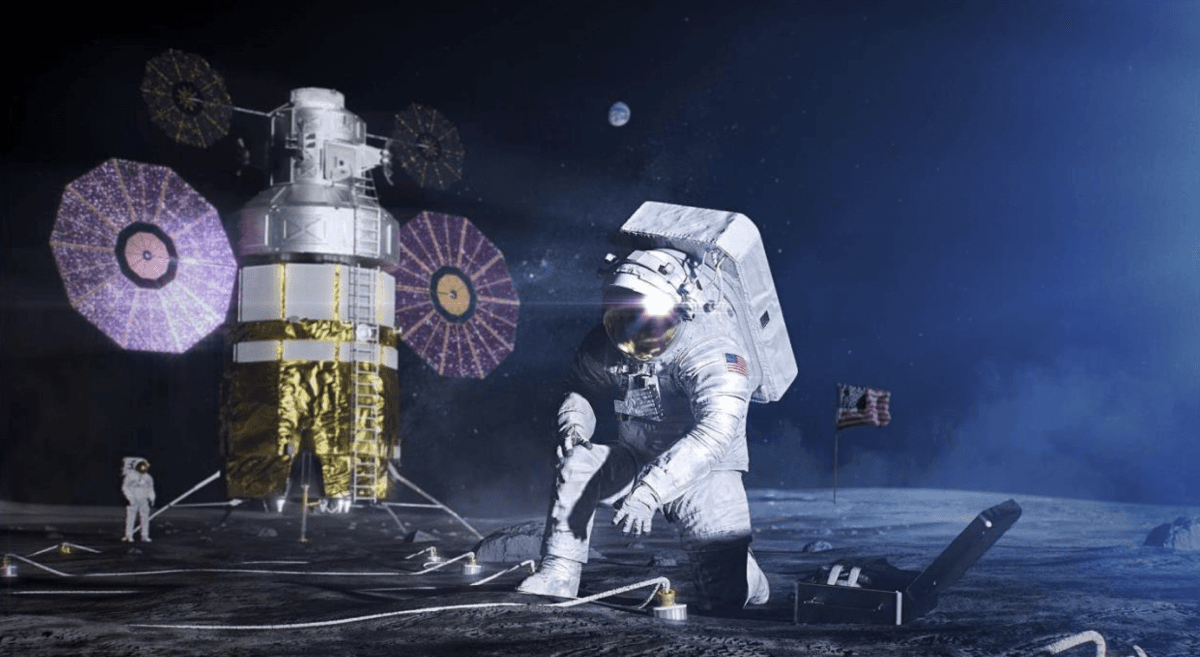
Space exploration is entering an exciting period. Every year, scientists, space agencies, and private companies work on new ways to understand the universe, explore distant planets, and develop technologies that could make future space travel possible.
The year 2027 is expected to bring several interesting developments in space research. From lunar exploration and advanced spacecraft to Mars research and new astronomical observations, upcoming missions could help answer questions that scientists have been studying for decades.
Space exploration is no longer limited to sending astronauts into orbit or launching satellites. It now involves studying distant worlds, searching for signs of life, understanding the behaviour of stars, and learning how humans might live beyond Earth.
Another important development is the growing involvement of private space companies. Government agencies and commercial organisations are increasingly working together to develop spacecraft, launch systems, and technologies for future missions.
But what can we expect from space exploration in 2027? Which missions could make a difference, and what goals are scientists working towards?
Let's explore the major developments, planned missions, scientific opportunities, and future possibilities that could shape space exploration in 2027.
What Makes Space Exploration in 2027 Important?
Space exploration is moving towards a new phase where long-term research and practical space activities are becoming equally important.
Earlier missions mainly focused on reaching space, studying planets, and collecting scientific information. Today, the goals are much broader. Scientists want to understand whether humans can stay on the Moon for longer periods, how spacecraft can travel farther, and whether other planets may have conditions suitable for life.
The year 2027 is particularly interesting because several ongoing space programmes are expected to reach important stages.
Some major areas of attention include:
Moon exploration: Developing technologies and missions for future lunar activities.
Mars research: Studying the planet's atmosphere, surface, and geological history.
Space telescopes: Observing distant galaxies, stars, and planetary systems.
Satellite technology: Improving communication, navigation, and Earth observation.
Commercial spaceflight: Increasing the role of private companies in space activities.
Human space exploration: Preparing for longer and more complex missions beyond Earth.
These developments could influence how future space missions are planned and conducted.
1. Lunar Exploration Remains a Major Priority
The Moon continues to be one of the most important destinations for space agencies. Although humans first landed there decades ago, scientists still have many questions about its surface, resources, geological structure, and history.
Modern lunar exploration is not only about visiting the Moon. It is also about understanding whether astronauts could work there for longer periods and whether future missions could use local resources.
NASA's Artemis programme is a major part of these efforts. Its long-term objective is to support human exploration of the Moon and build experience that could eventually help prepare astronauts for missions to Mars.
What Could Future Lunar Missions Focus On?
Studying the Moon's south polar region.
Investigating water ice and other possible resources.
Testing advanced spacesuits and lunar equipment.
Improving communication and navigation systems.
Developing technologies for longer surface operations.
Understanding how lunar dust affects equipment and astronauts.
The Moon could eventually become an important location for testing technologies needed for deeper space exploration.
However, building a reliable lunar presence will require time, careful planning, and significant investment.
2. NASA's Artemis Programme and Human Spaceflight
Human spaceflight is entering an important development stage. NASA's Artemis programme aims to return astronauts to the lunar environment and establish a foundation for future exploration.
The programme includes the Space Launch System (SLS), Orion spacecraft, lunar landers, and other technologies designed to support missions beyond low Earth orbit.
The Artemis mission timeline is subject to change, so 2027 should be viewed as a period of continued programme development rather than a guaranteed date for a particular lunar landing.
Why Is Artemis Important?
1. Developing Human Spaceflight Technology
Astronauts travelling beyond Earth's immediate surroundings need advanced spacecraft, life-support systems, and reliable communication equipment.
2. Understanding the Lunar Environment
The Moon has extreme temperatures, radiation exposure, and challenging surface conditions. Studying these factors is important for astronaut safety.
3. Preparing for Mars Exploration
The experience gained through lunar missions could help scientists understand the difficulties of longer journeys into deep space.
4. Encouraging International Cooperation
Lunar exploration involves several countries and organisations working towards shared scientific and technological goals.
3. Mars Exploration Will Continue to Reveal New Information
Mars remains one of the most fascinating planets in our solar system. Its surface contains ancient river channels, dried lake beds, unusual rock formations, and other geological features that suggest the planet once had a different environment.
Scientists are interested in understanding whether Mars could have supported microbial life in the distant past.
Robotic missions, including NASA's Perseverance rover, continue to collect information that helps researchers study the planet's history.
What Are Scientists Looking for on Mars?
Evidence of ancient water activity.
Signs of environments that may once have supported microbial life.
Information about the planet's atmosphere.
Samples of rocks and soil for scientific research.
Geological changes that occurred over billions of years.
Better knowledge of radiation and surface conditions.
Mars exploration also supports the development of technologies that could be useful for future human missions.
Although a crewed journey to Mars is not expected to happen in 2027, research conducted during this period could contribute to long-term mission planning.
4. ESA's PLATO Mission Will Search for Earth-Like Planets
One of the interesting planned space missions for 2027 is the European Space Agency's PLATO mission.
PLATO stands for PLAnetary Transits and Oscillations of stars. Its main purpose is to search for planets outside our solar system, particularly rocky planets orbiting Sun-like stars.
The mission is planned for launch in April 2027 using Europe's Ariane 6 rocket.
PLATO will use 26 cameras to observe stars and identify small changes in their brightness. These changes can help scientists detect planets passing in front of their host stars.
What Will PLATO Study?
Earth-sized planets outside our solar system.
Planets located in or near the habitable zones of stars.
The size and characteristics of distant planets.
The internal structure and activity of stars.
Potential exomoons and planetary rings.
Why Is This Mission Important?
Scientists have discovered thousands of planets beyond our solar system, but many questions remain unanswered.
PLATO could help researchers identify more Earth-sized worlds and understand whether their environments might be suitable for life.
It will not directly confirm the existence of extraterrestrial life. Instead, it will provide important information for studying planets that may have interesting conditions.
5. NEO Surveyor Will Help Protect Earth From Asteroids
Space exploration is not only about discovering distant planets. It also involves understanding objects that could come close to Earth.
Asteroids and comets travel through our solar system, and some of them pass relatively close to our planet. Most are harmless, but larger objects need to be identified and monitored.
NASA's Near-Earth Object Surveyor, commonly known as NEO Surveyor, is designed to improve the detection of potentially hazardous asteroids and comets.
Its launch is currently planned for no earlier than September 2027.
How Will NEO Surveyor Work?
The spacecraft will use infrared technology to identify asteroids and comets that can be difficult to observe using ordinary visible-light telescopes.
Its observations will help scientists understand:
The size of near-Earth asteroids.
Their shapes and physical characteristics.
Their movement and orbital paths.
Which objects may require closer monitoring.
How planetary defence research can improve.
Why Does Asteroid Detection Matter?
Finding a potentially dangerous asteroid early gives scientists more time to study its movement and consider possible responses.
The mission represents an important step towards improving Earth's planetary defence capabilities.
It is not designed to destroy asteroids. Its primary purpose is to find and study them before they become a serious concern.
6. Japan's Martian Moons Exploration Mission
Japan's space agency, JAXA, is working on an interesting mission called Martian Moons eXploration (MMX).
Instead of focusing directly on the surface of Mars, this mission is designed to explore its two natural moons, Phobos and Deimos.
These small moons are scientifically interesting because their origins are still being studied.
The mission is planned for launch in 2027, although launch schedules can change as spacecraft development and testing progress.
What Does the MMX Mission Aim to Achieve?
Explore the Martian moon Phobos.
Study the surface and composition of Phobos and Deimos.
Collect a sample from Phobos.
Investigate the possible origins of the Martian moons.
Improve scientific understanding of the early solar system.
Why Is This Mission Different?
Most Mars exploration missions focus on the planet itself. MMX takes a different approach by studying the small celestial bodies that orbit it.
Understanding these moons could provide useful information about how Mars and its surrounding environment developed over time.
The mission could also improve knowledge of how small planetary bodies behave in space.
7. Space Telescopes Will Expand Our Understanding of the Universe
Space telescopes have completely changed the way scientists observe the universe.
Unlike ground-based observatories, space telescopes can operate above much of Earth's atmosphere. This allows them to capture information that may be difficult to observe from the ground.
The James Webb Space Telescope has already helped scientists study distant galaxies, star formation, and the atmospheres of planets outside our solar system.
In 2027, observations from existing space telescopes and new missions such as PLATO could continue expanding our understanding of the universe.
What Could Scientists Discover?
Previously unobserved distant galaxies.
New information about star formation.
Atmospheric details of distant planets.
Unusual cosmic objects and phenomena.
More evidence about how planetary systems develop.
Better understanding of the universe's early history.
Why Are Space Telescopes So Important?
A telescope does more than take beautiful pictures of space. It collects scientific data that helps researchers understand how the universe works.
Every new observation can provide clues about objects that are millions or even billions of light-years away.
8. Private Space Companies Will Play a Bigger Role
Space exploration was once largely controlled by government-funded space agencies. Today, private companies are becoming important partners in the industry.
Companies are developing reusable rockets, spacecraft, satellite systems, and commercial launch services.
This growing involvement could make certain space activities more accessible and create new opportunities for research and business.
Major Areas of Private Space Development
Area | Main Purpose |
Reusable rockets | Reduce launch costs and improve launch efficiency |
Commercial spacecraft | Transport cargo and astronauts |
Satellite networks | Improve global communication |
Lunar landers | Deliver equipment and supplies to the Moon |
Space tourism | Develop commercial human spaceflight |
Space stations | Support research and commercial activities |
How Can Private Companies Change Space Exploration?
Lower Launch Costs: Reusable rocket technology aims to reduce the expense of sending equipment into space.
More Launch Opportunities: Commercial launch providers can offer additional services to research organisations and satellite operators.
Technological Innovation: Competition encourages companies to develop new spacecraft designs and engineering solutions.
Commercial Research: Businesses can explore opportunities involving satellite services, space manufacturing, and future orbital facilities.
However, space remains a challenging environment. Safety, technical reliability, environmental concerns, and international regulations will continue to matter.
9. Satellite Technology Will Become More Important
Satellites have become an important part of everyday life, even though most people rarely think about them.
They support communication, weather forecasting, navigation, environmental monitoring, disaster management, and scientific research.
In 2027, improvements in satellite technology could further strengthen the way information is collected and shared across the world.
Important Uses of Modern Satellites
Communication: Supporting internet access and global connectivity.
Navigation: Helping aircraft, ships, vehicles, and mobile devices determine their positions.
Weather forecasting: Monitoring storms, rainfall, and changing atmospheric conditions.
Agriculture: Helping farmers observe crop conditions and land changes.
Disaster management: Providing information about floods, wildfires, and other natural events.
Climate research: Monitoring changes in oceans, forests, glaciers, and temperatures.
The future of space technology is closely connected to life on Earth. Better satellite systems can support services that people, businesses, and governments depend on every day.
10. International Cooperation Will Shape Future Space Missions
Space exploration is a complicated and expensive activity. A single mission may require years of research, advanced engineering, financial investment, and the involvement of thousands of specialists.
This is one reason why international cooperation has become increasingly important.
Different countries bring their own technologies, scientific knowledge, research facilities, and expertise to major space programmes.
How Countries Can Work Together
Collaboration Area | Possible Benefits |
Scientific research | Sharing information and discoveries |
Spacecraft development | Combining engineering expertise |
Astronaut training | Improving international mission preparation |
Satellite technology | Supporting communication and research |
Lunar exploration | Sharing equipment and scientific resources |
Planetary research | Understanding planets and small celestial bodies |
International partnerships can also help reduce duplicated efforts and encourage the development of common technical standards.
The future of space exploration will depend not only on technological progress but also on how effectively countries work together.
Major Space Exploration Missions and Developments Expected in 2027
Here is a quick comparison of some important missions and developments discussed above.
Mission or Development | Space Agency / Organisation | Main Objective |
Artemis III | NASA | Test systems for future lunar landings |
PLATO | ESA | Search for Earth-sized exoplanets |
NEO Surveyor | NASA | Detect potentially hazardous asteroids |
MMX | JAXA | Explore the moons of Mars |
Mars rover research | NASA | Study Martian geology and ancient environments |
Commercial spaceflight | Private companies | Develop spacecraft and launch systems |
Satellite development | Multiple agencies | Improve communication and Earth observation |
Note: These are planned missions and ongoing developments, not a guarantee that every activity will take place on its announced schedule. Launch dates and mission objectives may change.
How Space Exploration Can Benefit Life on Earth
Space research is often associated with astronauts, rockets, and distant planets. However, its benefits can reach far beyond the space industry.
Many technologies developed for space missions eventually contribute to improvements in everyday life.
Some Important Benefits Include:
1. Better Communication
Satellite technology helps people communicate across long distances and supports internet connectivity in remote areas.
2. Improved Weather Forecasting
Space-based observation systems help scientists monitor weather patterns and provide information about extreme weather conditions.
3. Medical and Scientific Research
Research conducted in microgravity can help scientists understand biological processes and investigate new approaches to medical research.
4. Environmental Monitoring
Satellites provide valuable information about forests, oceans, pollution, glaciers, and climate changes.
5. Technological Development
Space missions encourage innovation in robotics, materials science, computing, engineering, and energy systems.
6. New Career Opportunities
The growing space industry creates opportunities for engineers, researchers, software developers, scientists, technicians, and other professionals.
Major Challenges Facing Space Exploration in 2027
Although the future of space exploration looks promising, reaching ambitious goals is not easy.
Space missions involve technical difficulties, high costs, and considerable risks. Even a small equipment failure can affect an entire mission.
Here are some important challenges that space agencies and private companies need to address.
Major Challenge | Why It Matters |
High mission costs | Space research requires significant financial investment |
Technical failures | Equipment problems can delay or damage missions |
Space radiation | Radiation creates health risks for astronauts |
Long-distance travel | Deep-space journeys require advanced technology |
Space debris | Uncontrolled objects can damage spacecraft and satellites |
Communication delays | Signals take time to travel across large distances |
Astronaut health | Long missions can affect physical and mental well-being |
Environmental concerns | Rocket launches and space activities require responsible management |
Why Is Long-Distance Space Travel Difficult?
Travelling to distant planets involves much more than launching a powerful rocket.
Spacecraft must carry sufficient fuel, food, water, scientific equipment, and life-support systems. Astronauts also need protection from radiation and extreme environmental conditions.
For example, a human mission to Mars would require months of travel, careful resource management, and a reliable plan for emergencies.
These challenges explain why scientists are continuing to test new technologies before attempting more ambitious missions.
What Could Be the Future of Space Exploration After 2027?
The developments expected in 2027 could contribute to much bigger goals in the coming decades.
Space agencies are already studying technologies that may support long-duration missions, advanced lunar activities, and future exploration of Mars.
Some possible future developments include:
Long-Term Lunar Exploration: Developing systems that could support repeated astronaut visits and longer stays on the Moon.
Human Missions to Mars: Improving spacecraft, life-support systems, and radiation protection.
Advanced Space Telescopes: Discovering distant planets and studying the origins of galaxies.
Asteroid Research: Understanding the composition and movement of small celestial objects.
Space Habitats: Exploring technologies that could support human activities in orbit and beyond.
Robotic Exploration: Sending advanced robots to locations that are difficult or dangerous for humans to reach.
Space Resource Research: Investigating whether materials available on the Moon and other celestial bodies could support future missions.
These goals may take many years to achieve, but every successful experiment and mission helps scientists move closer to them.
Why Should People Pay Attention to Space Exploration?
Space exploration is not only a subject for scientists and astronauts. It has connections with technology, education, business, environmental research, and the future of humanity.
Understanding space developments can help people recognise how scientific discoveries influence the world around them.
Students can find inspiration in astronomy and engineering, businesses can explore new technology opportunities, and researchers can use space-based information to solve problems on Earth.
It also encourages curiosity. Questions about the Moon, Mars, distant planets, and the possibility of life beyond Earth remind us how much there is still to discover.
The Growing Importance of Space Exploration in 2027
Space exploration in 2027 is expected to bring important developments across several areas of science and technology.
NASA's Artemis III programme is planned to test critical systems for future lunar missions. ESA's PLATO mission aims to study Earth-sized planets around distant stars, while NASA's NEO Surveyor is designed to improve the detection of potentially hazardous asteroids.
Japan's MMX mission is also expected to expand scientific research into the small moons of Mars.
Alongside these missions, private space companies, satellite developers, and international research organisations will continue contributing to the changing space industry.
The progress made during this period could influence how future generations explore the Moon, Mars, and other parts of the universe.
Space exploration in 2027 represents another important step towards understanding the universe and expanding human capabilities beyond Earth.
From lunar exploration and Mars research to advanced telescopes and asteroid detection, upcoming missions offer exciting opportunities for scientific discovery.
However, the journey will not always be simple. High costs, technical challenges, astronaut safety, and mission delays remain important concerns.
What makes this period interesting is the growing connection between scientific research, commercial innovation, and international cooperation.
The biggest achievement of space exploration may not be reaching another planet. It could be everything humanity learns, develops, and discovers along the way.
Frequently Asked Questions
The main focus includes lunar missions, Mars research, asteroid detection, and discovering planets beyond our solar system.
Important planned missions include ESA's PLATO, NASA's NEO Surveyor, and Japan's Martian Moons Exploration mission.
NASA's Artemis programme is working towards future lunar exploration, but mission schedules may change.
Mars research helps scientists understand the planet's history and investigate whether it once supported microbial life.
It improves satellite communication, weather forecasting, environmental monitoring, scientific research, and technology development.
Sources and notes
Links the author listed for this post.
This article covers planned space exploration developments in 2027, including lunar missions, Mars research, asteroid detection, space telescopes, satellite technology, and commercial spaceflight.


Discussion
0 comments