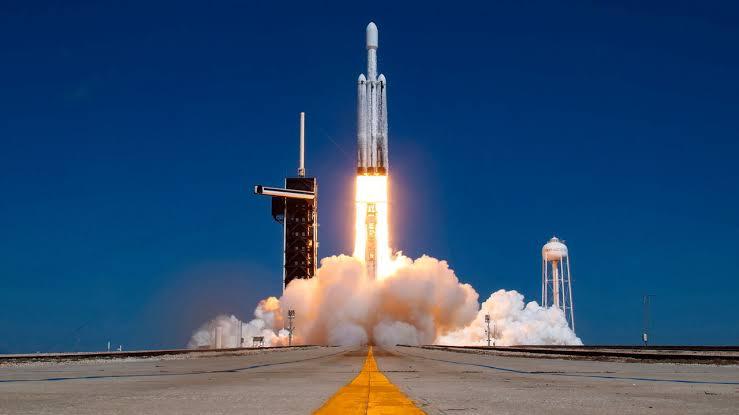
Space exploration is entering an exciting new phase. From returning humans to the Moon to collecting lunar samples and preparing India's first human spaceflight, upcoming missions are expected to expand our understanding of the universe.
The year 2027 could become an important milestone for international space programmes. NASA is preparing another major step in its Artemis programme, India's ISRO is advancing Chandrayaan-4 and Gaganyaan, and commercial space companies are developing new lunar landers and exploration technologies.
These projects are not only about reaching distant destinations. They are also designed to improve scientific research, develop advanced technologies, study planetary environments and prepare for longer human missions beyond Earth.
Let's explore the major space missions, technologies and scientific goals to watch in 2027.
Space Exploration 2027: Major Highlights

Several space agencies have announced ambitious plans for 2027. Some missions are focused on human spaceflight, while others aim to investigate the Moon, study the Sun or test new spacecraft systems.
Mission / Programme | Space Agency | Planned Timeline | Main Objective |
|---|---|---|---|
Artemis III | NASA and partners | 2027 | Test lunar landing systems in low Earth orbit |
Chandrayaan-4 | ISRO | 2027 target | Collect lunar samples and return them to Earth |
Gaganyaan | ISRO | 2027–28 target | Demonstrate Indian human spaceflight |
SunRISE | NASA | 2027 listed target | Study solar radio bursts |
IM-4 | Intuitive Machines / NASA CLPS | 2027 listed target | Deliver scientific payloads to the Moon |
Blue Ghost Mission 2 | Firefly Aerospace / NASA CLPS | 2027 listed target | Deliver lunar science and technology payloads |
Blue Moon Mark 1 | Blue Origin | 2027 listed target | Demonstrate commercial lunar landing technology |
These are announced targets and planning windows, not guaranteed launch dates. Mission schedules may change.
1. NASA Artemis III: A New Step Towards the Moon
NASA's Artemis programme is one of the most ambitious human space exploration initiatives currently underway. Its long-term goal is to establish a sustainable human presence on and around the Moon while developing technologies that could support future missions to Mars.
Artemis III is currently planned for 2027, but its mission architecture has changed. Under NASA's updated plan, it is expected to operate in low Earth orbit rather than conduct a lunar surface landing.
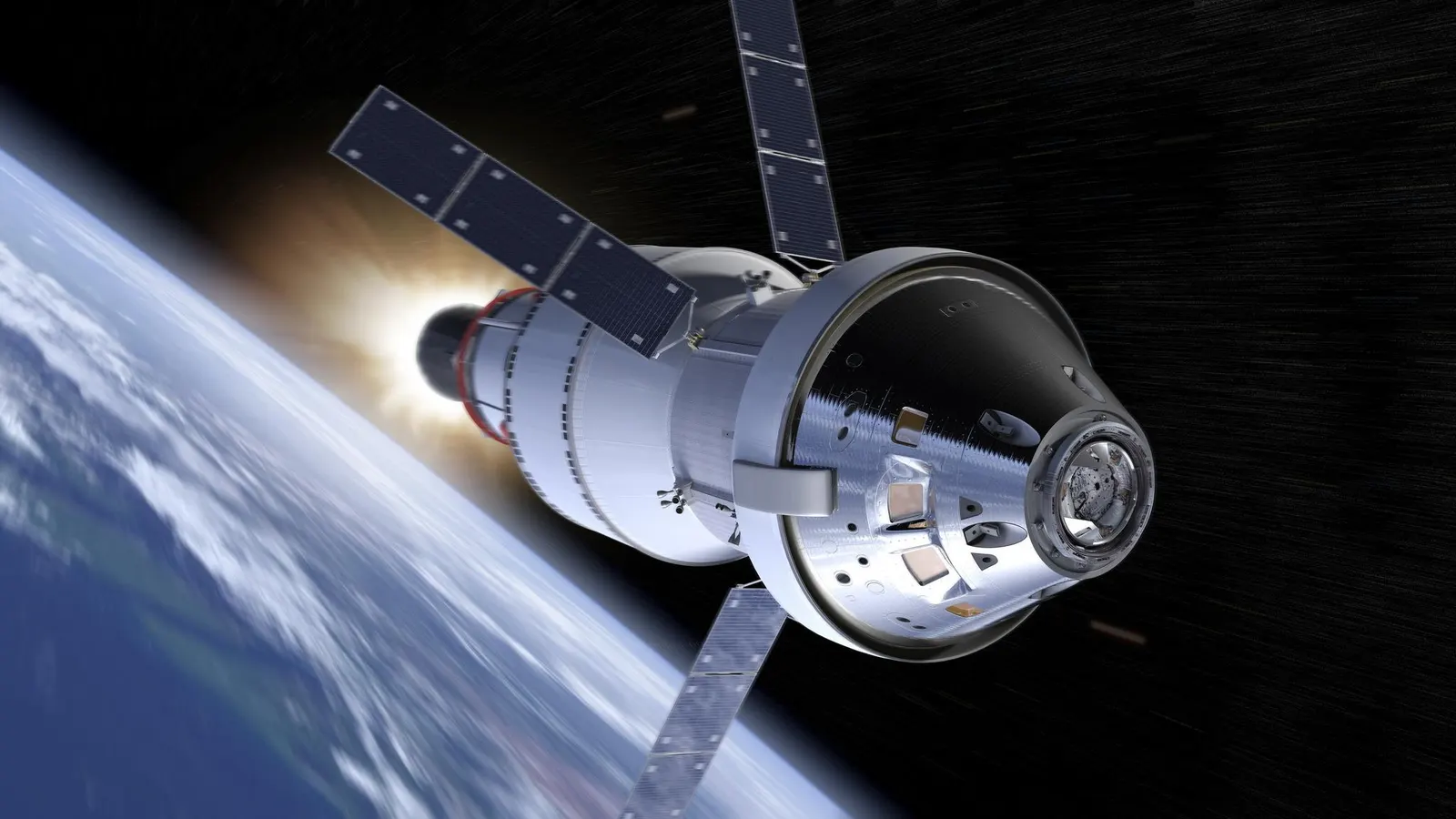
The mission is intended to test the integration and operations of NASA's Orion spacecraft with one or both commercial lunar landers being developed by SpaceX and Blue Origin.
What Will Artemis III Test?
Spacecraft rendezvous and docking operations.
Communication between Orion and commercial lunar landers.
Life-support and crew systems.
Astronaut operations in preparation for future lunar missions.
Technologies required for human exploration beyond Earth.
These tests are important because future lunar missions will require spacecraft, landers and astronauts to work together safely.
NASA currently targets Artemis IV for the first crewed lunar landing under its updated programme plan, with a 2028 target.
2. India's Chandrayaan-4: Bringing Moon Samples to Earth
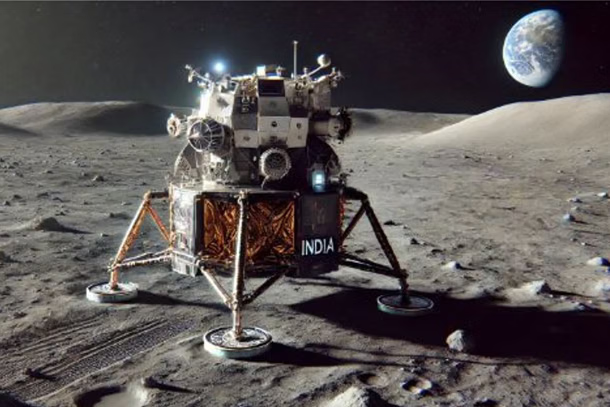
India's space programme is preparing another ambitious lunar mission with Chandrayaan-4. Unlike earlier missions that focused on lunar orbit observations, landing demonstrations and surface exploration, Chandrayaan-4 is designed to demonstrate the technologies required to collect lunar material and bring it back to Earth.
ISRO has a planned 2027 timeline for this mission.
The mission is expected to demonstrate several complex operations, including landing, collecting lunar samples, launching from the lunar surface, docking in lunar orbit and returning samples to Earth.
Why Is Chandrayaan-4 Important?
Lunar samples can provide valuable information about the Moon's formation, geological history and surface composition.
Scientists can study returned material using advanced laboratory equipment on Earth, allowing more detailed analysis than many instruments carried aboard a spacecraft.
Mission Feature | Main Activity | Scientific Purpose | Importance |
|---|---|---|---|
Lunar Landing | Reach the Moon's surface | Access lunar material | Surface exploration |
Sample Collection | Gather lunar soil and rocks | Study lunar composition | Geological research |
Lunar Ascent | Lift samples from the surface | Demonstrate return capability | Advanced engineering |
Sample Return | Bring material to Earth | Laboratory analysis | Scientific discoveries |
Chandrayaan-4 could become an important milestone in India's development of advanced lunar exploration capabilities.
3. ISRO Gaganyaan: India's Human Spaceflight Ambition
Gaganyaan is India's first human spaceflight programme. Its objective is to demonstrate the country's ability to send astronauts into low Earth orbit and safely return them to Earth.
The programme involves developing a human-rated launch vehicle, crew module, life-support systems, communication infrastructure and astronaut recovery operations.
India's government has identified 2027–28 as the target period for the first crewed Gaganyaan mission. The exact launch date will depend on the successful completion of uncrewed tests and safety evaluations.
What Makes Gaganyaan Special?
Gaganyaan is important because human spaceflight requires much more than launching a spacecraft. Every major system must be tested to protect the crew during launch, orbital operations and return.
The programme also includes Vyommitra, an Indian humanoid robot designed to participate in an uncrewed experimental mission and help validate spacecraft systems.
Key development areas include:
Human-rated launch vehicle technology.
Crew escape and emergency systems.
Environmental control and life support.
Astronaut training and mission operations.
Spacecraft recovery and communication networks.
A successful Gaganyaan programme would strengthen India's independent human spaceflight capabilities and support its longer-term plans for a national space station.
4. NASA SunRISE: Studying Solar Activity
The Sun is essential to life on Earth, but its activity can also affect satellites, communication systems and astronauts in space.
NASA's SunRISE mission is designed to study solar radio bursts associated with powerful solar activity. The mission uses a group of small spacecraft working together to observe radio signals from the Sun.
The NASA events listing currently identifies 2027 as its planned launch period.
Why Study Solar Radio Bursts?
Solar radio emissions can provide information about energetic particles and magnetic activity in the Sun's atmosphere.
Understanding these events can improve scientific knowledge of space weather and help researchers study phenomena that may affect technology in Earth's orbit.
The mission also demonstrates how multiple small satellites can operate together as a scientific observatory.
5. Commercial Lunar Missions: Private Companies Join Exploration
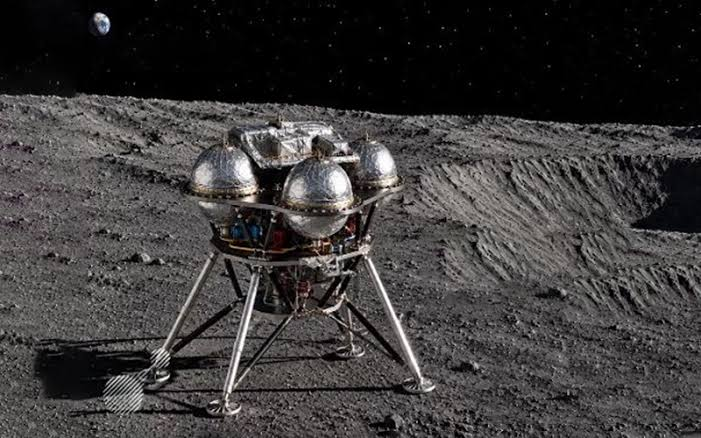
Government space agencies are no longer the only organisations developing missions to the Moon. Private aerospace companies are increasingly contributing spacecraft, lunar landers and delivery services.
NASA's Commercial Lunar Payload Services programme works with commercial partners to transport scientific instruments and technology demonstrations to the lunar surface.
Several missions are listed in NASA's planning schedule for 2027.
Important Commercial Lunar Projects
Intuitive Machines IM-4
Intuitive Machines is developing another lunar delivery mission under NASA's commercial lunar programme. The mission is intended to transport payloads and support scientific and technology objectives on the Moon.
Firefly Aerospace Blue Ghost Mission 2
Blue Ghost Mission 2 is part of Firefly Aerospace's lunar exploration work. The planned mission is expected to deliver scientific and technology payloads to the Moon.
Blue Origin Blue Moon Mark 1
Blue Origin is developing its Blue Moon lunar lander technology. The Mark 1 mission is intended to demonstrate commercial lunar landing capabilities and support future exploration activities.
Mission | Company | Planned Focus | Potential Contribution |
|---|---|---|---|
IM-4 | Intuitive Machines | Lunar payload delivery | Scientific experiments |
Blue Ghost Mission 2 | Firefly Aerospace | Lunar surface delivery | Technology demonstrations |
Blue Moon Mark 1 | Blue Origin | Commercial lunar landing | Future landing capabilities |
These missions demonstrate the growing role of private companies in making lunar exploration more frequent and commercially supported.
6. China's Long-Term Space Exploration Plans
China is also expanding its space science programme through a long-term roadmap covering lunar exploration, planetary science, astronomy and space-based research.
Its national space science plan for 2024–2050 identifies 2027 as an important milestone in its first development phase.
The programme includes work related to the Chinese space station, lunar exploration, planetary missions and scientific satellite projects.
Major Areas of Research
Lunar science: Investigating the Moon's origin, geological history and resources.
Planetary exploration: Developing research capabilities for planets and other solar system objects.
Space astronomy: Studying distant cosmic objects and high-energy events.
Solar research: Understanding solar activity and its relationship with Earth.
Space life sciences: Examining how living organisms respond to microgravity and other space conditions.
China's research roadmap shows how international space exploration is expanding beyond individual missions towards long-term scientific programmes.
7. Major Space Technologies to Watch in 2027
The future of space exploration depends on technological improvements. Reaching the Moon or another planet is only one part of the challenge. Spacecraft must also navigate accurately, communicate over long distances, protect astronauts and operate in difficult environments.
Several technologies are expected to play important roles in upcoming missions.
Technology | How It Works | Main Application | Future Benefit |
|---|---|---|---|
Reusable Rockets | Recover and reuse launch systems | Satellite and crew launches | Lower launch costs |
Lunar Landers | Transport equipment to the Moon | Surface exploration | More frequent missions |
Space Robotics | Automated machines perform tasks | Sample collection and repairs | Reduced human risk |
AI-Based Navigation | Software analyses spacecraft data | Autonomous operations | Improved efficiency |
Advanced Life Support | Recycles air and water | Human spaceflight | Longer missions |
Satellite Constellations | Multiple satellites work together | Communication and observation | Better coverage |
Reusable Rocket Technology
Reusable launch systems aim to reduce the cost of sending payloads into orbit. Instead of discarding every rocket stage, companies are developing systems that can return and fly again.
Lower launch costs could make scientific missions, satellite deployment and commercial space activities more accessible.
Artificial Intelligence in Space
AI can help spacecraft analyse information, identify objects and make certain operational decisions. These capabilities are particularly useful when communication delays make continuous human control difficult.
Space Robotics
Robotic systems can explore dangerous environments, collect samples and perform tasks that would be difficult for astronauts.
As lunar and planetary missions become more advanced, robotics will play an increasingly important role.
8. What New Discoveries Could Space Missions Bring?
Upcoming missions are expected to contribute to several important scientific questions. Although discoveries cannot be guaranteed in advance, the research goals offer exciting possibilities.
Understanding the Moon's History
Returned lunar samples could help researchers investigate the Moon's formation, volcanic activity and geological evolution.
Searching for Water on the Moon
Lunar polar regions are of particular interest because permanently shadowed areas may contain water ice.
Water could become an important resource for future exploration, potentially supporting life-support systems and producing oxygen or rocket propellant after suitable processing.
Studying the Sun
Solar missions can improve understanding of magnetic activity, solar flares and energetic particles. This research supports better preparation for space-weather events.
Learning How Humans Live in Space
Human spaceflight experiments help researchers understand the effects of microgravity on the human body. This knowledge is essential for longer missions to the Moon and eventually Mars.
9. Why Space Exploration Matters for Life on Earth
Space exploration is not only about discovering distant planets or reaching the Moon. Technologies developed for space missions can also provide practical benefits on Earth.
Satellite systems support weather forecasting, disaster monitoring, communication, navigation and environmental research.
Space Technology | Earth-Based Application | Main Benefit | Example |
|---|---|---|---|
Earth Observation | Monitor land and oceans | Environmental research | Forest monitoring |
Weather Satellites | Track atmospheric conditions | Better forecasting | Cyclone tracking |
Navigation Systems | Determine location | Transport efficiency | GPS-based navigation |
Satellite Communication | Connect remote regions | Wider connectivity | Remote communication |
Space Materials | Develop advanced materials | Engineering innovation | Lightweight components |
Space programmes also create opportunities for scientists, engineers, universities, startups and technology companies.
10. The Future of Space Exploration Beyond 2027
The missions planned for 2027 are part of a much larger vision. Space agencies are preparing for longer-term goals that include sustainable lunar exploration, advanced space stations, Mars research and deeper investigation of the universe.
India's Space Vision 2047 includes plans for the Bharatiya Antariksh Station by 2035 and an Indian human landing on the Moon by 2040.
NASA's Artemis programme aims to establish a more sustained human presence around and on the Moon, creating experience that could support future Mars missions.
China is also developing long-term plans for lunar exploration and scientific research through 2050.
These goals require international cooperation, private investment, advanced engineering and years of scientific preparation.
How to Follow Upcoming Space Missions in 2027
Space enthusiasts do not need specialised equipment to stay informed about upcoming missions. Official space agency websites regularly publish launch schedules, mission updates, scientific discoveries and educational resources.
Here are useful ways to follow space exploration:
Visit NASA's official mission and launch schedule pages.
Follow ISRO announcements for Chandrayaan and Gaganyaan updates.
Check official updates from ESA, JAXA and other international space agencies.
Follow commercial launch providers for lunar mission developments.
Read scientific mission reports to understand discoveries beyond headlines.
Readers can also explore free online tools on AltFTool to discover useful digital utilities for research, productivity and everyday online tasks.
Frequently Asked Questions
Major planned missions and programmes include NASA's Artemis III, India's Chandrayaan-4, Gaganyaan, NASA's SunRISE and several commercial lunar lander missions.
NASA's current Artemis III plan for 2027 involves testing Orion and commercial lunar lander operations in low Earth orbit. The first crewed lunar landing is currently targeted for Artemis IV in 2028.
Chandrayaan-4 is an Indian lunar sample-return mission designed to collect material from the Moon and bring it back to Earth. Its planned timeline is 2027.
India's first crewed Gaganyaan mission is currently targeted for 2027–28, following uncrewed tests and safety evaluations.
Sources and notes
Links the author listed for this post.
This article is based on official space agency announcements, government space programme updates and published mission plans. Launch dates and mission objectives may change as programmes develop.
More on AltFTool
- ALtFTool (opens in a new tab)
altftool.com


Discussion
0 comments