Artificial Intelligence (AI) is becoming one of the most influential technologies in the world. From government decision-making and international relations to military operations and cybersecurity, AI is changing how countries protect their interests and respond to global challenges.
Governments are increasingly investing in AI-powered technologies to improve intelligence gathering, monitor potential threats, strengthen digital infrastructure and modernise their defence systems. At the same time, the growing use of AI is creating new concerns about cyberattacks, misinformation, autonomous weapons and international security.
What makes this transformation particularly important is that AI is no longer limited to technology companies or research laboratories. It is becoming an important part of national strategies, economic competition and global political relationships.
As countries compete to develop advanced AI capabilities, one major question is emerging: Who will control the future of artificial intelligence, and how will it influence global power?
Let's explore how AI is transforming global politics, defence and national security.
1. How AI Is Changing Global Politics
AI is changing the way governments collect information, analyse international developments and make important policy decisions.
Political leaders and government agencies can use AI tools to process large amounts of information, identify patterns and understand complicated situations more efficiently.
For example, AI-powered analytical systems can help governments examine economic indicators, monitor international developments, identify emerging security concerns and evaluate possible policy outcomes.
This technology is also influencing international competition. Countries that develop strong AI industries may gain advantages in economic productivity, technological innovation, defence capabilities and global influence.
Major Political Changes Driven by AI
Faster Government Decisions: AI can analyse large datasets and support policymakers with research and forecasting.
International Competition: Countries are competing to develop advanced AI models, infrastructure and semiconductor technologies.
Digital Diplomacy: Governments are using digital tools to monitor international discussions and understand public sentiment.
Information Management: AI helps identify coordinated misinformation campaigns and manipulated digital content.
Economic Influence: Nations with strong AI industries may gain greater influence in international trade and technology partnerships.
AI is therefore becoming an important factor in international relations, where technological capabilities can influence a country's strategic position.
2. AI Is Transforming Modern Defence Systems
Military organisations are exploring AI to improve operational planning, intelligence analysis, surveillance and logistics.
Traditional defence systems often depend on human analysis of information collected from different sources. AI can help process this information more quickly and identify patterns that may otherwise take considerable time to recognise.
Modern military organisations are particularly interested in AI because it can support decision-making in complex and rapidly changing environments.
Important Applications of AI in Defence
AI in Modern Defence Systems
Five important ways artificial intelligence is transforming military technology and defence operations.
AI-Powered Surveillance
AI can analyse information from satellites, cameras, sensors and other monitoring systems. It can help identify unusual activity and support border monitoring and security operations.
Autonomous and Semi-Autonomous Drones
AI-enabled drones can assist with navigation, observation, mapping and reconnaissance. Some systems can operate with limited human intervention, although their capabilities and levels of autonomy differ.
Military Intelligence
AI can help defence agencies organise intelligence reports, analyse satellite imagery and identify possible security threats.
Smart Defence Equipment
AI is being explored in military vehicles, robotics, monitoring systems and other advanced defence technologies to improve operational efficiency.
Logistics and Maintenance
Military organisations can use predictive analytics to estimate equipment maintenance requirements, manage supplies and improve resource planning.
Why It Matters
These applications show why AI is becoming a strategic priority for modern defence organisations. However, military decisions involving human lives still require careful oversight, testing and accountability.
3. The Growing Role of AI in Cybersecurity
Cybersecurity has become a major national security concern because governments, financial institutions, defence organisations and critical infrastructure increasingly depend on digital systems.
AI is helping security teams detect suspicious activities, identify unusual network behaviour and respond to potential cyber threats.
At the same time, cybercriminals and hostile actors can also misuse AI to develop more convincing scams, automate certain attacks and create sophisticated phishing messages.
How AI Is Strengthening Cybersecurity
Threat Detection: AI systems can identify unusual network activities and potentially malicious behaviour.
Fraud Prevention: Financial institutions can use AI to recognise suspicious transactions and unusual account activity.
Automated Monitoring: Security teams can monitor large digital environments more efficiently.
Incident Response: AI tools can help security professionals investigate alerts and prioritise potential threats.
Vulnerability Analysis: AI can support the identification and assessment of weaknesses in software and digital infrastructure.
However, AI-powered cybersecurity is not a complete solution. Human expertise, secure infrastructure, regular updates and effective security policies remain essential.
4. AI and the Rise of Autonomous Weapons
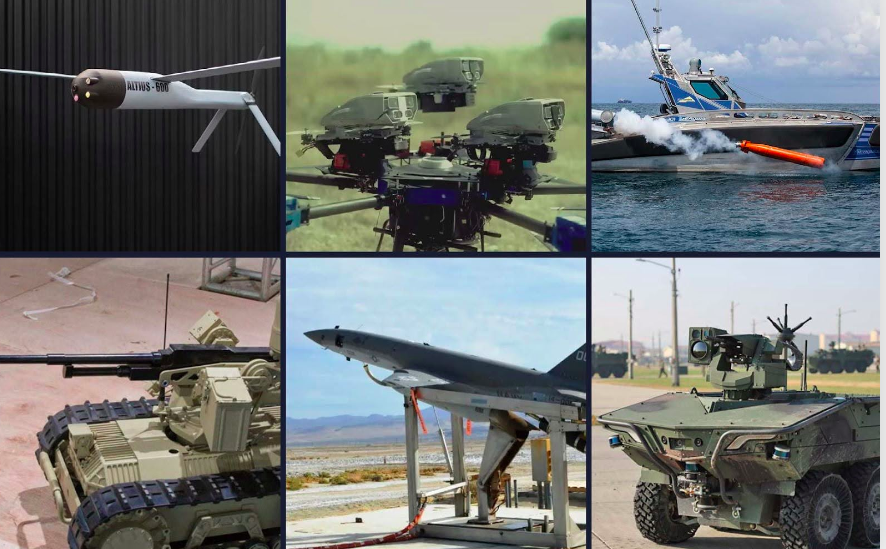
One of the most debated developments in military AI is the emergence of autonomous weapon systems.
These systems use sensors, software and automated decision-making capabilities to perform certain military functions. Depending on their design, some may identify, select or engage targets with varying levels of human involvement.
Autonomous weapons raise important questions about responsibility, military ethics and international humanitarian law.
For example, if an autonomous system makes an incorrect decision during a conflict, determining who is responsible can become complicated.
Major Concerns About Autonomous Weapons
Human Control: How much authority should an AI system have over decisions involving the use of force?
Target Identification: Can an automated system reliably distinguish between military targets and civilians?
Accountability: Who should be held responsible when an AI-enabled weapon causes unintended harm?
Technical Errors: Software failures, inaccurate information or unexpected conditions could lead to dangerous outcomes.
International Regulations: Countries need common standards to manage the development and use of autonomous weapons.
The international discussion is expanding beyond autonomous weapons to include AI-assisted military planning, intelligence and decision-making.
The Stockholm International Peace Research Institute (SIPRI) has highlighted the growing importance of international governance for military AI and its implications for peace and security.
5. AI Is Changing Global Power Competition
Artificial intelligence is becoming a major area of strategic competition between powerful countries.
The United States, China, European nations and other countries are investing in AI research, semiconductor production, advanced computing infrastructure and defence-related innovation.
These investments are not only about developing better technology. They are also connected to economic growth, national independence and long-term geopolitical influence.
Why Countries Are Competing in AI
Strategic Area | Why It Matters |
|---|---|
AI Research | Helps develop advanced technological capabilities. |
Semiconductors | Provides the computing foundation for modern AI systems. |
Defence Technology | Supports intelligence, surveillance and military innovation. |
Data Infrastructure | Helps countries develop and operate AI applications. |
Cybersecurity | Protects government networks and critical infrastructure. |
Economic Growth | Improves productivity and supports new industries. |
Countries that develop reliable AI infrastructure and skilled workforces may gain an advantage in the global technology economy.
However, dependence on foreign chips, computing infrastructure and AI services can also create strategic vulnerabilities.
6. The Role of AI in National Security
National security involves protecting a country's people, institutions, infrastructure, economy and territorial interests.
AI is becoming relevant across almost every major area of national security.
Governments can use AI to improve their understanding of potential risks, strengthen emergency planning and protect important digital systems.
Key National Security Applications
Border Security: AI-powered monitoring systems can support the analysis of border surveillance information.
Critical Infrastructure Protection: AI can help monitor power grids, transportation networks, communication systems and other essential services.
Counterterrorism Analysis: AI can assist authorised security agencies in examining information and identifying potential threat patterns.
Emergency Management: Predictive systems can help authorities analyse disaster information and coordinate emergency responses.
Financial Security: AI-based monitoring can help identify suspicious financial activities and potential fraud.
Despite these advantages, national security applications must follow appropriate legal frameworks and protect individual rights and privacy.
7. AI, Fake News and Political Misinformation
AI-generated misinformation is becoming a serious challenge for governments, political institutions and democratic societies.
Generative AI can produce realistic images, videos, audio recordings and written content. These technologies have legitimate uses, but they can also be misused to create misleading political messages.
For example, manipulated videos or AI-generated audio recordings can falsely suggest that a political leader made a statement they never actually made.
Such content can spread rapidly through social media, creating confusion before authorities or fact-checkers have time to respond.
How AI Can Affect Political Information
Deepfake videos can damage public trust.
Fake audio recordings can misrepresent political statements.
Automated accounts can distribute misleading content.
AI-generated articles can make false claims appear convincing.
Manipulated images can influence public reactions during sensitive events.
Governments, technology companies, journalists and fact-checking organisations need stronger systems to identify manipulated content.
Digital literacy is equally important because people should verify information before sharing politically sensitive news.
8. What Does AI Mean for India's Defence and National Security?
India is also strengthening its focus on artificial intelligence as part of its broader digital transformation and national security strategy.
With growing digital infrastructure, expanding technology industries and increasing security requirements, AI offers opportunities across defence, cybersecurity, surveillance and emergency management.
India's defence modernisation efforts increasingly recognise the importance of emerging technologies, including AI, robotics, drones and advanced data analysis.
Important Areas Where AI Can Support India
Artificial intelligence can strengthen India's defence capabilities, improve digital security and support the development of advanced domestic technologies.
Border Monitoring
AI-enabled surveillance and analytical systems can support monitoring activities along sensitive border regions. These technologies can help analyse information from cameras, satellites and sensors to identify unusual activity.
Defence Research
AI research can contribute to the development of advanced military technologies, robotics and intelligent systems. It can also support innovation in India's defence research and modernisation efforts.
Cybersecurity
AI can help strengthen the protection of government networks, financial infrastructure and critical digital services. It can support the identification of suspicious activities and potential cyber threats.
Disaster Management
AI-based forecasting and data analysis can support responses to floods, extreme weather and other emergencies. These tools can help authorities assess risks and improve emergency planning.
Indigenous Technology Development
Investing in domestic AI research, semiconductor capabilities and computing infrastructure can reduce technological dependence on foreign suppliers and strengthen India's technology ecosystem.
9. Major Risks of Using AI in Global Security
Although AI offers significant opportunities, its growing role in politics and defence also creates challenges that countries cannot ignore.
Risk | Possible Impact |
|---|---|
Cyberattacks | AI may help attackers automate certain malicious activities. |
Deepfakes | Manipulated content can create political confusion. |
Autonomous Weapons | Reduced human control can raise serious ethical concerns. |
Data Privacy | Sensitive government and personal information may be exposed. |
Algorithmic Bias | Incorrect or biased data may produce misleading results. |
Technology Dependence | Countries may become dependent on external AI infrastructure. |
Military Escalation | Automated systems may increase the risk of miscalculation during a crisis. |
Another important concern is overdependence on AI-generated recommendations. Even advanced systems can make mistakes, misunderstand situations or produce inaccurate results.
For this reason, AI should support responsible human decision-making rather than replace human accountability in high-risk security situations.
10. Why the World Needs Global AI Regulations
AI technology is developing across national borders, making international cooperation increasingly important.
Without suitable regulations and common standards, countries may struggle to manage the risks associated with military AI, autonomous weapons, cyber operations and AI-generated misinformation.
International organisations are already discussing ways to improve responsible AI development and strengthen global security.
The United Nations has recognised the importance of examining AI applications in the military domain, while organisations such as SIPRI and UNIDIR continue to contribute research and policy discussions.
What Global AI Regulations Should Focus On
Establishing clear rules for military AI applications.
Maintaining meaningful human control over decisions involving the use of force.
Improving transparency and accountability.
Protecting sensitive information and critical infrastructure.
Preventing the misuse of AI for cyberattacks and misinformation.
Encouraging international cooperation and information sharing.
Developing reliable testing and safety standards.
The objective should not be to stop technological progress. Instead, countries need to ensure that AI development and deployment remain responsible, secure and consistent with international law.
11. The Future of AI in Global Politics and Defence
The influence of artificial intelligence on global politics and defence is likely to expand over the coming years.
Future AI systems may provide more advanced intelligence analysis, improve military logistics, strengthen cybersecurity and support faster government responses to emerging challenges.
At the same time, technological competition may become more intense as countries try to secure access to advanced chips, computing infrastructure, research capabilities and skilled professionals.
Several developments are likely to shape the future:
Smarter Defence Systems: Greater use of AI in surveillance, intelligence and military support operations.
Advanced Cybersecurity: More sophisticated tools for detecting and responding to digital threats.
AI Diplomacy: Technology governance may become an increasingly important subject in international negotiations.
Stronger Digital Infrastructure: Countries may invest more in domestic data centres, semiconductor capabilities and secure networks.
International AI Standards: Governments may work towards common rules for high-risk AI applications.
Human Oversight: Responsible human supervision will remain important in sensitive military and national security decisions.
The future will depend not only on how powerful AI systems become but also on how responsibly governments choose to use them.
Conclusion
Artificial intelligence is changing global politics, defence and national security in ways that go far beyond technological innovation.
It is influencing international competition, transforming military operations, strengthening cybersecurity and creating new challenges for governments around the world.
For countries such as India, AI also presents an opportunity to strengthen domestic technology capabilities, modernise defence systems and improve digital security.
However, technological advancement must be balanced with accountability, human oversight, privacy protection and international cooperation.
The future of global security will not depend only on which country develops the most advanced AI. It will also depend on which countries can use this technology responsibly while maintaining international peace and stability.
As AI continues to evolve, responsible innovation and global cooperation will become increasingly important for building a safer digital and geopolitical future.
FAQ'S
AI is changing global politics by helping governments analyse information, monitor international developments, improve policy planning and compete for technological influence.
AI is used in intelligence analysis, surveillance, drone technology, military logistics, predictive maintenance and cybersecurity.
AI can help governments identify potential threats, protect critical infrastructure, improve cyber defence and support emergency planning.
Yes. AI can contribute to cyberattacks, misinformation, autonomous weapon risks, privacy violations and military miscalculations if it is not properly managed.
AI can support India's defence modernisation through intelligent surveillance, robotics, data analysis, cybersecurity and domestic defence technology development.
Sources and notes
Links the author listed for this post.
This article is based on information and research from international security organisations, technology publications and government resources discussing artificial intelligence, global politics, defence technology and national security.


Discussion
0 comments
No comments yet
Discussion will appear here once it loads.