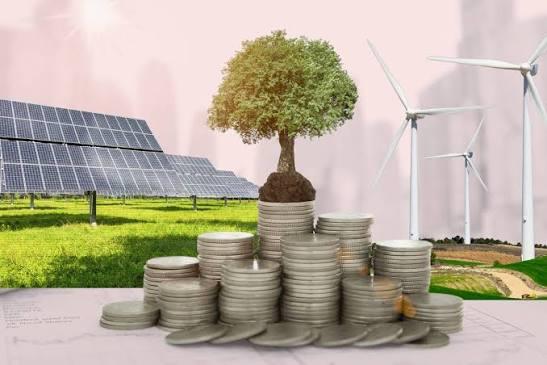
The global energy industry is undergoing a major transformation as countries, businesses, and investors increasingly shift their attention towards cleaner and more sustainable energy sources. Renewable energy investment has become an important part of this transition, with solar power, wind energy, hydropower, and battery storage attracting significant financial attention. Rising electricity demand, climate concerns, energy security, and technological improvements are encouraging investors to explore opportunities beyond traditional fossil fuels.
Renewable energy is no longer viewed simply as an environmental initiative. It is becoming a major business opportunity with the potential to create long-term returns, support industrial development, and reduce dependence on imported fuels. Governments are introducing supportive policies, companies are setting clean-energy targets, and financial institutions are directing capital towards projects that support a low-carbon economy.
According to the International Energy Agency (IEA), global energy investment is expected to reach approximately $3.3 trillion in 2025, with around $2.2 trillion directed towards clean energy technologies, including renewables, electricity grids, storage, and electrification. This demonstrates how strongly the global energy market is changing.
But what is driving this growing interest, and why are investors increasingly considering renewable energy? Let's explore the major factors, investment opportunities, industry trends, and challenges shaping the future of clean energy.
1. Rising Global Demand for Clean Energy

One of the biggest reasons behind increasing renewable energy investment is the growing demand for electricity. Population growth, urbanisation, industrial expansion, electric vehicles, data centres, and digital technologies are increasing electricity consumption worldwide.
Traditional energy sources such as coal, oil, and natural gas continue to play an important role in electricity generation. However, their environmental impact and exposure to changing fuel prices have encouraged countries to diversify their energy sources.
Renewable energy offers an alternative by generating electricity from naturally replenished resources. Solar panels convert sunlight into electricity, wind turbines use moving air, and hydropower systems generate electricity through flowing water.
As demand for electricity increases, investors are recognising the importance of developing reliable and sustainable energy infrastructure.
Important factors driving electricity demand:
Rapid growth in industrial and manufacturing activities.
Increasing adoption of electric vehicles.
Expansion of artificial intelligence and data centres.
Rising electricity consumption in urban areas.
Greater demand for reliable and affordable power.
2. Solar and Wind Energy Are Attracting More Investment
Solar and wind energy have become two of the most important segments of the renewable energy industry. Improvements in technology, manufacturing capacity, and project development have made these energy sources increasingly competitive.
Solar energy is particularly attractive because solar panels can be installed across large power plants, commercial buildings, factories, and residential rooftops. Wind energy also offers opportunities through onshore and offshore wind farms.
According to the IEA's Global Energy Review 2026, global renewable capacity additions reached approximately 800 GW in 2025, an increase of 16% compared with 2024. Solar power accounted for more than three-quarters of new renewable capacity additions, while wind contributed around 20%.
Major Renewable Energy Technologies
Energy Source | How It Works | Investment Opportunity | Major Benefit |
|---|---|---|---|
Solar Energy | Converts sunlight into electricity | Solar farms and rooftop systems | Scalable and widely available |
Wind Energy | Uses turbines to generate electricity | Onshore and offshore wind farms | Low operating emissions |
Hydropower | Uses flowing water to generate electricity | Dams and small hydro projects | Reliable electricity generation |
Geothermal Energy | Uses heat from beneath the Earth's surface | Geothermal power plants | Consistent energy supply |
These technologies are attracting attention from infrastructure funds, energy companies, private investors, and governments looking to expand electricity generation capacity.
3. Government Policies Are Encouraging Renewable Investments

Government policies play a significant role in shaping the renewable energy investment landscape. Many countries are introducing financial incentives, renewable energy targets, tax benefits, subsidies, and regulatory frameworks to encourage clean-energy development.
These policies help reduce investment uncertainty and make renewable energy projects more attractive to private companies.
For example, governments may support solar installations through incentives, encourage wind farm development through competitive auctions, and invest in electricity transmission infrastructure to connect renewable projects with consumers.
Long-term government commitments also provide investors with greater confidence when evaluating large-scale projects that require substantial initial capital.
How Government Support Encourages Investment
Government Initiative | Purpose | Investment Impact | Expected Outcome |
|---|---|---|---|
Tax Incentives | Reduce project expenses | Improves financial attractiveness | More clean-energy projects |
Renewable Targets | Increase clean-energy generation | Creates market demand | Higher renewable capacity |
Subsidies | Support project development | Reduces initial financial pressure | Faster adoption |
Green Financing | Encourage sustainable funding | Improves capital availability | More investment opportunities |
However, government support differs significantly between countries. Changes in regulations, subsidies, and energy policies can also influence project costs and investor confidence.
4. Falling Technology Costs Are Making Renewable Energy Competitive
Technology improvements have played a major role in increasing renewable energy investment. Over the past decade, the cost of manufacturing and installing solar panels, wind turbines, and battery systems has changed significantly.
Better manufacturing processes, improved equipment efficiency, larger production facilities, and technological innovation have helped make renewable energy more affordable.
According to the International Renewable Energy Agency (IRENA), solar photovoltaic installation costs declined by approximately 87% between 2010 and 2024. Onshore wind installation costs also decreased by around 55% during the same period.
Executive summary
The latest IRENA report on 2025 generation costs also highlights the competitiveness of renewable electricity. More than 90% of utility-scale renewable projects commissioned in 2025 generated electricity at a lower cost than the cheapest new fossil-fuel alternative in their respective markets.
Renewable Energy Cost Trends
Technology | 2025 Generation Cost | Annual Change | Investment Perspective |
|---|---|---|---|
Solar PV | $44/MWh | 1% increase | Competitive large-scale projects |
Onshore Wind | $33/MWh | 4% decrease | Attractive generation costs |
Offshore Wind | $78/MWh | 3% decrease | Growing infrastructure opportunity |
Bioenergy | $86/MWh | 2% decrease | Alternative renewable generation |
Source: IRENA, Renewable Power Generation Costs in 2025. MWh means megawatt-hour.
Lower generation costs can improve the financial attractiveness of renewable projects. However, the actual profitability of an investment also depends on financing costs, location, electricity prices, maintenance, and grid connectivity.
5. Energy Security Is Becoming a Major Investment Priority
Energy security is another important reason why countries are increasing investments in renewable energy. Dependence on imported fossil fuels can expose national economies to international price fluctuations, geopolitical tensions, and supply disruptions.
Countries that rely heavily on imported oil, gas, or coal may face higher energy costs when international markets become unstable.
Renewable energy offers an opportunity to diversify electricity generation through locally available natural resources. Countries with strong sunlight, wind corridors, rivers, or geothermal potential can develop domestic energy infrastructure and reduce their dependence on imported fuels.
For investors, this creates opportunities in domestic power generation, energy storage, transmission networks, and renewable energy manufacturing.
IRENA estimated that renewable electricity helped avoid approximately $480 billion in fossil-fuel costs globally in 2025, highlighting the economic importance of renewable energy beyond environmental benefits.
6. Battery Storage Is Creating New Investment Opportunities
Solar and wind energy depend on natural conditions. Solar panels generate electricity during daylight hours, while wind turbines require suitable wind conditions. This makes energy storage important for maintaining a reliable electricity supply.
Battery storage systems can store surplus electricity and release it when demand increases or renewable generation decreases.
As renewable energy capacity expands, investors are paying greater attention to battery manufacturing, large-scale storage facilities, grid-connected batteries, and advanced energy management systems.
Key Areas of Battery Storage Investment
Investment Area | Main Function | Business Opportunity | Market Importance |
|---|---|---|---|
Lithium-Ion Batteries | Store electrical energy | Battery manufacturing | Supports energy storage |
Grid-Scale Storage | Balances electricity supply | Utility storage projects | Improves grid stability |
Residential Batteries | Store rooftop solar power | Home energy systems | Supports household energy independence |
Battery Recycling | Recovers valuable materials | Recycling facilities | Supports resource efficiency |
Energy storage is becoming an essential part of the clean-energy ecosystem. It can help address electricity supply fluctuations, improve grid flexibility, and make renewable power more useful across different industries.
7. Businesses Are Increasing Their Renewable Energy Investments
Businesses are also contributing to the growth of renewable energy investment. Large corporations, manufacturers, technology companies, and commercial property operators are increasingly exploring clean electricity to support their sustainability goals.
Electricity is a major operating expense for many businesses. Investing in rooftop solar installations, renewable energy contracts, and energy-efficient infrastructure can help companies manage long-term energy costs.
Technology companies are another important source of demand. Data centres require substantial electricity to operate servers, cloud computing systems, and artificial intelligence infrastructure. As digital services expand, companies are exploring renewable energy procurement to support their growing power requirements.
Corporate renewable energy investments can take several forms:
Installing solar panels on commercial buildings.
Purchasing electricity through renewable power agreements.
Investing in dedicated solar and wind projects.
Using battery storage to manage electricity consumption.
Improving energy efficiency across business operations.
These activities are creating opportunities for renewable energy developers, equipment manufacturers, engineering companies, and infrastructure providers.
8. Global Investment Trends Show Strong Market Interest
Renewable energy investment is part of a much larger global transition towards cleaner energy systems. Governments, institutional investors, private companies, and financial organisations are allocating capital to different areas of the energy industry.
BloombergNEF reported that global energy transition investment reached a record $2.3 trillion in 2025, increasing by 8% compared with 2024. Renewable energy accounted for approximately $690 billion of this total. However, renewable energy investment itself declined by 9.5% year-on-year, demonstrating that growth across the wider energy transition does not mean every clean-energy sector is expanding at the same rate.
BloombergNEF
Global Energy Transition Investment in 2025
Investment Sector | Investment Amount | Market Position | Key Focus |
|---|---|---|---|
Electrified Transport | $893 Billion | Largest segment | Electric vehicles and charging |
Renewable Energy | $690 Billion | Major segment | Solar, wind and other renewables |
Grid Investment | $483 Billion | Infrastructure segment | Electricity transmission and distribution |
Hydrogen | $7.3 Billion | Emerging segment | Low-carbon hydrogen development |
Source: BloombergNEF, Energy Transition Investment Trends 2026. Figures refer to 2025 investment.
BloombergNEF
These figures highlight the scale of investment flowing into the energy transition. They also show that electricity infrastructure, transportation, and renewable generation are closely connected.
9. Emerging Markets Are Creating New Renewable Energy Opportunities
Emerging economies are becoming important destinations for renewable energy investment. Countries across Asia, Africa, Latin America, and the Middle East are expanding electricity infrastructure to support economic development and growing populations.
Many emerging markets have strong solar and wind resources but still require additional electricity generation capacity, transmission networks, and energy storage systems.
India is an important example of this opportunity. Its renewable energy industry is expanding through solar parks, rooftop solar projects, wind installations, and other clean-energy initiatives.
According to BloombergNEF, India's energy transition investment increased by 15% in 2025, reaching approximately $68 billion.
BloombergNEF
Opportunities Across Emerging Markets
Market | Renewable Opportunity | Investment Focus | Growth Driver |
|---|---|---|---|
India | Solar and wind energy | Solar parks and manufacturing | Rising electricity demand |
Southeast Asia | Solar and hydropower | Renewable infrastructure | Industrial development |
Africa | Solar and wind power | Off-grid and utility projects | Electricity access |
Middle East | Large solar projects | Utility-scale solar | Energy diversification |
These markets offer substantial development potential, although investors must evaluate local regulations, currency exposure, infrastructure availability, and financing conditions before committing capital.
10. Challenges That Investors Should Consider
Despite the growing popularity of renewable energy, the industry faces several challenges that can affect investment decisions. Renewable projects often require significant initial capital, long development timelines, and access to suitable infrastructure.
Investors must understand these risks before entering the market.
Major Challenges in Renewable Energy Investment
Challenge | Why It Matters | Potential Impact | Possible Solution |
|---|---|---|---|
High Initial Costs | Projects require significant capital | Financial pressure | Long-term financing |
Grid Infrastructure | Renewable projects need grid connections | Project delays | Grid modernisation |
Weather Dependency | Solar and wind depend on natural conditions | Supply fluctuations | Battery storage |
Regulatory Changes | Policies can change over time | Investment uncertainty | Stable regulations |
Supply Chain Risks | Equipment depends on global manufacturing | Higher project costs | Diversified suppliers |
Another important challenge is the availability of affordable financing. Renewable energy projects in developing economies may face higher borrowing costs because of currency risks, limited financial infrastructure, and uncertainty surrounding long-term revenue.
Investors must also consider land availability, environmental approvals, equipment maintenance, and the time required to connect projects to electricity networks.
Addressing these challenges will be essential to maintaining investor confidence and supporting the long-term expansion of renewable energy.
11. What Does the Future of Renewable Energy Investment Look Like?
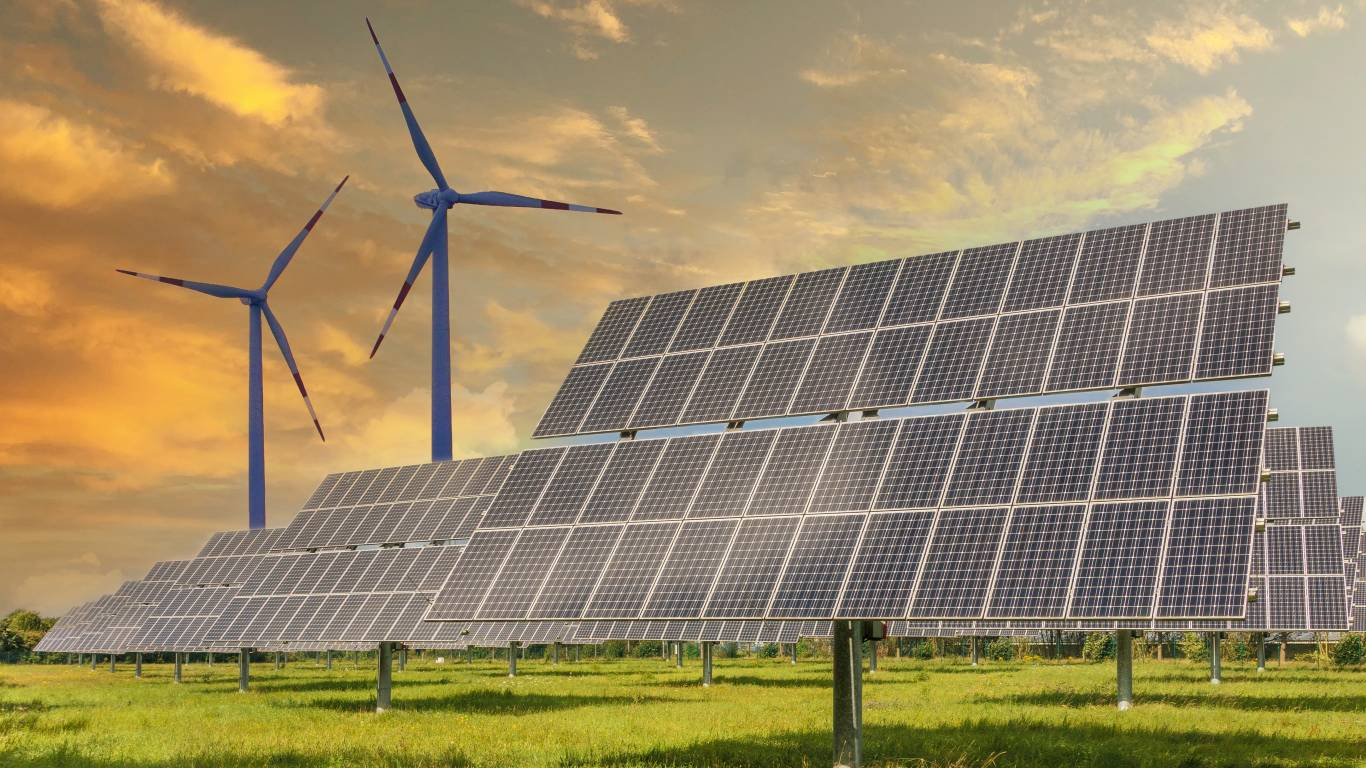
The future of renewable energy investment is expected to be shaped by technological innovation, electricity demand, government policies, and the global shift towards sustainable infrastructure.
According to the IEA's Renewables 2026 report, global renewable electricity capacity is expected to increase by almost 85% between 2025 and 2031. Solar photovoltaic technology is projected to account for more than three-quarters of this growth.
Several emerging trends are likely to influence investment decisions in the coming years.
1. Expansion of Solar Power: Large-scale solar farms and rooftop installations are expected to remain important investment areas as countries increase electricity generation capacity.
2. Growth of Offshore Wind: Offshore wind projects are attracting interest because they can access stronger and more consistent wind resources, although development costs and construction complexity remain important considerations.
3. Advanced Battery Technologies: Improvements in battery efficiency, storage capacity, and manufacturing could create additional opportunities for energy storage companies.
4. Smart Electricity Grids: Digital technologies, automation, and artificial intelligence can help improve electricity distribution, monitor energy consumption, and manage renewable power generation.
5. Green Hydrogen Development: Green hydrogen, produced using renewable electricity, could support industries that are difficult to electrify directly, including certain manufacturing and transportation applications.
6. Sustainable Infrastructure Financing: Green bonds, infrastructure funds, and other financial instruments may help mobilise capital for renewable energy development.
The direction is clear: renewable energy is becoming a central part of the global electricity system. However, future investment growth will depend on how effectively countries address infrastructure, financing, and regulatory challenges.
12. How Investors Can Explore Renewable Energy Opportunities
Renewable energy investment offers opportunities across several business models. Investors do not necessarily need to develop an entire power plant to participate in the industry.
They can explore companies involved in renewable energy equipment, electricity generation, battery storage, infrastructure development, and clean-energy technology.
Different Ways to Invest in Renewable Energy
Investment Option | Description | Potential Advantage | Important Consideration |
|---|---|---|---|
Renewable Energy Stocks | Shares of clean-energy companies | Exposure to industry growth | Market volatility |
Green Bonds | Debt instruments funding sustainable projects | Interest-based returns | Credit risk |
Renewable Energy ETFs | Funds investing in multiple companies | Portfolio diversification | Fund expenses |
Infrastructure Funds | Investments in energy infrastructure | Long-term asset exposure | Liquidity limitations |
Before investing, individuals should research company financial performance, project economics, debt levels, regulatory conditions, and market risks.
Renewable energy is a growing industry, but that does not mean every project or company will generate positive returns. A well-informed investment decision requires evaluating both the financial opportunity and the risks involved.
Frequently Asked Questions (FAQs)
Global renewable energy investment is increasing because of rising electricity demand, climate concerns, government incentives, technological improvements, and the need for greater energy security.
Solar energy is one of the leading areas of renewable energy investment because of its scalability, improving technology, and competitive electricity generation costs.
China, the United States, India, and European countries are among the major markets investing in renewable energy and broader clean-energy infrastructure.
Renewable energy offers long-term growth opportunities through electricity generation, storage, and infrastructure. However, returns depend on project costs, market conditions, financing, and regulatory policies.
Sources and notes
Links the author listed for this post.
This article is prepared using information and industry reports from trusted energy and research organisations, including the International Energy Agency (IEA), International Renewable Energy Agency (IRENA), and BloombergNEF. The data and insights cover global renewable energy investments, clean-energy technologies, market developments, and future industry trends.
More on AltFTool
- AltFTool (opens in a new tab)
altftool.com


Discussion
0 comments
No comments yet
Discussion will appear here once it loads.