Language should make communication easier, not more complicated. Whether you are travelling to another country, learning a new language, chatting with international friends, or handling business communication, understanding Spanish can open up many opportunities.
However, learning every Spanish word and expression takes time. Sometimes, you simply need to understand a message, translate a sentence, or find the right words to communicate with someone. This is where an English to Spanish Translator: becomes a useful everyday tool.
Today, several online translation platforms make it possible to convert English words, sentences, and complete paragraphs into Spanish within seconds. Some tools focus on quick translations, while others offer voice recognition, pronunciation support, document translation, and contextual examples.
But with so many options available, choosing the right translator can be confusing. Google Translate, DeepL, Microsoft Translator, Reverso, and SpanishDict all offer different features and experiences.
In this guide, we explore the top English to Spanish Translator: tools, their useful features, advantages, limitations, and how to choose the right option for your everyday needs.
What Is an English to Spanish Translator?
An English to Spanish Translator: is a digital tool that converts English text or speech into Spanish. It helps people understand unfamiliar words, communicate across language barriers, and access information written in another language.
These translation tools are available through websites, smartphone applications, desktop software, and browser extensions.
For example, if you enter the English sentence "I would like a glass of water," a translation tool can provide:
Spanish: Me gustaría un vaso de agua.
Instead of searching for each word separately, users can translate complete sentences and understand the message more quickly.
An English to Spanish Translator: can be useful for several everyday activities, including:
Understanding Spanish messages and emails.
Translating website content.
Learning new Spanish vocabulary.
Preparing international business communication.
Understanding restaurant menus while travelling.
Translating social media posts and captions.
Practising everyday Spanish conversations.
Modern translation tools also use artificial intelligence and language-processing technology to understand sentence structure and context. This makes them more helpful than traditional word-by-word dictionaries, although their results still need to be checked when accuracy is especially important.
Why Do People Need English to Spanish Translator Tools?
Spanish is spoken by hundreds of millions of people worldwide. It is used in Spain, Mexico, much of Central and South America, and Spanish-speaking communities across other countries.
Because of this, understanding Spanish can be useful in education, employment, travel, and international communication.
An English to Spanish Translator: makes communication more accessible for people who are not fluent in Spanish.
Here are some common reasons people use these tools.
1. Everyday Communication
People often need to translate short messages, greetings, questions, and personal conversations.
For example, someone communicating with a Spanish-speaking friend may want to understand a message or prepare a suitable reply.
A translation tool can provide a quick starting point without requiring advanced language knowledge.
2. Education and Language Learning
Students learning Spanish can use translation platforms to understand vocabulary, sentence structure, and common expressions.
An English to Spanish Translator: can help learners compare English and Spanish sentences, explore alternative meanings, and practise writing.
However, it is better to understand why a sentence is translated in a particular way instead of simply memorising the translated result.
3. International Travel
Travelling becomes easier when you can understand basic local expressions.
Translation tools can help when booking hotels, ordering meals, asking for directions, reading signs, or communicating with local people.
4. Business and Professional Communication
Businesses working with Spanish-speaking customers may need translated emails, product descriptions, website content, and customer support messages.
Translation tools can help prepare initial drafts quickly. Important professional communication should still be reviewed to ensure that the wording is accurate and appropriate.
Top English to Spanish Translator Tools for Everyday Use
Different translation platforms serve different purposes. Some are ideal for quick everyday translations, while others are more suitable for language learning or longer written content.
Here are some popular English to Spanish Translator: tools worth exploring.
1. Google Translate
Best for everyday use
Google Translate is a widely used translation platform for people who need quick language conversion. It supports text, voice, camera, and other translation features, making it useful for everyday communication and travel.
Useful features:
Text and voice translation.
Camera-based translation.
Conversation support.
Offline translation for supported downloaded languages.
Best for: Students, travellers, and people who regularly translate short messages.
2. DeepL Translator
Best for written translations
DeepL is known for its focus on natural-sounding translations. It is useful when translating longer sentences, emails, articles, and other written content.
Useful features:
Text translation.
Supported document translation.
Alternative wording suggestions.
Writing and translation assistance.
Best for: Professionals, writers, students, and people preparing longer Spanish messages.
3. Microsoft Translator
Best for conversations
Microsoft Translator provides text and speech translation features. It can be useful for personal communication, multilingual conversations, and people who regularly work with Microsoft services.
Useful features:
Text translation.
Speech translation.
Conversation features.
Translation support across Microsoft products.
Best for: Professionals, students, and people who need help with spoken communication.
4. Reverso
Best for contextual examples
Reverso is useful for people who want to understand how words and expressions are used in real sentences. Its contextual examples can help language learners choose more appropriate translations.
Useful features:
Context-based translation.
Example sentences.
Vocabulary support.
Language-learning features.
Best for: Students, writers, and people learning everyday Spanish expressions.
5. SpanishDict
Best for learning Spanish
SpanishDict combines translation with dictionary and language-learning resources. It can help users understand word meanings, verb forms, pronunciation, and grammar.
Useful features:
English-Spanish dictionary.
Verb conjugation tools.
Pronunciation assistance.
Grammar and vocabulary resources.
Best for: Beginners, students, and people who want to improve their Spanish knowledge.
6. iTranslate
Best for mobile travel assistance
iTranslate offers mobile translation features for people who need language support while travelling or communicating on the go. Available features can depend on the device and subscription.
Useful features:
Text translation.
Voice translation.
Conversation assistance.
Additional mobile translation features.
Best for: Travellers and smartphone users who want translation assistance while away from home.
These tools offer different experiences, so the best English to Spanish Translator: depends on whether you need quick text conversion, spoken communication, contextual examples, or language-learning support. Features and free-plan limits may change, so check each platform before relying on a particular feature.
Comparison of the Best English to Spanish Translator Tools
Choosing between multiple platforms becomes easier when you compare their main strengths.
Translator Tool | Best Use | Notable Features |
|---|---|---|
Google Translate | Everyday translation | Text, voice, camera |
DeepL | Written content | Text and document translation |
Microsoft Translator | Conversations | Speech and conversation features |
Reverso | Context and vocabulary | Example sentences |
SpanishDict | Language learning | Dictionary and verb conjugation |
iTranslate | Mobile travel use | Text and voice features |
An English to Spanish Translator: comparison should focus on your actual requirements rather than popularity alone.
For example, someone travelling abroad may value camera translation and offline access, while a student may prefer grammar explanations and contextual examples.
Important Features to Look for in an English to Spanish Translator
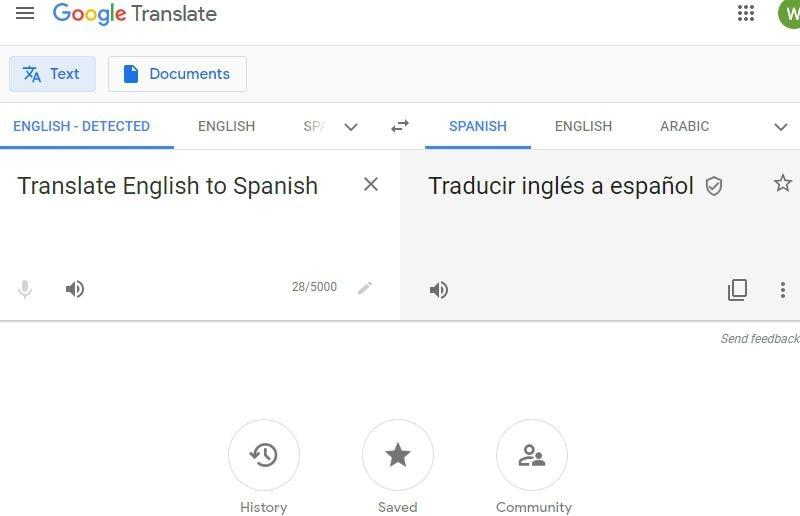
A translation tool should make communication easier. Before choosing one, consider the features that will genuinely help with your daily activities.
1. Fast and Simple Text Translation
An English to Spanish Translator: should provide a simple way to enter English text and receive a Spanish translation.
Fast text conversion is useful when translating messages, reading online information, or preparing short paragraphs.
A clean interface also makes the tool easier for beginners who may not be familiar with translation software.
2. Voice and Speech Translation
Voice translation can make conversations more convenient.
Instead of typing every sentence, users can speak into their phone and receive a translated version. Some applications also read the translated sentence aloud.
This feature is especially useful when travelling, asking questions, or communicating with someone who does not speak English.
3. Camera Translation
Camera translation allows users to understand printed words without manually typing them.
For example, travellers can use this feature to translate menus, signs, labels, and notices.
An English to Spanish Translator: with camera support can be particularly useful when exploring unfamiliar places.
4. Pronunciation Assistance
A good translation experience should help users understand how words are spoken.
Audio pronunciation allows learners to hear Spanish vocabulary and practise saying it correctly.
This is helpful for people who are learning the language and want to become more confident during conversations.
5. Document Translation
Some platforms allow users to upload supported documents and translate their contents.
This can save time when working with reports, educational materials, business documents, and longer articles.
However, formatting may change during conversion, and important documents should receive professional review.
6. Regional Language Support
Spanish is spoken in several countries, and some expressions differ between regions.
An English to Spanish Translator: should ideally provide context or alternative wording when a phrase has different regional meanings.
This is particularly important when preparing website content, advertisements, or business communication for a specific Spanish-speaking audience.
How to Use an English to Spanish Translator
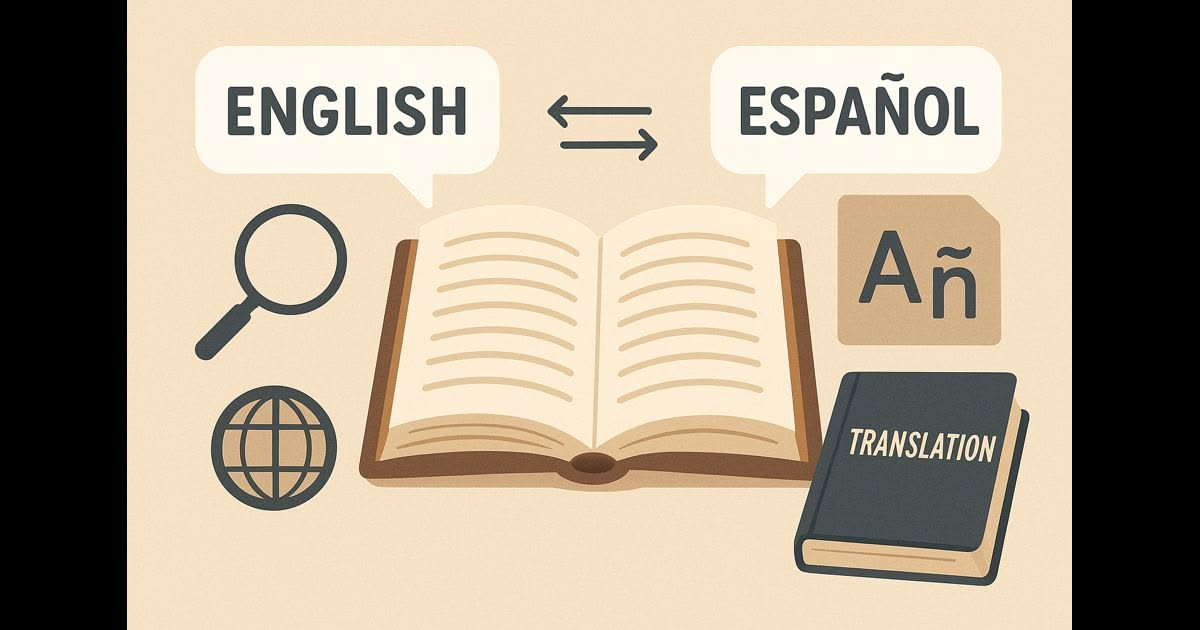
Most online translation tools follow a similar process. Even first-time users can translate basic text without any technical knowledge.
Here is a simple step-by-step guide.
Step 1: Open a translation platform.
Visit a translation website such as Google Translate or DeepL.
Step 2: Select the languages.
Choose English as the source language and Spanish as the target language.
Step 3: Enter your English text.
Type a word, sentence, or paragraph into the input box.
Step 4: Review the translated result.
The platform will display the Spanish translation. Check the meaning and sentence structure.
Step 5: Copy or use the translation.
Copy the result into your message, document, or other application.
Step 6: Check important content.
If the translation is for professional or official use, ask a qualified Spanish speaker or translator to review it.
An English to Spanish Translator: can make the process quick, but reviewing the final result helps reduce misunderstandings.
Benefits of Using English to Spanish Translator Tools
Translation tools offer practical advantages for people with different language requirements.
1. Saves Time
Looking up every unfamiliar word individually can become tiring.
An English to Spanish Translator: allows users to convert complete sentences and paragraphs in one place, making everyday translation tasks faster.
2. Supports Better Communication
Translation platforms help people communicate with friends, customers, colleagues, and service providers who speak Spanish.
They can also reduce misunderstandings when discussing simple everyday matters.
3. Helps With Language Learning
Students can explore vocabulary, grammar, and sentence structure while learning Spanish.
By comparing translated sentences with their original English versions, learners can identify new expressions and improve their understanding.
4. Makes Travel More Convenient
Travellers can translate menus, signs, directions, and basic questions.
This can make international trips easier, especially when visiting places where English is not commonly spoken.
5. Supports International Businesses
Businesses can use translation platforms to prepare initial versions of customer messages, product descriptions, and website content.
An English to Spanish Translator: can help speed up multilingual communication, although professional proofreading remains important for customer-facing material.
Common English to Spanish Translation Examples
Learning common phrases can make everyday communication easier.
Here are some useful examples that beginners can practise.
English Phrase | Spanish Translation |
|---|---|
Good morning | Buenos días |
How are you? | ¿Cómo estás? |
My name is Rahul | Me llamo Rahul |
Thank you very much | Muchas gracias |
Please help me | Por favor, ayúdame |
Where is the hotel? | ¿Dónde está el hotel? |
I need some water | Necesito agua |
How much does it cost? | ¿Cuánto cuesta? |
I don't understand | No entiendo |
See you later | Hasta luego |
An English to Spanish Translator: can help users discover more phrases and understand how expressions change according to the situation.
Keep in mind that Spanish has formal and informal ways of addressing people. The correct wording may depend on the country and the relationship between speakers.
Common Mistakes to Avoid When Using Translation Tools
Even advanced translation platforms can make mistakes. Users should understand their limitations instead of assuming that every translated sentence is perfect.
1. Translating Words Without Context
A single English word can have several meanings.
For example, "right" may refer to a direction, something correct, or an entitlement.
An English to Spanish Translator: needs sufficient context to identify the intended meaning.
2. Ignoring Grammar
Spanish grammar is different from English grammar. Nouns, adjectives, articles, and verbs follow rules that may not have direct English equivalents.
Always review translated sentences instead of assuming that the word order will remain the same.
3. Forgetting Regional Differences
Some Spanish expressions are more common in Spain, while others are widely used in Latin America.
If you are translating for a particular audience, consider its regional language preferences.
4. Depending Completely on Automatic Translation
Automated systems may struggle with humour, sarcasm, idioms, slang, and specialised terminology.
For legal, medical, financial, or official documents, use a qualified translator to review the content.
5. Ignoring Privacy
Avoid entering passwords, confidential business information, private customer records, or sensitive personal details into translation platforms without checking their data-handling policies.
An English to Spanish Translator: is convenient, but users should understand how their information may be processed or stored.
How to Choose the Right English to Spanish Translator
The right platform depends on what you want to accomplish.
Before selecting a tool, consider these questions:
Do you mainly translate short messages or longer documents?
Do you need voice translation for conversations?
Would camera translation help during travel?
Are you learning Spanish and need grammar explanations?
Do you need regional vocabulary?
Does the platform offer the features you need for free?
Are its privacy and data-handling policies suitable for your use?
For example, Google Translate may be a convenient starting point for general use. DeepL may suit longer written translations, while SpanishDict can be helpful for people who want to understand vocabulary and grammar.
An English to Spanish Translator: should match your daily requirements rather than simply offer the largest number of features.
Final Thoughts
Finding the right translation tool can make everyday communication much easier. Whether you are learning Spanish, preparing a message, travelling abroad, or working with international customers, online translation platforms provide a convenient way to understand another language.
The top English to Spanish Translator: tools offer different advantages. Google Translate is useful for everyday tasks, DeepL focuses on written translations, Microsoft Translator supports conversations, Reverso provides contextual examples, and SpanishDict offers useful language-learning resources.
There is no single tool that is perfect for every situation. The best choice depends on your translation needs, preferred features, and the type of content you want to understand.
Use translation platforms as helpful assistants, check important translations carefully, and continue practising Spanish alongside them. A little language practice combined with the right technology can make communication more natural and confident.
Google Translate is a popular everyday option, while DeepL, Microsoft Translator, and Reverso offer useful alternatives for different needs.
Many translation platforms offer free basic services, although some advanced features may require a subscription.
Yes, platforms such as Google Translate and Microsoft Translator offer speech or conversation translation features.
SpanishDict and Reverso can be helpful for students because they provide vocabulary, contextual examples, and language-learning resources.
No, translation accuracy can vary with context, grammar, regional expressions, and specialised terminology, so important translations should be reviewed.
Sources and notes
Links the author listed for this post.
This article uses general information about publicly available translation services and their features. Reference platforms include Google Translate, DeepL, Microsoft Translator, Reverso, SpanishDict, and iTranslate.


Discussion
0 comments