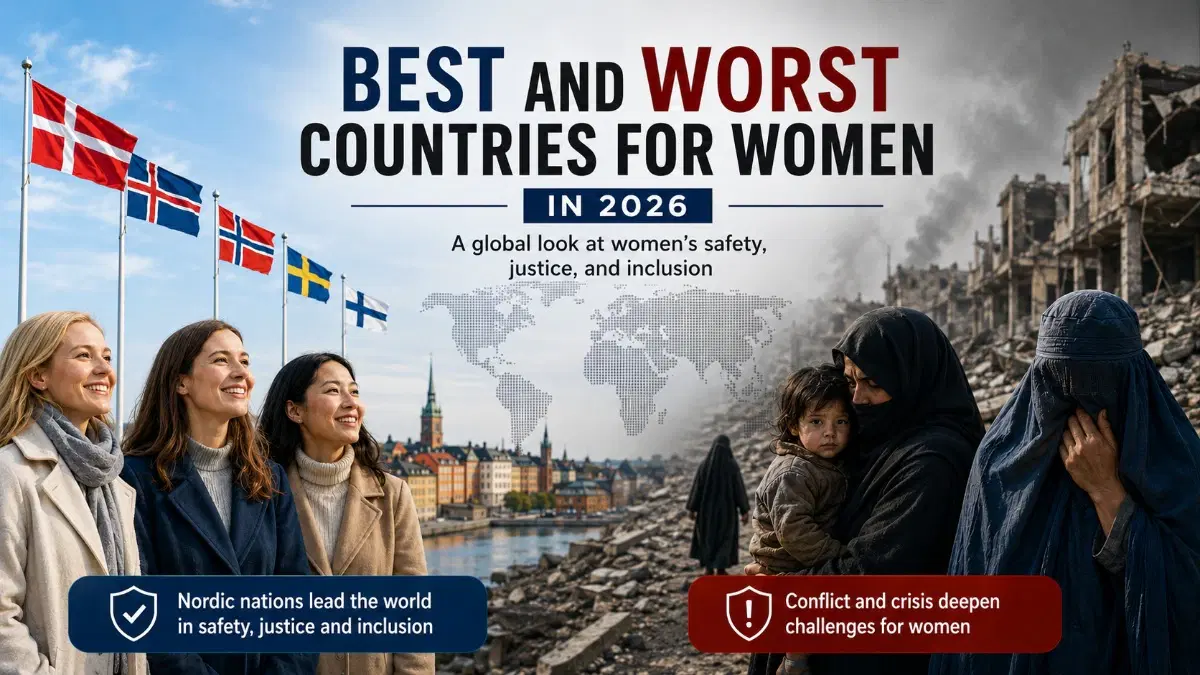
Women's safety is not just a personal concern; it is a fundamental human right and an important measure of a country's social progress. Every woman should be able to travel, work, study, participate in public life and use digital platforms without experiencing harassment, discrimination or violence. However, gender-based violence, domestic abuse, workplace harassment, human trafficking and online threats continue to affect women across the world.
Governments are increasingly recognising that improving women's safety requires more than strict laws. It also involves accessible support services, better law enforcement, public awareness, education, safer infrastructure and equal opportunities. Countries are introducing different policies and programmes to protect women and create environments where they can live independently and confidently.
According to UN Women, almost one in three women worldwide has experienced physical or sexual violence at least once in her lifetime. This highlights why governments, communities and organisations must work together to make women's protection a priority.
Why Women's Safety Needs Global Attention
Women's safety affects education, employment, economic independence, mental well-being and participation in society. When women do not feel safe in public spaces or at home, their freedom and opportunities become limited. Fear of harassment can influence everyday decisions, such as travelling alone, accepting a job, attending educational institutions or participating in community activities.
Safety challenges also vary between countries. Some regions focus on preventing domestic violence, while others are strengthening public transport security, addressing online abuse or improving responses to human trafficking. Despite these differences, the objective remains the same: ensuring that women have access to protection, justice and equal rights.
Major Challenges Affecting Women's Safety
Safety Challenge | Common Examples | Impact on Women | Required Action |
|---|---|---|---|
Public harassment | Street harassment and stalking | Restricts freedom of movement | Safer public spaces and policing |
Domestic violence | Physical, emotional and financial abuse | Affects health and independence | Legal protection and shelters |
Workplace harassment | Unwanted behaviour and discrimination | Limits professional growth | Strong workplace policies |
Digital violence | Cyberstalking and image-based abuse | Creates fear and privacy risks | Cyber laws and reporting systems |
Human trafficking | Forced labour and exploitation | Threatens freedom and security | Prevention and survivor support |
1. Stronger Laws Against Gender-Based Violence
One of the most important steps countries are taking is strengthening laws that protect women from violence, harassment and exploitation. Legal frameworks help define offences, establish penalties and provide pathways for survivors to seek justice.
Governments are updating legislation to address domestic violence, sexual harassment, stalking, forced marriage, human trafficking and technology-facilitated abuse. Some countries are also improving police procedures and training legal professionals to handle cases with sensitivity.
UN Women's 2025 reporting highlights that its support helped 32 countries adopt, revise or repeal laws to strengthen national protections against violence against women and girls during that year.
Examples of Legal Protection Initiatives
Country | Initiative or Legal Action | Main Focus | Expected Benefit |
|---|---|---|---|
India | Domestic Violence Act, 2005 and other protective laws | Protection against abuse and harassment | Legal remedies and support |
Spain | Comprehensive policies addressing gender-based violence | Prevention and survivor protection | Coordinated institutional response |
Chile | Law No. 21,675 of 2024 | Comprehensive response to gender-based violence | Stronger protection mechanisms |
Brazil | Act No. 15.123/2025 | Increased penalties for psychological violence involving AI | Better recognition of emerging forms of abuse |
Stronger laws are essential, but their effectiveness depends on proper implementation. Survivors need accessible reporting systems, timely investigations, legal assistance and protection from further harm.
2. Emergency Helplines and Support Centres
Emergency helplines and support centres provide women with access to assistance when they face violence, harassment or other dangerous situations. These services can connect callers with police, healthcare professionals, counsellors, legal support and temporary accommodation.
Several countries are working to make these services easier to access through toll-free numbers, dedicated response teams and coordinated support systems. A well-connected support network can help women receive assistance without having to approach multiple institutions independently.
India's Approach to Emergency Support
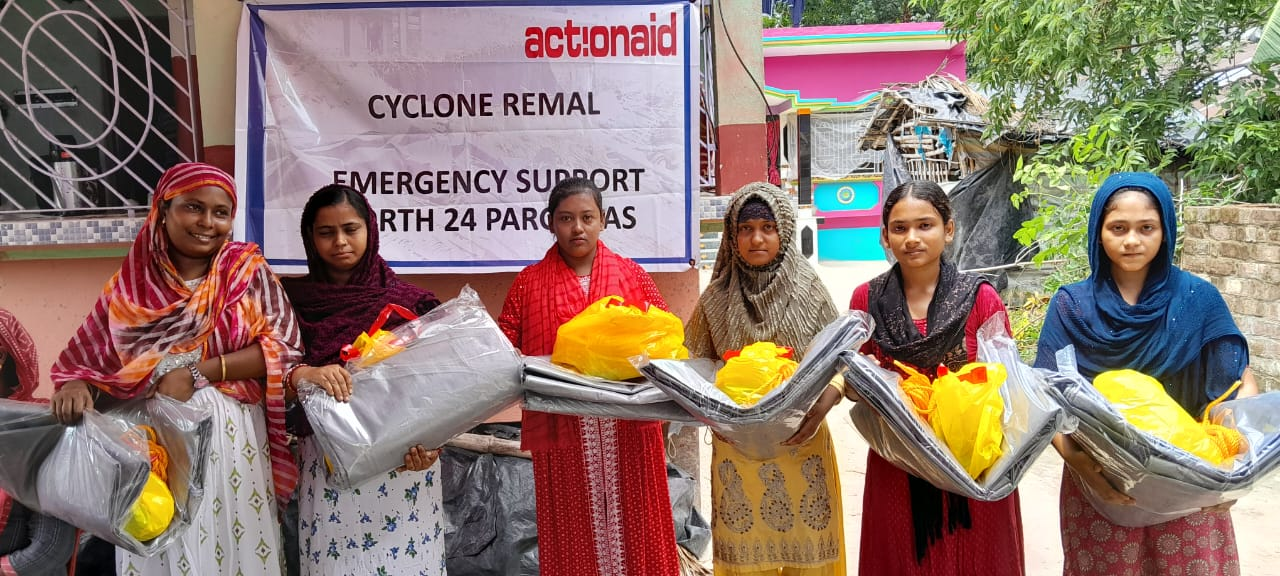
India has introduced several initiatives under Mission Shakti to strengthen women's safety and empowerment. Two important services are the Women Helpline 181 and One Stop Centres, also known as Sakhi Centres.
Women Helpline 181: A 24-hour toll-free service that connects women with emergency and non-emergency support.
One Stop Centres: Provide access to medical assistance, legal support, police facilitation, psychological counselling and temporary shelter.
Emergency Response Support System 112: Provides a common emergency response number for police, fire, health and other emergency services.
As reported by India's Press Information Bureau in November 2026, 991 One Stop Centres had become operational by 30 June 2026, assisting more than 15.20 lakh women since the scheme began. The Women Helpline had assisted over 1.04 crore women by the same date.
Initiative | Country | Service Provided | Safety Objective |
|---|---|---|---|
Women Helpline 181 | India | Emergency and non-emergency support | Connect women to assistance |
One Stop Centres | India | Medical, legal and psychological services | Provide integrated survivor support |
Emergency Response System 112 | India | Police, fire and medical response | Improve emergency access |
Shelter and support services | Multiple countries | Temporary accommodation and counselling | Protect women experiencing violence |
3. Making Public Spaces and Transportation Safer
Public spaces should allow women to travel, work and participate in social activities without fear. Poor street lighting, isolated roads, unsafe public transport and limited access to emergency services can increase safety concerns.
Governments are therefore working on safer urban infrastructure and improved transport systems. Measures can include better lighting, CCTV monitoring, emergency communication points, trained transport staff, accessible complaint systems and responsive policing.
However, safety cannot depend only on surveillance or restrictions on women's movement. Urban planning must focus on making streets, stations, workplaces and public facilities accessible and secure for everyone.
Ways Countries Can Improve Public Safety
Safety Measure | Where It Can Be Applied | How It Helps | Long-Term Benefit |
|---|---|---|---|
Street lighting | Roads, parks and residential areas | Improves visibility | More accessible public spaces |
CCTV monitoring | Stations and public locations | Supports incident monitoring | Better security management |
Emergency help points | Transport hubs and public areas | Provides access to assistance | Faster emergency reporting |
Staff training | Buses, trains and stations | Improves response to harassment | More responsible services |
Safer urban planning | Streets and public infrastructure | Reduces isolated and poorly designed spaces | Inclusive cities |
Public safety initiatives should also include women in planning and decision-making. Their experiences can help authorities identify unsafe locations and understand which improvements are most useful.
4. Protecting Women From Digital Violence
Technology has created new opportunities for women to learn, work, communicate and build businesses. However, digital platforms have also become spaces where harassment, cyberstalking, threats, impersonation and non-consensual sharing of intimate images can occur.
Countries are increasingly updating their laws and policies to recognise online abuse as a serious safety issue. Governments are also encouraging digital platforms to improve reporting mechanisms and respond more effectively to harmful content.
For example, Brazil introduced Act No. 15.123/2025, increasing penalties for psychological violence involving artificial intelligence. Chile has also taken steps to address digital violence through legislative proposals, while several other countries have strengthened protections against technology-facilitated abuse.
Important Areas of Digital Protection
Digital Threat | Possible Risk | Protection Measure | Role of Technology |
|---|---|---|---|
Cyberstalking | Repeated unwanted monitoring | Reporting and legal action | Account security tools |
Online harassment | Threatening or abusive messages | Platform complaint systems | Content moderation |
Identity misuse | Fake profiles and impersonation | Identity verification and reporting | Detection systems |
Image-based abuse | Sharing private images without consent | Legal remedies and content removal | Image detection tools |
Online threats | Intimidation and targeted abuse | Cybercrime investigation | Digital evidence collection |
Digital safety also requires awareness among users. Strong passwords, privacy settings, careful sharing of personal information and timely reporting can reduce certain online risks. However, responsibility should not be placed entirely on women; platforms and authorities must also take action.
5. Education and Awareness to Change Social Attitudes

Laws and emergency services are important, but long-term improvements also require changes in social attitudes. Discrimination, victim-blaming and harmful gender stereotypes can prevent women from reporting abuse or accessing support.
Countries are introducing educational programmes and public campaigns to encourage respect, equality and non-violent behaviour. Schools, colleges, workplaces and community organisations can help young people understand consent, personal boundaries, gender equality and responsible relationships.
Prevention programmes should also involve men and boys. Teaching respect, accountability and healthy behaviour from an early age can help challenge attitudes that normalise harassment or discrimination.
How Education Supports Women's Protection
Awareness Area | Suggested Activity | Target Group | Intended Outcome |
|---|---|---|---|
Gender equality | School and college workshops | Students | Respect and equal treatment |
Consent education | Age-appropriate awareness sessions | Young people | Understanding personal boundaries |
Workplace safety | Harassment prevention training | Employees and employers | Safer professional environments |
Community awareness | Public campaigns and discussions | Local communities | Reduced stigma and discrimination |
Digital responsibility | Online safety education | Internet users | More responsible digital behaviour |
UN Women identifies prevention, survivor-centred services, stronger laws, data and support for women's rights organisations as interconnected areas of action. This shows why awareness must be combined with practical protection systems.
6. Supporting Women Through Shelters, Healthcare and Counselling
Women experiencing violence may need more than immediate police assistance. They can also require medical treatment, psychological counselling, legal guidance, financial support and safe accommodation.
Countries are strengthening support services to help survivors recover and rebuild their lives. Shelters can provide temporary protection, while counselling and healthcare services can address the physical and emotional effects of abuse.
A survivor-centred approach means listening to women, respecting their choices, protecting their privacy and avoiding unnecessary delays or repeated questioning. Services should also be accessible to women with disabilities and those living in rural or economically disadvantaged communities.
Support Service | Purpose | How It Helps | Important Requirement |
|---|---|---|---|
Temporary shelters | Provide safe accommodation | Protects women from immediate danger | Secure and accessible facilities |
Medical assistance | Treat injuries and health concerns | Supports physical recovery | Confidential healthcare |
Psychological counselling | Address emotional distress | Supports mental well-being | Trained professionals |
Legal assistance | Explain rights and legal options | Improves access to justice | Affordable legal support |
Rehabilitation programmes | Support long-term recovery | Encourages independence | Skills and employment opportunities |
Countries such as Brazil and Burkina Faso have strengthened integrated care services, while several other governments have expanded shelters, helplines and assistance for survivors.
7. Encouraging Women's Economic Independence
Women's safety is closely connected to economic independence. When women have access to education, employment, financial resources and professional opportunities, they can make more informed decisions about their lives.
Economic empowerment does not automatically eliminate violence, but it can improve women's ability to access support, leave unsafe situations and participate in decision-making.
Governments and organisations can contribute by supporting women's entrepreneurship, equal employment opportunities, vocational training, financial literacy and workplace protection.
Economic Initiatives That Can Support Women
Initiative | Main Focus | Potential Impact | Who Can Support It |
|---|---|---|---|
Skill development | Professional and technical training | Better employment opportunities | Governments and colleges |
Financial literacy | Saving, budgeting and banking | Greater financial confidence | Banks and NGOs |
Entrepreneurship support | Loans and business guidance | Independent income generation | Financial institutions |
Workplace equality | Fair hiring and pay practices | Stronger professional participation | Employers and regulators |
Career development | Mentorship and leadership training | More women in decision-making | Businesses and communities |
Economic independence should be supported alongside safe workplaces, protection from harassment and equal access to opportunities.
8. Using Data and Technology to Improve Safety Policies
Governments cannot address safety challenges effectively without understanding where violence occurs, which groups face barriers and whether existing programmes are working.
Collecting reliable data helps authorities identify gaps, plan resources and evaluate policies. Countries are increasingly developing databases, research programmes and reporting systems to improve their understanding of violence against women.
UN Women's Global Database on Violence against Women and Girls brings together information about national laws, policies, prevention programmes and survivor services. Its database includes more than 10,000 measures from 194 countries and territories, helping track government action and identify areas where further progress is needed.
Technology or Data Tool | Application | Benefit | Important Consideration |
|---|---|---|---|
Safety applications | Emergency alerts and location sharing | Faster access to help | Protect location privacy |
Digital reporting portals | Online complaints and incident reporting | Easier access to authorities | Secure personal information |
Crime data systems | Monitoring reported incidents | Better policy planning | Maintain data accuracy |
Mapping tools | Identifying unsafe public areas | More targeted infrastructure improvements | Avoid exposing survivors |
Research databases | Tracking laws and support programmes | Evidence-based decisions | Use reliable and ethical data |
Technology should strengthen human support systems rather than replace them. Privacy, accessibility and responsible data management must remain central to every digital safety initiative.
What More Can Countries Do to Improve Women's Safety?
Although many governments have introduced important initiatives, progress remains uneven. Laws may exist without effective enforcement, support centres may be difficult to reach, and survivors may hesitate to report violence because of stigma or fear of retaliation.
Countries can strengthen their efforts by focusing on practical implementation and accountability.
Important priorities include:
Improve law enforcement: Train police officers, prosecutors and judicial staff to respond sensitively and effectively to gender-based violence.
Expand support services: Make shelters, helplines, medical care and legal assistance accessible in rural and underserved areas.
Strengthen digital protection: Update laws and reporting systems to address cyberstalking, online threats and image-based abuse.
Invest in safer infrastructure: Improve lighting, transport facilities and emergency response access.
Promote gender equality: Encourage respectful behaviour and equal opportunities through education and community programmes.
Measure progress: Collect reliable data and regularly evaluate whether policies are improving women's safety.
The goal should not simply be to introduce more programmes. Governments must ensure that existing systems are accessible, properly funded and effective in protecting women.
Frequently Asked Questions
Women's safety protects fundamental rights, supports gender equality and allows women to participate freely in education, employment and public life.
Governments are strengthening laws, establishing emergency helplines, improving public transport security, expanding shelters and introducing programmes to prevent gender-based violence.
Safety applications, emergency alerts, digital reporting systems and online security tools can improve access to assistance and help authorities respond to certain threats.
Education encourages respect, consent, gender equality and responsible behaviour. It can also help people recognise harassment and understand how to report it.
Sources and notes
Links the author listed for this post.
The information in this article is based on reports, policies and resources published by UN Women, the United Nations and the Government of India, along with official government sources covering women's rights, protection laws and safety initiatives.
More on AltFTool
- AltFTool (opens in a new tab)
altftool.com


Discussion
0 comments