An English to Spanish translator helps you convert words, sentences, and paragraphs from English into Spanish quickly and easily. Whether you are learning Spanish, preparing a message, writing content, or communicating with Spanish-speaking audiences, a translation tool can make the process more convenient.
Spanish is spoken by millions of people around the world, making it an important language for travel, education, business, and digital communication. Understanding how to translate English into Spanish can help you connect with a wider audience and communicate more confidently.
In this guide, we will explain how an English to Spanish translator works, its benefits, common translation challenges, and practical tips for getting more accurate results.
What Is an English to Spanish Translator?
An English to Spanish translator is a language translation tool that converts English text into Spanish. It can help users understand unfamiliar words, translate everyday conversations, and prepare written content in another language.
Spanish is used across Spain, Mexico, much of Central and South America, and many other communities worldwide. According to the Instituto Cervantes' 2025 report, the global Spanish-speaking community exceeds 630 million people, including native speakers, learners, and people with varying levels of proficiency.
This makes English to Spanish translation useful for personal communication, education, travel, and international business.
How to Translate English to Spanish Online
Translating English text into Spanish online is straightforward. Most translation tools follow a similar process.
Step 1: Enter Your English Text
Open a translation tool and type or paste the English word, sentence, or paragraph you want to translate.
Step 2: Select the Languages
Choose English as the source language and Spanish as the target language.
Step 3: Translate the Text
Click the translate button or wait for the tool to generate the translation automatically.
Step 4: Review the Spanish Translation
Read the translated text carefully. Check whether the meaning, tone, and sentence structure match your original message.
Step 5: Copy and Use the Translation
Once you are satisfied with the result, copy the Spanish text and use it in your message, document, or learning activity.
Common English to Spanish Words and Phrases
Learning common Spanish words can help you understand translations more easily. These expressions are useful for beginners, travelers, students, and anyone communicating with Spanish speakers.
English Word | Spanish Translation | English Phrase | Spanish Phrase |
|---|---|---|---|
Hello | Hola | Good morning | Buenos días |
Thank you | Gracias | Thank you very much | Muchas gracias |
Please | Por favor | Please help me | Por favor, ayúdame |
Goodbye | Adiós | See you later | Hasta luego |
Water | Agua | I need water | Necesito agua |
Friend | Amigo / Amiga | My friend | Mi amigo / Mi amiga |
Family | Familia | My family | Mi familia |
Welcome | Bienvenido / Bienvenida | Welcome to my home | Bienvenido a mi casa |
Note: Spanish words may change according to gender, number, and sentence context.
Benefits of Using an English to Spanish Translator
A translation tool can make communication easier when you need to understand or express something in Spanish.
1. Quick and Convenient Translation
Instead of searching for every word individually, you can translate an entire sentence or paragraph at once.
This is especially helpful when you need to understand a message quickly or prepare a simple response.
2. Supports Spanish Language Learning
An English to Spanish translator can help beginners compare words and sentence structures between the two languages.
You can use it to:
Learn everyday Spanish vocabulary
Understand basic sentence formation
Practice translating simple sentences
Check the meaning of unfamiliar expressions
Improve your reading comprehension
For better learning, try translating a sentence yourself before checking the result.
3. Helps With Travel and Everyday Communication
If you are visiting a Spanish-speaking country, translation tools can help you understand signs, menus, directions, and basic conversations.
For example, you may need to ask for directions, order food, or communicate with hotel staff.
4. Useful for Business and Content Creation
Businesses can use English to Spanish translation to prepare basic product descriptions, customer messages, promotional content, and website information.
However, important business documents, legal content, and professional marketing campaigns should be reviewed by a qualified Spanish translator to ensure accuracy and cultural relevance.
5. Improves Access to Information
Translation tools can help Spanish-speaking users understand English content and English-speaking users access Spanish information.
This can be useful for reading articles, understanding instructions, and communicating across language barriers.
English to Spanish Translation Examples
Understanding how common English sentences are translated into Spanish can help you use translation tools more effectively.
English Sentence | Spanish Translation | Usage | Translation Tip |
|---|---|---|---|
How are you? | ¿Cómo estás? | Casual conversation | Use with friends or familiar people |
What is your name? | ¿Cómo te llamas? | Introduction | Literally asks what you are called |
I am learning Spanish. | Estoy aprendiendo español. | Language learning | Use "estoy" for an ongoing action |
Where is the hotel? | ¿Dónde está el hotel? | Travel | "Dónde" means where |
I would like some coffee. | Me gustaría un café. | Ordering food or drinks | A polite way to make a request |
These examples show that Spanish translations do not always follow the same word order as English.
Common Challenges in English to Spanish Translation
Although translation tools are helpful, English and Spanish have different grammar rules and expressions. Some words cannot be translated accurately by replacing them with a single equivalent word.
1. Different Sentence Structures
English and Spanish sometimes arrange words differently.
For example:
English: I like music.
Spanish: Me gusta la música.
The Spanish sentence structure differs from the English version. A word-for-word translation may sound unnatural.
2. Gender and Number
Spanish nouns generally have grammatical gender. Articles and adjectives often change according to the noun.
English | Spanish | Grammar Point | Example |
|---|---|---|---|
The boy | El niño | Masculine singular | El niño es alto |
The girl | La niña | Feminine singular | La niña es alta |
The boys | Los niños | Masculine plural | Los niños son altos |
The girls | Las niñas | Feminine plural | Las niñas son altas |
Learning these patterns can help you understand why Spanish translations sometimes use different endings.
3. Formal and Informal Language
Spanish has different ways of addressing people.
For example:
Tú: Commonly used for informal conversations.
Usted: Commonly used for formal or respectful communication.
The appropriate choice depends on the country, relationship, and situation.
4. Words With Multiple Meanings
Some English words have several meanings, depending on context.
For example, the English word "light" may refer to illumination, something lightweight, or a pale color.
A translator needs the surrounding sentence to determine the correct Spanish equivalent.
Tips for Getting Better English to Spanish Translation Results
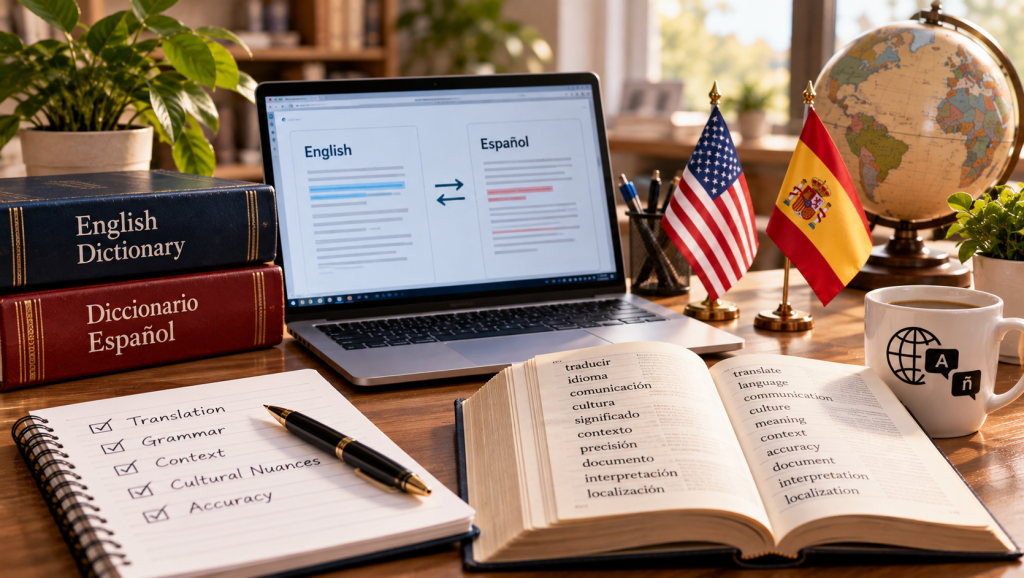
A translation tool works best when you provide clear and complete text.
Use Complete Sentences
Instead of translating isolated words, provide the entire sentence whenever possible.
This gives the tool more context and helps it identify the intended meaning.
Avoid Unnecessary Slang
Informal expressions, jokes, and regional slang may not translate directly.
Use simple language when you want a clear and understandable Spanish translation.
Check Accents and Punctuation
Spanish uses accent marks and punctuation that may differ from English.
For example:
¿Cómo estás?
¿Qué quieres?
¡Muchas gracias!
Accents can sometimes change the meaning of a word, so they should not be ignored.
Review Important Translations
For business emails, academic work, legal documents, or professional communication, review the translation carefully.
Automatic translation can sometimes miss tone, cultural context, or specialized terminology.
Learn From the Translation
Rather than copying every result immediately, compare the English and Spanish versions.
Identify unfamiliar words, notice sentence patterns, and practice using the translated expressions in your own sentences.
Best Resources for English to Spanish Translation
You can use different language resources depending on your translation needs.
Resource | Main Purpose | Best For | Link |
|---|---|---|---|
Google Translate | Text and conversation translation | Everyday translation | Visit Google Translate |
SpanishDict | Spanish translations and learning resources | Vocabulary and grammar | Visit SpanishDict |
WordReference | Dictionary and language discussions | Word meanings and usage | Visit WordReference |
RAE Dictionary | Official Spanish-language dictionary | Spanish word definitions | Visit RAE |
Each resource serves a different purpose. A translator is convenient for complete sentences, while dictionaries can help you understand the meaning and usage of individual words.
You can also explore free online tools on AltFTool to discover useful utilities for everyday digital tasks and productivity.
Why English to Spanish Translation Is Useful in Daily Life
Translation is no longer limited to language classrooms. It has become part of everyday digital communication.
Students can use translation tools to understand unfamiliar vocabulary. Travelers can communicate with local people. Content creators can prepare multilingual content, and businesses can connect with Spanish-speaking audiences.
The key is to use translation as a communication aid rather than relying on it blindly.
A good translation should communicate the intended meaning clearly, naturally, and respectfully.
Frequently Asked Questions
Enter your English text into a translation tool, select Spanish as the target language, and generate the translation. Review the result before using it.
Yes. Beginners can use translation tools to learn vocabulary, understand sentences, and compare English and Spanish grammar.
Yes. Many online translation tools support sentences and paragraphs. For better results, use clear and complete text.
No. Automatic translation may make mistakes with slang, idioms, grammar, and context. Important translations should be reviewed.
Sources and notes
Links the author listed for this post.
Language statistics referenced from the Instituto Cervantes, Spanish: A Language to the World 2025.
More on AltFTool
- AltFTool (opens in a new tab)
altftool.com


Discussion
0 comments