Marketing online can involve a lot of small tasks. From checking keywords and creating campaign links to finding hashtags, writing content, tracking performance, and managing social media, there is always something that needs attention.
The good news is that you do not always need expensive software for these tasks. Many free online marketing and social media tools can make everyday work faster and easier.
This guide explores useful marketing tools for creators, marketers, freelancers, small businesses, and anyone working on an online presence.
What Are Marketing & Social Media Tools?
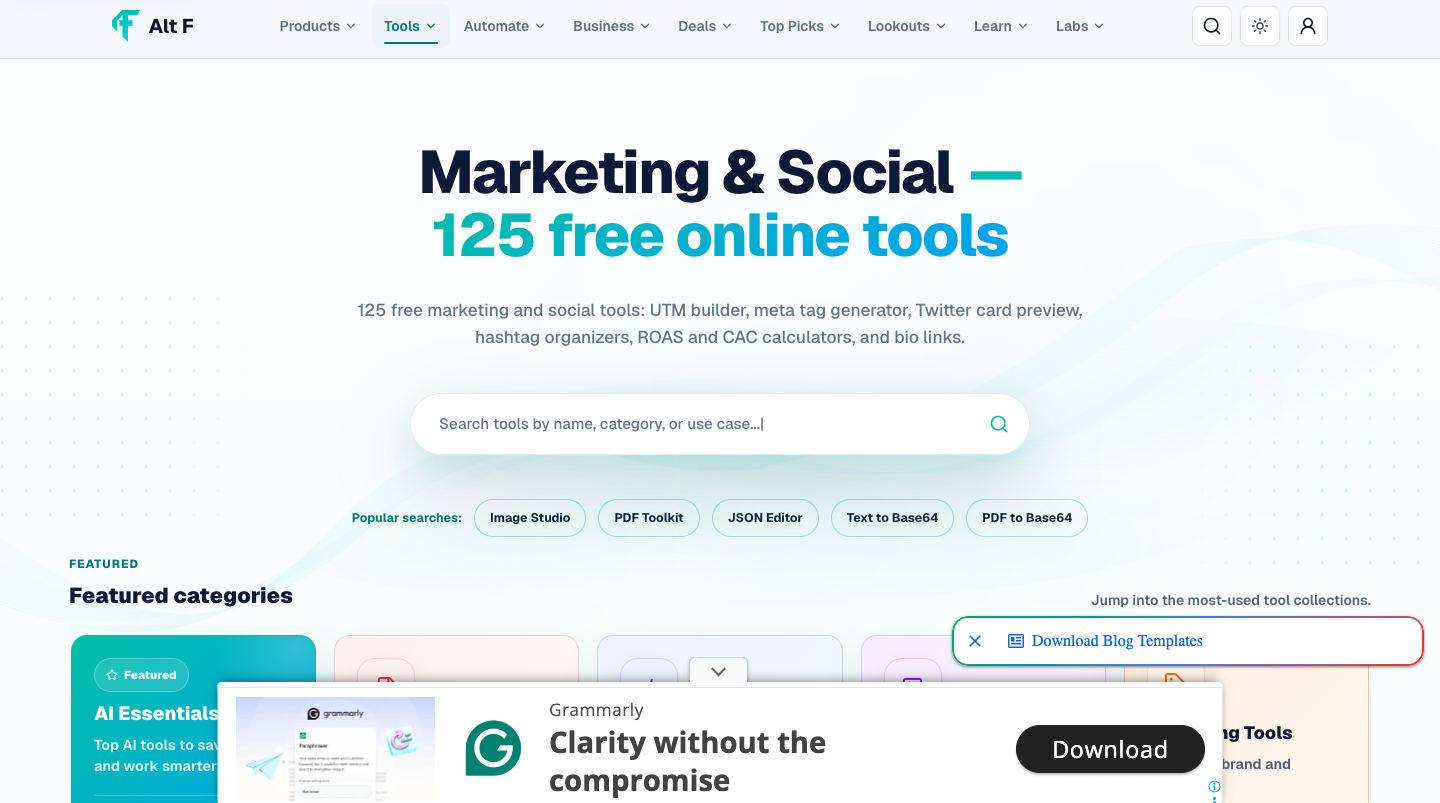
Marketing and social media tools are online resources designed to help with different parts of digital marketing.
Some tools focus on SEO, while others help with social media content, hashtags, advertising, analytics, campaign tracking, or content planning. Instead of trying to handle everything manually, users can choose individual tools based on the task they need to complete.
For example, a marketer might use a UTM builder to create trackable campaign links, a hashtag tool to find relevant tags, and an SEO tool to improve a webpage.
Why Use Free Marketing Tools?
Not every marketing task requires a paid subscription. Free tools can be particularly useful when you are starting a project, testing an idea, or handling occasional tasks.
They can help you:
Save time on repetitive work
Check basic SEO information
Create campaign URLs
Research social media ideas
Find relevant hashtags
Prepare marketing content
Understand basic campaign data
Organize online marketing activities
For small businesses and individual creators, these tools can also help keep marketing costs manageable.
SEO Tools for Better Visibility
Search engine optimization is an important part of digital marketing. SEO tools can help users understand how webpages may perform in search and identify areas that need improvement.
Common SEO-related tools include keyword research tools, meta tag generators, title analyzers, sitemap tools, robots.txt generators, and other website utilities.
These tools can simplify technical or repetitive SEO tasks, especially for users who are still learning how search optimization works.
However, a tool alone cannot guarantee better rankings. Search performance also depends on content quality, website structure, competition, relevance, and many other factors.
Social Media Tools
Managing social media can become time-consuming when you are active across multiple platforms.
Social media tools can help with tasks such as:
Content planning
Hashtag research
Caption ideas
Post optimization
Profile analysis
Campaign tracking
Social media research
For creators and businesses, having the right tools can make the content workflow more organized.
Hashtag Tools
Hashtags can help organize content around specific topics and make posts easier to discover within platforms that support hashtag-based discovery.
A hashtag tool can help generate or explore relevant hashtags based on a topic or keyword.
Instead of adding random popular hashtags, it is usually better to choose tags that actually relate to the content. Relevance matters because the goal is to reach people interested in the topic rather than simply collect a large number of views.
UTM Builders for Campaign Tracking
If you share links across different marketing channels, it can be useful to know where visitors are coming from.
UTM parameters add tracking information to a URL. This can help identify traffic from sources such as social media posts, email campaigns, advertisements, or other promotional channels.
A UTM builder makes it easier to create these tracking URLs without manually constructing every parameter.
Before publishing a campaign link, always check that the URL works correctly and that the tracking information is consistent.
Marketing Calculators
Marketing often involves numbers. You may need to calculate conversion rates, advertising costs, engagement rates, return on ad spend, or other metrics.
Marketing calculators can make these calculations quicker and reduce the need to work through formulas manually.
They are especially useful when comparing campaigns or preparing quick reports.
Advertising Tools
Digital advertising requires careful planning. Even a small campaign can involve budgets, audience targeting, creative assets, landing pages, and performance measurements.
Online advertising tools can support different parts of this process. Some may help with calculations, while others can assist with ad copy, campaign planning, keyword research, or related tasks.
Using these tools does not replace campaign strategy, but they can make individual steps easier to manage.
Content Marketing Tools
Content is a major part of modern marketing. Blog posts, social media captions, newsletters, videos, product descriptions, and other content can all support an online presence.
Content marketing tools can help with brainstorming, editing, formatting, keyword research, planning, and optimization.
The most useful approach is to use these tools as part of the workflow rather than relying on them to create everything automatically.
Human review is still important, particularly when content represents a brand or business.
Tools for Small Businesses
Small businesses often have limited time and resources. A single person may be responsible for social media, content, website updates, email marketing, and customer communication.
Free marketing tools can help reduce some of this workload.
For example, a business owner could use an SEO utility for basic website checks, a UTM generator for campaign links, and social media tools for content planning and hashtag research.
Choosing a small set of useful tools can be more practical than signing up for dozens of platforms.
This review looks at Marketing & Social Media Tools 2026: Free Online Tools from a practical user perspective: what it helps with, where it fits best, and what to check before relying on it.
Best for
Readers who need a quick workflow for marketing & social media tools 2026: free online tools.
One-time tasks where speed matters more than heavy setup.
Comparing simple options before choosing a final tool.
Key features to check
Feature | Why it matters | What to test |
|---|---|---|
Ease of use | Reduces setup time | Can a new user finish the task quickly? |
Output quality | Protects the final result | Does the result look clean and accurate? |
Privacy | Keeps sensitive data safer | Does the workflow require uploads or accounts? |
Verdict
Marketing & Social Media Tools 2026: Free Online Tools is most useful when the goal is clear and the result can be checked immediately. For repeat work, save the best settings and pair it with related AltFTool utilities.
Marketing Tools for Creators
Content creators often need to balance creativity with promotion.
A creator may use social media tools to research hashtags, SEO tools to improve discoverability, analytics tools to understand audience activity, and content tools to organize ideas.
The right combination depends on the platform and type of content being created.
A YouTube creator, Instagram creator, blogger, and newsletter writer may all have very different marketing requirements.
How to Choose the Right Marketing Tool
With so many online tools available, it can be tempting to use everything at once. That usually creates more work rather than less.
Start with the task you want to solve.
For example:
Need better search visibility?
Look for SEO and keyword tools.
Need campaign tracking?
Use a UTM builder.
Need social media ideas?
Explore hashtag, content, and social research tools.
Need quick calculations?
Use marketing calculators.
Need help with content?
Look for writing, editing, and content planning tools.
Choosing tools based on specific needs makes the workflow easier to manage.
Free vs Paid Marketing Tools
Free tools can be enough for basic tasks, but they may come with limitations.
A free version might restrict the number of searches, projects, reports, exports, or advanced features. Paid versions may provide additional functionality, higher limits, automation, or more detailed data.
There is no need to upgrade immediately. Start with the free version and see whether it meets your requirements.
If you regularly reach its limits or need advanced features, then comparing paid plans can make sense.
Common Marketing Mistakes to Avoid
Tools can help with marketing, but they cannot replace good judgment.
Some common mistakes include:
Using Too Many Tools
Signing up for every new marketing tool can make your workflow confusing. A few reliable tools are often easier to manage.
Focusing Only on Numbers
Metrics are useful, but they need context. A large number of impressions does not automatically mean a campaign achieved its goal.
Ignoring the Target Audience
Marketing should start with the people you want to reach. Tools can provide data, but understanding your audience remains important.
Copying Trends Without Context
A trending hashtag or topic may not be relevant to every brand. Use trends when they genuinely fit your content.
Publishing Without Reviewing
Always check generated content, campaign links, statistics, and important marketing information before publishing.
How to Build a Simple Marketing Toolkit
You do not need a huge collection of software to get started.
A simple toolkit might include:
An SEO tool
A keyword research resource
A social media or hashtag tool
A UTM builder
A content planning tool
A basic analytics resource
A marketing calculator
As your needs grow, you can add more specialized tools.
Why Tool Selection Matters
The right tool should make a task easier, not create another task to manage.
Before using a marketing tool, consider whether it is easy to understand, provides the information you actually need, works with your workflow, and offers enough functionality through its free version.
It is also worth checking whether the tool has usage limits, account requirements, privacy considerations, or paid features.
Quick checklist
Confirm the main goal for marketing & social media tools 2026: free online tools.
Compare the available options before choosing one workflow.
Use the related AltFTool utilities to finish the task faster.
They are online tools that help with tasks such as SEO, content creation, social media research, campaign tracking, advertising, analytics, and marketing calculations.
Yes. Free tools can handle many basic marketing tasks and are especially useful for beginners, creators, freelancers, and small businesses.
Start with tools that solve your immediate needs, such as SEO utilities, keyword research tools, hashtag tools, UTM builders, and basic analytics resources.
They can make research, planning, tracking, and content-related tasks easier. However, results also depend on content quality, audience relevance, consistency, and the platform being used.
Digital marketing does not have to be complicated. The right online tools can take care of repetitive tasks and give you more time to focus on strategy, content, and your audience.
Who should use Digital Tools
Marketing & Social Media Tools 2026: Free Online Tools is built for readers who want a faster way to finish everyday web tasks. The main goal is shorter workflows, clearer outputs, and reusable tool habits, so the guide focuses on practical choices instead of broad theory.
Use it when you need one of these outcomes:
- testing a task before choosing a heavier app
- saving time on a repeated browser workflow
- combining a guide with a related AltFTool utility
How to get a better result
- Read the core use case and decide what output you need.
- Open the related AltFTool utility and test it with a small sample.
- Review the result, adjust settings, and repeat only if needed.
- Continue with related tools or guides for the next step in the workflow.
Start small, check the first output, and only then repeat the workflow with the full file, text, media, or game session. That gives you a quick quality check before you spend more time.
Quality checks before you trust the output
- the input is clean before running the tool
- the output matches the format you need
- private details are removed before sharing or downloading
Do not overcomplicate a simple task. Start with the smallest sample that proves the workflow, then scale up once the output looks right.
Continue your workflow
If you want to try the workflow now, open the related AltFTool tool area. For more reading, continue through the Digital Tools archive or the AltFTool tools directory.
This creates a cleaner path from explanation to action: read the guide, test the tool, compare the output, and move into the next related AltFTool resource only when it helps the task.
Sources and review notes
References used to check facts, freshness, and reader-safe recommendations in this guide.
Information is based on publicly available marketing resources, social media tools, SEO references, and official tool information. Features, pricing, and availability may change over time, so users should verify the latest details before using a tool.
- 1AltFTool
altftool.com
Discussion
0 comments
No comments yet
Discussion will appear here once it loads.