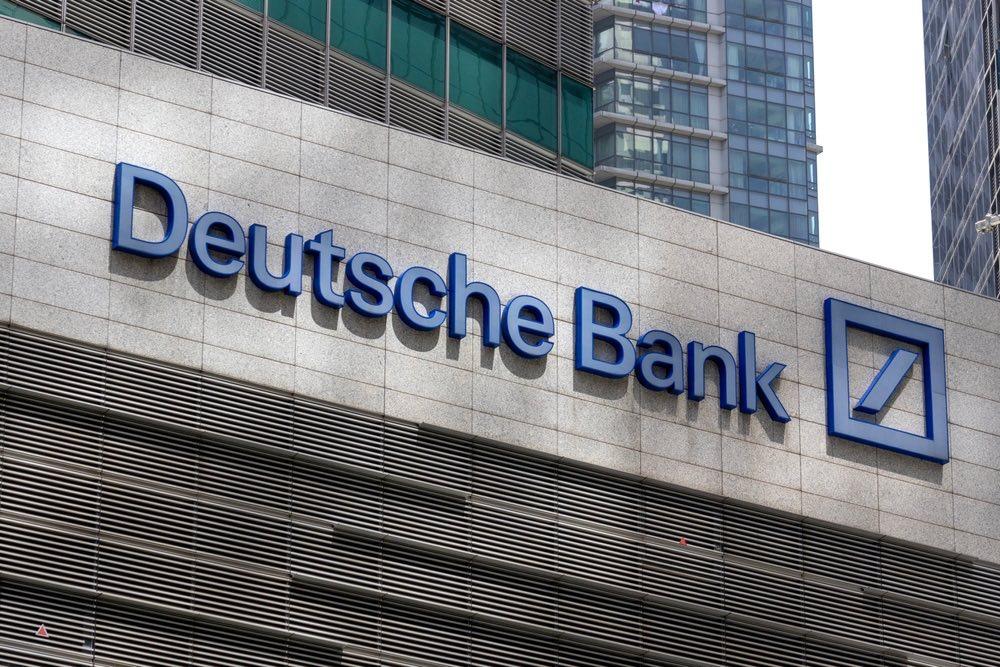
Deutsche Bank has come under renewed scrutiny after a major collection of leaked internal documents brought attention to its historical relationships with controversial clients and its approach to risk management. The reports have raised questions about how the German banking giant handled compliance warnings, monitored high-risk transactions, and balanced commercial opportunities against regulatory responsibilities.
The news triggered a sharp reaction in the stock market. Deutsche Bank shares fell by more than 6% on November 17, 2026, following the publication of reports based on millions of internal records. The stock remained under pressure the following morning, opening around 1.9% lower on November 18. The developments have revived concerns about the bank's reputation and the effectiveness of reforms introduced in recent years.
Deutsche Bank has responded by describing the matters as historical and highlighting investments made to strengthen its internal controls. However, the situation demonstrates how past business decisions can continue to influence investor confidence, even when a financial institution says it has changed its operating practices.
Why Deutsche Bank Shares Came Under Pressure
The immediate reason behind the share price decline was the publication of investigative reports examining the bank's historical business activities. The reports were based on a large collection of leaked emails, meeting records, internal assessments, and other documents.
According to media organisations involved in the investigation, the documents cover approximately two decades of the bank's activities. They reportedly provide additional details about relationships with wealthy and politically influential customers, business operations in Russia, and transactions connected with individuals who later became subjects of serious criminal investigations.
Investors reacted because the allegations raised questions about whether the bank's internal risk management systems had consistently identified and addressed potential problems.
For shareholders, the concern extends beyond the historical transactions themselves. They also need to consider whether the revelations could lead to additional regulatory attention, legal expenses, reputational damage, or questions about the bank's leadership.
A decline in share prices does not automatically mean that a company is facing new financial penalties. However, uncertainty about possible consequences can influence market sentiment and encourage investors to reassess the risks associated with holding its shares.
What the Leaked Documents Reportedly Revealed
The investigation attracted international attention because of the scale of the documents and the range of historical business relationships discussed. Reports examined several areas of Deutsche Bank's operations, including dealings involving controversial clients, suspicious financial transactions, and expansion plans in Russia.
The allegations should be understood in their proper context. A reported business relationship or financial transaction does not automatically establish that the bank or an individual committed a crime. Nevertheless, the material has raised important questions about due diligence, internal oversight, and the handling of potential warning signs.
Historical Relationships With Controversial Clients
One major area of attention involves Deutsche Bank's past relationships with high-profile clients, including Jeffrey Epstein and Donald Trump.
Media reports have described financial activity associated with Epstein and his companies, including transactions that reportedly received internal scrutiny. These revelations have renewed questions about how financial institutions should assess customers whose activities, public profiles, or financial connections create significant reputational risks.
The reports also discussed Deutsche Bank's former banking relationship with Trump and alleged mishandling of confidential tax information. According to reporting, a document was mistakenly sent to another client's accountant in 2017.
These issues highlight the importance of customer confidentiality and the responsibility banks have to protect sensitive financial information.
Business Activities Connected With Russia
Another important subject is Deutsche Bank's historical pursuit of business opportunities in Russia.
The leaked material reportedly suggests that the bank continued to explore commercial opportunities involving wealthy Russian clients and other business relationships despite internal concerns about potential risks.
Russia-related financial activity has become particularly sensitive because of geopolitical tensions, international sanctions, and concerns about money laundering.
The reports have raised questions about whether commercial ambitions received too much attention compared with compliance warnings. Deutsche Bank's response has emphasised that the matters discussed relate to earlier periods and that its control systems have since been strengthened.
Questions About Internal Compliance Warnings
The wider investigation has also focused on the relationship between commercial teams and employees responsible for managing financial and regulatory risks.
Compliance departments are expected to identify suspicious activity, investigate unusual transactions, and ensure that business decisions follow applicable laws and internal policies.
When concerns are raised but not addressed effectively, a bank may face regulatory investigations, financial penalties, and damage to its reputation.
The latest reports have therefore placed renewed attention on whether internal warnings were consistently treated as important decision-making information.
Key Areas Highlighted by the Reports
The developments involve several different aspects of banking operations. The following table summarises the major areas of concern and why they matter to financial markets.
Area of Concern | Reported Issue | Potential Risk | Importance for Investors |
|---|---|---|---|
Client relationships | Historical dealings with controversial individuals | Reputational and compliance concerns | Could affect public confidence |
Russia-related business | Expansion efforts despite reported internal concerns | Sanctions and geopolitical exposure | May increase regulatory scrutiny |
Financial transactions | Payments associated with high-risk clients | Anti-money laundering concerns | Could create legal and compliance costs |
Internal controls | Questions about how warnings were handled | Governance weaknesses | May influence confidence in management |
Confidential information | Reported accidental disclosure of client tax information | Data protection and privacy concerns | Could affect trust in banking services |
Deutsche Bank's Response to the Allegations
Deutsche Bank has pushed back against the idea that the reports describe its current operating environment. The lender said that the matters highlighted in the investigation date back many years, with some incidents reaching back as much as two decades.
The bank has also stated that relevant matters were reviewed at the time and that it worked with regulators where appropriate.
Under Chief Executive Officer Christian Sewing, Deutsche Bank has attempted to rebuild its reputation and improve its financial performance. The bank says it has made substantial investments in strengthening compliance procedures, risk management systems, and internal controls.
It has highlighted approximately €7 billion in direct investment in its control environment between 2019 and 2025. The lender has also pointed to its record profits in 2025 and recent financial performance as evidence of its transformation.
The response reflects an important distinction between historical problems and current business operations. A bank may introduce significant reforms after earlier compliance failures, but investors and regulators still need convincing evidence that those changes work effectively.
Christian Sewing's Leadership Faces Renewed Attention
Leadership and Transformation
Christian Sewing became Deutsche Bank's CEO in 2018, focusing on simplifying operations, improving profitability, strengthening internal controls, and rebuilding investor confidence. His leadership has played an important role in the bank's transformation strategy.
Renewed Investor Scrutiny
The latest leaked reports have brought renewed attention to the bank's historical business decisions and risk management practices. Investors may now look more closely at management transparency, compliance improvements, and the effectiveness of reforms introduced under Sewing's leadership.
Christian Sewing became Deutsche Bank's chief executive in 2018, at a time when the institution was dealing with the consequences of earlier scandals, weak profitability, and regulatory pressure.
His leadership has focused on simplifying operations, improving financial performance, strengthening internal controls, and restoring confidence among investors and customers.
The latest reports have created another challenge for that strategy. Although the bank maintains that the incidents are historical, renewed public attention can make it harder for management to demonstrate that its transformation is complete.
Investors may examine whether the revelations affect the credibility of the bank's reform programme. They may also consider whether additional explanations or reviews are required.
Leadership confidence is particularly important in the banking sector because shareholders depend on management to identify risks before they develop into expensive problems.
The situation does not automatically indicate that Sewing's position is under threat. However, the reports have placed additional attention on his ability to maintain confidence in the institution's governance and long-term strategy.
Why Banking Risk Management Is So Important
Risk management is one of the most important responsibilities of a financial institution. Banks handle deposits, transfers, loans, investments, international payments, and confidential customer information. Every activity involves some level of financial, operational, legal, or reputational risk.
A strong risk management framework helps a bank identify problems before they become serious. It also supports compliance with financial regulations and protects customers, shareholders, and the wider financial system.
Know Your Customer Procedures
Know Your Customer, commonly known as KYC, is a process through which banks verify customer identities and understand the nature of their financial activities.
Banks may collect identity documents, business information, ownership details, and information about the source of funds. These checks help institutions identify customers who may present higher risks.
Anti-Money Laundering Controls
Anti-money laundering procedures are designed to identify and prevent the movement of funds connected with illegal activities.
Banks monitor transactions for unusual patterns, investigate suspicious activity, and report concerns to the appropriate authorities when required.
Weak monitoring can expose a financial institution to regulatory action and significant reputational consequences.
Sanctions Screening
International banks must also ensure that their services comply with applicable sanctions and restrictions.
This requires screening customers, businesses, counterparties, and transactions against relevant lists. These controls are especially important when banks operate across countries with different political and regulatory environments.
Internal Audits and Governance
Internal audit teams review whether policies are being followed and whether controls are working effectively.
Strong governance also requires employees to report concerns without fear of pressure from commercial teams or senior management.
When these responsibilities are handled properly, financial institutions are better positioned to protect themselves against avoidable losses.
How the Share Price Decline May Affect Investors
A sudden fall in a major bank's share price can influence investor sentiment across the financial sector. Deutsche Bank's decline has attracted attention because the institution is one of Germany's most prominent banking groups.
Investors generally evaluate several factors when deciding how to respond to negative news.
Reputational risk: Negative publicity can affect relationships with customers, business partners, and institutional investors. Even when historical issues do not create immediate financial losses, they may influence confidence.
Regulatory uncertainty: Investors may become cautious if reports raise the possibility of additional regulatory reviews or investigations. Uncertainty can affect how they value a company's future earnings.
Management credibility: Shareholders may examine whether leadership has responded transparently and whether previous reforms have addressed the underlying weaknesses.
Financial performance: Investors also consider profitability, capital strength, operating costs, and the bank's ability to maintain its business strategy despite negative publicity.
A share price decline can reflect changing expectations rather than a confirmed deterioration in the company's financial position. It is therefore important to distinguish market reaction from verified financial consequences.
Possible Financial and Regulatory Implications
The latest developments may create several possible challenges for Deutsche Bank, although their actual impact remains uncertain.
Potential Implication | What It Could Mean | Possible Business Effect | What Investors May Monitor |
|---|---|---|---|
Regulatory reviews | Authorities may examine historical practices | Additional compliance work | Official regulatory statements |
Legal exposure | New claims or disputes could emerge | Potential legal expenses | Confirmed legal proceedings |
Reputation pressure | Customers may question the bank's practices | Possible loss of confidence | Customer and market sentiment |
Higher compliance costs | Further investment may be required | Increased operating expenses | Future financial disclosures |
Leadership scrutiny | Management may face additional questions | Pressure on strategic priorities | Governance and management updates |
It is important not to treat these possibilities as confirmed outcomes. The bank has said that the matters are historical and that any potential financial impact is not expected to be meaningful, if there is an impact at all.
Future developments, official reviews, and financial disclosures will help clarify whether the reports lead to consequences beyond reputational pressure.
Deutsche Bank's Transformation and Financial Performance
Despite its historical challenges, Deutsche Bank has spent several years working to improve its financial position.
The institution has focused on strengthening its core banking operations, improving profitability, controlling costs, and making its risk management systems more effective.
Its leadership has presented recent financial results as evidence that the transformation programme is producing progress.
However, financial performance and corporate governance are closely connected. A bank may report strong earnings while still facing questions about the quality of its internal controls.
For long-term investors, both areas matter. Profitability indicates the institution's ability to generate returns, while effective governance helps protect those returns from avoidable risks.
The latest controversy therefore creates a test for the bank: it must demonstrate that its improvements are not limited to financial results but also extend to everyday decision-making and compliance practices.
What the Situation Means for the Wider Banking Industry
The Deutsche Bank reports have implications beyond one financial institution. Global banks regularly work with wealthy individuals, multinational companies, investment funds, and customers operating across different jurisdictions.
These relationships can generate significant revenue, but they also create complex compliance responsibilities.
Financial institutions must understand who their customers are, where their funds originate, and whether transactions present unusual risks.
The controversy reinforces several lessons for the banking industry:
Compliance procedures must be independent of commercial pressure.
Customer relationships should receive regular risk assessments.
Suspicious transactions need timely investigation.
Senior management must take internal warnings seriously.
Confidential customer information must be protected.
Risk management systems should adapt to changing international regulations.
Banks that fail to maintain these standards can face financial penalties, regulatory restrictions, and lasting damage to their public image.
The situation also demonstrates why transparency is important. Customers and investors expect financial institutions to explain how they manage risk and respond when problems are identified.
What Investors Should Watch Next
Official Bank Statements
Investors should follow Deutsche Bank's official statements for clarification about the historical matters mentioned in the leaked reports. Any additional information about internal reviews and corrective actions may influence market confidence.
Regulatory Developments
Updates from financial regulators will be important in understanding whether the reported issues lead to further scrutiny. Investors should distinguish between media allegations, preliminary enquiries, and confirmed regulatory findings.
Future Financial Results
Upcoming financial reports may help investors assess whether the controversy has affected Deutsche Bank's profitability, operating expenses, customer relationships, or compliance spending.
Management Transparency
Clear communication from management will remain essential. Investors may evaluate how effectively the bank explains its past practices, demonstrates improvements, and maintains confidence in its long-term strategy.
The immediate market reaction is only one part of the story. Investors following Deutsche Bank may want to monitor several developments over the coming weeks and months.
First, official statements from the bank could provide additional clarification about the historical matters described in the reports. Any new information about internal reviews or corrective measures may influence market sentiment.
Second, regulatory responses will be important. Investors should distinguish between media allegations, preliminary enquiries, and confirmed regulatory findings.
Third, future financial results may help show whether the controversy has affected the bank's operating performance, customer relationships, or compliance spending.
Finally, management's ability to communicate clearly will remain important. Investors generally prefer transparent explanations over broad assurances, particularly when a company is dealing with questions about its past conduct.
A balanced assessment should consider both the seriousness of the reported issues and the evidence of reforms introduced since the relevant incidents.
Is Deutsche Bank Facing a Long-Term Reputation Challenge?
Rebuilding a bank's reputation can take years because trust is influenced by more than financial results. Customers want confidence that their money and personal information are protected, while regulators expect institutions to follow strict rules.
Deutsche Bank has made considerable efforts to improve its operations since earlier compliance problems. However, the latest disclosures show that historical decisions can continue to shape how the institution is viewed.
The long-term impact will depend on whether the reports result in additional verified findings, whether regulators identify unresolved weaknesses, and whether the bank can demonstrate that its current systems are effective.
If its reforms prove reliable and no material new liabilities emerge, the controversy may eventually become a reputational issue rather than a major financial setback. If further concerns are confirmed, the bank could face a longer period of scrutiny.
FAQ's
Christian Sewing is the Chief Executive Officer of Deutsche Bank. He has led the bank's restructuring and transformation efforts, focusing on profitability, operational improvements, and stronger risk management.
Deutsche Bank shares declined following leaked reports that raised questions about the bank's historical risk management practices, controversial client relationships, and internal compliance procedures.
Deutsche Bank described the issues as historical and highlighted improvements made to its compliance systems, risk management procedures, and internal controls in recent years.
The reports examined historical business relationships, financial transactions, Russia-related activities, and internal discussions about potential risks and compliance concerns.
The reports could create reputational pressure and potential regulatory uncertainty. Their long-term financial impact will depend on any further investigations, confirmed findings, legal developments, and the bank's ability to maintain investor confidence.
Sources and notes
Links the author listed for this post.
Based on media reports concerning Deutsche Bank's historical risk management practices, leaked internal documents, past client relationships, official bank statements, and reported stock market developments.
More on AltFTool
- AltFTool (opens in a new tab)
altftool.com

Discussion
0 comments
No comments yet
Discussion will appear here once it loads.