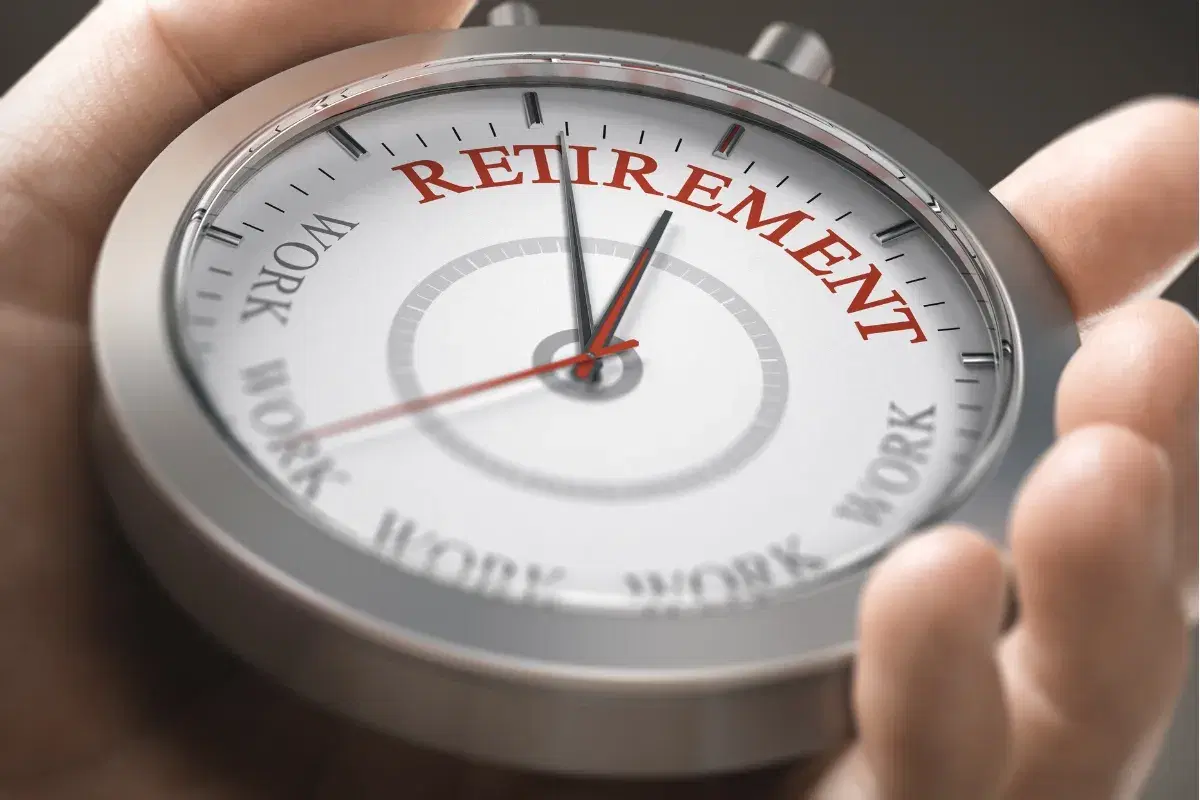
Ask ten people when they will retire and you will get ten different answers: “at 65,” “when I can afford it,” “never.” The truth is more interesting. Your jubilación depends on your birth year, your work history and the choices you make years before the day arrives.
In Spain, 2026 is a turning point. The retirement age is moving toward 67, and the number of years you have contributed now decides whether you leave work at 65 or wait almost two more years. A few months can change your pension and your plans.
This guide gives you the rules in plain language, a self-check, a decade-by-decade planning table and a list of common mistakes to avoid. It focuses on Spain’s public system, with ideas anyone can use.
Important: This article is general information, not financial or legal advice. Rules change, so confirm your own situation with the Seguridad Social or a qualified adviser.
Jubilación at a Glance
Topic | Quick answer (Spain, 2026) |
|---|---|
Ordinary retirement age | 65 or 66 years and 10 months, depending on years contributed |
Minimum contribution | 15 years, with 2 of them in the last 15 years |
Early retirement | Possible, with a reduction in your pension |
Working longer | Allowed, with an incentive |
Where to check your data | The Seguridad Social online service and its retirement simulator |
What Is the Retirement Age in 2026?
Spain is finishing a gradual increase that began years ago. In 2026 the Seguridad Social sets two ordinary ages: 65 for people with at least 38 years and 3 months of contributions, and 66 years and 10 months for those with fewer. finantresnoticias
Years contributed | Retirement age in 2026 | From 2027 |
|---|---|---|
38 years 3 months or more | 65 | 65 (needs 38 years 6 months) |
Less than 38 years 3 months | 66 years 10 months | 67 |
In 2027, retiring at 65 will require at least 38 years and 6 months of contributions. People who fall short will have to wait until 67. cronista
Quick example: Marta has 36 years of contributions. In 2026 her ordinary retirement age is 66 years and 10 months. Javier has 39 years, so he can retire at 65.
Minimum Requirements: Who Qualifies?
Reaching the right age is not enough. To receive a contributory pension you must also meet a contribution rule. The Seguridad Social requires at least 15 years of contributions, and 2 of those years must fall within the 15 years before you retire. telecinco
Your Checklist Before You Apply
You have reached your legal retirement age (or qualify for early retirement).
You have the minimum contribution years.
You are registered with the Seguridad Social, or in a situation treated as equivalent.
Your work history is complete and correct.
Tip: Check your vida laboral (work-history record) regularly. Missing or wrong periods are easier to fix years before you retire.
Early Retirement: Leaving Sooner Has a Price
Many people dream of stopping early. It is possible, but your pension drops. Voluntary early retirement lets you bring forward the ordinary age by up to two years. It requires at least 35 years of effective contributions, and reduction coefficients lower the pension for each month you bring it forward. telecinco
Option | What it means | Main trade-off |
|---|---|---|
Ordinary retirement | Retire at your legal age | No reduction |
Voluntary early retirement | Retire up to two years earlier | Permanently lower pension |
Delayed retirement | Keep working past the legal age | Incentive, plus more years of income |
Think before you leave: A lower pension lasts for the rest of your life. Ask for a simulation before deciding.
Working Longer: A Smart Option for Some
Staying active after the legal age is allowed and encouraged. Working beyond the legal age comes with an additional incentive on the pension, and the Ministry of Inclusion says about 40,000 people a year use it. cronista
Who it suits:
People who enjoy their work and are in good health
People who want to raise their final pension
Self-employed workers with flexible schedules
Who should be careful:
People in physically demanding jobs
People with health problems or caring duties
How Your Pension Is Calculated: What’s New
The way pensions are calculated is changing. Since 2026 the Seguridad Social has been applying a new calculation method step by step, and it coexists with the previous system. The Seguridad Social decides automatically, at the moment of retirement, which of the two calculation periods is more favourable and gives you the higher pension.
In simple terms, the goal is that you receive whichever result is better for you. You do not have to choose between the methods yourself.
How to Apply: A Simple Step-by-Step Path
Check your data. Review your vida laboral and personal details.
Run a simulation. The Seguridad Social offers a simulator in its online service that shows possible retirement dates and a pension estimate based on your data. finantresnoticias
Get the application form. Request it by phone or through the Seguridad Social website.
Submit on time. You can submit the application up to six months before your legal retirement age, by post, online or at a Seguridad Social office. institutosantalucia
Keep copies. Save every document and confirmation.
Retirement Readiness Self-Check
Answer yes or no. Each “yes” is a point.
Question | Yes |
|---|---|
Do I know my legal retirement age for 2026 or 2027? | ☐ |
Have I checked my vida laboral this year? | ☐ |
Have I run a pension simulation? | ☐ |
Do I have an emergency fund of 3–6 months of expenses? | ☐ |
Do I save regularly for retirement outside the public pension? | ☐ |
Do I know my monthly expenses in retirement? | ☐ |
Do I have a plan for health costs and insurance? | ☐ |
Have I talked about retirement with my partner or family? | ☐ |
Your score:
7–8: Excellent. You are well prepared.
4–6: Good start. Close the gaps this year.
0–3: No panic. Begin with the first three questions this week.
Retirement Planning by Decade
It is never too early or too late to improve your plan.
Your age | Focus | Smart action |
|---|---|---|
20s–30s | Build the habit | Start saving something monthly, even if small, and keep contributions continuous |
40s | Grow and protect | Increase savings, pay down expensive debt and review insurance |
50s | Get precise | Request pension simulations, estimate expenses and compare early and ordinary retirement |
60s | Decide and prepare | Confirm contribution years, plan the application and think about phased or delayed retirement |
Myth vs Fact
Myth | Fact |
|---|---|
“Everyone retires at 65.” | In 2026, many people retire at 66 years and 10 months, depending on contribution years. |
“I can retire as soon as I turn 65.” | You also need enough contribution years. |
“Early retirement has no downside.” | The pension is reduced because of reduction coefficients. |
“The public pension will cover everything.” | For many people it will not fully replace their previous income, so extra savings help. |
“It’s too late to start planning.” | Even a few years of planning can improve your decisions. |
Five Common Retirement Mistakes
Not checking your work history. Gaps and errors cost money later.
Retiring early without a simulation. The reduction lasts for life.
Ignoring inflation. Prices rise, so your plan needs room to grow.
Underestimating healthcare and care costs. They tend to rise with age.
Having no plan for the “what will I do” question. Money matters, but so do purpose, routine and relationships.
Beyond Money: A Good Jubilación Needs a Life Plan
A pension pays the bills. It does not give your days meaning. Many retirees say the hardest part is not the budget, it is the empty calendar.
Ideas to prepare emotionally:
Try a hobby, volunteering or part-time work before you retire.
Plan a weekly routine with social contact.
Stay physically active and keep learning.
Consider a gradual transition, if your employer allows it.
Jubilación is not a finish line. It is a new stage, and it goes better when you plan it early. In 2026, the key numbers to know are 65 and 66 years and 10 months, and above all your years of contributions. Check your records, run a simulation, build savings outside the public system and think about how you want to spend your time.
Start with one step today: look up your vida laboral. It takes ten minutes and may save you years of stress.
FAQs
At 65 if you have at least 38 years and 3 months of contributions, otherwise at 66 years and 10 months.
15 years, with 2 of them within the last 15 years.
Yes, voluntary early retirement is possible with enough contribution years, but the pension is reduced.
You can submit your application up to six months before your legal retirement age.
Yes. From 2027 the figures become 65 (with 38 years and 6 months of contributions) or 67.
Sources and notes
Links the author listed for this post.
Retirement ages, contribution requirements, early-retirement conditions, the application window and the new calculation method are based on 2026 Spanish reporting and guides, including Diari de Tarragona, El Cronista, Valencia Plaza, Telecinco, FinanTres Noticias and Instituto Santalucía, which refer to Seguridad Social rules. Rules, thresholds and pension amounts can change, so please verify the latest figures on the official Seguridad Social website (seg-social.es) before publishing or making decisions. This post is general information and not personal financial, legal or tax advice.


Discussion
0 comments
No comments yet
Discussion will appear here once it loads.