
When most people hear the word "Thanksgiving," their minds immediately jump to an American dining table piled high with roasted turkey, mashed potatoes, cranberry sauce, and pumpkin pie. They picture autumn leaves, afternoon football games, and families traveling across the country just to spend a few days under the same roof.
While the United States has certainly made Thanksgiving famous worldwide, the act of pausing to give thanks is far from uniquely American. Across the globe, dozens of nations set aside specific days to express gratitude, honor hard work, remember pivotal moments in their history, and celebrate the end of the harvest season. Some countries call their holiday Thanksgiving, while others have centuries-old harvest festivals rooted in local agriculture and lunar calendars.
Exploring how different nations celebrate gratitude in 2026 reveals a fascinating truth: even when our histories, foods, and customs look completely different, the human need to slow down and appreciate what we have is universal. Whether it is sharing half-moon rice cakes in South Korea, weaving grain crowns in Germany, or thanking essential workers in Japan, every culture has its own meaningful way of saying "thank you."
Thanksgiving 2026 Calendar: Key Dates Around the World
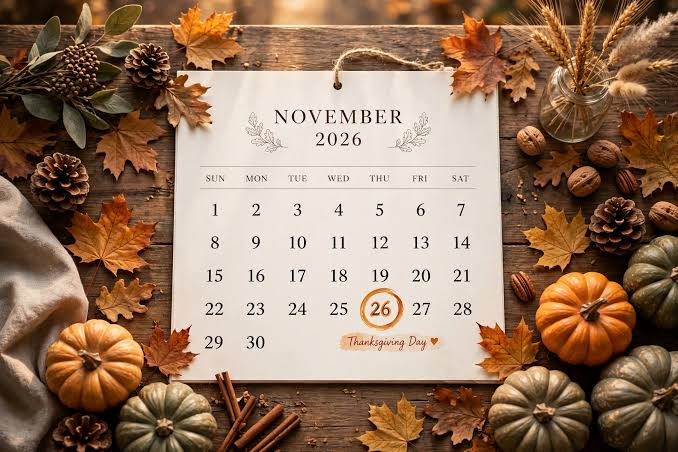
Because every country bases its traditions on different historical events, agricultural cycles, or lunar calendars, global Thanksgiving and harvest holidays are spread across several months. If you are keeping track of international holidays in 2026, here is when the major celebrations take place:
Country | Holiday or Festival Name | 2026 Date | Primary Focus |
South Korea | Chuseok | September 24–26 | Autumn harvest and honoring ancestors |
Germany | Erntedankfest | October 4 (First Sunday of October) | Agricultural harvest and community thanks |
Canada | Thanksgiving Day | October 12 | Autumn harvest and family gatherings |
Grenada | Thanksgiving Day | October 25 | Historical remembrance |
Liberia | Thanksgiving Day | November 5 | Historical heritage and religious gratitude |
Japan | Labor Thanksgiving Day | November 23 | Appreciating workers and production |
United States | Thanksgiving Day | November 26 | Harvest heritage, family, and gratitude |
1. United States: The Classic Autumn Feast
In the United States, Thanksgiving is one of the busiest travel periods and most cherished family holidays of the entire year. Celebrated annually on the fourth Thursday of November, American Thanksgiving falls on November 26, 2026.
The holiday traces its roots back to early colonial harvest feasts, most famously the 1621 gathering between the Plymouth colonists and the Wampanoag people. However, it did not become a regular national fixture until 1863, when President Abraham Lincoln proclaimed a national day of "Thanksgiving and Praise" during the Civil War. Later, in 1941, Congress officially locked in the fourth Thursday of November as the permanent date.
How Americans Celebrate
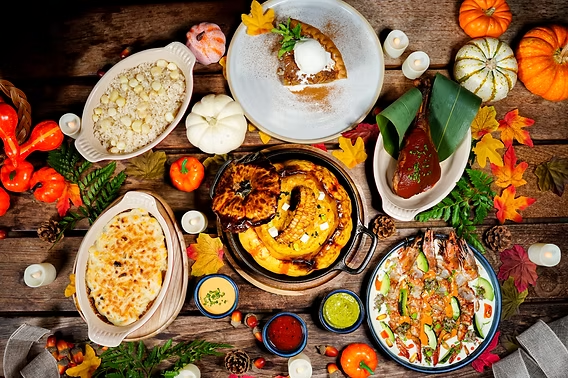
The Big Meal: Food is the centerpiece of the day. Most households serve roasted turkey with herb stuffing, mashed potatoes with gravy, green bean casserole, cranberry sauce, and warm pumpkin or pecan pie.
Parades and Football: Millions of people start their morning watching the Macy's Thanksgiving Day Parade in New York City on television, followed by afternoon National Football League (NFL) games.
Giving Back: Beyond the dining table, volunteering at local food banks, running community "Turkey Trot" 5K races, and donating meals to shelters are major parts of the American Thanksgiving spirit.
What makes the American version stand out isn't just the size of the meal—it is the collective pause. For one Thursday in November, almost the entire country steps away from work and daily stress simply to be present with loved ones.
2. Canada: An Earlier Harvest Celebration
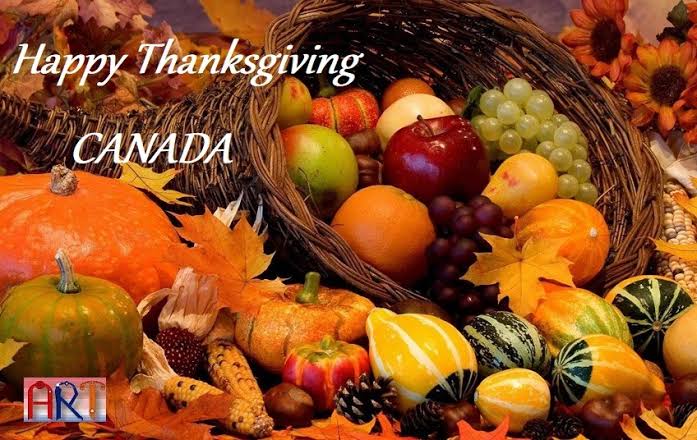
Just across the northern border, Canadians celebrate their own version of Thanksgiving, though it arrives more than a month earlier than the American holiday. In 2026, Canadian Thanksgiving takes place on Monday, October 12, which is the second Monday of October.
The difference in timing comes down to geography and climate. Because Canada sits further north, its summer growing season ends earlier, meaning crops are harvested in September and early October rather than November. Canadian Thanksgiving actually predates the famous Plymouth feast; English explorer Martin Frobisher held a formal ceremony in Newfoundland in 1578 to give thanks for surviving a perilous sea voyage.
How Canadians Celebrate
On the surface, a Canadian Thanksgiving dinner looks very similar to an American one, featuring roasted turkey, stuffing, squash, and pumpkin pie. However, Canadian families often weave regional favorites into the menu, such as butter tarts in Ontario, Nanaimo bars in British Columbia, or boiled dinners in the Atlantic provinces.
Because the holiday always falls on a Monday, Canadians enjoy a three-day autumn long weekend. Many families use the extra time to go hiking, take road trips to view the changing maple leaves, or enjoy a relaxed weekend at a family cottage without the intense shopping frenzy of Black Friday following immediately afterward.
3. Liberia: Gratitude Rooted in History
Few people realize that Liberia, a nation on the coast of West Africa, also observes an official national Thanksgiving Day. Celebrated every year on the first Thursday of November, Liberia's Thanksgiving falls on November 5, 2026.
Unlike North American Thanksgiving, Liberia's holiday did not grow out of a farming harvest. Instead, it is deeply tied to the country's founding in the 19th century. Liberia was established in the 1820s by freed African Americans who migrated from the United States with the support of the American Colonization Society. Those settlers brought American customs, institutions, and holidays with them, adapting them to their new home.
How Liberians Celebrate
In Liberia, Thanksgiving is centered heavily around faith, music, and community spirit rather than commercialism. Families dress in their finest clothes and attend lively church services filled with singing and dancing. At the end of the service, church members often auction off baskets of local produce—such as cassavas, pineapples, bananas, and yams—with the proceeds going to support community projects and people in need. Afterward, families return home for generous meals featuring spicy West African dishes like jollof rice, roasted chicken, and cassava leaf stew.
4. Japan: Honoring Everyday Workers

Japan takes a completely different and inspiring approach to gratitude. Every year on November 23, the country celebrates Labor Thanksgiving Day, known in Japanese as Kinrō Kansha no Hi. In 2026, the holiday falls on Monday, November 23.
The roots of this holiday actually stretch back over two millennia to an ancient Shinto harvest ritual called Niiname-sai, in which the Emperor offered the season's newly harvested rice to the deities and tasted it for the first time. After World War II, in 1948, the Japanese government reimagined the holiday to reflect modern democratic values, shifting the focus from agricultural harvests to human labor, workers' rights, and mutual appreciation across society.
How Japan Celebrates
Rather than gathering for a massive banquet, Japanese communities use Labor Thanksgiving Day to recognize the people who keep society running smoothly. Elementary school students often draw pictures, write thank-you letters, and create handmade crafts to deliver to local police officers, firefighters, hospital staff, and municipal workers. Labor unions and local organizations also hold events highlighting worker welfare and environmental stewardship.
It is a refreshing twist on the concept of Thanksgiving. Instead of only thanking nature or family, Japan reminds its citizens to appreciate the teachers, delivery drivers, builders, and public servants whose daily efforts make modern life possible.
5. Germany: Erntedankfest and the Harvest Crown
In Germany, gratitude for the earth's bounty is celebrated through Erntedankfest, a traditional harvest festival whose name literally translates to "harvest thanks festival." While it is not a federal public holiday where businesses close down, it is widely observed by churches, farming communities, and towns across Germany, Austria, and Switzerland—usually on the first Sunday of October (October 4, 2026).
How Germans Celebrate
Erntedankfest keeps its focus squarely on agriculture and the farmers who grow the nation's food. Local churches are decorated with vibrant displays of pumpkins, apples, loaves of freshly baked bread, corn stalks, and seasonal flowers.
One of the most recognizable symbols of the festival is the Erntekrone (harvest crown)—an intricate crown woven from wheat, oats, barley, and colorful ribbons. In many rural villages, residents hold festive parades where the Erntekrone is carried through the streets to the church or town square, accompanied by brass bands, folk dancing, and outdoor markets serving local sausages, apple cider, and autumn pastries.
6. South Korea: Chuseok and Honoring Ancestors
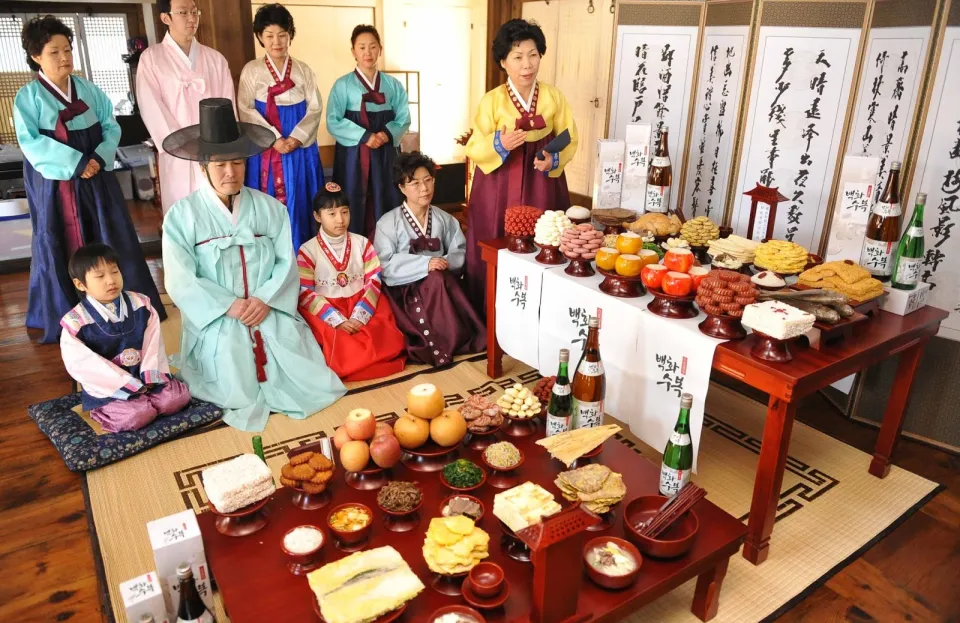
Often referred to in English as "Korean Thanksgiving," Chuseok is one of South Korea's biggest and most important traditional holidays. Because it follows the lunar calendar—falling on the 15th day of the eighth lunar month—its dates change every year. In 2026, the main Chuseok day lands on September 25, with the official holiday period running from September 24 to September 26.
How South Koreans Celebrate
During Chuseok, millions of people leave major cities like Seoul and travel back to their ancestral hometowns, creating one of the largest annual migrations in Asia. The holiday is built around two core pillars: celebrating a successful autumn harvest and showing deep respect for one's ancestors.
Charye (Ancestral Memorials): Families wake up early, dress in traditional colorful attire called hanbok, and set up a ceremonial table filled with freshly harvested rice, fruits, fish, and meats to honor their departed relatives.
Seongmyo: Families visit ancestral gravesites to tidy the grounds, pull weeds, and bow in remembrance.
Songpyeon: No Chuseok is complete without songpyeon—chewy, half-moon-shaped rice cakes filled with sweet sesame seeds, honey, red bean paste, or chestnuts, steamed over a layer of fragrant pine needles.
7. Grenada: A Holiday Born From Modern History
In the Caribbean island nation of Grenada, Thanksgiving Day is an official public holiday observed every year on October 25. However, unlike almost every other celebration on this list, Grenada's Thanksgiving has nothing to do with farming or autumn harvests.
Instead, the holiday commemorates the events of October 25, 1983. Following a violent political coup and the execution of Prime Minister Maurice Bishop, a joint military intervention led by the United States and several Caribbean nations landed on the island to restore order and constitutional government. Grenadians established Thanksgiving Day to express gratitude for the restoration of peace, stability, and democracy.
Today, Grenadians spend October 25 attending church services, enjoying relaxed family barbecues, and reflecting on their nation's resilience. It serves as an important reminder that two countries can share the exact same holiday name for completely different historical reasons.
Other Global Harvest Festivals Worth Knowing

Even in countries that do not have an official "Thanksgiving Day," the spirit of harvest gratitude thrives under different names throughout the calendar year:
Pongal (India): Celebrated primarily in Tamil Nadu and across South India every January, Pongal is a vibrant four-day harvest festival thanking the Sun God, nature, and farm cattle for a prosperous agricultural year. Families boil newly harvested rice with milk and jaggery in clay pots until it overflows, symbolizing abundance.
Mid-Autumn Festival (China and East Asia): Celebrated on the 15th day of the eighth lunar month (September 25, 2026), this festival brings families together under the brightest full moon of the year to share sweet, richly filled mooncakes, light lanterns, and give thanks for family unity.
Harvest Festival (United Kingdom): Typically held in September or October around the Harvest Moon, British schools and churches celebrate by singing traditional harvest hymns and collecting baskets of non-perishable food, fruits, and vegetables to donate to local food banks and shelters.
Simple Ways You Can Celebrate Thanksgiving in 2026

You do not need to live in North America—or even live in a country where Thanksgiving is an official day off—to embrace the best parts of these global traditions. Here are a few practical, meaningful ways to bring the spirit of gratitude into your own home this year:
Host a "Bring Your Favorite Dish" Dinner: Skip the pressure of cooking an elaborate, expensive feast from scratch. Invite friends or family over and ask everyone to bring one dish that reminds them of home or makes them happy.
Write Real Thank-You Notes: Take a page out of Japan's Labor Thanksgiving Day playbook. Write a short, sincere note or message to someone whose work or kindness helped you this year—whether that is a colleague, a teacher, a neighbor, or a parent.
Start a Three-Thing Gratitude Jar: Before sitting down to eat, have everyone at the table write down three specific things they appreciated over the past year on slips of paper and read them aloud.
Donate Food or Time Locally: Inspired by the UK's Harvest Festival and Liberia's community auctions, drop off groceries at a local pantry or spend a few hours volunteering at a community shelter.
Why Global Thanksgiving Traditions Still Matter Today
In a fast-paced digital world where it is easy to get caught up in daily stress, deadlines, and endless scrolling, global Thanksgiving traditions act as a much-needed reset button. They remind us that food does not simply appear on grocery store shelves—it comes from the soil, the weather, and the hard work of farmers, drivers, and workers.
More importantly, looking at how different cultures celebrate gratitude shows us that human connection does not require extravagance. Whether you are gathering around a roasted turkey in Chicago, sharing songpyeon with grandparents in Busan, or enjoying a quiet homemade meal with a few close friends, the heart of Thanksgiving remains the same everywhere: slowing down, looking around, and appreciating the people and blessings right in front of you.
Frequently Asked Questions
In 2026, Canada celebrates Thanksgiving on October 12, while the United States celebrates it on November 26.
Liberia, Grenada, and Japan all observe their own official national versions of Thanksgiving Day.
Instead of focusing on a large harvest feast, Japan celebrates on November 23 to honor everyday workers and their contributions to society.
South Korea celebrates Chuseok from September 24 to 26 in 2026, focusing on family reunions, honoring ancestors, and eating half-moon rice cakes.
Grenada’s Thanksgiving commemorates the 1983 restoration of peace and constitutional government rather than an autumn harvest.
Sources and notes
Links the author listed for this post.
Information is based on official tourism websites, cultural organisations and historical references about Thanksgiving celebrations around the world. Dates and traditions are checked against available 2026 information.
More on AltFTool
- AltFTool (opens in a new tab)
altftool.com


Discussion
0 comments
No comments yet
Discussion will appear here once it loads.