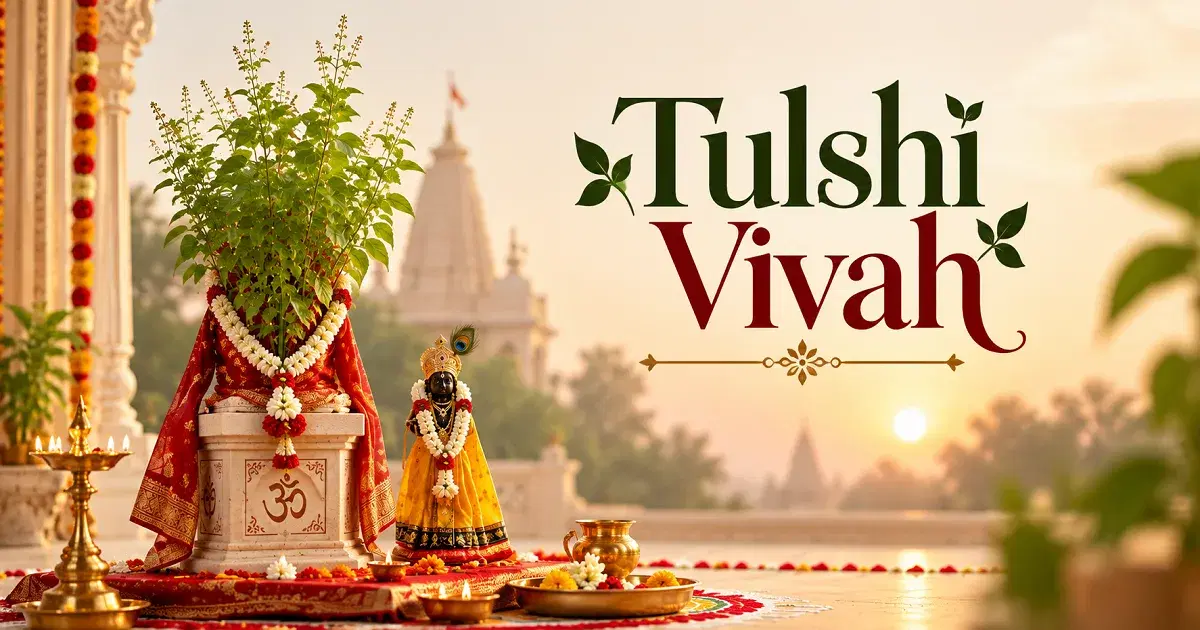
Tulsi Vivah is one of the most beautiful traditional celebrations in Indian culture. It marks the symbolic wedding of the sacred Tulsi plant, also known as holy basil, to Lord Vishnu, who is often worshipped in the form of Shaligram. The festival holds a special place in Hindu households. It brings together faith, family traditions, nature and the joy of a wedding ceremony, all in one day. Even people who don’t follow every ritual can feel the warmth of it. The Tulsi plant that quietly sits in the courtyard suddenly becomes the bride of the day. It’s a festival that feels both sacred and wonderfully homely.
Celebrated after Diwali, Tulsi Vivah fills homes and temples with a festive mood. Families decorate their Tulsi plants, prepare traditional sweets and arrange the wedding rituals with great care. Relatives are invited to join, and everyone from grandparents to the youngest kids gets involved. For many people, it’s also the moment that marks the beginning of the Hindu wedding season. There’s a lot of love packed into one evening.
In 2026, Tulsi Vivah is a lovely chance to understand Indian traditions and experience a festival that has been celebrated across generations. Whether you follow every ritual or simply enjoy learning about Indian culture, this celebration gives you a meaningful look at the country’s rich heritage. Let’s walk through how it’s celebrated so you can take part in your own way.
What Is Tulsi Vivah and Why Is It Celebrated?
Tulsi Vivah is a traditional Hindu festival that celebrates the ceremonial marriage of Goddess Tulsi to Lord Vishnu. In many households, Lord Vishnu is represented by a Shaligram stone during the ceremony.
Tulsi, or holy basil, is considered a sacred plant in Hinduism. You’ll often find it growing in courtyards, balconies and small gardens. Many families start their day by watering the plant and saying a prayer near it.
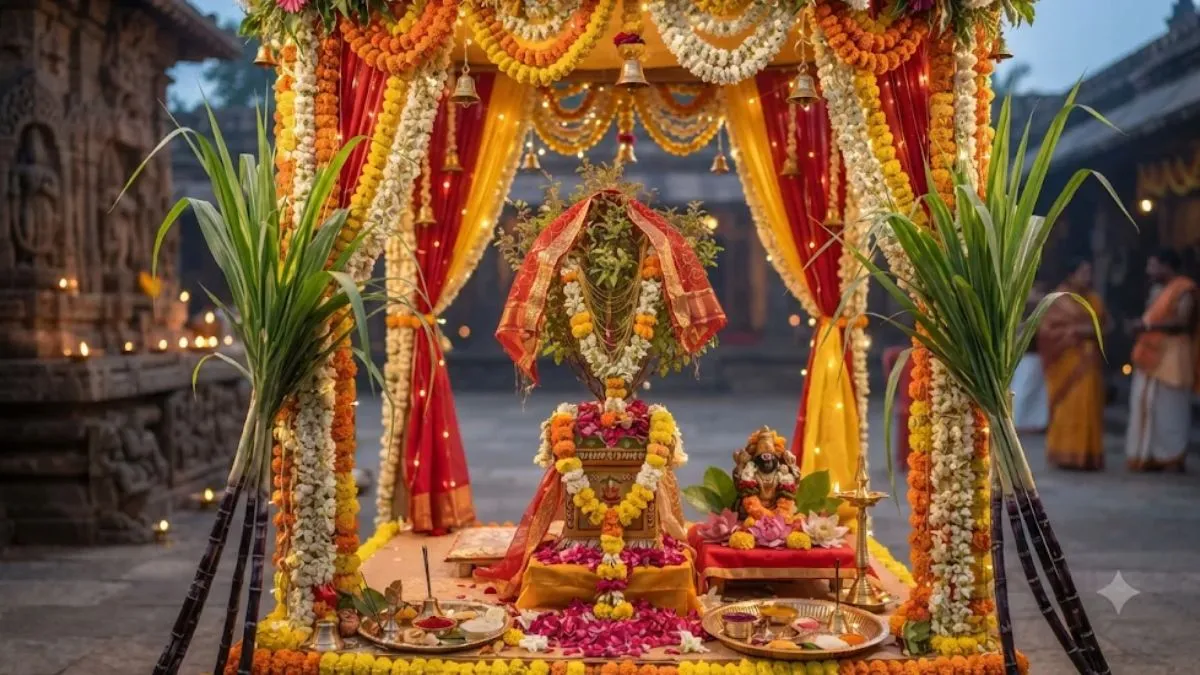
The festival follows wedding-style customs. The Tulsi plant is dressed up like a bride, while Lord Vishnu or Shaligram is prepared as the groom. A small mandap is set up, devotional songs are sung and traditional wedding rituals are performed.
But the celebration isn’t only about devotion. It also reflects the Indian way of respecting plants, keeping family customs alive and bringing people together through festivals.
Tulsi Vivah 2026 Date and Auspicious Occasion
Tulsi Vivah is generally observed on the Dwadashi Tithi of Shukla Paksha in the Hindu month of Kartik. Some communities celebrate it on Kartik Ekadashi or on the days that follow, depending on regional traditions and the local religious calendar.
In 2026, the festival falls in November. Since tithi timings and regional practices can differ, it’s best to check the exact date and puja timing in a reliable local Hindu Panchang.
The festival usually comes after Diwali and Dev Uthani Ekadashi. According to Hindu belief, Lord Vishnu wakes up from his four-month cosmic rest around this time. Tulsi Vivah symbolically celebrates his marriage and is seen as an auspicious time to begin wedding ceremonies and other important activities.
The Story Behind Tulsi Vivah: Vrinda and Lord Vishnu
The story of Tulsi Vivah comes from Hindu mythology and is closely tied to Goddess Vrinda and Lord Vishnu.
In a popular version of the legend, Vrinda was a deeply devoted woman married to Jalandhar. Her devotion and spiritual strength protected him from defeat. When Lord Vishnu stepped into the battle against Jalandhar, Vrinda realised she had been deceived, and she was heartbroken.
She cursed Lord Vishnu, but he later blessed her and gave her a special place in his worship. Vrinda became associated with the sacred Tulsi plant, and Lord Vishnu promised that Tulsi would always remain dear to him.
That’s why Tulsi leaves are considered so important in Vishnu and Krishna worship. The marriage of Tulsi and Shaligram represents their eternal bond, and it’s remembered every year through Tulsi Vivah.
Important Tulsi Vivah Rituals and Traditions
🌿 Important Tulsi Vivah Rituals and Traditions
Click any ritual card to play the Tulsi Vivah devotional song.
Cleaning and Decorating
Flowers, rangoli and bridal chunari
▶ CLICK TO PLAY SONGWedding Mandap
Sugarcane and flower decorations
▶ CLICK TO PLAY SONGGanesh Puja
Prayers, mantras and offerings
▶ CLICK TO PLAY SONGHaldi Ceremony
Turmeric and wedding preparations
▶ CLICK TO PLAY SONGKanyadaan and Wedding
Garlands and marriage rituals
▶ CLICK TO PLAY SONGAarti and Prasad
Devotional prayers and offerings
▶ CLICK TO PLAY SONGTulsi Vivah
🌿 Sacred Indian Tradition 🌿
Tulsi Vivah is celebrated with customs that feel a lot like a traditional Indian wedding. The exact rituals may change from one family or region to another, but the central idea stays the same.
1. Cleaning and Decorating the Tulsi Plant
Preparations usually begin by cleaning the courtyard or balcony where the Tulsi plant is kept. The space is decorated with flowers, rangoli and small oil lamps.
The Tulsi plant is dressed like a bride in a red or yellow chunari. Some families also decorate the pot with colourful fabric, bangles, flowers and traditional ornaments.
Even a simple setup can look lovely. A few marigold flowers, a small rangoli and two diyas are enough to create a festive mood.
2. Preparing the Wedding Mandap
A small wedding mandap is built around the Tulsi plant. Sugarcane stalks are traditionally used for it, though flowers and decorative cloth are also common.
A small chowki is arranged for the Shaligram stone or an idol of Lord Vishnu. The bride and groom are placed close to each other, just as they would be at a real wedding.
3. Performing Ganesh Puja
Before the main ceremony begins, devotees traditionally pray to Lord Ganesha. He is worshipped as the remover of obstacles and is invited to bless the occasion.
Families offer flowers, rice, sweets and prayers according to their own customs.
4. Haldi and Wedding Preparations
Some households perform a symbolic haldi ceremony before the wedding. Turmeric paste is offered to Tulsi as part of the bridal preparations.
There may also be traditional songs, devotional music and family members gathering around. These little details give Tulsi Vivah the warm feeling of an Indian family wedding.
5. Kanyadaan and Marriage Rituals
In the main ceremony, Tulsi is treated as the bride and Shaligram or Lord Vishnu as the groom. A family member may perform a symbolic Kanyadaan, which represents giving away the bride.
Depending on family traditions, the ceremony includes exchanging garlands, tying a sacred thread, reciting mantras and performing symbolic pheras.
6. Aarti and Distribution of Prasad
The celebration usually ends with aarti. Devotees light diyas, sing devotional songs and pray for happiness, peace and prosperity.
Sweets, fruits and other prasad are shared among family members and guests. Sharing prasad makes the evening feel like a family celebration rather than a purely individual ritual.
How to Celebrate Tulsi Vivah at Home in 2026
You don’t need an elaborate setup to celebrate Tulsi Vivah. A small, thoughtfully prepared ceremony at home can be just as meaningful.
Here’s a simple way to organise it:
Clean the surroundings: Wash the Tulsi platform and tidy the area around it before decorating.
Prepare decorations: Arrange flowers, rangoli, a red chunari and a few diyas.
Make a small mandap: Use sugarcane stalks or simple decorative materials.
Arrange puja samagri: Keep kumkum, haldi, rice, flowers, fruits, incense sticks and sweets ready.
Place Shaligram or Vishnu idol: Set up the sacred representation of Lord Vishnu beside the Tulsi plant.
Perform the puja: Follow your family tradition or ask a priest for guidance on the wedding rituals.
Sing aarti and distribute prasad: Invite your family to join in and end the ceremony with prayers.
A handy tip is to arrange the puja items a day before the festival. That way you avoid last-minute shopping and get more time to enjoy the celebration with your family.
Tulsi Vivah Celebration Across Different Indian Regions
India has many regional traditions, and Tulsi Vivah is celebrated under different names and customs across the country. The religious meaning stays similar, but the way families organise the ceremony can look quite different.
Maharashtra
In Maharashtra, the ceremony is commonly called Tulshiche Lagna. Families decorate the Tulsi Vrindavan with flowers, rangoli and colourful decorations. Traditional wedding songs and sharing sweets are a big part of the celebration.
Uttar Pradesh
In places like Mathura and Vrindavan, Tulsi Vivah is closely linked with Lord Krishna worship. Temples may hold special ceremonies with devotional singing, decorations and wedding-style rituals.
Gujarat
Gujarati families celebrate with traditional puja arrangements, colourful rangoli and family gatherings. Local customs may include devotional songs and festive food.
Andhra Pradesh and Telangana
Here the festival is also known as Tulasi Kalyanam. In some traditions, an Amla plant or branch is associated with Lord Vishnu during the symbolic marriage. Special prayers and traditional offerings are arranged.
Rajasthan and Madhya Pradesh
Families in Rajasthan and Madhya Pradesh celebrate with decorated Tulsi plants, diyas, traditional puja and sweets. In many homes, it’s a small family gathering where elders guide the younger ones through the rituals.
These regional differences make Tulsi Vivah a wonderful reflection of India’s cultural diversity.
Traditional Foods and Sweets Prepared During Tulsi Vivah
Food is a big part of Indian festivals, and Tulsi Vivah is no different. Families often prepare simple vegetarian dishes and sweets as offerings and prasad.
Some commonly prepared festive foods include:
Ladoo: Besan, atta and other traditional ladoos are popular offerings.
Panchamrit: A sacred mixture usually made with milk, curd, honey, sugar and ghee.
Kheer: A sweet rice pudding made with milk, sugar and dry fruits.
Puri and Halwa: Some households make these traditional dishes for family and guests.
Seasonal Fruits: Bananas, apples, coconuts and other available fruits are offered during puja.
Food traditions vary from family to family. What stays common is preparing fresh vegetarian offerings and sharing them with everyone after the ceremony.
Cultural and Religious Significance of Tulsi Vivah
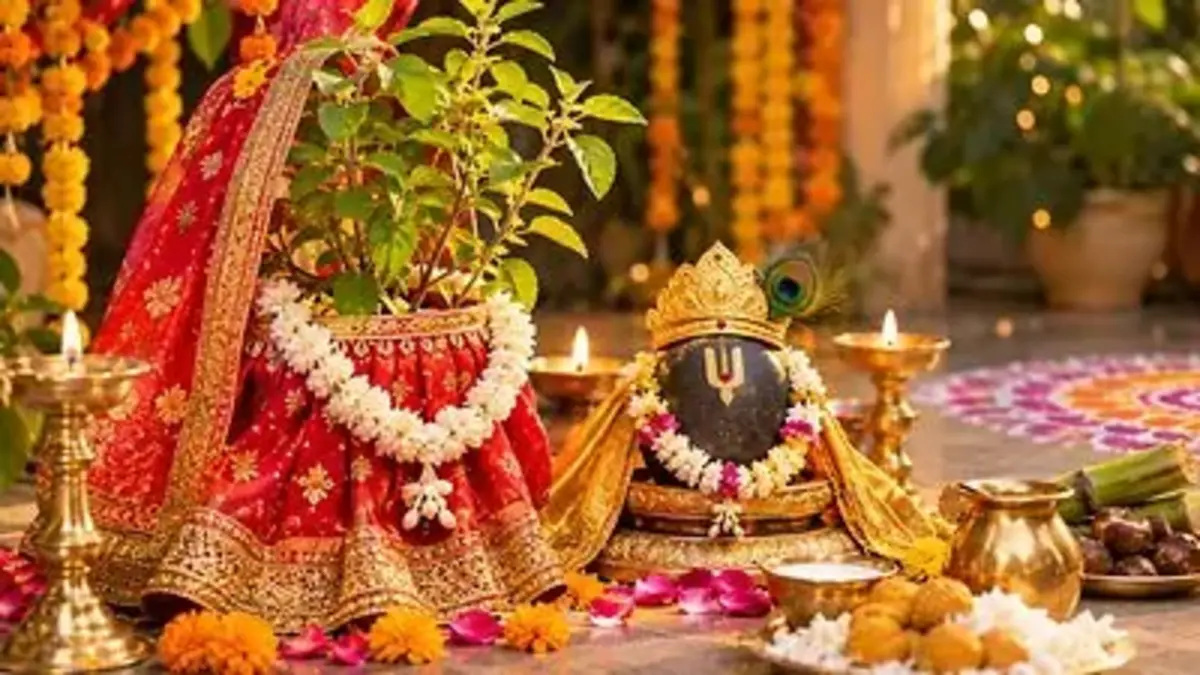
Tulsi Vivah holds a special place in Indian culture because it stands for devotion, family values and respect for nature.
1. Importance of Marriage Traditions: The festival symbolises the value of marriage and commitment in Hindu traditions. Its wedding rituals echo many of the customs followed in traditional Indian marriages.
2. Connection with Nature: Tulsi isn’t treated like an ordinary garden plant. It’s respected as a sacred part of the household, and worshipping it reflects the Indian way of living close to nature.
3. Family Bonding: Grandparents, parents and children often take part together. The younger ones learn religious stories, traditional decorations and the meaning behind each ritual.
4. Spiritual Beliefs: Devotees believe that worshipping Goddess Tulsi and Lord Vishnu brings peace, happiness and prosperity to the home.
5. Beginning of the Wedding Season: Tulsi Vivah is traditionally linked with the end of Chaturmas and the start of the auspicious Hindu wedding season.
Traditional Decorations and Ideas for Tulsi Vivah 2026
Decorations add charm to the celebration, and you can create a beautiful setting without spending much.
Marigold Flowers: Use fresh marigolds around the Tulsi platform and mandap.
Traditional Rangoli: Make a colourful rangoli with natural colours or flower petals.
Clay Diyas: Place small earthen lamps around the Tulsi plant for a warm evening glow.
Red and Yellow Fabrics: Decorate the Tulsi pot and mandap with traditional fabrics.
Sugarcane Decoration: Add sugarcane stalks to give the setup a traditional wedding look.
If kids are joining in, let them help with the flowers and rangoli. It makes the celebration more fun and helps them understand why these traditions matter.
Tulsi Vivah 2026: Things to Keep in Mind
If you’re planning to celebrate at home, a little preparation makes everything easier.
First, check the festival date and local puja muhurat in a reliable Panchang. Keep all the puja materials ready, including flowers, fruits, sweets, kumkum and incense sticks.
Be careful not to damage the Tulsi plant while decorating it. Choose lightweight decorations and don’t hang heavy ornaments on its branches. If you’re using electric lights, keep the wires away from water and open flames.
You can also invite relatives or neighbours to join you. A small gathering with devotional songs, traditional food and prayers can make the evening even more memorable.
Conclusion
Tulsi Vivah 2026 is more than a religious ceremony. It’s a celebration of Indian culture, family relationships, devotion and traditional values. From decorating the sacred Tulsi plant to performing the wedding rituals and sharing prasad, every part of the festival carries its own meaning.
It also reminds us to respect nature and preserve traditions that have been handed down for generations. Whether you organise a grand ceremony in a temple or a simple ritual at home, Tulsi Vivah is a beautiful way to connect with Indian cultural heritage and spend meaningful time with your family.
Tulsi Vivah 2026 will be celebrated on 21 November.
It celebrates the symbolic marriage of Goddess Tulsi and Lord Vishnu.
The sacred Tulsi (holy basil) plant is worshipped.
Decoration, puja, garland exchange, wedding rituals and aarti.
Ladoo, kheer, puri, halwa and panchamrit are commonly prepared.
Sources and notes
Links the author listed for this post.
Information in this article is based on traditional Hindu beliefs, cultural practices, religious stories and commonly followed Tulsi Vivah customs. Festival dates and puja timings may vary according to regional Panchang calendars.
- 1
Discussion
0 comments
No comments yet
Discussion will appear here once it loads.