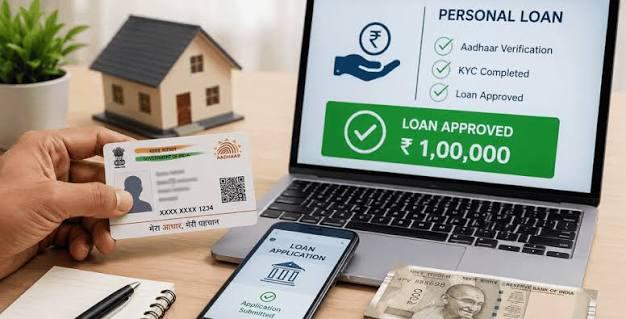
Applying for a personal loan can be quite simple when your documents are ready. But if even one important document is missing, your application may take longer or the lender may ask for additional verification. In 2026, lenders generally look at your identity, address, income, employment and financial profile before approving a personal loan. RBI directions also require regulated lenders to obtain key information about a borrower’s economic profile, including age, occupation and income, while assessing creditworthiness.
The exact checklist can vary from one bank or NBFC to another, so it is always worth checking the lender’s latest requirements before applying.
What Are Personal Loan Documents?
Personal loan documents are papers or digital records used by a lender to verify who you are, where you live, how much you earn and whether you can comfortably repay the loan.
Unlike a home loan, a personal loan is usually unsecured, so you normally do not need to provide property documents as collateral. Instead, lenders rely heavily on your income, credit history and overall financial profile.
Quick Personal Loan Document Checklist
Identity Proof
Aadhaar, Passport, Voter ID, Driving Licence
Address Proof
Aadhaar, Passport, utility bill, bank statement
PAN Card
PAN card
Income Proof
Salary slips, ITR, Form 16
Bank Statement
Recent bank statements
Employment Proof
Employee ID, appointment letter, employer details
Photographs
Recent passport-size photos, where required
Loan Application
Completed loan application form
1. Identity Proof
Identity verification is one of the first steps in a personal loan application.
You may be asked to provide a government-issued identity document such as:
Aadhaar Card
Passport
Voter ID
Driving Licence
Other acceptable government-issued identity documents
The name on your application should generally match the identity document you submit.
RBI's KYC framework requires regulated entities to verify customer identity and address as part of their KYC process.
Tip
Before uploading your ID, check that the document is clear, valid and readable. Blurry scans can create unnecessary delays.
2. Address Proof
Lenders may also need proof of your current residential address.
Commonly accepted documents can include:
Aadhaar Card
Passport
Voter ID
Driving Licence
Recent utility bill
Bank statement
Other documents accepted by the lender
The exact list differs between lenders.
For example, bank KYC guidance can include documents such as passport, PAN, voter ID and driving licence for identity verification, while certain address documents may be accepted for residence verification.
What if your permanent and current addresses are different?
Don't worry. You may be asked for an additional address document or declaration. The lender will tell you what is acceptable for your application.
3. PAN Card
A PAN card is an important document when applying for many financial products in India.
It helps the lender identify your financial and tax records. Make sure the PAN details entered in your application are accurate.
Quick check before applying:
Correct PAN number
Correct name
No typing mistakes
Clear copy or digital image
If your PAN details do not match your other documents, you may be asked for additional verification.
4. Income Proof for Salaried Applicants
If you are a salaried employee, your lender may ask for documents that show your regular income.
Common examples include:
Latest salary slips
Recent bank statements
Form 16
Salary certificate, where applicable
Employment or company details
Income proof helps the lender understand whether your monthly earnings are sufficient for the proposed EMI.
RBI's current responsible-business-conduct directions state that lenders should obtain information about a borrower's economic profile, including income and occupation, while assessing creditworthiness.
Simple Tip
Keep your latest salary slips and recent bank statements ready before starting the application. This can make the process smoother.
5. Income Documents for Self-Employed Applicants
Self-employed applicants may have a different documentation process because their income may not come through a fixed monthly salary.
Depending on the lender, you may be asked for:
Income Tax Returns (ITRs)
Bank statements
Business registration documents
GST-related documents, where applicable
Profit and loss statements
Balance sheets
Other financial statements
The exact requirements depend on the lender and the nature of your business.
Self-Employed Applicant Checklist
Document | Purpose |
|---|---|
ITR | Shows declared income |
Bank statement | Shows financial transactions |
Business proof | Confirms business activity |
Financial statements | Helps assess financial health |
GST documents | May support business/income verification |
Not every self-employed borrower will need every document listed here.
6. Bank Statements
Recent bank statements can be an important part of your personal loan application.
They help lenders understand your income flow and regular financial activity. Depending on the lender, you may be asked for statements covering a particular recent period.
Before submitting them, check that:
Your name is visible
The account details are clear
Transactions are readable
The statement covers the required period
The document has not been edited
If your salary is credited into the same account, the statement may also help demonstrate regular income.
7. Employment Proof
Some lenders may request employment-related information, particularly from salaried borrowers.
Possible documents include:
Employee ID card
Appointment letter
Employment certificate
Employer details
Salary certificate
The purpose is generally to confirm your employment status and income source.
For applicants who have recently changed jobs, additional documents may sometimes be requested because the lender needs to understand the stability of the current income.
8. Photographs
Some personal loan applications may require recent passport-size photographs, particularly when applying through a branch.
For online applications, a photograph may instead be captured or uploaded digitally.
Make sure your photograph meets the lender's size and format requirements.
9. Personal Loan Application Form
The application form is also an important part of your documentation.
You may need to provide details such as:
Full name
Date of birth
Contact information
Address
Employment details
Monthly income
Existing loan details
Requested loan amount
Bank account details
Important: Enter information carefully. Even a small mismatch between your application and supporting documents can lead to additional verificatio
How to Prepare Your Documents Before Applying
Preparing everything beforehand can save time.
1. Check Your Name
Make sure your name is consistent across your PAN, identity documents, bank account and application.
2. Keep Digital Copies
Create clear PDF or image copies of your important documents. This is particularly useful for online applications.
3. Check Document Validity
Don't submit expired or outdated documents when the lender requires a current document.
4. Keep Original Documents Nearby
Even if you apply online, the lender may ask for additional verification.
5. Avoid Altering Documents
Never edit income statements, bank statements or identity documents to change information. Submit genuine documents only.
What Happens After You Submit the Documents?
Once your application is submitted, the lender generally verifies the information provided.
The process may involve:
Application → KYC Verification → Income Verification → Credit Assessment → Approval Decision → Loan Agreement → Disbursement
The lender may contact you if additional information or documents are needed.
For digital lending, RBI's 2025 directions require regulated entities to follow specific requirements around disclosures, data collection and borrower protection.
Important Things to Check Before Taking a Personal Loan
Getting your documents ready is only one part of the process. Before accepting a loan, look at the complete cost.
Check These Points
Interest rate
Processing fee
Other applicable charges
EMI amount
Loan tenure
Prepayment or foreclosure conditions
Penal charges
Total repayment amount
For digital loans, RBI requires regulated entities to provide borrowers with important loan information through a Key Fact Statement (KFS), including applicable cost-related information.
Don't Focus Only on the EMI
A lower EMI can sometimes mean a longer repayment period. Always compare the total amount payable, not just the monthly EMI.
Be Careful With Digital Loan Apps
Online personal loans can be convenient, but you should check the lender before submitting sensitive documents.
RBI advises borrowers to verify whether a digital lending app is associated with an RBI-regulated bank or NBFC and warns against downloading suspicious loan apps received through SMS or social-media links.
Before Uploading Your Documents
✔ Check the lender's official website
✔ Verify the lender or regulated entity
✔ Read the privacy policy
✔ Check the loan terms and KFS
✔ Avoid suspicious links
✔ Never share OTPs or banking passwords
Your documents contain sensitive financial and identity information, so submit them only through trusted channels.
FAQ's
1. What documents are generally required for a personal loan?
Identity proof, address proof, PAN, income proof and bank statements are commonly requested. The exact requirements vary by lender.
2. Is PAN mandatory for a personal loan?
PAN is commonly required for personal loan applications, but requirements can vary depending on the lender and circumstances.
3. What documents are needed for salaried employees?
Salary slips, bank statements and employment-related documents may be requested along with KYC documents.
4. What documents are needed for self-employed applicants?
Self-employed borrowers may need ITRs, bank statements, business proof and financial documents, depending on the lender.
5. Can I apply for a personal loan online?
Yes. Many regulated lenders offer online applications. Use the lender's official website or verified digital lending channel and check the loan terms before submitting documents.
Sources and notes
Links the author listed for this post.
This article is based on general personal loan documentation requirements followed by banks and financial institutions in India.


Discussion
0 comments
No comments yet
Discussion will appear here once it loads.