
Imagine waking up in the morning and your alarm clock automatically adjusting to your schedule. Your coffee machine starts preparing your favourite drink, your home thermostat sets the ideal temperature, and your phone displays the fastest route to work based on real-time traffic.
Now imagine that the same connectivity supports your doctor's appointment, your online classes, your workplace meetings, your banking transactions and even the public transport system you use every day.
This is not simply a vision of a futuristic world. Many of these connected experiences already exist, and reliable internet access is helping bring them together.
Connectivity has become much more than a way to browse websites or send messages. It is increasingly the foundation that allows digital services to communicate, exchange information and work together.
You can also explore AT&T's 5G network to learn about its wireless connectivity and network coverage.
Connectivity: The Invisible Backbone of Modern Life

Connectivity is the invisible system that allows devices, people and services to interact. When it works smoothly, we rarely notice it. When it fails, even simple activities can become difficult.
Think about how many services depend on an internet connection today:
A digital payment requires communication between your device and a payment system.
A video meeting depends on data moving between participants.
A navigation app needs updated information about roads and traffic.
A smart home device may rely on a network to receive commands.
A business website needs connectivity to serve customers and process requests.
The more services become connected, the more important network availability, speed and security become.
AT&T's network information describes its combination of 5G and fiber as supporting connectivity at home, at work and while travelling. Its network capabilities are designed to support mobile broadband, data and video services.
1. Smart Homes: A More Connected Daily Routine
A connected home can bring several everyday devices together through a network. Instead of operating each device separately, users may be able to manage lighting, temperature, security and entertainment through connected applications.
For example, a smart thermostat can be adjusted remotely, while connected cameras or sensors can send notifications when activity is detected.
Connectivity can also help households manage their internet access. AT&T's Smart Home Manager offers features such as managing Wi-Fi access, viewing connected-device data usage and controlling screen time on compatible setups.
Smart home service | How connectivity helps | Everyday benefit | Important consideration |
|---|---|---|---|
Smart lighting | Connects lights to apps or schedules | Convenient control | Secure device access |
Smart thermostat | Allows remote temperature settings | Comfort and energy management | Compatible equipment |
Home security | Sends alerts from connected devices | Awareness of activity | Privacy and reliable power |
Smart appliances | Enables connected functions | Easier daily routines | Internet and device compatibility |
A connected home is not necessarily about having the most devices. It is about making technology useful, manageable and secure.
2. Healthcare: Connecting Patients and Medical Services
Connectivity is changing how people access healthcare. Telehealth allows patients to communicate with healthcare professionals through video or digital platforms, reducing the need to travel for some appointments.
Connected medical devices can also help transmit information to healthcare providers. In certain settings, network-connected equipment supports remote monitoring, data sharing and communication between medical teams.
AT&T's healthcare solutions describe how 5G and fiber connections can support telehealth services and connected medical devices.
Healthcare application | Connectivity role | Potential advantage | Key requirement |
|---|---|---|---|
Telehealth | Supports video consultations | Easier access to care | Stable connection |
Remote monitoring | Transfers device readings | Ongoing observation | Appropriate medical devices |
Hospital communication | Connects teams and systems | Faster information sharing | Secure networks |
Digital records | Enables authorised data access | Better coordination | Privacy protection |
Connectivity can improve access, but it does not replace medical professionals, physical examinations or emergency services when those are required.
3. Education: Learning Beyond the Classroom

Education no longer depends only on a physical classroom. Students can attend online lectures, access digital libraries, submit assignments and collaborate with classmates through connected platforms.
For learners in remote areas, connectivity can open access to educational resources that may not be available locally. It can also support teachers through digital lesson planning and online learning materials.
However, reliable access remains essential. A student with an unstable connection may struggle to attend a live class or download study resources.
Education service | How it uses connectivity | Student benefit | Challenge |
|---|---|---|---|
Online classes | Live video and audio | Flexible learning | Network interruptions |
Digital libraries | Online access to resources | Wider study material | Data availability |
Learning platforms | Assignments and feedback | Organised learning | Device access |
Group projects | Shared documents and calls | Collaboration | Digital skills |
A connected education system works best when internet access, affordable devices and digital literacy are available together.
4. Transportation: Smarter and More Responsive Travel
Transportation systems increasingly depend on real-time information. Navigation applications use connected data to help users identify routes, estimate travel times and respond to traffic changes.
Connectivity can also support fleet tracking, logistics coordination and communication between transport operators.
In the future, connected infrastructure may help vehicles, traffic systems and public services exchange more information. Such systems could improve coordination, although their effectiveness depends on infrastructure, safety standards and reliable communication.
Transport application | Connectivity function | Possible impact | What is needed |
|---|---|---|---|
Navigation apps | Updates routes and traffic | Better route planning | Current data |
Fleet tracking | Shares vehicle location | Improved logistics | Reliable network |
Smart traffic systems | Connects sensors and signals | Traffic management | Secure infrastructure |
Connected vehicles | Enables data exchange | New mobility features | Safety and compatibility |
Connectivity can make travel more informed, but it cannot eliminate every traffic problem or guarantee accurate arrival times.
5. Businesses: Always-On Customer Experiences
For businesses, connectivity supports communication with customers, employees, suppliers and partners. Online stores, digital payments, cloud software and customer support systems all rely on networks.
A small business can use connected tools to manage orders, communicate with customers and maintain its online presence without operating from a large physical office.
AT&T's business connectivity services and network investments reflect the role of wireless and fiber infrastructure in supporting organisations and digital operations.
Business activity | Connectivity use | Business value | Possible risk |
|---|---|---|---|
Online sales | Website and payment access | Wider customer reach | Service downtime |
Remote work | Video calls and cloud tools | Flexible collaboration | Connection instability |
Customer support | Messaging and digital channels | Faster communication | Privacy concerns |
Inventory management | Connected systems and updates | Better visibility | System disruption |
When connectivity becomes central to business operations, companies also need backup plans, cybersecurity measures and clear procedures for service interruptions.
6. 5G: Supporting the Next Generation of Connected Services
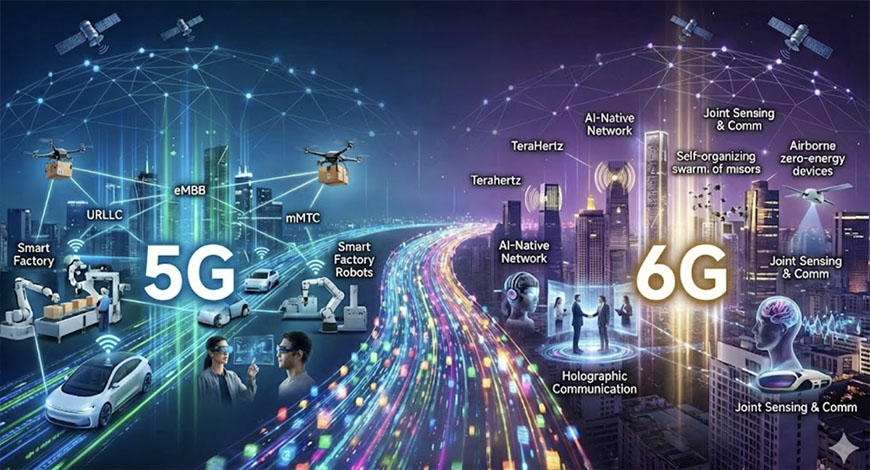
5G is a mobile network technology designed to support faster data communication and new connected experiences. Depending on network conditions, device capabilities and service availability, it can offer improved performance for activities such as streaming, gaming and connected-device communication.
AT&T continues to expand and develop its 5G network. Its official network information explains that 5G coverage requires compatible plans and devices and is not available everywhere.
5G can be particularly relevant when many devices need to communicate or when applications require responsive connections. But it is not a magic solution. The quality of a connected experience still depends on coverage, network capacity, device performance and the service being used.
7. What Happens When Connectivity Fails?
If connectivity becomes the backbone of every service, an outage can affect more than entertainment or social media.
A disconnected home may lose access to online work tools. A business may struggle to process digital payments. A student may miss a live lesson. Connected systems may stop receiving updates.
This is why network resilience matters. Connectivity providers and service operators need to prepare for disruptions through infrastructure planning, monitoring, backup systems and recovery procedures.
AT&T offers an Internet Backup feature for eligible fiber customers that can use an eligible wireless device to help keep a home network online during certain fiber outages. Availability depends on specific service and equipment requirements.
AT&T+1
Connectivity challenge | Everyday effect | Helpful preparation | Long-term priority |
|---|---|---|---|
Network outage | Services may become unavailable | Backup connection | Network resilience |
Weak signal | Slow or interrupted access | Check coverage and placement | Better infrastructure |
Cybersecurity threats | Risk to accounts and data | Strong passwords and updates | Secure systems |
High demand | Reduced performance | Manage connected devices | Network capacity |
The goal is not simply to connect everything. It is to build systems that remain dependable, secure and accessible when people need them most.
The Future: Connectivity as a Foundation for Everyday Services
As more services become connected, the next stage of digital life may involve greater coordination between devices, applications and infrastructure.
Smart cities could use connected sensors to monitor public infrastructure. Businesses may use connected systems to manage operations more efficiently. Healthcare providers may expand remote services, while homes could become more responsive to people's routines.
The future of connectivity will not be measured only by how fast a phone downloads a file. It will also depend on how reliably networks support the services people depend on.
For AT&T and other telecommunications providers, this means continuing to develop networks that support changing digital needs. AT&T's combination of 5G and fiber infrastructure is part of its approach to supporting connected experiences across different environments.
You can also explore AT&T's 5G network to learn about its wireless connectivity and network coverage.
For everyday digital productivity, explore free online tools on AltFTool to discover useful utilities for writing, content creation, conversion and other digital tasks.
Connectivity Should Make Life Easier, Not More Complicated

Connectivity is becoming an essential part of modern life. It supports communication, education, healthcare, transportation, business and entertainment.
But a truly connected future should not be defined by the number of devices online. It should be defined by whether technology makes everyday experiences more accessible, convenient and secure.
Reliable connectivity can help people stay informed, work more flexibly, access services and communicate across distances. At the same time, digital inclusion, privacy, cybersecurity and network resilience must remain priorities.
The question is no longer whether connectivity will influence everyday life. It already does.
The more important question is how we build a connected world that works for everyone.
FAQs
Connectivity means the ability of devices, people and digital services to communicate through networks such as mobile data, Wi-Fi and broadband internet.
AT&T provides wireless services, 5G connectivity and broadband options, including fiber internet in eligible locations.
5G supports mobile data communication and can enable responsive digital experiences, connected devices and applications that require higher network performance.
It allows compatible devices such as lights, thermostats and security systems to communicate with apps and networks for remote control and monitoring.
Sources and notes
Links the author listed for this post.
This article is based on information from AT&T's official network, 5G, fiber internet, smart home and healthcare resources. Examples of connected services are provided for general informational purposes.


Discussion
0 comments