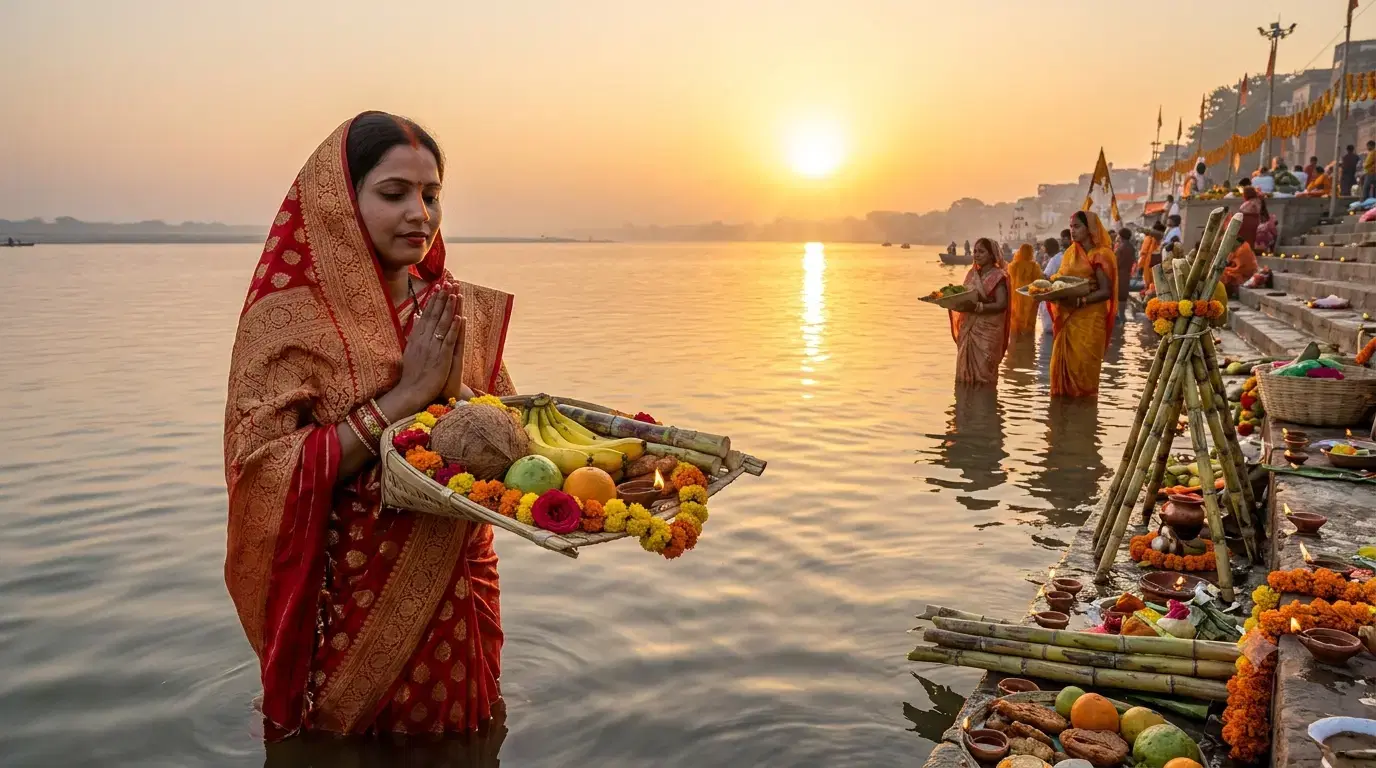
Chhath Puja is one of those Indian festivals where devotion, nature, family, and tradition come together beautifully. The festival is mainly associated with the worship of Lord Surya (the Sun God) and Chhathi Maiya, and it is especially important in Bihar, Jharkhand, eastern Uttar Pradesh and parts of Nepal. It is also celebrated by communities across India and beyond.
What makes Chhath Puja particularly special is its direct connection with nature. Instead of focusing mainly on temples or idols, devotees gather near rivers, ponds and other water bodies and offer Arghya to the setting and rising Sun.
For me, one of the most beautiful things about Chhath is the atmosphere around the ghats. Families arrive together with bamboo baskets filled with fruits and traditional offerings, devotional songs can be heard around the water, and the entire place feels peaceful and deeply connected to tradition.
What Is Chhath Puja?
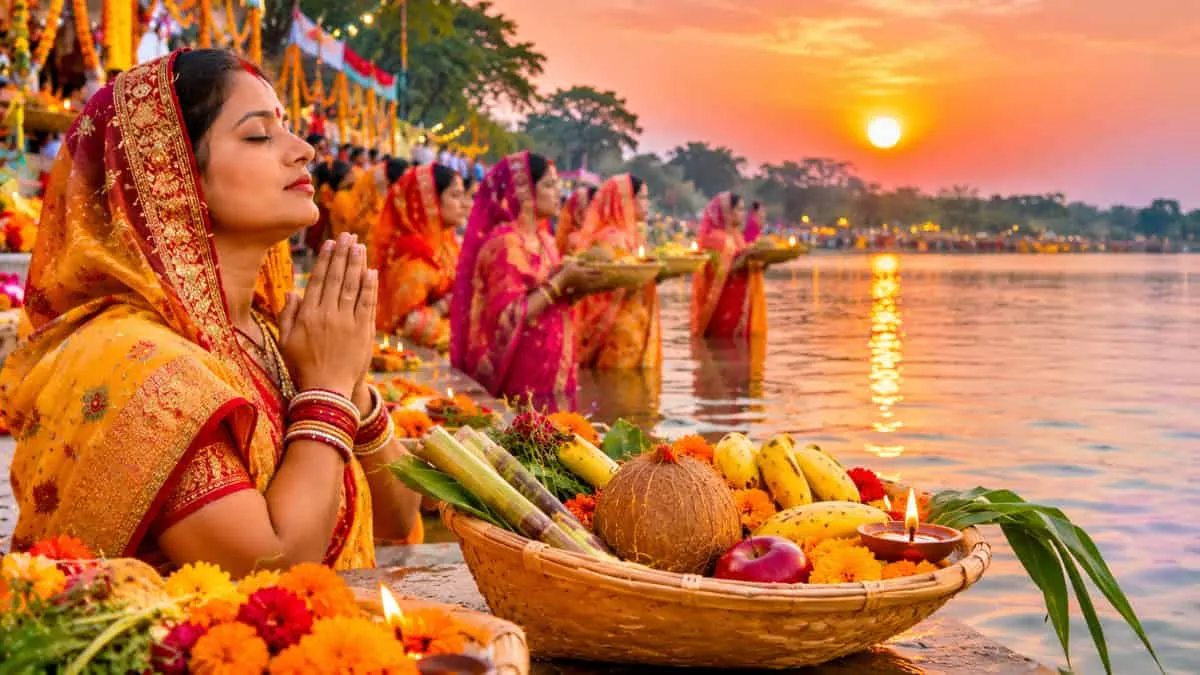
Chhath Puja is a four-day Hindu festival dedicated primarily to Surya and Chhathi Maiya. It is also known as Chhath, Chhathi, Surya Shashthi, Chhath Parv and Dala Chhath in different traditions.
The main Kartik Chhath is observed around Kartik Shukla Shashthi, generally in October or November. Chhath is also observed during Chaitra, although Kartik Chhath is generally celebrated on a much larger scale.
The festival is known for:
Worship of the Sun
Devotion to Chhathi Maiya
Fasting and self-discipline
Holy bathing
Sandhya Arghya to the setting Sun
Usha Arghya to the rising Sun
Traditional Chhath songs
Family and community participation
Traditional prasad such as Thekua and fruits
History of Chhath Puja
The history of Chhath Puja is connected with ancient traditions of Surya worship. Government tourism sources describe the festival as rooted in ancient Hindu and Vedic traditions, where the Sun is revered as a source of life, energy and light.
There are also several traditional stories associated with Chhath and Surya worship. Some accounts connect the practice with characters from the Ramayana and Mahabharata, while other traditions have developed through regional folk beliefs.
For example, traditional accounts associate Karna with the worship of Surya and describe him offering Arghya while standing in water. Other traditional narratives connect Surya worship with Sita and Draupadi. These stories are part of religious and cultural traditions, and versions can differ between regions and families.
So, rather than having one single origin story, Chhath can be understood as a festival shaped by ancient Sun worship, regional traditions, folk practices and generations of family customs.
Why Is Chhath Puja Celebrated?
At its heart, Chhath is a festival of gratitude.
The Sun is essential for life on Earth. It provides light and energy and plays an important role in agriculture and nature. Devotees therefore express gratitude to Surya for life, health, prosperity and well-being.
The festival is also associated with prayers for the welfare of family members, children and loved ones.
Important Reasons Behind Chhath Puja
Worship of Surya
Gratitude for the source of life and energy.
Chhathi Maiya
Prayers for family welfare and protection.
Fasting
Represents discipline, devotion and self-control.
Water Rituals
Symbolize spiritual purification and connection with nature.
Arghya
An expression of gratitude, devotion and prayer.
Family Participation
Strengthens family bonds and community spirit.
Traditional Prasad
Helps preserve traditional food and cultural practices.
The Four Days of Chhath Puja
One of the most important features of Chhath is that it is not a one-day celebration. The main observance takes place over four days, with each day having its own ritual and significance.
Day 1: Nahay Khay
The first day is called Nahay Khay.
Devotees traditionally take a holy bath and begin the festival with cleanliness and discipline. Homes and cooking areas are cleaned, and food is prepared with particular attention to purity.
Traditional meals can include rice, dal and pumpkin preparations, although recipes and practices vary by region and family tradition.
The main idea: purification and preparation for the days ahead.
Day 2: Kharna
The second day is known as Kharna or Lohanda.
Devotees observe a fast during the day and traditionally break it after sunset following the evening ritual. Offerings commonly include kheer and fruits, with variations depending on family customs.
After Kharna, the rigorous fasting period traditionally continues until the following morning's Arghya.
Day 3: Sandhya Arghya
The third day is the main evening ritual of Chhath.
Devotees prepare their offerings and go to a river, pond or another suitable water body. As the Sun begins to set, they offer Arghya to the setting Sun.
This is one of the most distinctive features of Chhath because the setting Sun is worshipped before the rising Sun.
Traditional baskets may contain fruits, coconut, sugarcane, Thekua and other offerings. Devotional songs are also an important part of the atmosphere.
Day 4: Usha Arghya
The final day begins before sunrise.
Devotees return to the ghat and offer Usha Arghya to the rising Sun. After completing the ritual, the fast is traditionally concluded and prasad is shared with family members, friends and neighbours.
For many families, this morning is an emotional moment because it marks the completion of several days of discipline and devotion.
Why Are Both the Setting and Rising Sun Worshipped?
This is perhaps the most interesting aspect of Chhath Puja.
In many Sun-worship traditions, the focus is naturally placed on the rising Sun. Chhath, however, gives importance to both the setting and rising Sun. Government tourism sources specifically identify this as a distinctive feature of the festival.
The evening Arghya can be viewed as an expression of gratitude, while the morning Arghya welcomes the new day.
It creates a beautiful message: respect the journey, be grateful for what has passed, and welcome what is coming next.
Chhathi Maiya and Her Significance
Along with Surya, devotees also worship Chhathi Maiya, traditionally associated with Shashthi Devi.
In folk traditions, Chhathi Maiya is revered for family welfare, protection and the well-being of children. Different communities may have their own stories and interpretations surrounding her. B
This connection makes Chhath especially meaningful for families. Many devotees observe the vrat with prayers for the health, happiness and prosperity of their loved ones.
Traditional Chhath Puja Offerings
Chhath prasad is another important part of the festival.
Some commonly seen offerings include:
Thekua
Rice laddoo or Kasar
Kheer
Sugarcane
Bananas and other seasonal fruits
Coconut
Sweets
Rice and wheat-based preparations
The exact list can vary according to regional and family traditions. The Ministry of Information and Broadcasting also describes traditional offerings such as Thekua, rice-based sweets, fruits and other locally sourced items.
Why Is Thekua So Important?
Thekua is perhaps the most recognizable Chhath prasad. It is generally prepared from wheat flour and jaggery, with variations in ingredients and preparation.
For many families, making Thekua is not simply cooking. It is a tradition passed from one generation to another.
Chhath Puja and Nature
Chhath has a strong relationship with natural elements.
The Sun, water, fruits, sugarcane, wheat, rice and other natural products all have a visible place in the festival. Devotees gather at rivers, ponds and other water bodies for the main Arghya rituals.
The emphasis on cleanliness is also significant. Communities often clean and decorate the ghats before the festival.
This makes Chhath more than a religious celebration. It also reflects a traditional appreciation of nature, water and the environment.
Chhath Puja Traditions and Community Spirit
Chhath is deeply connected with community participation.
Families often prepare prasad together, clean their surroundings, decorate their homes and travel to ghats together. Traditional folk songs create a familiar festive atmosphere.
Another interesting aspect is that Chhath traditionally does not require the central role of a priest in the way many other Hindu rituals do. Devotees directly offer prayers to the Sun and nature. Bihar government sources describe this direct form of worship as an important part of Chhath's social character.
Chhath Brings People Together
The festival brings people from different backgrounds to the same ghats.
You can see families standing together in the water, sharing prasad and helping one another with preparations. This sense of togetherness is one reason Chhath has remained such a strong cultural tradition.
Chhath Puja in Different Regions
Chhath is strongly associated with Bihar and eastern Uttar Pradesh, but its celebration has spread much further.
It is also widely observed in:
Region | Chhath Celebration |
|---|---|
Bihar | One of the most prominent festivals |
Jharkhand | Widely celebrated |
Eastern Uttar Pradesh | Major community celebration |
Nepal Terai | Strong traditional observance |
Delhi | Large celebrations by migrant communities |
Mumbai | Community celebrations at water bodies |
Kolkata | Large celebrations around river ghats |
Other Indian cities | Celebrated by communities from Bihar and Purvanchal |
Government tourism information notes that Chhath is celebrated beyond its traditional heartlands, including by communities across India and Nepal.
Important Things to Remember About Chhath Puja
If you are learning about Chhath for the first time, these points are worth remembering:
Chhath is primarily dedicated to Surya and Chhathi Maiya.
The main Kartik observance takes place around Kartik Shukla Shashthi.
The festival traditionally lasts four days.
Nahay Khay begins the observance.
Kharna is observed on the second day.
Sandhya Arghya is offered to the setting Sun.
Usha Arghya is offered to the rising Sun.
Thekua and fruits are among the well-known offerings.
Cleanliness and purity are given special importance.
Ritual details can vary according to family and regional traditions.
FAQ's
Chhath Puja is a four-day Hindu festival dedicated mainly to Surya and Chhathi Maiya.
Devotees worship Surya and pray for health, prosperity, family welfare and well-being.
Chhath uniquely includes Arghya to the setting Sun as well as the rising Sun.
The main Chhath observance traditionally lasts four days.
Thekua is one of the most famous traditional prasad items associated with Chhath Puja.
Sources and notes
Links the author listed for this post.
This article is based on information from Bihar Tourism, the Government of India tourism portal, and official cultural sources.

Discussion
0 comments
No comments yet
Discussion will appear here once it loads.