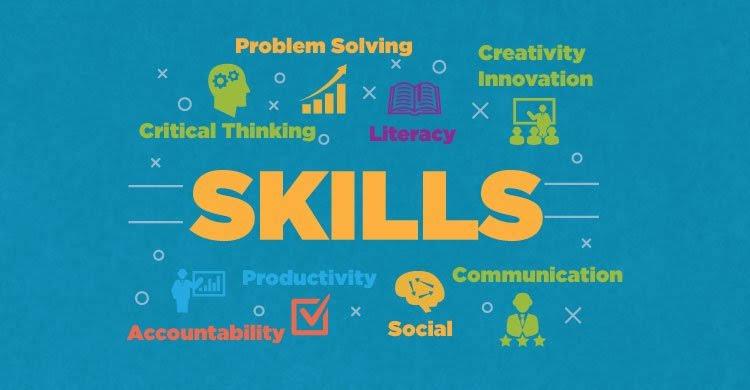
The way people build their careers is changing. A college degree is still valuable, but it is no longer the only thing employers look at when hiring someone. Today, companies want people who can solve problems, understand technology, communicate clearly, and adapt when something new comes along.
Think about how much the workplace has changed in just a few years. Artificial intelligence can now handle tasks that once required hours of manual work. Remote teams have become common, digital tools are part of everyday business, and even traditional industries are adopting new technologies.
Because of these changes, some job roles are evolving faster than university courses can keep up. A degree may provide a strong foundation, but practical skills help people stay relevant when the nature of work changes.
So, what should someone learn to prepare for the future?
c answer is not to learn every new technology or collect dozens of certificates. It is to develop a combination of technical, professional, and personal skills that can be useful across different industries.
Let's explore the skills worth investing time in and why they matter for long-term career growth.
Why Skills Are Becoming More Important Than Degrees
A degree shows that someone has studied a particular subject and developed a foundation of knowledge. However, it does not always prove that a person can handle the practical challenges of a modern workplace.
For example, a marketing graduate may understand traditional advertising but still need to learn social media analytics, AI-assisted content creation, and digital campaign management.
Similarly, someone working in finance may need to understand data analysis, financial software, and automation to manage modern business requirements.
This does not mean degrees have lost their value. Instead, education and practical skills are becoming more closely connected.
Here are a few reasons why skill development matters:
Technology is changing quickly: Employees need to understand new tools and platforms.
Job responsibilities are evolving: One position may now require several different abilities.
Companies value practical experience: Employers often look for people who can apply their knowledge to real situations.
Career changes are more common: Transferable skills make it easier to move between industries.
Continuous learning is becoming necessary: What works today may need updating tomorrow.
10 Skills Worth Learning for the Changing Job Market
Not every skill is equally important for every career. However, some abilities are useful across multiple industries and can help professionals remain flexible.
1. Artificial Intelligence and AI Literacy
Artificial intelligence is becoming part of everyday work. Businesses are using AI to analyse information, automate repetitive tasks, generate ideas, improve customer support, and increase productivity.
Learning how to work with AI tools can give professionals an advantage. The goal is not to become an AI engineer overnight. It is to understand how these tools work, where they are useful, and when human judgment is still necessary.
Start by learning:
How to write clear AI prompts.
How to use AI tools for research and brainstorming.
How to check AI-generated information for accuracy.
How to automate simple everyday tasks.
How to understand the limitations and ethical concerns of AI.
People who know how to combine AI capabilities with their own knowledge can often complete tasks more efficiently.
2. Data Analysis and Interpretation
Almost every industry generates data. Retail businesses study customer purchases, healthcare organisations analyse operational information, and marketing teams measure campaign performance.
However, collecting data is only the first step. Businesses need people who can understand what the numbers mean and use that information to make better decisions.
Learning data analysis does not necessarily require advanced mathematics or programming.
Useful skills include:
Microsoft Excel and Google Sheets.
Data cleaning and organisation.
Basic statistics.
Data visualisation.
Understanding dashboards and reports.
Basic SQL for working with databases.
Professionals who can explain what the data reveals are valuable because they help organisations make decisions based on evidence rather than assumptions.
3. Communication Skills
Technology may change how people work, but communication remains essential.
Employees need to explain ideas, discuss problems, share updates, prepare reports, and work with people from different backgrounds. Poor communication can create confusion even when someone has excellent technical knowledge.
Both written and verbal communication deserve attention.
Focus on improving:
Professional email writing.
Clear presentations.
Active listening.
Explaining complex ideas in simple language.
Giving and receiving constructive feedback.
Communicating effectively in remote teams.
Good communication is not about using complicated words. It is about making sure the other person understands what you are trying to say.
4. Critical Thinking and Problem-Solving
Modern workplaces often involve situations where there is no ready-made answer. A customer may face an unexpected problem, a project may fall behind schedule, or a business decision may require comparing several possibilities.
Critical thinking helps people look beyond the obvious answer.
It involves understanding a situation, checking available information, identifying possible risks, and choosing a sensible solution.
You can develop this skill by:
Asking questions instead of accepting every statement.
Comparing different solutions before making decisions.
Identifying the actual cause of a problem.
Checking facts before reaching conclusions.
Learning from mistakes and previous experiences.
AI can provide suggestions, but people still need to judge whether those suggestions make sense in a real situation.
5. Digital Literacy and Technology Skills
Digital literacy is no longer limited to people working in IT. Almost every profession now depends on digital platforms, software, communication tools, and online systems.
A professional who understands basic technology can adapt more easily when a company introduces a new platform or changes its working process.
Some useful areas to learn include:
Cloud storage and file management.
Online collaboration platforms.
Digital documentation.
Cybersecurity basics.
Productivity applications.
Video conferencing and remote working tools.
Understanding digital tools also helps employees work more independently and avoid unnecessary delays.
6. Adaptability and Learning Agility
One of the most useful abilities in a changing job market is the willingness to learn something new.
An employee may start a career using one software platform and later need to work with an entirely different system. A marketing professional may need to understand AI-powered analytics, while a business manager may need to learn automation tools.
People who resist every change can struggle to keep up with new responsibilities.
To become more adaptable:
Stay curious about industry developments.
Try unfamiliar tools and applications.
Accept constructive feedback.
Be open to learning from younger or more experienced colleagues.
Treat mistakes as opportunities to improve.
Adaptability does not mean changing careers every few months. It means being comfortable with learning as your responsibilities evolve.
7. Creativity and Innovation
Automation can handle many repetitive activities, but businesses still need people who can think differently, understand customer needs, and develop fresh ideas.
Creativity is useful in more than artistic professions. It plays an important role in marketing, product development, education, business planning, customer experience, and problem-solving.
You can strengthen creativity by:
Exploring different perspectives.
Studying how successful products and services are developed.
Experimenting with new ideas.
Combining knowledge from different subjects.
Looking for better ways to complete everyday tasks.
A creative employee does not always need to invent something completely new. Sometimes, improving an existing process can make a meaningful difference.
8. Cybersecurity Awareness
As more work happens online, protecting information has become a shared responsibility.
Employees regularly handle emails, customer details, business documents, financial records, and login credentials. A single careless action can expose important information.
Even people outside the IT industry should understand basic cybersecurity practices.
Important areas include:
Recognising phishing emails and suspicious messages.
Creating strong and unique passwords.
Using multi-factor authentication.
Understanding safe file sharing.
Protecting personal and company information.
Recognising common online scams.
Basic cybersecurity knowledge can help individuals protect themselves and reduce security risks within an organisation.
9. Project Management and Organisation
Being good at a task is important, but completing it on time and coordinating with others is equally valuable.
Project management skills help professionals organise responsibilities, manage deadlines, track progress, and use resources effectively.
These skills are useful for freelancers, team leaders, business owners, office employees, and professionals working remotely.
Start with the basics:
Setting clear goals.
Breaking large tasks into smaller activities.
Prioritising important work.
Managing deadlines.
Tracking project progress.
Coordinating with team members.
Learning how to organise work can improve productivity without requiring people to work longer hours.
10. Emotional Intelligence and Leadership
Technical knowledge can help someone get a job, but working successfully with people requires another set of abilities.
Emotional intelligence involves understanding your own emotions, recognising how others may feel, and responding thoughtfully in different situations.
It becomes particularly important when managing teams, handling disagreements, dealing with customers, or working under pressure.
Some important areas include:
Self-awareness.
Empathy.
Conflict resolution.
Decision-making.
Team collaboration.
Responsible leadership.
Leadership is not limited to managers. Even an employee who supports colleagues, takes responsibility, and communicates respectfully demonstrates leadership qualities.
Technical Skills vs Human Skills: What Should You Prioritise?
A common question among students and working professionals is whether they should focus more on technical skills or soft skills.
The truth is that both are important, and they work best together.
Technical Skills | Human Skills |
AI and automation | Critical thinking |
Data analysis | Communication |
Coding and programming | Creativity |
Cybersecurity | Adaptability |
Cloud computing | Emotional intelligence |
Digital marketing | Teamwork |
Software proficiency | Leadership |
Technical skills help people perform specific tasks, while human skills help them apply their knowledge, collaborate with others, and make thoughtful decisions.
For example, a data analyst may know how to use advanced software, but communication skills are necessary to explain findings to a business team.
Similarly, a project manager may understand project management software, but leadership and problem-solving abilities help keep the team moving in the right direction.
The strongest combination is technical knowledge supported by human judgment.
Skills to Learn Based on Different Career Paths
You do not need to learn everything mentioned in this article. The right skills depend on your interests, current experience, and career goals.
Here is a simple comparison to help you decide where to begin.
Career Field | Skills Worth Learning |
Marketing | SEO, AI tools, analytics, content strategy |
Finance | Excel, financial analysis, data interpretation |
Information Technology | Programming, cloud computing, cybersecurity |
Healthcare | Digital health tools, communication, data literacy |
Education | Digital teaching, AI literacy, presentation skills |
Business Management | Leadership, project management, decision-making |
Design | UX/UI, creative software, AI-assisted design |
Human Resources | People management, HR analytics, communication |
Sales | CRM tools, negotiation, customer relationship management |
Entrepreneurship | Financial planning, marketing, adaptability |
This approach helps learners focus on abilities that support their chosen profession instead of following every new career trend.
How to Choose the Right Skills Without Feeling Overwhelmed
With so many online courses, AI tools, certifications, and learning platforms available, it is easy to feel that everyone is learning something you are missing.
However, trying to learn ten different skills at the same time can lead to frustration.
A better approach is to understand what your career actually requires.
Consider these steps:
1. Understand Your Current Position
Start by identifying your existing strengths and areas where you need improvement. Think about the tasks you perform regularly and the skills that could make those tasks easier.
2. Study Your Industry
Look at the responsibilities mentioned in job descriptions related to your career goals. Notice which technical and professional skills appear repeatedly.
3. Choose One Technical Skill
Select something practical that can improve your current work or help you qualify for a future role. It could be Excel, AI literacy, data analysis, or digital marketing.
4. Improve One Human Skill
Work on communication, critical thinking, teamwork, or problem-solving alongside your technical learning.
5. Practise Through Real Projects
Watching tutorials is useful, but practical experience makes learning more meaningful. Create a sample project, analyse a dataset, build a portfolio, or solve a realistic workplace problem.
6. Review Your Progress Regularly
Check what you have learned, where you are still struggling, and whether your chosen skill remains relevant to your career goals.
A Simple 90-Day Skill Development Plan
If you are unsure how to begin, a three-month learning plan can make the process easier.
You do not need to spend several hours every day. Consistency and practical application matter more than trying to learn everything quickly.
Timeline | Learning Focus | What to Do |
Days 1–30 | Build the foundation | Choose one skill and understand its basics |
Days 31–60 | Practise regularly | Complete exercises and small projects |
Days 61–90 | Apply your knowledge | Build a portfolio project and review your progress |
Weekly Learning Routine
A manageable weekly schedule can help you stay consistent.
Day | Activity |
Monday | Learn a new concept |
Tuesday | Watch practical demonstrations |
Wednesday | Practise what you learned |
Thursday | Work on a small project |
Friday | Explore real-world applications |
Saturday | Review your progress |
Sunday | Rest or plan the next week |
The routine can be adjusted according to your work schedule, education, and personal responsibilities.
Are Online Courses and Certificates Enough?
Online courses and certificates can help people understand new subjects and demonstrate their interest in learning. However, completing a course does not automatically mean someone can perform the work confidently.
Employers may also want to see how a person applies their knowledge.
For example, someone learning graphic design can create sample designs. A beginner in data analysis can prepare a dashboard using a public dataset. Someone interested in digital marketing can develop a sample campaign strategy.
A strong learning profile can include:
Relevant educational qualifications.
Practical projects.
Internships or work experience.
Professional certifications.
A portfolio of completed work.
Evidence of continuous learning.
The important thing is to show what you can actually do, not just how many courses you have completed.
Common Mistakes to Avoid While Learning New Skills
Learning is useful, but the wrong approach can waste time and energy.
Here are some common mistakes worth avoiding:
Following every trend: Not every trending skill will be useful for your career.
Collecting certificates without practice: Knowledge becomes valuable when you know how to apply it.
Ignoring communication: Technical expertise alone may not be enough for effective teamwork.
Learning without a goal: Always understand why a particular skill matters to your career.
Comparing your progress with others: Everyone has different learning speeds and responsibilities.
Giving up too early: Some skills require regular practice before you feel confident.
Instead of chasing every new opportunity, focus on developing abilities that solve real problems.
The Future of Work: Why Continuous Learning Matters
The future workplace will likely involve a closer relationship between people and technology. AI, automation, cloud platforms, robotics, and data-driven systems will continue influencing how different industries operate.
Some routine responsibilities may become automated, while new roles and responsibilities may emerge. This does not mean every existing job will disappear. In many cases, the work itself will change.
For employees, this creates an opportunity to become more flexible and expand their professional abilities.
For students, it highlights the importance of combining academic knowledge with practical learning.
For experienced professionals, it provides a reason to update their skills rather than depending entirely on what they learned at the beginning of their careers.
The most useful career mindset is simple: learn, practise, adapt, and keep improving.
A degree can help you enter a profession, but your ability to learn and apply new skills can influence how far you grow within it.
As job roles continue to evolve, professionals need more than one area of expertise. They need a balanced combination of technical knowledge, communication, creativity, adaptability, and problem-solving abilities.
You do not have to become an expert in everything. Start with one skill that matches your career goals, practise it consistently, and gradually expand your knowledge.
The people who prepare for the future are not necessarily those who know everything today. They are the ones who remain willing to learn when tomorrow brings something new.
Frequently Asked Questions
AI literacy, data analysis, communication, critical thinking, and adaptability are valuable skills for changing workplaces.
A degree provides foundational knowledge, while practical skills help professionals handle real-world responsibilities and changing job requirements.
Beginners can start with free learning resources, online courses, practical exercises, and small projects related to their career interests.
AI knowledge helps professionals use modern tools, automate repetitive tasks, improve productivity, and adapt to technology-driven workplaces.
It depends on the skill and learning routine, but consistent practice over several weeks or months can build a useful foundation.
Sources and notes
Links the author listed for this post.
Content is based on general research into changing workplace trends, emerging technologies, skill development, and evolving employer expectations.
- 1en.wikipedia.org (opens in a new tab)
en.wikipedia.org

Discussion
0 comments