Medical records are an important part of every individual's healthcare journey. They contain valuable information about a person's medical history, previous illnesses, diagnoses, treatments, prescriptions, laboratory reports and consultations. These documents help doctors understand a patient's health background and make more informed decisions about medical care.
Whenever someone visits a hospital, clinic, diagnostic centre or healthcare professional, relevant information about the consultation and treatment may become part of their medical record. Over time, these records create a useful history that helps healthcare professionals understand changes in a patient's health.
Traditionally, medical records were maintained through paper files, printed prescriptions and physical laboratory reports. However, technological advancements have introduced electronic medical records and digital health platforms that make information management more convenient.
In India, initiatives such as the Ayushman Bharat Digital Mission (ABDM) are supporting the development of a connected digital healthcare ecosystem. Through the Ayushman Bharat Health Account (ABHA), individuals can link and access eligible digital health records through participating systems.
Whether maintained on paper or digitally, medical records are essential for improving communication between patients and healthcare providers, supporting treatment decisions and maintaining continuity of care.
What Information Is Included in a Medical Record?
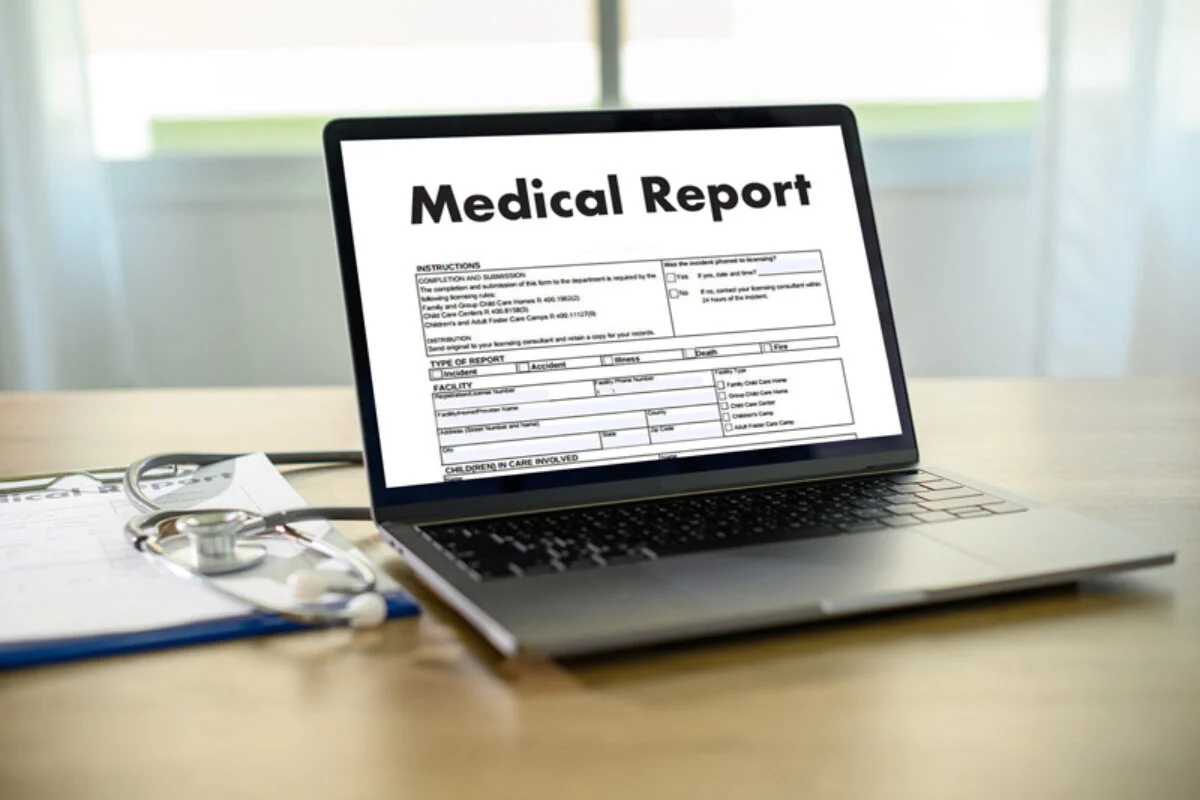
A medical record contains different types of information related to a patient's health and medical treatment. The exact details depend on the healthcare facility, the patient's medical history and the services provided.
Some common information included in medical records is:
Personal Information: Patient name, age, contact information and identification details.
Medical History: Previous illnesses, surgeries, allergies and existing health conditions.
Diagnosis Details: Medical conditions identified during consultations.
Treatment Information: Prescribed medicines, procedures and treatment plans.
Laboratory Reports: Blood tests, urine tests and other diagnostic results.
Imaging Reports: X-rays, ultrasound scans, CT scans and MRI reports.
Consultation Notes: Doctor observations, recommendations and follow-up instructions.
Common Components of Medical Records
Record Component | Information Included | Purpose | Example |
|---|---|---|---|
Patient Information | Basic personal details | Patient identification | Name and date of birth |
Medical History | Previous health conditions | Understand health background | Previous surgery |
Diagnosis | Identified medical conditions | Support treatment decisions | Diagnosis report |
Test Reports | Laboratory and imaging results | Evaluate health information | Blood test or X-ray |
Different Types of Medical Records
Medical records are available in different formats depending on how healthcare information is collected, maintained and used. Understanding these types helps patients and healthcare professionals manage information more effectively.
1. Paper-Based Medical Records
Paper-based medical records are traditional physical documents maintained by hospitals, clinics and healthcare professionals. They may include handwritten consultation notes, printed prescriptions, laboratory reports and discharge summaries.
Although many healthcare facilities are adopting digital systems, paper records continue to be used in different healthcare settings.
2. Electronic Medical Records (EMRs)
Electronic Medical Records are digital versions of patient records maintained within a particular healthcare organization or clinical practice. They generally include diagnoses, prescriptions, treatment details and medical history.
EMRs help healthcare professionals organize information, reduce dependence on physical files and retrieve patient details more efficiently within their systems.
3. Electronic Health Records (EHRs)
Electronic Health Records provide a broader digital view of an individual's healthcare information. Depending on the system and available integrations, they can bring together information from multiple healthcare providers.
EHR systems can support information sharing, continuity of care and better coordination between authorized healthcare professionals.
4. Personal Health Records (PHRs)
Personal Health Records allow individuals to maintain and manage information about their own health. These records may include medical reports, prescriptions, vaccination details and other health-related documents.
Patients may use digital applications to organize their information and share selected records with healthcare providers.
Types of Medical Records at a Glance
Record Type | Format | Main User | Key Benefit |
|---|---|---|---|
Paper Records | Physical documents | Hospitals and patients | Traditional documentation |
EMR | Digital | Individual healthcare facilities | Organized clinical information |
EHR | Digital | Multiple authorized providers | Coordinated healthcare |
PHR | Digital or physical | Individuals | Personal health management |
Why Are Medical Records Important?
Medical records are more than a collection of documents. They provide a structured history of healthcare interactions and help medical professionals understand a patient's condition over time.
1. Better Treatment Decisions
Doctors can review previous diagnoses, prescriptions, allergies and test results before recommending further treatment. Access to relevant medical history can help healthcare professionals make more informed clinical decisions.
2. Continuity of Healthcare
When patients visit different doctors or healthcare facilities, previous medical information can help providers understand earlier treatments and avoid unnecessary repetition of certain investigations.
3. Improved Communication
Accurate records support communication between doctors, nurses, specialists, laboratories and other authorized healthcare professionals.
4. Monitoring Health Progress
Medical records help track changes in health conditions, treatment responses and diagnostic results over time. This information can be useful during follow-up appointments.
5. Administrative and Legal Documentation
Healthcare facilities also maintain medical records for administrative, professional and legal documentation. Applicable recordkeeping requirements vary by country and healthcare setting.
Benefits of Digital Medical Records

Digital transformation is changing the way healthcare information is collected, stored and managed. Electronic systems can make medical documentation more accessible and organized compared with traditional paper-based processes.
Here are some major benefits of digital medical records.
Faster Access to Health Information
Authorized healthcare professionals can retrieve available digital information without searching through large physical files. This can improve administrative efficiency and support clinical workflows.
Better Record Organization
Digital platforms help organize prescriptions, reports, diagnoses and other documents in a structured format. Patients can also maintain personal copies of important health information.
Easier Information Sharing
With appropriate permissions and technical compatibility, digital records can be shared between participating healthcare providers. This can be particularly helpful when patients seek treatment at different facilities.
Reduced Paperwork
Digital documentation can reduce dependence on printed reports and physical storage systems. It may also help healthcare organizations manage their administrative processes more efficiently.
Improved Patient Engagement
Personal health record applications can give individuals greater visibility into their available health information and help them participate more actively in managing their healthcare.
Medical Records in India: Understanding ABHA and ABDM
India is making significant progress in digital healthcare through the Ayushman Bharat Digital Mission (ABDM), launched in September 2021.
The initiative aims to develop an integrated digital healthcare ecosystem that supports the creation, linking and exchange of health information through participating systems.
What Is an ABHA Number?
ABHA stands for Ayushman Bharat Health Account. It is a unique 14-digit health identifier designed to help individuals link and access their digital health records.
Through participating ABDM-enabled healthcare systems, individuals can connect relevant medical information and share records with healthcare providers using consent-based processes.
How Does ABHA Support Digital Medical Records?
ABHA can help individuals connect different healthcare interactions to a digital health identity. Depending on the participating healthcare facility and application, this may include prescriptions, laboratory reports, consultation details and other health documents.
Importantly, ABDM facilitates the exchange of health information; it does not mean that all medical records are automatically stored in one central database.
Patients can manage consent for sharing records through supported systems.
Key Features of India's Digital Healthcare Ecosystem
Feature | Description | Benefit | Intended User |
|---|---|---|---|
ABHA Number | Unique 14-digit health identifier | Links health records | Individuals |
Digital Health Records | Electronic medical information | Convenient access | Patients and providers |
Consent Management | Permission-based information sharing | Greater control over sharing | Patients |
Healthcare Registries | Digital provider and facility directories | Easier identification | Healthcare ecosystem |
For more information, explore the official Ayushman Bharat Digital Mission website to understand India's digital healthcare initiatives and available services.
How to Organize and Maintain Medical Records
Maintaining organized medical records can make healthcare visits more convenient. Patients who keep their important reports and prescriptions accessible may find it easier to provide relevant medical information during consultations.
Here are some practical steps to follow:
1. Keep Important Documents Together
Maintain a dedicated folder for prescriptions, diagnostic reports, vaccination records, discharge summaries and other important documents.
2. Organize Records by Date
Arrange medical documents chronologically so that previous consultations and test results can be identified easily.
3. Maintain Digital Copies
Where appropriate, scan or photograph important paper documents and keep secure digital copies. Make sure the information is readable.
4. Update Your Medical History
Add relevant information about new diagnoses, allergies, treatments and procedures to your personal health documentation.
5. Review Information Before Medical Appointments
Before visiting a doctor, collect relevant previous reports and prescriptions. This can help healthcare professionals understand your medical background.
Practical Medical Record Management Checklist
Activity | Recommended Practice | Frequency | Expected Benefit |
|---|---|---|---|
Document collection | Save prescriptions and reports | After appointments | Complete history |
File organization | Arrange by date and category | Regularly | Easy retrieval |
Digital backup | Store secure copies | Periodically | Reduced document loss |
Information review | Check important details | Before appointments | Better preparation |
Medical Record Privacy and Data Security
Medical records contain sensitive personal information. Protecting these documents is essential, particularly as healthcare services increasingly rely on digital platforms.
Unauthorized access, accidental sharing, weak passwords and insecure storage can create privacy risks.
Patients and healthcare organizations should follow appropriate security practices to protect medical information.
Important Ways to Protect Medical Records
Use Strong Passwords: Protect health applications and accounts with unique passwords.
Enable Additional Security: Use available two-factor authentication or other security features.
Share Carefully: Provide medical information only to trusted and authorized healthcare professionals.
Avoid Public Devices: Do not leave personal medical documents open on shared computers.
Use Secure Storage: Keep physical records in a safe location and digital copies in trusted storage systems.
Review Permissions: Check which applications and healthcare providers have access to shared information.
In India's ABDM ecosystem, health information exchange is designed around patient consent. Patients should review sharing requests and understand which records are being shared, with whom and for what purpose.
For further information, explore the Ministry of Health and Family Welfare's Electronic Medical Records and Electronic Health Records Standards.
Challenges Associated With Medical Record Management

Although medical records provide many benefits, maintaining accurate and accessible information can involve several challenges.
Data Privacy Concerns
Healthcare information requires careful handling. Organizations must implement appropriate access controls and security measures to protect patient confidentiality.
Incomplete Documentation
Missing prescriptions, outdated medical histories or unavailable diagnostic reports can make it difficult for healthcare professionals to understand previous treatment.
Technical Compatibility
Different healthcare systems may use different software, data formats and documentation standards. This can create difficulties when information needs to be exchanged.
Digital Literacy
Some individuals may find healthcare applications difficult to use, particularly when they are unfamiliar with digital services.
Storage and Maintenance
Healthcare facilities need reliable systems, trained staff and appropriate processes to maintain records accurately over time.
The Future of Medical Records: AI and Digital Healthcare
Technology is creating new opportunities for managing healthcare information. Artificial intelligence, cloud computing, data analytics and interoperable digital platforms are influencing how medical records are organized and accessed.
AI-Assisted Medical Documentation
AI-powered systems can assist healthcare professionals with administrative documentation, summarization and organizing clinical information. Human review remains important to ensure accuracy.
Cloud-Based Record Management
Cloud technology can support secure storage and access to digital records, depending on the provider's security practices and applicable requirements.
Interoperable Healthcare Systems
Interoperability allows different healthcare systems to exchange information using compatible standards. It can help reduce information gaps when patients receive treatment from multiple providers.
Personalized Healthcare Support
With appropriate consent and clinical oversight, digital health information can help healthcare professionals understand individual health histories and support more informed care planning.
For additional digital productivity resources, explore AltFTool's collection of free online tools to discover useful utilities for everyday digital tasks, calculations, content creation and productivity.
Frequently Asked Questions (FAQs)
A medical record is a collection of documents containing information about an individual's health history, diagnoses, treatments, prescriptions and diagnostic reports.
The main types include paper-based medical records, Electronic Medical Records (EMRs), Electronic Health Records (EHRs) and Personal Health Records (PHRs).
They help healthcare professionals understand a patient's medical history, support treatment decisions, monitor health progress and improve communication.
An EMR generally contains digital patient information maintained within a particular healthcare organization, while an EHR is designed to support a broader and more connected view of health information across providers.
Sources and notes
Links the author listed for this post.
Learn what medical records are, why they are important, their different types, benefits of electronic health records, patient privacy and digital medical record management.
More on AltFTool
- AltFTool (opens in a new tab)
altftool.com

Discussion
0 comments
No comments yet
Discussion will appear here once it loads.