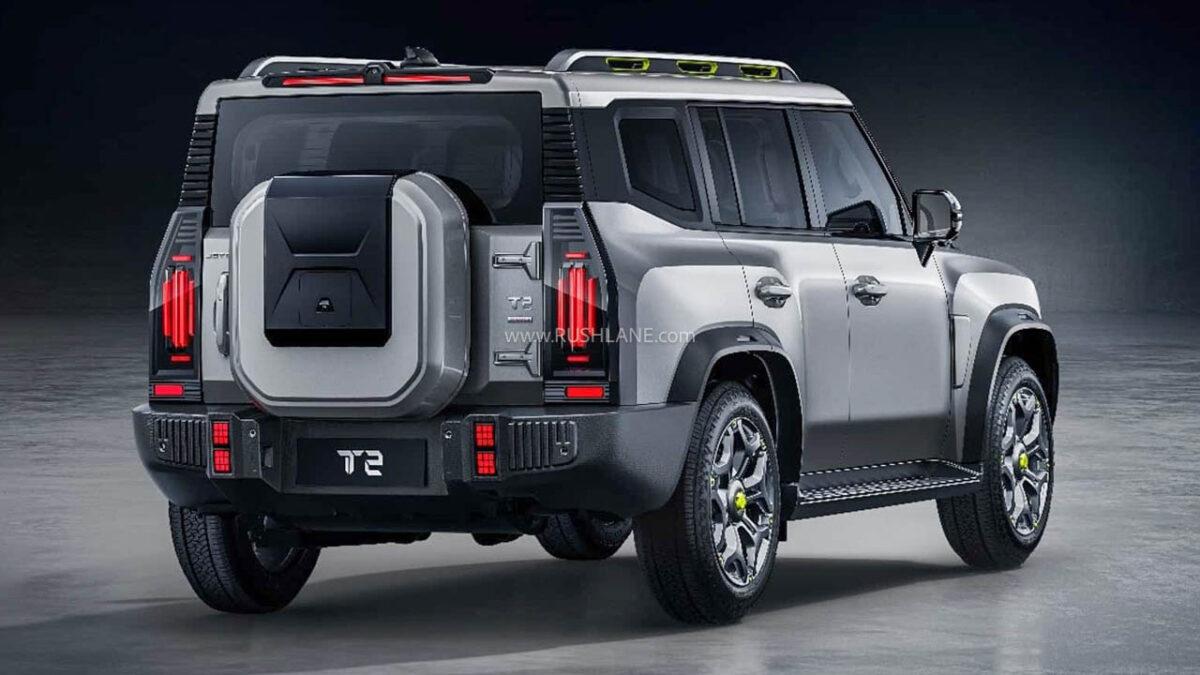
India's automobile industry is preparing for another major development as JSW Motors moves closer to introducing its first passenger vehicle. Backed by the JSW Group, the company is building an ambitious entry into the country's growing new-energy vehicle market. Instead of working alone, it has brought together more than 50 suppliers and technology partners from India and international markets to develop its first plug-in hybrid SUV.
The upcoming vehicle represents more than a new SUV launch. It highlights JSW Motors' strategy of combining established global automotive technology with Indian engineering, locally sourced components and software designed for domestic customers.
The company plans to unveil its first plug-in hybrid electric vehicle (PHEV) in December 2026. Its manufacturing plans, technology partnerships and localisation programme could make it an important new competitor in India's increasingly competitive automobile market.
Let's explore what JSW Motors is preparing, who its major partners are and what its entry could mean for India's electric and hybrid vehicle industry.
passenger vehicle segment with a plug-in hybrid SUV. The vehicle will be based on a platform developed by China's Chery Automobile, while its engineering and several components are being adapted for Indian driving conditions.
The company has selected an international supplier network to support different parts of vehicle development, including powertrain technology, electronics, connectivity, safety systems and interior components.
1. JSW Motors Is Preparing Its First SUV
Its approach combines an established vehicle platform with local engineering and manufacturing capabilities. This can help the company introduce advanced technology without developing every automotive system from the beginning.
The first SUV will also establish the foundation for a wider range of electrified vehicles that JSW Motors intends to introduce in the coming years.
2. More Than 50 Global Suppliers Join the Project
🌍 JSW Motors' Global Supplier Network
More than 50 suppliers and technology partners are contributing to the development of JSW Motors' first hybrid SUV.
One of the most interesting aspects of JSW Motors' entry is its extensive supplier network. The company has partnered with more than 50 suppliers and technology firms across India, Europe, Japan, China and South Korea. These companies bring specialised knowledge and components to the project.
Motherson
Country: India
Contribution: Automotive components
ManufacturingUno Minda
Country: India
Contribution: Electrical and vehicle systems
Vehicle SystemsTata Elxsi
Country: India
Contribution: Software and cabin interface
Automotive SoftwareBharti Airtel
Country: India
Contribution: Vehicle connectivity
ConnectivityKPIT Technologies
Country: India
Contribution: Automotive software
TechnologyBridgestone
Country: Japan
Contribution: Tyres
Tyre TechnologyKwangjin
Country: South Korea
Contribution: Automotive components
ComponentsSaint-Gobain
Country: France
Contribution: Automotive glass
Glass TechnologyBASF
Country: Germany
Contribution: Materials and chemicals
Advanced MaterialsFEV
Country: Germany
Contribution: Powertrain engineering
EngineeringIDIADA
Country: Spain
Contribution: Vehicle engineering and validation
Vehicle TestingThis international collaboration gives JSW Motors access to specialised expertise while supporting its long-term objective of developing a stronger Indian automotive supply chain.
⚡ 3. Why JSW Motors Is Choosing a Plug-in Hybrid SUV
The first vehicle will use plug-in hybrid electric vehicle technology, commonly known as PHEV. A plug-in hybrid combines an electric motor and battery with a conventional internal combustion engine. Unlike a traditional hybrid, its battery can also be charged externally.
This combination allows drivers to use electric power for suitable journeys while retaining an engine for longer trips.
4. A Manufacturing Facility Spread Across 600 Acres
JSW Motors is developing a major manufacturing facility in Chhatrapati Sambhajinagar, Maharashtra. The greenfield project is supported by a cumulative investment plan of more than ₹27,000 crore.
The facility is spread across approximately 600 acres and is designed with an installed production capacity of up to 500,000 vehicles annually.
The manufacturing campus will include several important facilities:
Press shop: For shaping and forming vehicle body panels.
Paint shop: For vehicle painting and finishing.
Assembly bays: For assembling different vehicle components.
Supplier park: To bring important suppliers closer to the manufacturing operation.
Having suppliers within the manufacturing campus can improve coordination, simplify logistics and support production efficiency.
The facility is also expected to support JSW Motors' future electric and hybrid vehicle models, making it an important part of the company's long-term automotive strategy.
5. Localisation Is a Major Part of the Strategy
JSW Motors is not simply importing a complete vehicle and selling it in India. The company is working to localise several components and adapt the SUV to domestic requirements.
This strategy is important because Indian driving conditions can differ significantly from those in international markets.
Road quality, weather, traffic, fuel standards and maintenance requirements all influence vehicle performance and ownership costs.
The company's localisation programme covers several areas.
Vehicle Component | Supplier / Partner |
Alloy wheels | JJF Castings |
Tyres | Bridgestone |
Lubricants and fluids | Castrol and Fuchs |
Adhesives and sealants | Henkel and BASF |
Electrical components | Uno Minda |
Vehicle systems | Motherson |
Cabin interface | Tata Elxsi |
The company also plans to gradually increase Indian supplier participation across its future vehicle range.
Why does localisation matter?
It can reduce dependence on imported components.
It may improve the availability of replacement parts.
It can support domestic manufacturing businesses.
It can make after-sales support more efficient.
It helps develop technical expertise within India's automotive industry.
However, the final impact on vehicle prices and maintenance costs will depend on production volumes and the level of localisation achieved.
6. Engineered for Indian Fuel and Road Conditions
A vehicle developed for international markets cannot always be introduced in India without adjustments.
JSW Motors is working with engineering and testing partners to ensure that its first SUV meets relevant Indian requirements.
According to the company, the powertrain is being calibrated for E20 fuel and BS VI Phase 2 standards.
E20 refers to petrol blended with up to 20% ethanol. Vehicle compatibility with this fuel is increasingly important as India expands its ethanol-blending programme.
The company is also working with FEV, HORIBA and the Automotive Research Association of India (ARAI) for testing and validation.
Other important development areas include:
High-voltage battery systems.
Advanced driver assistance systems (ADAS).
Thermal management.
Chassis and suspension-related components.
Electrical architecture.
Vehicle safety and performance validation.
These adaptations are intended to make the SUV suitable for Indian usage rather than relying entirely on its original international configuration.
7. Smart Technology and Connected-Car Features
Modern vehicles are becoming increasingly dependent on software, sensors and connected services.
JSW Motors is incorporating these technologies into its first SUV through partnerships with Indian and international technology companies.
The company has adapted software for 16 electronic control units (ECUs), covering different vehicle functions, from powertrain operations to infotainment.
Tata Elxsi is developing the cabin interface, while Bharti Airtel will provide connectivity through SIM cards operating on Indian networks.
The vehicle's electronic systems also involve chips and technology from companies such as Qualcomm, Mobileye, NXP and Infineon.
Some important technology areas include:
Technology | Purpose |
Connected-car systems | Communication between the vehicle and cloud services |
Electronic control units | Managing different vehicle functions |
Infotainment software | Supporting entertainment and cabin interaction |
ADAS | Supporting driver assistance features |
Telematics | Providing vehicle connectivity and information |
Semiconductor technology | Powering electronic vehicle systems |
These technologies could help JSW Motors develop vehicles with more advanced digital capabilities.
However, the company has not yet announced the complete list of connected features available in the production SUV.
8. Data Privacy and Indian Cloud Infrastructure
Connected vehicles collect information through different electronic systems, cameras and communication modules. This makes data management an important consideration for modern automobile manufacturers.
JSW Motors has stated that connected-car data, including footage from in-car cameras, will be hosted on Amazon Web Services (AWS) servers located in India.
According to the company, this information will remain under its control and will not be transferred to, stored in or accessed from another country.
The company also says that data storage, processing and sharing will follow its security policies and applicable Indian laws.
This approach highlights the growing importance of data privacy in the connected automobile industry.
For customers, transparency about data collection, storage, access and security will be an important factor when evaluating connected-car services.
9. JSW Motors Exploring Future Partnerships with Google and OpenAI
JSW Motors is also looking beyond the launch of its first SUV.
The company is reportedly in advanced discussions with Google and OpenAI regarding independent future products and technology initiatives.
The discussions cover areas such as:
Software-defined vehicles.
Autonomous driving technology.
Agentic integration.
Advanced digital experiences.
Future vehicle software development.
Software-defined vehicles use software to control and improve different vehicle functions. This approach can allow manufacturers to introduce new features and improvements through software updates.
Autonomous driving technology, meanwhile, focuses on systems that can assist with or automate certain driving tasks.
Agentic integration could introduce more advanced AI-powered interactions and services.
It is important to note that these discussions do not mean that all these technologies will be available in the first SUV. Their potential implementation will depend on future partnerships, product development and regulatory requirements.
10. What Is Next for JSW Motors?
The first plug-in hybrid SUV is expected to be the starting point of a wider electrified vehicle programme.
JSW Motors has indicated plans to introduce different types of advanced electrified vehicles, including:
Vehicle Technology | Full Form | Basic Explanation |
PHEV | Plug-in Hybrid Electric Vehicle | Combines an electric motor and an engine |
BEV | Battery Electric Vehicle | Runs entirely on battery-powered electric motors |
REEV | Range-Extended Electric Vehicle | Uses an additional engine to generate electricity |
AEV | Advanced Electrified Vehicle | A broader category of advanced electrified vehicles |
This wider product strategy could help the company serve customers with different driving requirements and budgets.
Rather than concentrating on one powertrain, JSW Motors appears interested in developing a broader portfolio of cleaner mobility solutions.
Its manufacturing facility and supplier ecosystem are also intended to support this expansion.
11. How JSW Motors Could Change India's Automobile Market
India already has established passenger vehicle manufacturers, including Tata Motors and Mahindra & Mahindra, which have expanded their presence in the electric SUV segment.
JSW Motors will enter this competitive market with a combination of international technology, domestic manufacturing and a growing supplier network.
Its entry could influence the industry in several ways.
More Competition in the Hybrid Segment
The introduction of another PHEV manufacturer could increase customer awareness and encourage more competition in electrified SUVs.
Opportunities for Indian Suppliers
Partnerships with domestic businesses could create opportunities for automotive component manufacturers, software developers and engineering companies.
Greater Focus on Local Manufacturing
The company's localisation strategy may encourage investment in domestic production capabilities and technology development.
More Choices for Customers
If JSW Motors successfully expands its portfolio, buyers could eventually have more options across hybrid, electric and range-extended vehicle categories.
Nevertheless, the company's long-term success will depend on product quality, pricing, dealership coverage, customer trust and after-sales service.
12. Important Details About the Upcoming JSW SUV
Here is a quick overview of the information currently available about the company's first vehicle.
Particular | Details |
Manufacturer | JSW Motors |
Parent Group | JSW Group |
First vehicle | Plug-in hybrid SUV |
Expected unveiling | December 2026 |
Vehicle platform | Chery Automobile |
Supplier network | 50+ partners |
Manufacturing location | Chhatrapati Sambhajinagar, Maharashtra |
Manufacturing investment plan | More than ₹27,000 crore |
Factory area | Approximately 600 acres |
Planned annual capacity | 500,000 vehicles |
Fuel compatibility | E20 calibration |
Emission standards | BS VI Phase 2 |
Future models | BEVs, REEVs and other electrified vehicles |
Note: These details reflect information available as of November 17, 2026. The final vehicle name, variants, pricing, complete specifications and booking details have not been officially confirmed in the source article.
13. Challenges JSW Motors May Need to Address
Entering the automobile market is a major undertaking, particularly when a company is introducing a completely new passenger vehicle brand.
Despite its supplier network and investment plans, JSW Motors will need to overcome several challenges.
1. Building Customer Trust
Customers often prefer established automobile brands because of their service networks and ownership experience. JSW Motors will need to build confidence through product quality and dependable support.
2. Developing an Effective Service Network
A strong dealership and service network will be essential for reaching customers across different Indian cities.
3. Managing Component Costs
International technology partnerships and imported components can influence manufacturing costs. Increasing localisation may help, but achieving the right balance will take time.
4. Competing with Established Brands
Tata Motors, Mahindra and other manufacturers already have a presence in India's electrified vehicle market. JSW Motors will need a clear product identity and competitive offering.
5. Delivering Reliable Technology
Hybrid powertrains, connected features and advanced electronic systems require proper testing and long-term maintenance support.
The company's ability to address these challenges will play an important role in determining its position in India's passenger vehicle market.
FAQ'S
JSW Motors plans to unveil its first plug-in hybrid SUV in December 2026.
The company's first vehicle will be a plug-in hybrid electric SUV combining an electric motor, battery and conventional engine.
The vehicle will be manufactured at the company's facility in Chhatrapati Sambhajinagar, Maharashtra.
JSW Motors has partnered with more than 50 suppliers and technology companies from India and international markets.
Yes. The company has outlined plans to introduce battery-electric vehicles, range-extended electric vehicles and other advanced electrified models.
Sources and notes
Links the author listed for this post.
Primary source: The Economic Times – JSW Motors tapping global suppliers to drive in first car (November 15, 2026). Additional reference: ET Supply Chain – JSW Motors leans on global suppliers for its first car. This article is an independently written overview based on the reported information. Product specifications and launch details may change following official announcements.
More on AltFTool
- AltFTool (opens in a new tab)
altftool.com

Discussion
0 comments
No comments yet
Discussion will appear here once it loads.