My mother had a trick that I only understood years later. Every Sunday evening she would sit with a cup of tea and a small notebook, look at what was left in the kitchen and quietly decide what the next week would taste like. There was no recipe app, no meal-prep container set and no fancy spreadsheet. Yet somehow we ate well all week, nothing went in the bin and she rarely had to run to the market for a forgotten ingredient.
I used to think that was just her natural talent. Now I know it was a method, and anyone can learn it. Feeding a whole family on a budget isn’t about eating boring food or counting every coin. It’s about planning a little, buying smartly and cooking in a way that makes one effort stretch across several meals. Here’s a simple guide to doing exactly that.
Why Budget Meals Often Go Wrong

Most family food budgets don’t leak because of one big expense. They leak through small things: a few impulse buys, vegetables that rot in the fridge, takeaway on tired evenings and last-minute trips to the shop where everything seems to cost more. Without a plan, every evening starts with the stressful question, “What do we cook today?”
The fix isn’t strict discipline. It’s removing that daily guesswork, because most overspending happens when we’re tired, hungry and short of ideas.
Impulse purchases quietly add up over a month
Unplanned meals often lead to takeaway
Wasted food is wasted money
Tired evenings are when budgets break
A little planning removes most of the stress
Start With a Simple Weekly Plan
Look Before You Shop
Open your fridge, freezer and kitchen shelves before writing any list. Note what you already have, such as rice, flour, lentils, spices, a few vegetables or half a packet of pasta. Plan your first few meals around those items, so you don’t buy duplicates.
Plan Meals, Not Just Ingredients
Pick five or six dinners for the week and leave one or two nights open for leftovers or something spontaneous. Decide lunches and breakfasts too, even loosely. When every meal has a rough plan, your shopping list becomes shorter and more focused.
Write a Realistic List and Stick to It
Group items by type, such as vegetables, grains, dairy and spices, so you don’t wander around the shop. Having a list also helps you ignore tempting offers that you never planned to buy.
Build Meals Around Affordable Staples
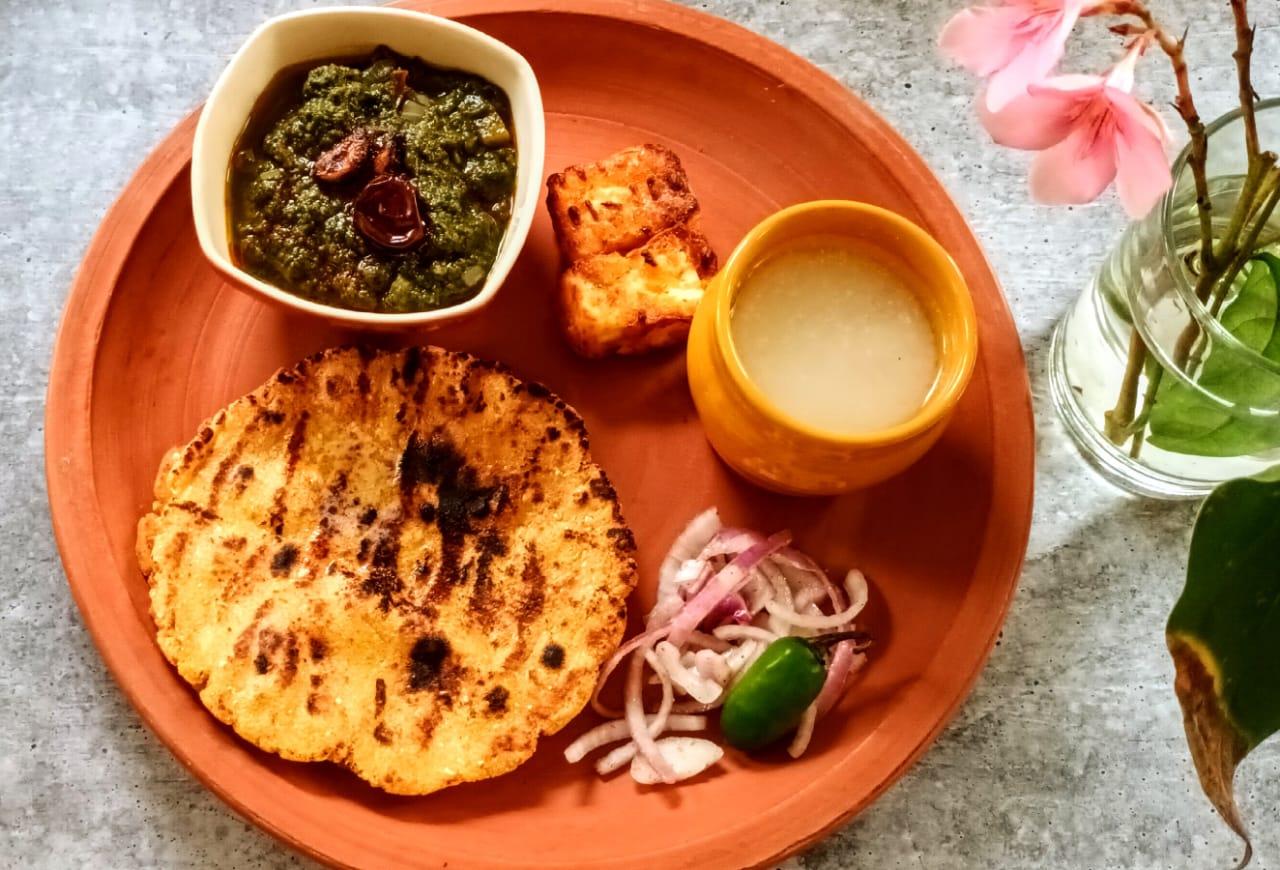
🌿 1. Fresh Sarson Ka Saag
Buy fresh mustard greens from local markets to prepare delicious Sarson Ka Saag. Seasonal greens make this traditional meal affordable and flavorful.
🫓 2. Make Makki Ki Roti
Use makki ka atta to prepare homemade rotis. Pair them with warm Sarson Ka Saag for a traditional, satisfying and budget-friendly meal.
🥬 3. Add Affordable Greens
Combine mustard leaves with spinach and bathua while preparing Sarson Ka Saag. These seasonal greens add variety and make the dish delicious.
🧈 4. Add a Little Homemade Butter
Serve hot Sarson Ka Saag and Makki Ki Roti with a small amount of homemade white butter for authentic Punjabi-style flavor.
🍲 5. Cook Saag in Batches
Prepare a larger batch of Sarson Ka Saag and refrigerate portions safely. Make fresh Makki Ki Roti whenever you are ready to eat.
🍽️ 6. Enjoy a Complete Punjabi Meal
Serve Sarson Ka Saag with Makki Ki Roti, sliced onions and homemade pickle. Enjoy a comforting traditional meal without expensive ingredients.
Some foods are naturally filling, nutritious and gentle on the wallet. Building your meals around these means you can eat well without a big spend.
Grains and Lentils
Rice, wheat flour, oats, poha, semolina and different dals form the base of most family meals. Lentils and beans are rich in protein and fibre, and they stretch a long way. A pot of dal with rice, a simple vegetable and some curd makes a complete, comforting meal.
Seasonal Vegetables
Vegetables that are in season are usually fresher and cheaper. Plan your menu around what looks good and reasonably priced at the market, not around a fixed idea. A vegetable that’s plentiful this month will probably be expensive in another.
Eggs, Curd and Other Protein
Eggs, curd, paneer, soy chunks, chickpeas and legumes are good protein sources for families. You don’t need large portions of costly items. Small amounts mixed into dishes like pulao, parathas or gravies go further.
Frozen and Pantry Helpers
Frozen peas, sweet corn and canned or dried beans can be useful backups, especially when fresh produce is costly or you’re running low. Keep a few of these on hand for busy evenings.
Cook Once, Eat Twice
This is the heart of budget cooking. Making a bit extra on purpose saves time, gas and money later. It also keeps you away from the temptation of ordering food when you’re exhausted.
Turn Leftovers Into New Meals
Leftover rice becomes fried rice or curd rice. Extra dal can be used to knead soft rotis or thicken soup. Roasted vegetables can be tucked into sandwiches, wraps or parathas. It feels like a new meal, even though most of the work was already done.
Batch Cook the Basics
Spend an hour on the weekend boiling chickpeas, preparing a base masala or chopping vegetables. Store them in airtight containers in the fridge or freezer. On busy weekdays, dinner then takes ten or fifteen minutes instead of an hour.
Use Your Freezer Wisely
Freeze portions of cooked beans, soups, sauces or dough. Label them with the date so nothing gets forgotten. Always cool food properly before freezing, and reheat it thoroughly before eating.
Cook extra rice, dal or vegetables on purpose
Prepare a base sauce or masala in bulk
Freeze in small, labelled portions
Reinvent leftovers into new dishes
Cool and store food safely
Sample Ideas for a Week
You don’t need exact recipes to get started. Here is a rough guide to how meals can connect with one another, so nothing is wasted.
Day | Main Meal | Why It’s Budget-Friendly | How It Helps Later |
|---|---|---|---|
Monday | Dal, rice and a seasonal vegetable | Uses cheap staples | Extra dal and rice saved for later |
Tuesday | Vegetable pulao with curd | Uses leftover rice and veggies | Quick and filling |
Wednesday | Rajma or chole with roti | High in protein and fibre | Leftover beans work in wraps |
Thursday | Egg curry or paneer bhurji with paratha | Small protein goes a long way | Extra masala used in sandwiches |
Friday | Khichdi with pickle and papad | Simple, comforting and cheap | Uses up pantry items |
Smart Shopping Habits

Where and how you shop matters almost as much as what you cook. A few small habits make a noticeable difference without making life harder.
Compare and Buy Smart
Compare prices between your local market, neighbourhood shops and supermarkets. Staples like rice, flour and lentils are often cheaper in larger packs, but only buy bulk if you will use it before it spoils. Check unit prices, not just the sticker price, because a bigger pack isn’t always the better deal.
Shop When You’re Not Hungry
It sounds silly, but it really works. Shopping hungry makes everything look tempting. Eat a little before you go, and stick to your list.
Limit Packaged and Ready-Made Foods
Ready-to-eat snacks and heavily packaged foods usually cost more than simple home-made versions. A tray of homemade roasted chana, popcorn or fruit chaat is cheaper and often healthier than packets of chips.
Reduce Food Waste
Throwing away food is like throwing away money. A few small habits keep your fridge working for you.
Store vegetables properly, and keep older items at the front so they get used first. Use stems, peels and leftover vegetables in soups, parathas or chutneys where it makes sense. Check expiry dates before you shop, and plan to use perishable items early in the week. When bananas turn too ripe, make pancakes or a simple cake instead of tossing them.
Get the Whole Family Involved
Cooking doesn’t have to be one person’s job. Children can wash vegetables, mix batter, set the table or choose a dish for the week. Teenagers can handle simple recipes, and partners can take charge of one or two nights.
Involving everyone also makes budget meals more enjoyable. People are more likely to eat what they helped choose and prepare. And it teaches children, in a gentle way, where food comes from and how to respect it.
Keep Meals Healthy and Balanced
🌿 1. Include Fresh Green Vegetables
Prepare Sarson Ka Saag with fresh mustard leaves, spinach and bathua. These greens provide fiber and important nutrients for a balanced meal.
🫓 2. Choose Makki Ki Roti
Pair homemade Makki Ki Roti with Sarson Ka Saag. Cornmeal provides carbohydrates that help supply energy for everyday activities.
🥣 3. Add Protein to Your Meal
Enjoy Sarson Ka Saag and Makki Ki Roti with a bowl of dal, curd or a serving of paneer to add protein and improve meal balance.
🧈 4. Control Added Fats
Enjoy Sarson Ka Saag with a little homemade butter or ghee. Use moderate amounts of oil and butter to keep your meal balanced.
🥗 5. Add Fresh Salad
Serve Makki Ki Roti and Sarson Ka Saag with cucumber, carrot and onion salad. Fresh vegetables add variety, fiber and crunch to your plate.
🍽️ 6. Maintain Balanced Portions
Build a balanced plate with Sarson Ka Saag, Makki Ki Roti, a protein-rich side and fresh salad. Enjoy different food groups in suitable portions.
A tight budget doesn’t have to mean poor nutrition. Try to include grains, a protein source, vegetables and some dairy or healthy fats across the day. Use less oil and sugar where you can, and keep fruit as an easy snack.
Different family members have different needs. Young children, older adults, pregnant women and people with health conditions or allergies may need special care with food choices. If you’re unsure, a doctor or a qualified dietitian can give you advice that suits your family.
Mistakes to Avoid
Shopping without a list or a plan
Buying large quantities that spoil before use
Relying on packaged snacks for every craving
Cooking too much with no plan for leftovers
Ignoring seasonal produce in favour of out-of-season items
Skipping meals and then overspending on takeaway
Final Thoughts
Preparing budget-friendly meals for your whole family isn’t about sacrifice. It’s about a little planning, a few smart habits and using what you already have. Start small: plan three dinners, cook one extra portion and try one new leftover idea. Soon it becomes a rhythm, just like my mother’s quiet Sunday notebook. The best family meals aren’t the most expensive ones. They’re the ones everyone sits down to enjoy together.
FAQ's
Plan meals, buy affordable ingredients, and cook at home.
Rice, lentils, eggs, beans, and seasonal vegetables.
Make a shopping list and avoid unnecessary purchases.
Yes, use balanced ingredients like vegetables, grains, and protein.
Store food properly and reuse leftovers creatively.
Sources and notes
Links the author listed for this post.
Information is based on general meal-planning practices, food budgeting tips, and reliable cooking and nutrition resources.
- 1
Food
More on AltFTool
- altftool.com (opens in a new tab)
altftool.com
Discussion
0 comments
No comments yet
Discussion will appear here once it loads.