Mobile phones have become essential for communication, entertainment, navigation, shopping, and work. From checking emails in the morning to watching videos at night, consumers depend on mobile data throughout the day. However, choosing a mobile plan that genuinely meets these needs can be challenging.
Many people select a package because it offers a large data allowance, an attractive promotional price, or unlimited internet. Yet, a bigger plan is not always the better choice. If someone regularly uses only a small amount of data, paying for an oversized allowance may be unnecessary. On the other hand, choosing a plan with too little data can lead to inconvenience and additional expenses.
Providers such as iD Mobile offer convenient ways to manage mobile accounts, monitor data usage, and choose plans that suit individual needs. By reviewing these features and understanding their data habits, consumers can make smarter decisions about their mobile connectivity.
You can also explore free online tools on AltFTool to discover useful utilities for everyday digital tasks, productivity, and digital convenience.Understand What Mobile Data Usage Means
Mobile data is the internet allowance used by your phone when it is connected to a cellular network instead of Wi-Fi. It is generally measured in gigabytes (GB).
Different activities consume different amounts of data. Simple tasks such as sending messages or reading text-based websites usually require relatively little data. Activities involving video, high-resolution images, or continuous streaming can consume considerably more.
Common activities that use mobile data
Activity | Typical Data Impact |
|---|---|
Sending messages and emails | Low |
Browsing websites | Low to moderate |
Social media scrolling | Moderate |
Music streaming | Low to moderate |
Video calls | Moderate to high |
HD video streaming | High |
Online gaming | Usually moderate, with additional updates potentially using much more |
Actual consumption varies depending on the app, quality settings, duration, and background activity.
Important pointer: Do not estimate your data needs only by counting how many hours you use your phone. Consider what you do during those hours, because different activities consume different amounts of data.
Check Your Actual Monthly Data Consumption
The most reliable way to choose a suitable mobile plan is to review your real usage rather than guessing.
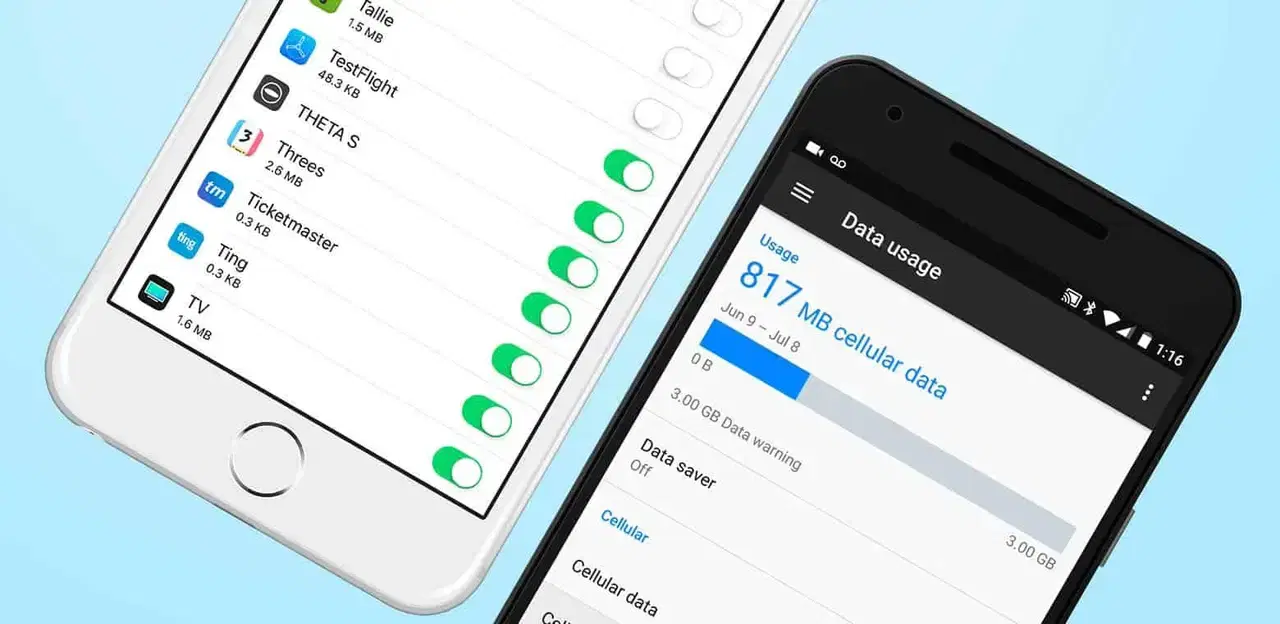
Consumers can usually check their data consumption through their mobile provider's app or online account. Device settings can also show which applications use the most mobile data.
For iD Mobile customers, the app and online account provide access to plan and allowance information. Customers can also check usage through their phone's settings for a more detailed view of app-level consumption.
How to check data usage on your phone
On Android:
Open Settings.
Select Connections or Network & Internet.
Tap Data Usage.
Open Mobile Data Usage.
Review total consumption and individual app usage.
On iPhone:
Open Settings.
Select Mobile Data or Cellular.
Review the total data used during the current period.
Scroll down to see usage by application.
On iPhones, mobile data statistics may need to be reset manually to align with your billing cycle.
Track usage for at least three months
A single month may not represent your normal habits. You might use more data during a holiday, a work project, or a period when home Wi-Fi is unavailable.
Reviewing several billing cycles helps identify a more realistic average.
Month | Data Used |
|---|---|
Month 1 | 6 GB |
Month 2 | 8 GB |
Month 3 | 7 GB |
Average | 7 GB |
In this example, a consumer using approximately 7 GB each month could compare plans around that usage level, while keeping a reasonable allowance for occasional increases.
Identify Your Personal Data Usage Pattern
Once you know your monthly consumption, consider how your data usage changes throughout the day and across different situations.
Some consumers mainly use mobile data while commuting. Others rely on it during work, travel, or outdoor activities. People who frequently connect to Wi-Fi may need a smaller allowance than those who spend most of their time away from it.
Which type of user are you?
User Type | Typical Usage Pattern | Plan Consideration |
|---|---|---|
Light user | Messaging, emails, occasional browsing | Small data allowance |
Moderate user | Social media, music, regular browsing | Medium allowance |
Heavy user | Frequent video streaming, downloads, hotspot use | Large allowance |
Frequent traveller | Maps, online bookings, mobile internet abroad | Check roaming and data flexibility |
These categories are only general examples. Your own usage history should guide the final decision.
Choose a Data Allowance That Fits Your Lifestyle

After reviewing your consumption, compare plans that offer enough data for your regular activities.
A useful approach is to select an allowance slightly above your typical monthly usage. This provides a buffer for unexpected needs without automatically paying for a much larger package.
For example, if your average usage is 7 GB, you might compare plans offering 10 GB or another suitable allowance available from your preferred provider.
Why the right allowance matters
It helps avoid paying for data you rarely use.
It reduces the risk of running out before the billing cycle ends.
It supports more predictable monthly spending.
It makes comparing mobile plans easier.
It allows consumers to balance convenience and affordability.
Ofcom advises consumers to check their actual usage before choosing a mobile package and notes that unlimited data may cost more than some users need.
Compare the Total Cost, Not Just the Advertised Price
A low monthly price can look attractive, but consumers should examine the complete cost of a mobile plan.
Consider the contract length, upfront payment, promotional pricing, potential price changes, and any additional charges.
What should you compare?
Factor | Why It Matters |
|---|---|
Monthly price | Determines regular spending |
Data allowance | Should match your consumption |
Contract duration | Affects flexibility |
Promotional period | The price may change after an offer ends |
Extra data charges | Important if you exceed your allowance |
Roaming terms | Relevant when travelling abroad |
Network coverage | Affects everyday connectivity |
A plan that costs slightly more but offers better coverage or suitable flexibility may provide greater value than the cheapest option.
Smart tip: Calculate the total cost over the full contract period before signing up. Do not make your decision based only on the first month's price.
Consider SIM-Only Plans If You Already Own a Phone
Consumers who already have a reliable smartphone may benefit from comparing SIM-only plans.
A SIM-only package provides mobile connectivity without including the cost of a new handset. This can make it a practical option for people who want to keep their existing device.
SIM-only plans may also offer different contract lengths, depending on the provider and deal.
Benefits of SIM-only options
No need to pay for a new phone you do not require.
Easier comparison of data allowances and monthly costs.
Potentially lower overall spending.
More flexibility when choosing a connectivity package.
Before switching, check whether your phone supports the network's technology, including 4G or 5G, and whether it is compatible with the SIM or eSIM option you want.
Understand Wi-Fi and Background Data Consumption
Your mobile data usage is influenced by how often you connect to Wi-Fi and which apps run in the background.
Automatic downloads, cloud backups, app updates, and video autoplay can consume data without you actively noticing.
Simple ways to manage data
Connect to trusted Wi-Fi networks when available.
Disable automatic app updates over mobile data.
Reduce video streaming quality when necessary.
Download music, maps, or videos before travelling.
Restrict background data for apps you rarely use.
Turn off autoplay on social media platforms.
These small adjustments can help consumers stay within their allowance without changing their daily digital routines significantly.
Check Network Coverage Before Choosing a Provider
A suitable data allowance is useful only when the network performs well in the places where you need it.
Before choosing a plan, check coverage at home, at work, and along your regular travel routes.
Ofcom's Map Your Mobile tool allows consumers to compare mobile coverage and expected performance in different locations.
What to consider about connectivity
Signal strength in frequently visited areas
Availability of 4G or 5G
Indoor coverage
Network performance during busy periods
Compatibility with your device
A plan with a generous data allowance may not deliver a satisfying experience if the connection is unreliable.
Review Your Plan Regularly
Your mobile habits can change over time. A new job, a change in commuting routine, more frequent travel, or increased use of streaming services may affect your monthly data consumption.
Review your plan whenever your usage changes significantly or when your contract approaches its end.
For iD Mobile customers, account tools can help manage allowances and explore plan options. Checking usage periodically can help identify whether the current package remains appropriate.
Signs that you may need a different plan
You regularly use almost all your monthly data.
You frequently purchase additional data.
You consistently use only a small fraction of your allowance.
Your monthly spending no longer matches your budget.
Your connectivity needs have changed.
Choosing a plan based on real usage is not a one-time decision. It is an ongoing process of reviewing, comparing, and adjusting.
FAQs
You can check your usage through your mobile provider's app, online account, or your smartphone's data usage settings.
Data requirements depend on individual habits. Light users may need only a few GB, while frequent streamers and hotspot users may require much larger allowances.
No. Unlimited plans can be useful for heavy users, but consumers with lower data consumption may find a smaller allowance more affordable.
SIM-only plans allow consumers to keep their existing phones and pay primarily for calls, texts, and mobile data, which can reduce overall costs.
Yes. Connecting to Wi-Fi for browsing, streaming, and downloads generally reduces the amount of mobile data used from your monthly allowance.


Discussion
0 comments