
The Australian Open is one of the biggest events in professional tennis and the first Grand Slam tournament of the calendar year. Every January, the world's leading tennis players travel to Melbourne, Australia, to compete for one of the most respected titles in the sport. Known as the "Happy Slam", the tournament combines high-level competition, exciting matches, international attention, and a lively atmosphere for tennis fans.
The Australian Open 2027 is scheduled to run from 11 to 31 January 2027 at Melbourne Park. The event will begin with Opening Week, which includes qualifying matches, player practice sessions, and entertainment activities. The main-draw competition is scheduled to begin on 17 January, followed by two weeks of Grand Slam tennis and the championship finals.
Explore AltFTool for free online tools, useful calculators, and digital resources to simplify everyday tasks and make learning easier.
Two important topics for players and fans are the tournament's prize money and competition format. Prize money determines how much players can earn at different stages, while the format explains how competitors progress from the opening rounds to the final. Although the official 2027 prize-money figures are not yet available, the confirmed 2026 figures provide a useful reference for understanding the tournament's financial structure.
Australian Open 2027 Tournament Dates and Schedule
The Australian Open 2027 will take place over three weeks, including Opening Week and the main-draw competition. The extended schedule gives fans more opportunities to watch players practise, attend qualifying matches, and experience activities around Melbourne Park before the biggest matches begin.
Opening Week is scheduled from 11 to 16 January. During this period, qualifying matches will determine which players earn places in the main draw. Fans can also expect practice sessions, entertainment, junior activities, and special events across the tournament precinct.
The main draw is scheduled to begin on Sunday, 17 January. The first week will feature the opening rounds, where a large number of players compete to remain in the tournament. As the competition progresses, the field becomes smaller and the matches become increasingly important.
The final week will include the later rounds, including the singles semi-finals and championship matches. The women's singles final is scheduled for 30 January, while the men's singles final is scheduled for 31 January.
Tournament Stage | Scheduled Dates | Main Activities | Purpose |
|---|---|---|---|
Opening Week | 11–16 January | Qualifying and practice | Prepare for the main draw |
Main Draw Week One | 17–24 January | Early singles and doubles rounds | Reduce the player field |
Main Draw Week Two | 25–31 January | Later rounds and finals | Decide the champions |
Championship Weekend | 30–31 January | Singles finals | Award the major singles titles |
These dates provide the planned structure for the 2027 event. Individual match schedules may vary depending on weather, match duration, and tournament arrangements.
Australian Open 2027 Prize Money: What Is Confirmed?
Prize money is an important part of every Grand Slam tournament. Players receive payments based on how far they progress in their respective competitions. Even players who lose in the opening round receive a payment, while those who reach the later stages can earn significantly higher amounts.
The official Australian Open 2027 prize-money breakdown has not yet been announced. Tennis Australia may publish the confirmed figures closer to the tournament. Until then, it would be inaccurate to describe any estimated amount as the guaranteed 2027 payout.
The latest confirmed prize pool is from the 2026 Australian Open, which reached a record AUD $111.5 million. This represented a 16 per cent increase compared with the 2025 prize pool.
In 2026, the men's and women's singles champions each received AUD $4.15 million. The runner-up received AUD $2.15 million, while players reaching the semi-finals earned AUD $1.25 million each.
These figures demonstrate the financial scale of the competition. They also show that prize money is distributed across different stages rather than being reserved only for the eventual champions.
Australian Open 2026 Prize Money Breakdown
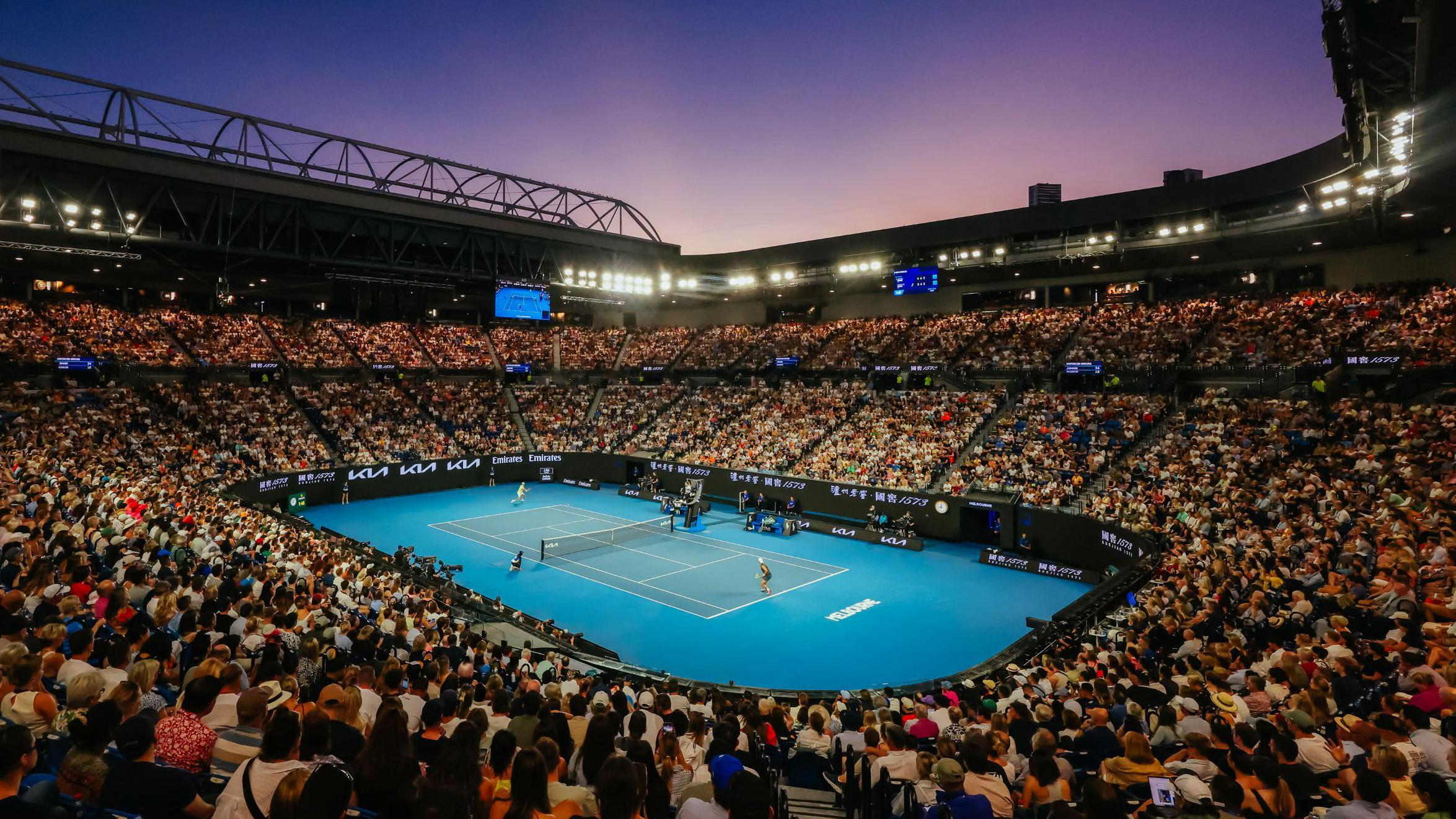
The following table presents the confirmed 2026 men's and women's singles prize money. These amounts are included as a reference for readers interested in the tournament's financial structure. They are not confirmed 2027 payouts.
Tournament Stage | Prize Money (AUD) | Payment Type | 2027 Status |
|---|---|---|---|
Champion | $4,150,000 | Per player | Not announced |
Runner-up | $2,150,000 | Per player | Not announced |
Semi-finalist | $1,250,000 | Per player | Not announced |
Quarter-finalist | $750,000 | Per player | Not announced |
Fourth Round | $480,000 | Per player | Not announced |
Third Round | $327,750 | Per player | Not announced |
Second Round | $225,000 | Per player | Not announced |
First Round | $150,000 | Per player | Not announced |
The 2026 figures show that players receive payments even if they do not advance beyond the first round. This is particularly important for professional players who must cover travel, coaching, accommodation, training, and other career-related expenses.
The final 2027 amounts may change depending on Tennis Australia's prize-money announcement.
How Does the Australian Open Prize Money Work?
The Australian Open distributes prize money according to the round in which a player exits the competition. A player who loses in the first round receives the payment assigned to that stage, while someone who reaches the quarter-finals receives the corresponding quarter-final payment.
The same principle applies to the men's and women's singles competitions. The 2026 prize-money announcement confirmed equal payments for both singles draws.
Prize money also supports players competing in qualifying rounds. Qualifying is especially important for athletes who have not secured a direct place in the main draw through their rankings or other entry arrangements.
In 2026, qualifying singles players received the following payments:
Qualifying Stage | Prize Money (AUD) | Competition Position | 2027 Status |
|---|---|---|---|
Qualifying Round One | $40,500 | First qualifying match | Not announced |
Qualifying Round Two | $57,000 | Second qualifying match | Not announced |
Qualifying Round Three | $83,500 | Final qualifying match | Not announced |
Players who successfully pass all qualifying rounds earn a place in the main draw and become eligible for its round-based prize money. This can make qualifying a significant opportunity for emerging players and competitors ranked outside the highest positions.
Australian Open 2027 Singles Tournament Format
The singles competitions are among the main attractions of the Australian Open. Both men's and women's singles feature a 128-player main draw, creating a challenging knockout competition.
Players must win their matches to move into the next round. A single defeat results in elimination, which means competitors need to maintain a high level of performance throughout the tournament.
The singles competition generally follows this progression:
First Round: 128 players compete, with 64 advancing.
Second Round: 64 players compete, with 32 advancing.
Third Round: 32 players compete, with 16 advancing.
Fourth Round: The remaining 16 players compete, leaving eight quarter-finalists.
Quarter-finals: Eight players compete for four semi-final places.
Semi-finals: Four players compete for two places in the final.
Final: The last two players compete for the championship title.
Men's singles matches are normally played as best-of-five sets, meaning a player must win three sets to secure victory. Women's singles matches are best-of-three sets, requiring two sets to win.
This difference makes men's singles matches potentially longer, while both competitions demand physical fitness, concentration, tactical planning, and consistency.
Australian Open Doubles Tournament Format
Doubles is another important part of the Australian Open. Instead of competing individually, players form teams of two and work together to defeat their opponents.
The men's and women's doubles main draws generally feature 64 teams each. Matches follow a knockout structure, with winning teams progressing through successive rounds.
Doubles tennis requires strong communication and coordination. Players must work together while covering different areas of the court. Serve placement, net positioning, quick reactions, and teamwork can influence the result.
Men's and women's doubles matches generally use a best-of-three-set format, with a deciding match tie-break used in place of a full third set under the tournament's rules.
Doubles Stage | Teams Remaining at Start | Main Objective | Result |
|---|---|---|---|
First Round | 64 | Win the opening match | 32 teams advance |
Second Round | 32 | Continue through the draw | 16 teams advance |
Third Round | 16 | Reach the quarter-finals | 8 teams advance |
Quarter-finals | 8 | Secure a semi-final place | 4 teams advance |
Semi-finals | 4 | Reach the championship match | 2 teams advance |
Final | 2 | Win the doubles title | One champion team |
Doubles competitions provide opportunities for specialist doubles players as well as singles players who choose to participate in both categories.
Mixed Doubles Format at the Australian Open
Mixed doubles brings together one male and one female player in each team. The competition adds another dimension to the tournament because players must combine different playing styles and coordinate their strategies.
The mixed doubles event follows a knockout format. Teams compete in successive rounds, and only the winners move forward. Matches are generally played as best-of-three sets, with a match tie-break used when required by the competition rules.
Mixed doubles often produces exciting match-ups because players must adjust their positioning, serve patterns, and court coverage to work effectively as a pair.
The event also gives fans an opportunity to watch leading players compete alongside partners they may not normally team up with during the regular tennis season.
Qualifying Rounds and Main Draw Entry

Not every player receives a direct place in the Australian Open main draw. Some competitors must participate in qualifying rounds to earn their position in the tournament.
Qualifying generally takes place before the main-draw competition. Players compete through three rounds, and successful competitors earn places in the main singles draws.
Direct entries are generally determined by player rankings and the tournament's entry regulations. Other places may be allocated through qualifying, wildcards, and applicable special entry arrangements.
Wildcards allow tournament organisers to include selected players who may not qualify through the normal ranking process. These places can provide opportunities for promising young athletes, local players, and competitors returning from injury.
Qualifying is important because it creates a pathway for a wider group of professional players to compete at Grand Slam level.
Junior and Wheelchair Tennis Competitions
The Australian Open also includes competitions beyond the main professional singles and doubles events. Junior tennis gives young players an opportunity to compete on a major international stage and gain valuable experience.
The junior events feature talented players who are developing their professional careers. Performing well at a Grand Slam junior tournament can help increase a player's visibility and confidence.
Wheelchair tennis is another important part of the event. It features elite athletes competing in different divisions, including men's, women's, and quad categories. The competition highlights athletic ability, tactical awareness, determination, and the continued growth of inclusive tennis.
These events help make the Australian Open a broader sporting celebration rather than a tournament focused only on the men's and women's singles championships.
What Makes the Australian Open Tournament Format Challenging?
The Australian Open takes place on outdoor hard courts at Melbourne Park. Hard-court tennis can reward players who combine powerful serving, controlled groundstrokes, movement, and strong defensive skills.
The tournament is also physically demanding because players may need to compete across several rounds over two weeks. A long match can affect recovery time and influence performance in the following round.
Heat management is another important consideration. Melbourne's summer conditions can create challenging playing environments, particularly during daytime sessions. Tournament officials use established heat-related policies and procedures to manage playing conditions.
Players must also adapt to different opponents. A competitor may face an aggressive server in one round and a defensive baseliner in the next. This requires tactical flexibility and the ability to adjust during matches.
The knockout format adds pressure because there is no second opportunity after a defeat. One poor performance can end a player's tournament campaign, regardless of their previous results.
Key Differences Between Singles, Doubles and Mixed Doubles
Although all three competitions are part of the Australian Open, they have different team structures and playing requirements.
Competition | Team Structure | Main Draw Size | Playing Style |
|---|---|---|---|
Men's Singles | One male player | 128 players | Individual competition |
Women's Singles | One female player | 128 players | Individual competition |
Men's Doubles | Two male players | 64 teams | Team coordination |
Women's Doubles | Two female players | 64 teams | Team coordination |
Mixed Doubles | One male and one female player | Separate draw | Combined team strategy |
Singles places greater responsibility on individual movement, endurance, and decision-making. Doubles requires players to coordinate their positions and communicate effectively. Mixed doubles combines both individual ability and teamwork.
Each category contributes to the overall tournament experience and provides different opportunities for professional tennis players.
What to Expect from the Australian Open 2027?
The Australian Open 2027 is expected to attract leading international players, emerging competitors, and large crowds to Melbourne Park. The tournament's three-week programme will offer more than championship matches, with Opening Week activities, qualifying competitions, player practice sessions, and entertainment events.
The AO 1 Point Slam is also scheduled to return during Opening Week. This special competition uses a one-point, winner-takes-all format and brings professional players together with amateur competitors and qualifiers. It is a separate event and should not be confused with the official Grand Slam singles tournament.
The traditional singles competitions will remain the central focus, with players aiming to progress through the knockout draws and win one of tennis's most recognised titles.
Prize money will also attract attention. The 2026 tournament established a record pool of AUD $111.5 million, and fans will be watching for the official 2027 announcement to see whether the overall amount and individual payouts increase again.
Why Prize Money Matters for Professional Tennis Players

Prize money plays an important role in supporting professional tennis careers. While the biggest rewards go to champions and players reaching the final stages, payments across the tournament help competitors at different ranking levels.
Professional players have several expenses, including coaching fees, travel, accommodation, fitness training, medical support, equipment, and tournament preparation. These costs can be particularly challenging for athletes who regularly compete in qualifying rounds and early main-draw matches.
A stronger prize-money structure can help players manage these expenses and continue participating in international tournaments.
It also supports the wider tennis ecosystem by creating more financial opportunities for competitors who are still developing their careers. The 2026 increase demonstrated the tournament's focus on distributing more financial support across different stages of competition.
The final 2027 prize-money announcement will provide a clearer picture of how the Australian Open plans to support players in the upcoming season.
How to use this guide
Start with the outcome. Decide what you need from australian open 2027 prize money and tournament format.
Check the important details. Review the examples, warnings, and linked resources.
Take action. Apply the best option and save the result for later use.
FAQ's
The tournament takes place at Melbourne Park in Melbourne, Victoria, Australia. It features multiple tennis courts and venues for professional, junior, and wheelchair tennis competitions.
The Australian Open 2027 is scheduled to take place from 11 to 31 January 2027 at Melbourne Park in Melbourne, Australia. The main-draw competition is scheduled to begin on 17 January.
No, the official 2027 prize-money breakdown has not yet been announced. The 2026 tournament had a record total prize pool of AUD $111.5 million.
The Australian Open follows a knockout format. Men's and women's singles feature 128 players each, while doubles competitions involve teams progressing through successive rounds until the final.
Men's singles matches are generally best of five sets, while women's singles matches are best of three sets.
Sources and notes
Links the author listed for this post.
This article is based on publicly available Australian Open tournament information, official Tennis Australia announcements, the 2027 event schedule, and confirmed 2026 prize-money details. The 2027 prize-money figures are subject to official confirmation.
More on AltFTool
- AltFTool (opens in a new tab)
altftool.com


Discussion
0 comments
No comments yet
Discussion will appear here once it loads.