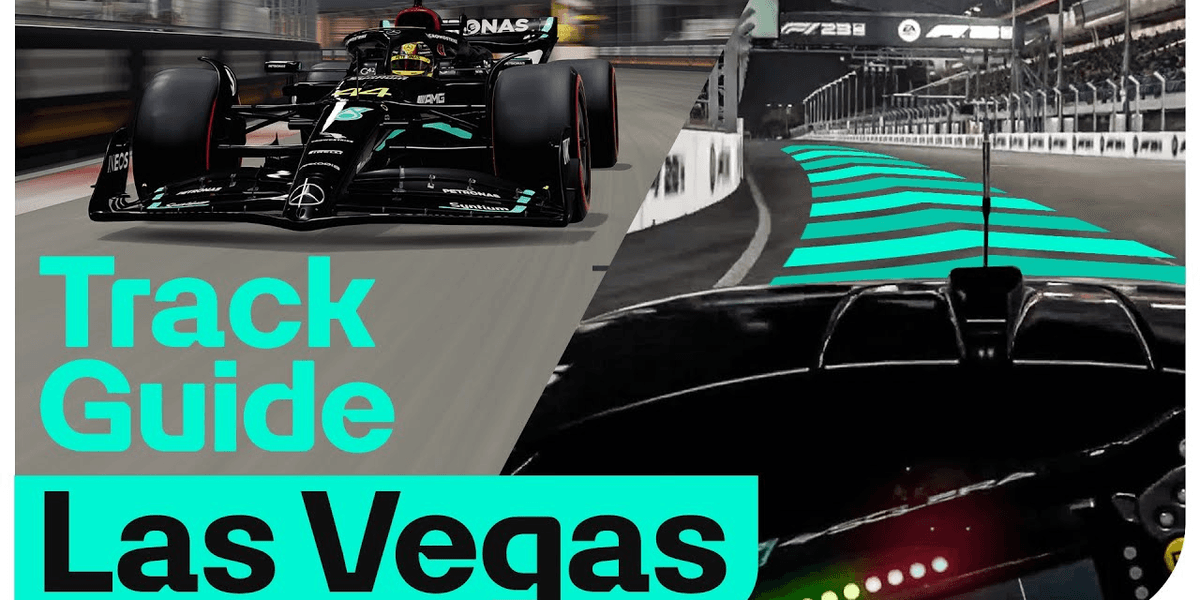
The Las Vegas Grand Prix is one of the most exciting additions to the Formula 1 calendar in recent years. Most circuits sit far away from busy city centres, but this one takes drivers straight through the heart of Las Vegas. Famous landmarks, glowing neon signs, luxury hotels and long straights create a racing atmosphere unlike any other event. Cars scream past the same buildings that tourists photograph every day. Even people who rarely watch motorsport stop to look when the cars hit the Strip at night. It feels less like a normal race and more like a giant show built around speed.
The Las Vegas F1 Circuit is also known as the Las Vegas Strip Circuit. It mixes high-speed sections with tight corners, tough braking zones and long straights where drivers reach incredible speeds. Racing under the lights makes everything feel even more special, and fans travel from all over the world to be part of it. Whether you follow F1 every weekend or are just learning the sport, knowing the track makes the race far more enjoyable.
In this guide, we cover the track layout, the important turns and some interesting race facts.
What Is the Las Vegas F1 Circuit?
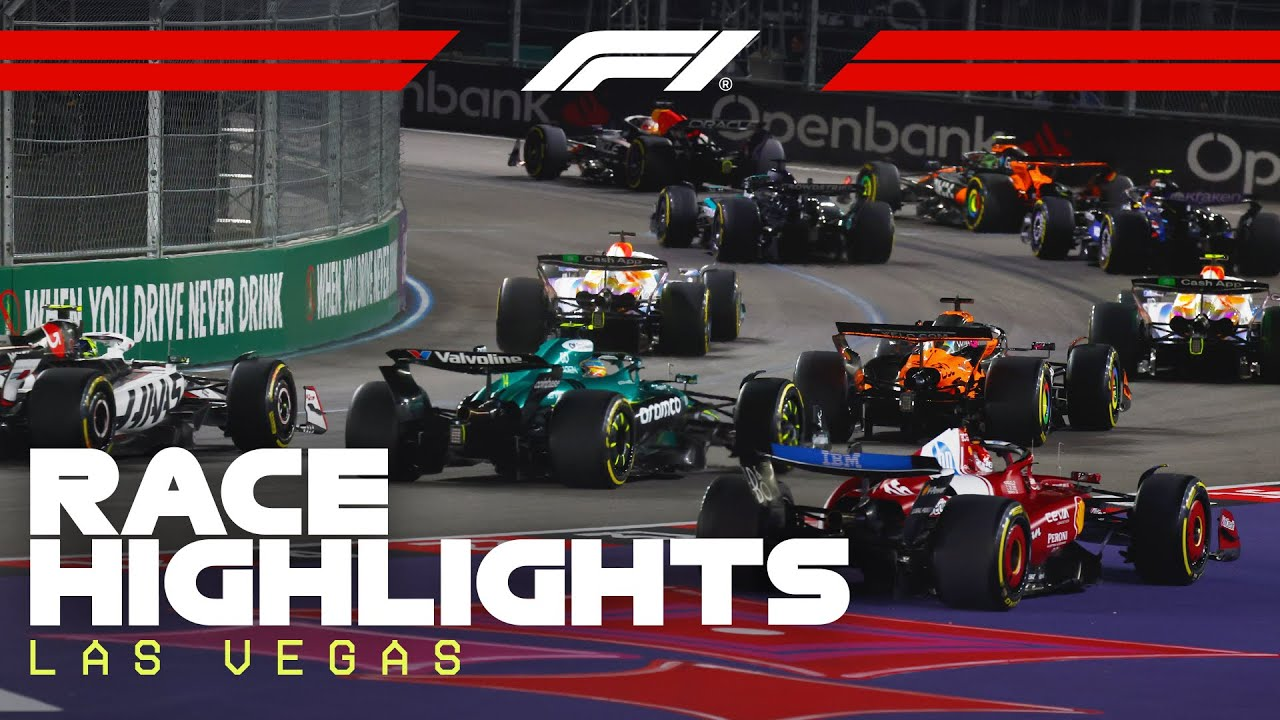
The Las Vegas F1 Circuit is a temporary street circuit in Las Vegas, Nevada, United States. It joined the Formula 1 calendar in 2023 and quickly became one of the most talked-about venues in the championship.
The track runs through some of the city's best-known areas, including the famous Las Vegas Strip. Drivers race past big hotels, entertainment venues and brightly lit buildings, which makes for a spectacular night-time setting.
Unlike permanent tracks, a street circuit uses public roads that are closed and prepared for racing. That changes the driving experience, because the surface, barriers and corners are not the same as at a traditional circuit. The race is also held at night, and the cooler desert air, artificial lighting and high speeds give the event its own identity.
Las Vegas F1 Circuit Track Layout and Specifications
The Strip Circuit is designed to encourage overtaking while testing the precision and confidence of the drivers. It has long straights, several heavy braking zones and a mix of slow and medium-speed corners. Here are the main specifications.
Track Specification | Details |
|---|---|
Circuit name | Las Vegas Strip Circuit |
Location | Las Vegas, Nevada, USA |
First F1 race | 2023 |
Circuit length | 6.201 km |
Number of turns | 17 |
Race distance | 50 laps |
Total race distance | 309.958 km |
Direction | Anti-clockwise |
Circuit type | Temporary street circuit |
One of the biggest attractions is the long straight along Las Vegas Boulevard, where drivers build speed and try overtaking moves before the braking zone. The track also has technical sections where staying in control matters more than flat-out speed.
Understanding the 17 Turns of the Las Vegas F1 Track
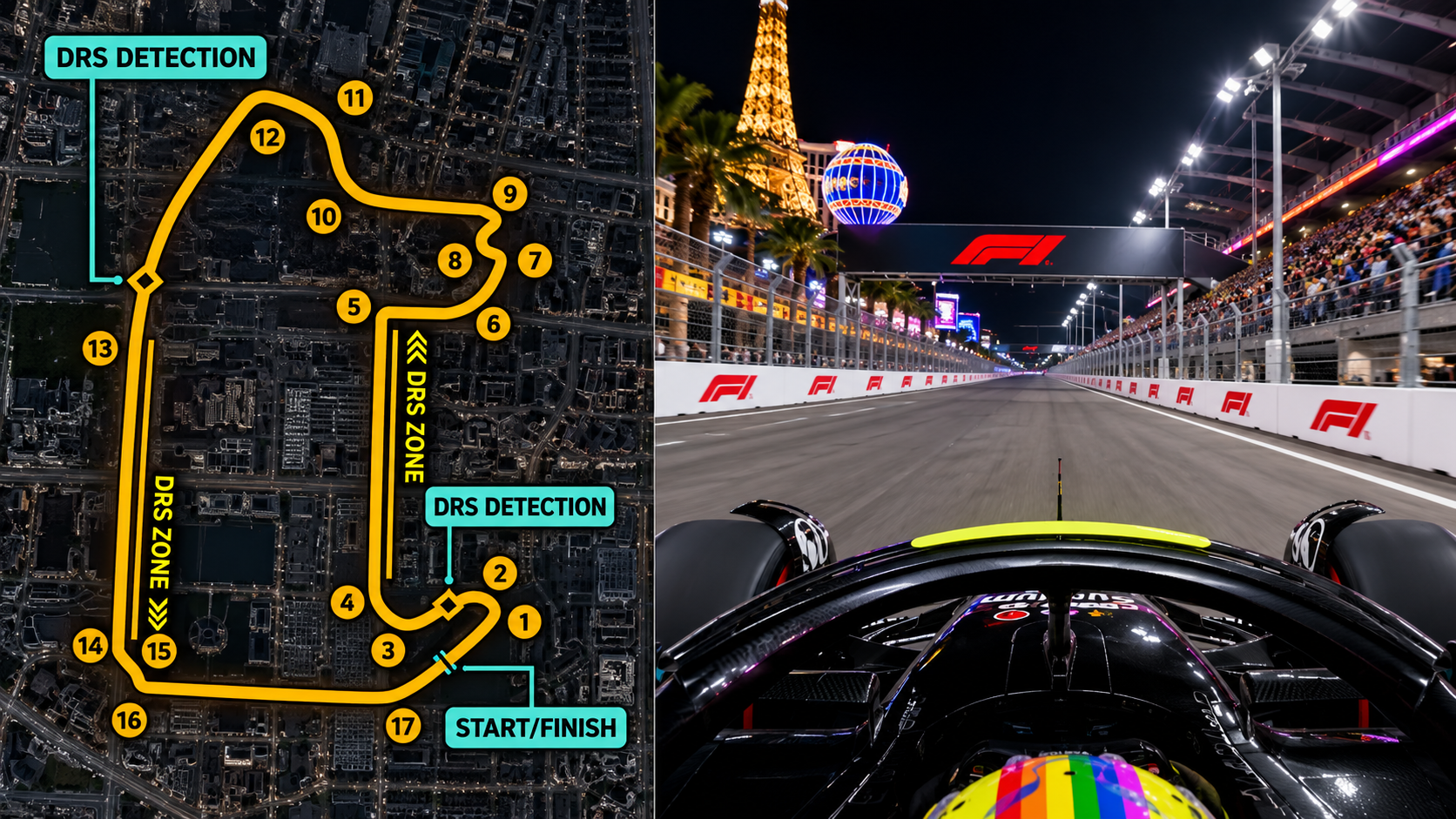
The circuit has 17 turns, and each section brings a different challenge. Some corners need heavy braking, while others demand smooth steering and good traction.
Turn 1: A critical opening corner. Drivers arrive here after the start-finish straight, and on the first lap many cars fight for position at once. Braking too late can lead to a mistake, while a wider line may give a rival the chance to pass. It is an exciting place to watch the opening lap.
Turns 2 to 5: The technical section. This group of corners asks drivers to manage their speed carefully. Direction changes and braking points make it more technical than the straights, and a small mistake can hurt the exit speed and make the next section harder.
Turns 6 to 9: Balance and control. This stretch tests how well drivers handle a sequence of corners. Smooth steering and careful throttle control are important, and a driver who exits with better speed gains an edge in the sections that follow.
Turns 10 to 12: Preparing for high speed. These corners set up the faster parts of the circuit. Finding the right racing line matters, because poor positioning reduces acceleration. F1 cars produce huge downforce, but drivers still have to balance grip, speed and tyre condition.
Turns 13 to 16: The Las Vegas Strip section. This is one of the most recognisable parts of the track. Cars travel along the famous Strip, surrounded by colourful lights and giant entertainment buildings. The speed makes it visually stunning, and drivers must stay focused because even a small slip at high speed can have serious consequences.
Turn 17: The final corner. This corner leads onto the last part of the lap, and a clean exit helps acceleration onto the main straight. It can also shape overtaking chances on the next lap, since a driver who nails it may attack the car ahead.
Why Is the Las Vegas F1 Circuit Difficult for Drivers?
The circuit looks fast, but driving here is not as simple as keeping your foot down. Drivers face several challenges that affect lap times and strategy.
Long straights and heavy braking. Cars hit extremely high speeds on the straights, but slower corners follow and demand strong braking. Braking too early costs time, and braking too late can lock the tyres or send the car wide.
Cold night-time conditions. Las Vegas is in the desert, yet night temperatures during the Grand Prix can be quite low. This makes tyre management a real challenge. F1 tyres need to work in a certain temperature range, and when they get too cold, drivers struggle with traction, especially when accelerating out of slow corners.
A low-grip street surface. Public roads were never designed for F1 cars, so the surface can feel slippery. Drivers must avoid unnecessary steering movements and keep a smooth style, because touching the barriers can quickly end a race or damage the car.
Tyre management and strategy. Long straights, slower corners and cool air make tyre care crucial. Teams must think about tyre temperature, wear and pit-stop timing, and a driver who pushes too hard early may struggle to stay consistent later.
Important Corners Every F1 Fan Should Watch
Some corners stand out because they influence overtaking and lap times.
Track Section | What Makes It Important |
|---|---|
Turn 1 | Heavy braking and opening-lap battles |
Turn 5 | Tight right-hand corner after a long straight |
Turns 7–8 | Challenging slow-speed chicane |
Turn 9 | Technical left-hand corner |
Turn 12 | Important braking and acceleration point |
Turn 14 | Entry to the final chicane section |
Turn 17 | Fast final corner before the main straight |
Turn 5 and the Turns 7–8 chicane are especially tricky because drivers must slow down quickly while keeping the car steady. Turn 12 matters too, since a good exit helps carry speed along the famous Las Vegas Boulevard straight.
Las Vegas Grand Prix: Race Facts and Records
Since returning in 2023, the Las Vegas Grand Prix has already produced several memorable moments. Its mix of speed, entertainment and unusual conditions has made it a distinctive event. Here are some interesting facts.
One of F1's longest tracks. At 6.201 kilometres, the circuit is the second-longest on the calendar, behind Spa-Francorchamps. The Las Vegas Boulevard section alone covers roughly 2 kilometres.
It returned in 2023. Las Vegas hosted F1 races in 1981 and 1982 under the name Caesars Palace Grand Prix. The modern Strip Circuit debuted in 2023 with a completely different layout.
Max Verstappen won twice. He won the first Las Vegas Grand Prix in 2023 and returned to the top of the podium in 2025. George Russell won the 2024 edition for Mercedes.
Alex Albon holds the top-speed record. He recorded 368.9 km/h (229.2 mph) at the 2024 race, which shows how fast F1 cars travel on the long straights.
The 2023 race had 181 overtakes. The opening race was packed with action, making it one of the most exciting events of that season.
The track uses huge amounts of lighting. Because the race is at night, thousands of temporary lights are needed. The official 2026 media information lists 1,750 temporary lights.
How Does the Las Vegas Circuit Compare with Other F1 Tracks?
Las Vegas shares a few things with other high-speed venues, but its street setting sets it apart.
Feature | Las Vegas | Monza | Monaco |
|---|---|---|---|
Circuit type | Street circuit | Permanent circuit | Street circuit |
Track length | 6.201 km | 5.793 km | 3.337 km |
Driving style | High speed and heavy braking | High speed | Technical and precision-based |
Main challenge | Cold tyres and braking | Speed and braking | Narrow roads and barriers |
Overtaking | Several opportunities | Strong overtaking opportunities | More difficult |
Las Vegas and Monza are often compared because both reward straight-line speed and efficient aerodynamics. But Las Vegas has more street-circuit traits, such as temporary barriers and changing grip. Monaco is almost the opposite, since its narrow roads and tight corners demand precision over top speed.
What Makes the Las Vegas Grand Prix Special for Fans?
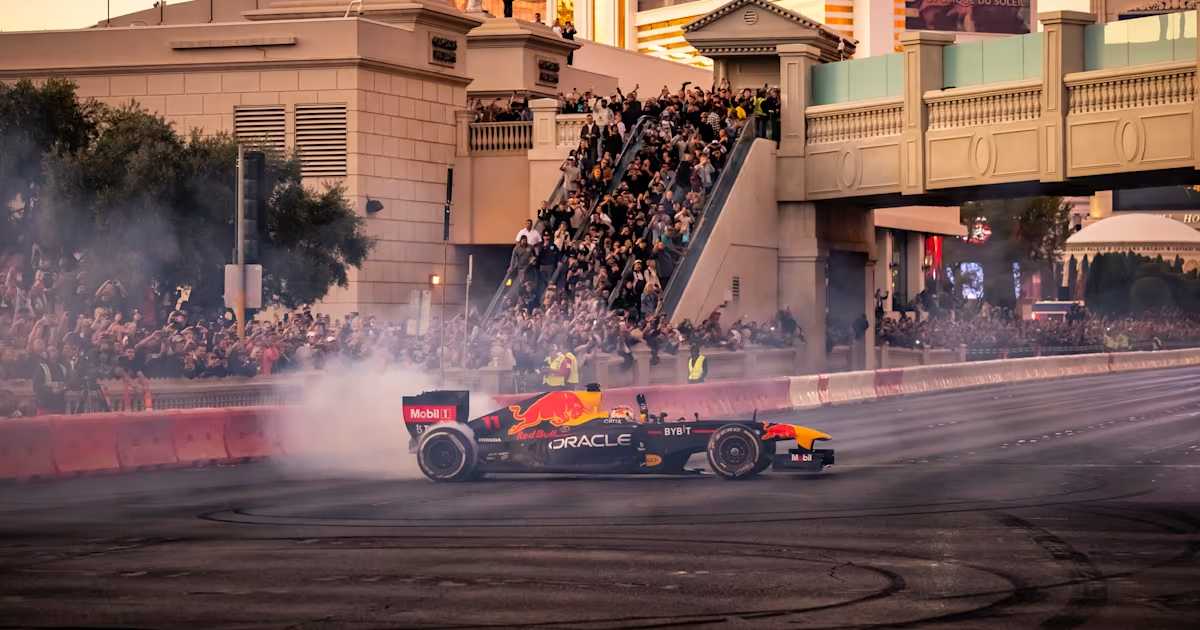
The racing is only one part of the experience. The event blends Formula 1 with the city's entertainment culture. Fans watch cars race past attractions like the Bellagio fountains, Caesars Palace and the Venetian, and the glowing buildings make a memorable backdrop, especially along the Strip.
There are different ways to watch too. Grandstand seats give a closer view of specific corners, while hospitality areas offer premium facilities and entertainment. For fans at home, the night race feels different from a normal daytime Grand Prix, with the lights, the city scenery and the sound of the engines making the broadcast look distinctive.
Las Vegas Grand Prix Race Weekend and Schedule
The weekend schedule is a little unusual. The main race takes place on Saturday night local time instead of the usual Sunday. The weekend generally includes three practice sessions, qualifying and the Grand Prix. Practice lets teams learn track conditions, test tyres and adjust their setups.
Qualifying is especially important, because a strong starting spot makes a big difference on a track where overtaking is possible but mistakes are costly. For 2026, the race weekend runs from November 19 to November 21, with the Grand Prix scheduled for Saturday, November 21, local time.
Tips for Understanding the Las Vegas F1 Race
If you are watching for the first time, a few details can help you follow the action. First, watch the braking zones at Turns 1, 5 and 12, since these often produce overtakes and position changes.
Second, notice how drivers handle their tyres in the opening laps. Cold tyres make grip hard to find, particularly when accelerating out of slow corners. Finally, keep an eye on pit-stop timing and safety car periods, because a safety car can change the whole strategy and let some drivers gain places with a well-timed stop.
Final Thoughts
The Las Vegas F1 Circuit is more than a racing track surrounded by famous hotels and bright lights. Its 6.201-kilometre layout, 17 challenging turns, long straights and demanding braking zones make it a real test for Formula 1 drivers.
From the opening corner to the high-speed Strip section, every part of the circuit offers something different. Cold night conditions and tyre management add another layer of difficulty, so strategy matters as much as outright speed.
For F1 fans, understanding this circuit makes the Grand Prix even more enjoyable. Whether you care about layouts, records, overtaking or driver performance, the Las Vegas Strip Circuit has plenty to explore.
The Las Vegas Strip Circuit is 6.201 km (3.8 miles) long.
The circuit features 17 turns with a combination of high-speed sections and tight corners.
The race consists of 50 laps, covering a total distance of 309.958 km.
The modern Las Vegas Grand Prix joined the F1 calendar in 2023.
Max Verstappen won the inaugural Las Vegas Grand Prix in 2023.
Sources and notes
Links the author listed for this post.
This article uses official Formula 1 publications, FIA records and Las Vegas Grand Prix resources for accurate circuit information. Track layout, 17 turns, race distance and historical facts are covered using publicly available sources. Additional details about racing conditions, tyre management and overtaking opportunities help readers understand the Las Vegas F1 experience.


Discussion
0 comments
No comments yet
Discussion will appear here once it loads.