
Artificial intelligence is no longer just a buzzword tossed around in tech keynotes or sci-fi movies. Over the past few years, it has quietly woven itself into the fabric of everyday work and daily life. Whether you are drafting an email with a smart assistant, getting hyper-personalized shopping recommendations, or relying on automated tools at the office, AI is already running in the background. Explore AI stocks to watch in 2027 and discover the leading companies, emerging technologies, and investment trends shaping the future of artificial intelligence.
As we approach 2027, the conversation around AI in the stock market is shifting. Early excitement focused heavily on who could build the fastest chips or launch the flashiest chatbot. Now, investors and everyday market watchers are asking a much more practical question: Which companies are actually turning all this AI spending into lasting, real-world profits?
J.P. Morgan Asset Management+ 1
When researching AI stocks, it helps to zoom out and look at the entire ecosystem rather than chasing a single headline name. Think of the AI industry like a gold rush. Some companies are selling the picks and shovels—building the microchips, servers, and networking cables that make AI possible. Others own the land—operating massive cloud platforms where AI lives. And a third group is using those tools to build practical software that businesses pay for every month.
J.P. Morgan Asset Management
In this guide, we will break down why 2027 is shaping up to be a pivotal year for artificial intelligence, explore 10 major AI stocks across different layers of the market, and highlight the risks every investor should keep on their radar before putting money to work.
Why AI Stocks Are Entering a New Phase in 2027
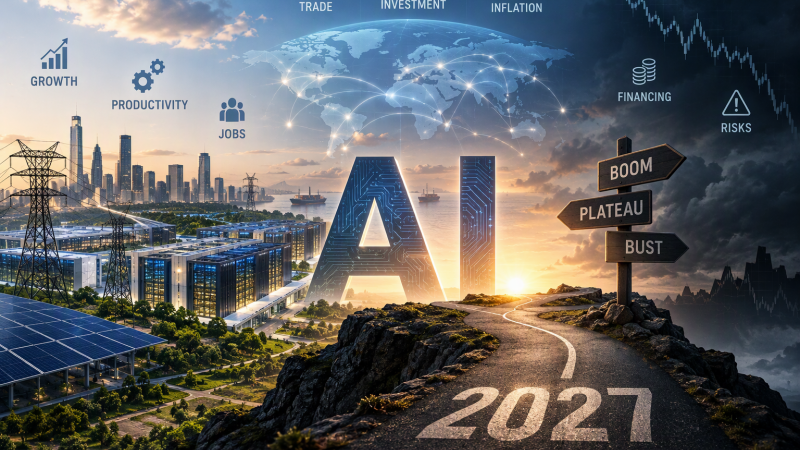
To understand where AI stocks might head in 2027, it helps to look at how the technology is evolving behind the scenes.
First, the physical demand for AI infrastructure remains massive. Training and running modern AI models takes an almost unimaginable amount of computing power. That means tech giants are still pouring hundreds of billions of dollars into specialized processors, high-speed networking gear, memory storage, and the massive data centers—and electrical grids—needed to house them.
J.P. Morgan Asset Management
Second, AI is spreading well beyond Silicon Valley. Healthcare researchers are using machine learning to speed up drug discovery, banks are automating complex risk checks, manufacturers are deploying smart robotics on factory floors, and retailers are streamlining supply chains.
Most importantly, major Wall Street research firms point out that 2027 marks a transition from the "build-out" phase to the "rollout" (or adoption) phase. Over the last couple of years, tech giants spent aggressively just to get their AI infrastructure in place. Heading into 2027, shareholders are demanding proof of return on investment (ROI). The winners in this next chapter won't just be the companies spending the most money—they will be the ones proving that customers are willing to pay for AI-powered tools.
J.P. Morgan Asset Management+ 3
10 Top AI Stocks to Watch in 2027
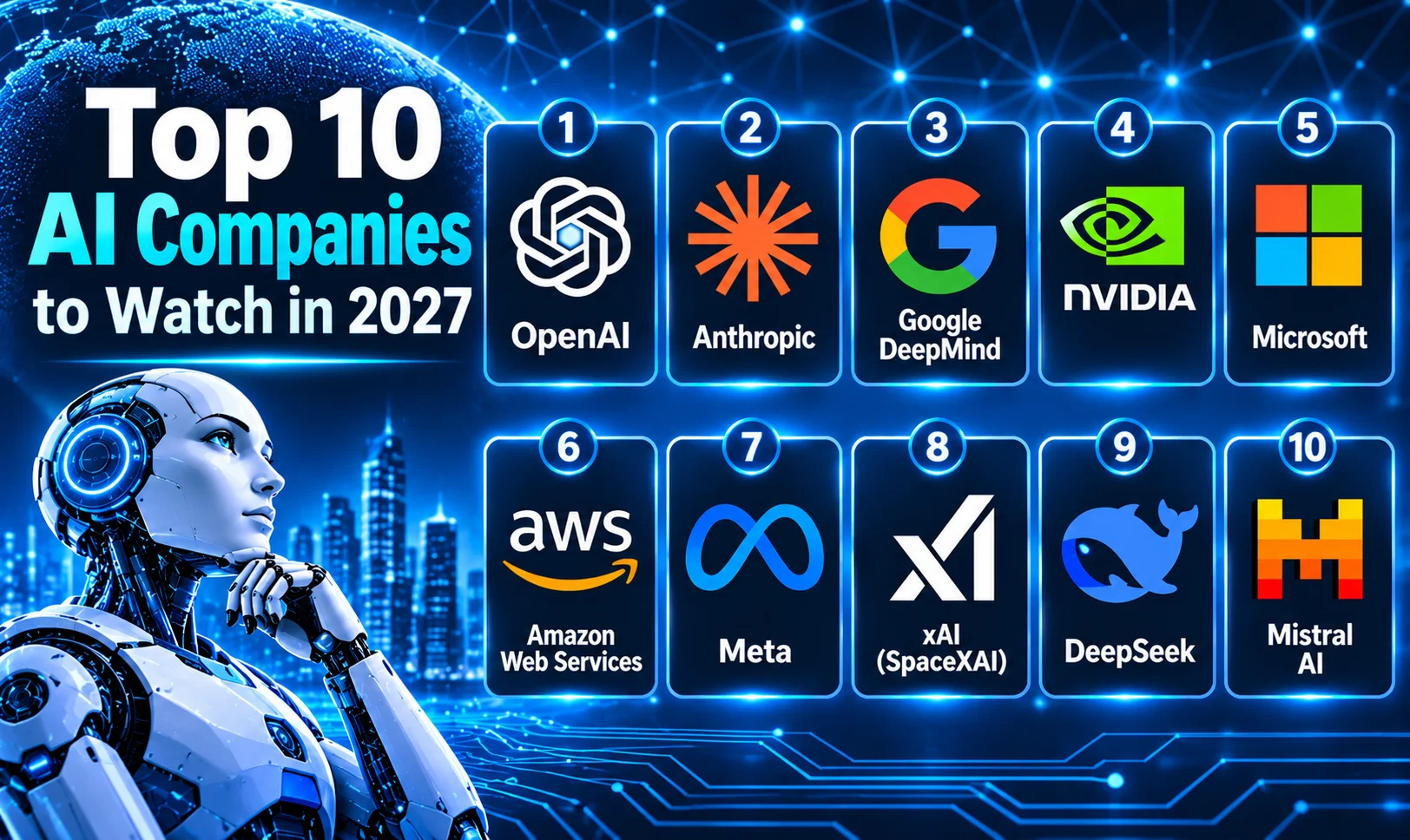
The companies below represent established leaders across semiconductors, cloud computing, manufacturing equipment, and enterprise software. Think of this list as a starting point for your own research rather than a list of guaranteed winners or personalized financial advice.
Company | Ticker | Primary Role in the AI Ecosystem | Key 2027 Catalyst |
NVIDIA | NASDAQ: NVDA | AI chips (GPUs) & computing platforms | Vera Rubin platform ramp & data center demand |
Microsoft | NASDAQ: MSFT | Cloud infrastructure & workplace AI software | Azure cloud growth & Copilot enterprise adoption |
Alphabet | NASDAQ: GOOGL | AI models (Gemini), cloud & digital search | Monetizing AI search & Google Cloud expansion |
Amazon | NASDAQ: AMZN | Cloud infrastructure (AWS) & custom AI chips | AWS AI workloads & retail logistics efficiency |
Broadcom | NASDAQ: AVGO | Custom AI accelerators & data center networking | Hyperscaler demand for custom silicon & networking |
AMD | NASDAQ: AMD | Alternative AI GPUs & data center processors | Instinct accelerator adoption by cloud providers |
Meta Platforms | NASDAQ: META | AI-driven advertising & consumer AI assistants | Ad targeting efficiency & open-source AI ecosystem |
Palantir | NASDAQ: PLTR | Enterprise AI data & decision-making software | Commercial customer growth via its AIP platform |
TSMC | NYSE: TSM | Advanced semiconductor manufacturing (foundry) | 2nm chip production & global capacity expansion |
ASML | NASDAQ: ASML | Extreme ultraviolet (EUV) lithography machines | Next-gen chipmaking tool orders & export policy |
1. NVIDIA (NASDAQ: NVDA)
It is nearly impossible to talk about artificial intelligence without starting with NVIDIA. Originally famous for powering video game graphics, NVIDIA’s graphics processing units (GPUs) have become the gold standard engine for training and running complex AI models.
What sets NVIDIA apart is not just its hardware, but its deep software ecosystem (CUDA), which makes it difficult for developers to switch to rival platforms overnight. The company's financial momentum heading into 2027 remains staggering. In its third-quarter fiscal 2027 earnings report released in November 2026, NVIDIA posted $115.8 billion in quarterly revenue—a 103% jump compared to the year before—with $107.6 billion coming directly from its data center business.
NVIDIA Investor Relations
As 2027 unfolds, attention is centered on the rapid rollout of NVIDIA’s next-generation Vera Rubin computing platform, whether massive tech buyers keep expanding their data center budgets, and how well NVIDIA defends its high profit margins against hungry rivals.
Vested Finance
What to watch in 2027: Vera Rubin chip shipments, data center revenue growth, gross profit margins, and rising competition.
Vested Finance
2. Microsoft (NASDAQ: MSFT)
While chipmakers build the engine, Microsoft provides the dashboard that millions of office workers look at every single day. Microsoft’s AI strategy is built on two massive pillars: its Azure cloud computing platform and its Copilot software suite.
Through Azure, businesses around the world rent the computing horsepower needed to build and run their own AI tools. Meanwhile, Copilot embeds generative AI directly into Word, Excel, Teams, and Outlook. Microsoft’s biggest advantage is distribution—companies don't have to overhaul their workflows to try Microsoft's AI because it is already sitting inside the software they pay for every year.
In 2027, investors will closely examine whether businesses are upgrading to paid Copilot tiers at scale and whether Azure’s cloud revenue justifies the tens of billions Microsoft is spending on new data centers.
What to watch in 2027: Azure cloud growth rates, enterprise Copilot subscription renewals, and capital expenditure discipline.
3. Alphabet (NASDAQ: GOOGL)

Alphabet, the parent company of Google, has been researching artificial intelligence for well over a decade. Today, its AI footprint spans everything from its Gemini family of AI models and Google Cloud to custom-built Tensor Processing Units (TPUs) and AI-enhanced Google Search.
Google’s superpower is data and daily reach. Billions of people use Search, YouTube, Gmail, and Android every day, giving Alphabet unmatched distribution to roll out new AI features instantly. At the same time, Google Cloud has become a go-to platform for fast-growing AI startups.
However, Alphabet faces a delicate balancing act in 2027. Traditional web search has been a cash cow for two decades, and investors want to see how AI-generated search answers affect digital advertising revenue—especially as newer AI search competitors try to chip away at Google's market share.
What to watch in 2027: Google Cloud profitability, Gemini user engagement, search advertising trends, and regulatory pressure.
4. Amazon (NASDAQ: AMZN)
Most shoppers know Amazon for next-day package delivery, but in the tech world, Amazon Web Services (AWS) is the backbone of the internet. Because AI models require immense cloud storage and computing muscle, AWS sits right at the center of the AI boom.
Amazon is taking a practical, multi-layered approach to AI. Through Amazon Bedrock, it gives corporate clients a menu of different AI models to choose from rather than locking them into just one. At the same time, Amazon designs its own custom AI chips—Trainium and Inferentia—to offer customers a more cost-effective alternative to expensive third-party GPUs. Behind the scenes, Amazon also uses AI to optimize warehouse robotics, delivery routes, and product recommendations across its massive retail business.
For 2027, the key storyline is how fast AWS can grow its AI services while keeping operating profits climbing across both cloud and retail.
What to watch in 2027: AWS revenue acceleration, adoption of custom Trainium chips, and retail operating margins.
5. Broadcom (NASDAQ: AVGO)
When people picture an AI data center, they usually think of processors. What they often overlook is the plumbing that connects all those processors together. That is where Broadcom shines.
As AI clusters grow to link tens of thousands of chips at once, data bottlenecks become a major headache. Broadcom builds the high-speed networking switches and interconnects that keep information flowing smoothly between servers. Even better, Broadcom has become the go-to partner for tech giants looking to design custom AI chips (known as ASICs) tailored specifically to their own workloads.
Broadcom offers investors a way to tap into AI infrastructure growth without relying solely on standard off-the-shelf GPUs. Heading into 2027, its performance will hinge on orders from its handful of massive cloud customers and steady demand for high-speed networking upgrades.
What to watch in 2027: Custom AI accelerator orders, networking chip sales, and customer concentration among major cloud providers.
6. Advanced Micro Devices (NASDAQ: AMD)
Every booming technology market eventually craves competition—and in AI chips, AMD is the clearest challenger to NVIDIA’s throne. Known for its Ryzen PC processors and EPYC server chips, AMD has made major strides in AI hardware with its Instinct line of data center accelerators.
Major cloud providers and tech giants have a strong incentive to support AMD: nobody wants a single supplier controlling all the pricing power in AI hardware. As AMD improves both its chip performance and its open-source ROCm software stack, more data centers are testing and deploying AMD hardware alongside—or instead of—rival chips.
In 2027, AMD’s biggest test will be proving it can steadily capture market share in AI data centers while keeping pace with an aggressive annual product release schedule.
What to watch in 2027: Instinct GPU revenue targets, new cloud customer wins, and software ecosystem improvements.
7. Meta Platforms (NASDAQ: META)
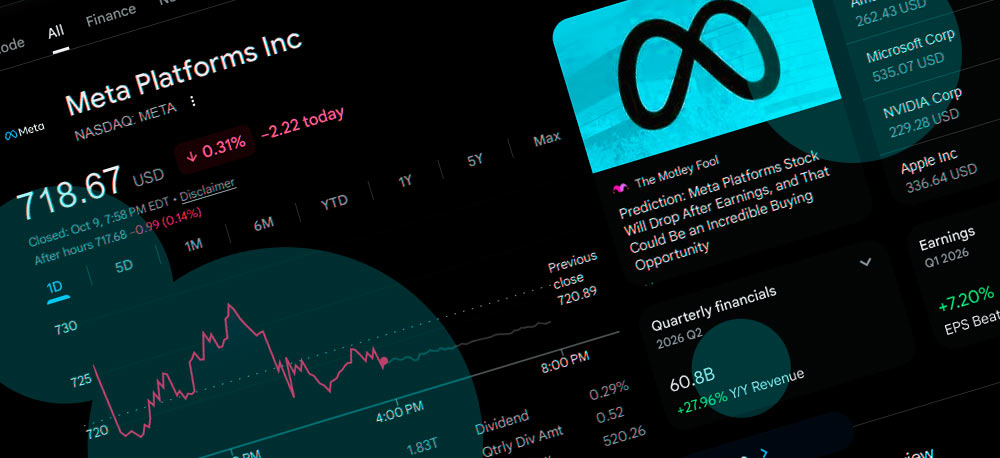
Meta Platforms—the parent company of Facebook, Instagram, and WhatsApp—proves that a company doesn't have to sell cloud servers to be an AI powerhouse. Instead, Meta uses AI as an invisible engine to supercharge its core business: digital advertising.
Over the past few years, Meta rebuilt its content recommendation and ad-targeting systems around advanced AI. The result? Users spend more time scrolling Reels and feeds, and advertisers get better returns on their ad spend. Meta has also taken a unique open-source approach with its Llama AI models, making its technology widely available to developers while embedding Meta AI assistants directly into WhatsApp, Instagram, and smart glasses.
For 2027, investors will weigh Meta’s strong ad revenue growth against its heavy capital spending on AI data centers and experimental hardware.
What to watch in 2027: Ad impression growth and pricing, Meta AI assistant engagement, and return on infrastructure spending.
8. Palantir Technologies (NASDAQ: PLTR)
If chipmakers build the hardware and cloud providers supply the electricity, Palantir builds the software that helps organizations actually use AI to solve messy, real-world problems.
Originally known for working with defense and intelligence agencies, Palantir has expanded rapidly into the commercial sector thanks to its Artificial Intelligence Platform (AIP). AIP allows hospitals, airlines, manufacturers, and energy companies to safely connect large language models to their own private internal data—helping them spot supply chain delays, manage hospital beds, or automate factory scheduling.
Palantir stands out as a pure-play AI software company. Heading into 2027, the key focus will be whether its rapid U.S. commercial customer growth continues and whether its stock valuation stays grounded in actual earnings growth.
What to watch in 2027: U.S. commercial customer count, net dollar retention, and valuation multiples relative to earnings.
9. Taiwan Semiconductor Manufacturing Company (NYSE: TSM)
Here is a little-known secret about the chip industry: many famous chip companies—including NVIDIA, AMD, Broadcom, and Apple—don't actually manufacture their own silicon. They design the blueprints, and then they send those designs to TSMC to be built.
TSMC is the world’s largest and most advanced contract chipmaker (foundry). Producing cutting-edge AI processors requires microscopic precision and tens of billions of dollars in factory investments, creating a competitive moat that very few companies on Earth can match. No matter which chip designer wins the AI race in 2027, there is a very high chance TSMC will be the company manufacturing their chips.
Because TSMC is building new fabrication plants globally to meet demand, investors in 2027 will watch its advanced manufacturing capacity, profit margins, and geopolitical stability in East Asia.
What to watch in 2027: Ramp-up of next-generation 2-nanometer chip production, global factory expansion, and geopolitical developments.
10. ASML (NASDAQ: ASML)
If TSMC is the factory that builds the world’s most advanced AI chips, ASML is the company that builds the machines inside that factory. Based in the Netherlands, ASML holds a near-monopoly on extreme ultraviolet (EUV) lithography systems—complex, bus-sized machines that use lasers to print microscopic circuit patterns onto silicon wafers.
Without ASML’s technology, modern AI processors simply could not exist at their current size and speed. Because chipmakers order these machines years in advance, ASML offers a unique, long-term window into where the semiconductor industry is heading.
At the same time, ASML’s business moves in cycles, and its sales are closely affected by international trade rules and export restrictions. In 2027, investors will keep a close eye on quarterly equipment bookings and global chipmaker spending budgets.
What to watch in 2027: Net system bookings, High-NA EUV machine adoption, and international export regulations.
Key Risks to Keep in Mind Before Investing in AI Stocks
While the long-term potential of artificial intelligence is exciting, no trend goes up in a straight line. Before adding AI stocks to a portfolio in 2027, it pays to think carefully about what could go wrong:
High Valuations Leave Little Room for Error: Many leading AI stocks trade at premium prices because investors expect years of rapid growth. If a company reports even slightly slower revenue growth or cautious guidance, its share price can drop sharply overnight.
The "ROI" Reality Check: Tech giants are spending hundreds of billions of dollars on AI data centers. If everyday businesses and consumers don't buy enough AI software to justify those massive bills, cloud companies could suddenly pull back on chip orders—creating a ripple effect across the entire supply chain.
J.P. Morgan Asset Management+ 1Intense Competition and Rapid Disruption: Technology moves fast. Today’s market leader can quickly face pressure from open-source AI models, custom in-house chips built by cloud giants, or nimble startups offering cheaper software alternatives.
Regulation and Geopolitics: Governments around the world are actively debating AI safety rules, copyright laws, and antitrust oversight. Meanwhile, export restrictions on advanced semiconductors and chipmaking equipment can suddenly cut off access to major international markets.
Power and Supply Bottlenecks: Building AI data centers isn't just about buying chips—it also requires massive amounts of electricity, cooling systems, and grid upgrades. Physical power shortages could slow down how fast new AI infrastructure comes online.
How to Approach AI Investing Smartly in 2027

You don't need to predict a single winner to participate in the growth of artificial intelligence. In fact, trying to bet everything on one high-flying stock is often the quickest way to experience stomach-churning volatility.
Instead, consider spreading your research across different layers of the AI value chain—balancing established cash-generating tech leaders with infrastructure builders or practical software providers. If picking individual companies feels overwhelming, broad technology or semiconductor exchange-traded funds (ETFs) can also offer instant diversification across dozens of businesses at once.
J.P. Morgan Asset Management
Above all, focus on business fundamentals rather than hype. Look for companies with strong balance sheets, real customer demand, and clear paths to turning artificial intelligence into sustainable cash flow.
J.P. Morgan Asset Management
Disclaimer: This article is for informational and educational purposes only and does not constitute personalized financial or investment advice. Stock markets carry inherent risks, including the loss of principal. Always conduct your own thorough research or consult a certified financial planner before making investment decisions.
In 2027, investors are moving past initial infrastructure hype to focus on which companies are turning massive AI spending into real-world profits.
NVIDIA, AMD, Broadcom, TSMC, and ASML dominate the hardware side by designing, manufacturing, and networking the advanced chips powering AI.
They earn recurring revenue by renting out AI computing power via cloud platforms and embedding paid AI tools into everyday business software.
Key risks include steep stock valuations, slowing return on AI spending, fierce competition, power shortages, and strict export regulations.
Investors can reduce risk by diversifying across different parts of the AI ecosystem or choosing broad technology and semiconductor ETFs.
Sources and notes
Links the author listed for this post.
Information is based on company reports, financial disclosures, investor relations updates, and technology industry research. Stock prices and market conditions may change.
More on AltFTool
- AltFTool (opens in a new tab)
altftool.com


Discussion
0 comments
No comments yet
Discussion will appear here once it loads.