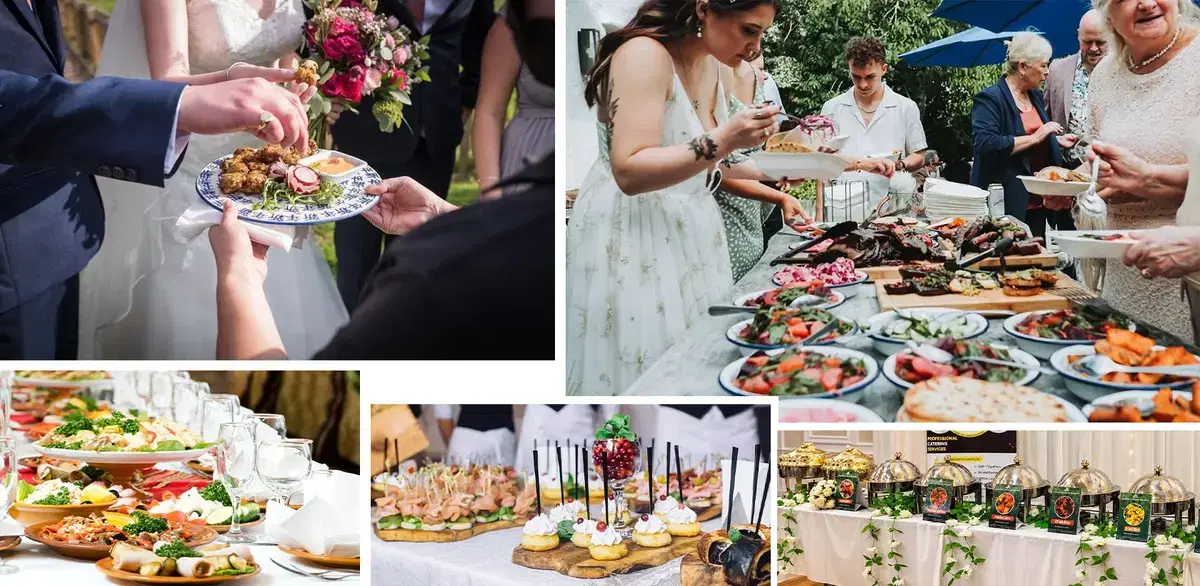
Food is easily one of the biggest highlights of an Indian wedding. Guests might forget the decorations, and they may only remember a few moments from the ceremonies. But a really good meal tends to stay with them for years. Think about the colourful snacks at the mehndi, the traditional sweets on the wedding day and the big dinner at the reception. Every single function is a chance to serve something special. When the food is right, people talk about it long after the wedding is over. That's why the menu deserves as much thought as anything else on your list.
Planning a wedding menu is exciting, but it comes with a lot of decisions. You have to think about the number of guests, food preferences, budget, venue, weather and the kind of ceremony. A menu that works perfectly for a daytime haldi may feel completely wrong for a formal evening reception. This is where a little planning saves you a lot of stress later.
This Wedding Food Guide 2026 covers popular Indian wedding dishes, menu ideas and practical catering tips for every celebration. Whether your wedding is a small family affair or a grand destination event, the right dishes can make each function more enjoyable.
Why Wedding Food Planning Matters
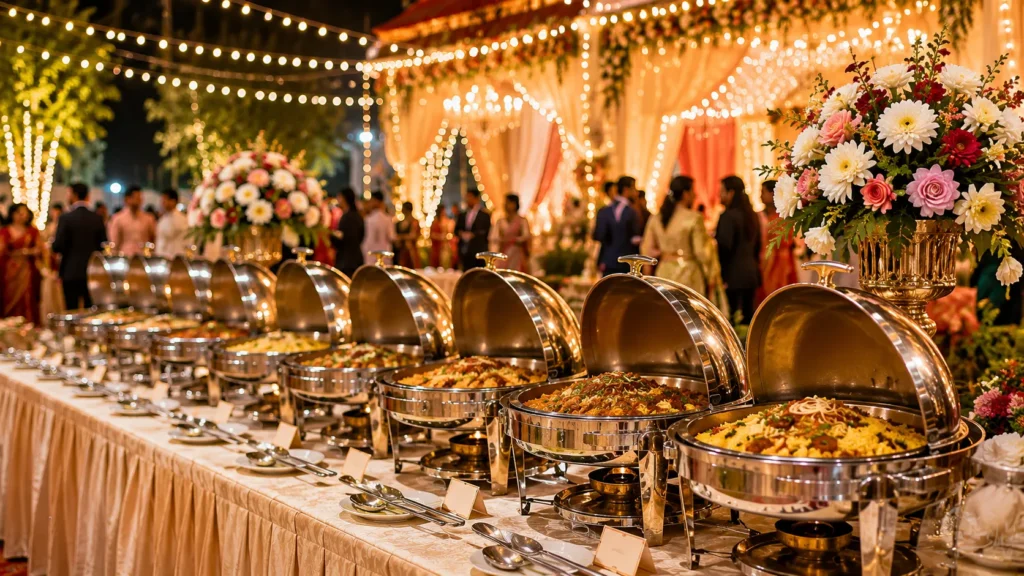
Wedding food is much more than just a meal. It brings people together and becomes a big part of how the celebration feels. Since guests usually attend several functions, a little variety across the events keeps the menu interesting.
For example, a simple breakfast spread at a morning haldi, street-food counters at the mehndi and a full dinner buffet at the reception all feel different. You get three different experiences without repeating the same dishes.
Good menu planning also helps you avoid food waste. When you know your guest list well and choose dishes carefully, it's easier to manage catering costs and still keep the quality high.
Best Food Ideas for Every Wedding Function
Every Indian wedding function has its own mood. The food should match the occasion, the timing and what your guests expect.
1. Haldi Ceremony Food Ideas
The haldi ceremony is usually relaxed and cheerful. Since many haldi functions happen in the morning or afternoon, light snacks and refreshing drinks are the best choice.
Popular haldi food options:
Mini samosas and kachoris
Dhokla and dhokla sandwiches
Aloo tikki and chaat
Fresh fruit bowls
Jalebi and rabri
Lemonade, aam panna and fresh juices
You can also set up a colourful food counter with regional snacks. For a summer wedding, add coconut water, buttermilk and chilled drinks so guests stay comfortable in the heat.
2. Mehndi Ceremony Food Ideas
Mehndi celebrations are lively, with music, dancing and plenty of family fun. That makes them perfect for interactive food counters where guests can pick exactly what they like.
Some popular mehndi menu ideas include:
Pani puri and dahi puri
Pav bhaji
Mini pizza and sandwiches
Pasta and noodles
Chole kulche
Dosa and uttapam
Cupcakes and mini desserts
A live chaat counter is a big hit because guests can customise their plates to their own taste. Keep a few mild options ready for children and for guests who don't like spicy food.
3. Sangeet Night Food Ideas
Sangeet nights have performances, dancing and a long evening of celebration. Guests usually prefer food that's easy to enjoy between performances.
Consider including:
Paneer tikka and hara bhara kebab
Vegetable spring rolls
Tandoori momos
Cheese balls
Mini burgers and wraps
Mocktails and fruit-based drinks
Brownies, mousse and mini pastries
A mix of finger foods and a dinner buffet works well for bigger sangeet events. Try not to serve too many heavy dishes during the early performances, because guests would rather have lighter snacks before dinner.
4. Wedding Day Lunch Menu
The main wedding ceremony is one of the most important events, so the food arrangements should follow the ceremony schedule closely.
For a traditional Indian wedding lunch, you can include:
Starters
Paneer tikka
Vegetable kebabs
Hara bhara kabab
Main course
Shahi paneer
Dal makhani
Seasonal mixed vegetables
Jeera rice or vegetable pulao
Butter naan and tandoori roti
Desserts
Gulab jamun
Rasmalai
Kheer
Seasonal fruit
If your guests come from different regions, add one or two regional dishes. A familiar local preparation makes the menu feel more personal and welcoming.
5. Reception Dinner Food Ideas
The reception is usually the largest gathering of the wedding. Guests can include relatives, friends, colleagues and people from different cultural backgrounds. A varied buffet makes it easier to keep everyone happy.
Popular reception menu options include:
Paneer lababdar
Dal makhani
Vegetable biryani
Malai kofta
Indian breads
Chinese noodles and fried rice
Grilled vegetables
Fresh salads
Gulab jamun and ice cream
Pastries and cheesecakes
For a grander reception, you can set up separate Indian, continental and dessert counters. But more dishes don't automatically mean a better menu. Freshness, taste and good service matter far more than the number of items.
Popular Indian Wedding Food Trends in 2026
01. Food Quality
Taste the dishes before booking. Check freshness, flavour, ingredients and presentation.
02. Catering Experience
Ask about previous wedding events and their experience managing large guest gatherings.
03. Guest Capacity
Confirm that the catering team can serve your expected number of guests without delays.
04. Food Hygiene
Check kitchen cleanliness, food storage, preparation methods and hygiene standards.
05. Service Staff
Discuss the number of servers, counter staff and supervisors available during the event.
06. Menu Flexibility
Ask about Jain, vegetarian, vegan and allergy-friendly food arrangements.
Wedding catering is becoming more personal. Couples now care about presentation, regional flavours and the overall dining experience, instead of just putting out a huge buffet.
Here are some food trends worth considering this year.
Live Food Stations
Live counters let guests watch their food being made and customise it. Popular choices include dosa stations, pasta counters, chaat stalls and fresh tandoor preparations. They also add an interactive touch to the celebration.
Regional Food Counters
Indian cuisine has so much variety to offer. You can bring in Rajasthani dal baati churma, Gujarati farsan, South Indian dosa, Punjabi chole bhature or Bengali sweets. Regional counters are especially nice when families want to include dishes from their hometowns.
Mini Dessert Portions
Instead of serving only large desserts, try adding small portions of different sweets. Mini cheesecakes, dessert cups, brownies, rasmalai and traditional mithai let guests sample several options without feeling too full.
Healthier Food Choices
Some guests prefer lighter meals or have specific dietary needs. Include fresh salads, grilled vegetables, fruit platters, less oily dishes and clearly labelled vegetarian options.
How to Plan a Wedding Menu According to Your Budget
Catering costs depend on the number of guests, the menu, the venue, the service style and the location. With a little planning, you can control your spending without making the food feel limited.
Set Your Catering Budget First
Decide how much you can spend on food before you finalise the menu. Work out the approximate cost per guest and multiply it by the number of people you expect. Keep some extra money aside for surprise guests or last-minute requests.
Select Dishes Carefully
You don't need ten different starters or fifteen main-course dishes. A balanced menu with a few well-made options is often more satisfying than an oversized buffet. For example, you could choose two popular starters, three main-course dishes, rice, bread, salads and two desserts.
Avoid Repeating the Same Menu
If you have several wedding functions, plan a different food theme for each one. It keeps the celebrations fresh and stops guests from seeing the same dishes again and again.
Discuss Packages with Caterers
Compare catering packages and ask exactly what's included in the quoted price. Check whether staff, crockery, counters, beverages and service charges are covered. And always ask for a food tasting before you confirm a caterer.
Important Things to Check Before Hiring a Wedding Caterer
The caterer plays a huge role in how smoothly the food side of your wedding goes. Even a great menu can turn into a headache if the service is slow or the quality keeps changing.
Before booking a caterer, check the following:
Food quality: Taste the dishes before confirming the menu.
Experience: Ask about the wedding events they've handled before.
Guest capacity: Make sure they can manage your expected guest count.
Food hygiene: Check kitchen cleanliness and how they store food.
Service staff: Confirm how many servers will be available.
Menu flexibility: Discuss Jain, vegan and allergy-friendly requirements.
Timing: Make sure food is prepared and served as per the event schedule.
It also helps to talk about a backup plan in case of bad weather or sudden changes in the schedule.
Vegetarian, Jain and Special Dietary Food Options
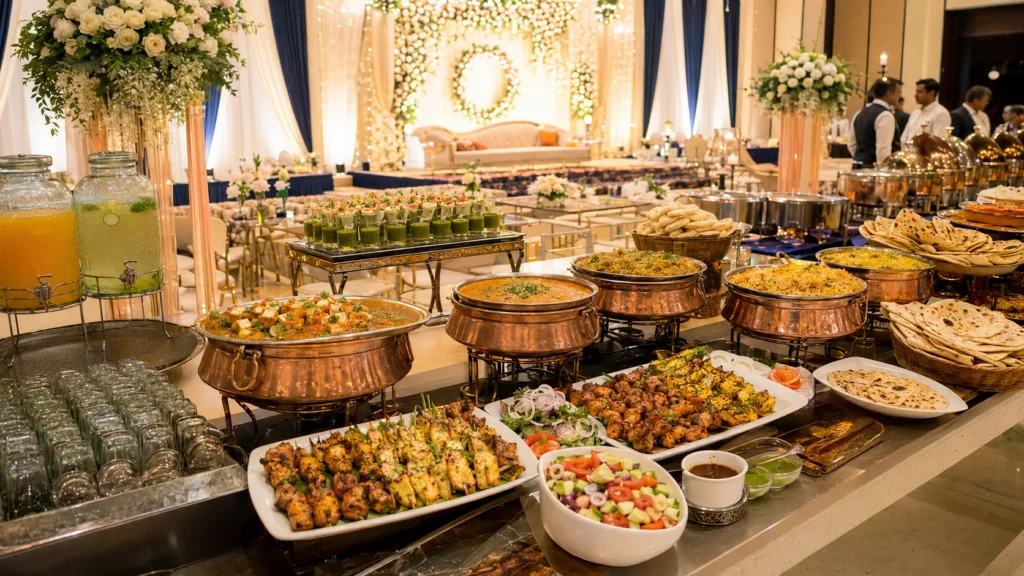
Indian weddings usually have guests with different dietary preferences. A thoughtful menu should make everyone feel comfortable and included.
Consider providing:
Separate Jain food counters with suitable ingredients
Vegan dishes without dairy products
Gluten-free options where possible
Less spicy dishes for children and older guests
Clearly labelled dishes that contain common allergens
Fresh fruit and simple food options
Keep dietary labels visible near every counter. Also, ask the catering team to learn the ingredients and cooking methods so they can answer guests' questions correctly.
Tips to Reduce Food Waste at Weddings
Big wedding celebrations can create a lot of food waste, especially when the guest count isn't certain. A few simple steps can help.
Confirm guest numbers with family members before finalising quantities.
Ask caterers to prepare food in batches where possible.
Avoid choosing too many similar dishes.
Keep an eye on the food counters during the event.
Arrange safe and timely food donation through trusted local organisations.
Use smaller serving portions for desserts and snacks.
Good planning keeps your expenses in check and makes sure guests have enough to eat throughout the celebration.
Final Thoughts
Planning the perfect wedding menu is all about balancing taste, variety, budget and convenience. From refreshing drinks at the haldi to colourful chaat counters at the mehndi and a delicious buffet at the reception, every function can have its own food identity.
A good wedding menu isn't about serving the maximum number of dishes. It's about choosing food that suits the occasion, respects your guests' preferences and stays good from start to finish.
As you plan your wedding in 2026, focus on a practical menu, a reliable caterer and fresh preparations. A well-organised food experience can make every function more enjoyable and memorable.
Paneer tikka, biryani, dal makhani, chaat and traditional sweets.
Pani puri, pav bhaji, sandwiches and refreshing drinks.
Live food counters, regional cuisines and mini desserts.
Choose seasonal ingredients and a balanced selection of dishes.
Check food quality, hygiene, experience and customer reviews.
Sources and notes
Links the author listed for this post.
This article draws on traditional Indian wedding food customs, popular catering practices and modern menu-planning ideas. It also considers common wedding food preferences, regional cuisines and dining trends to provide practical inspiration for planning memorable wedding celebrations in 2026.
- 1


Discussion
0 comments