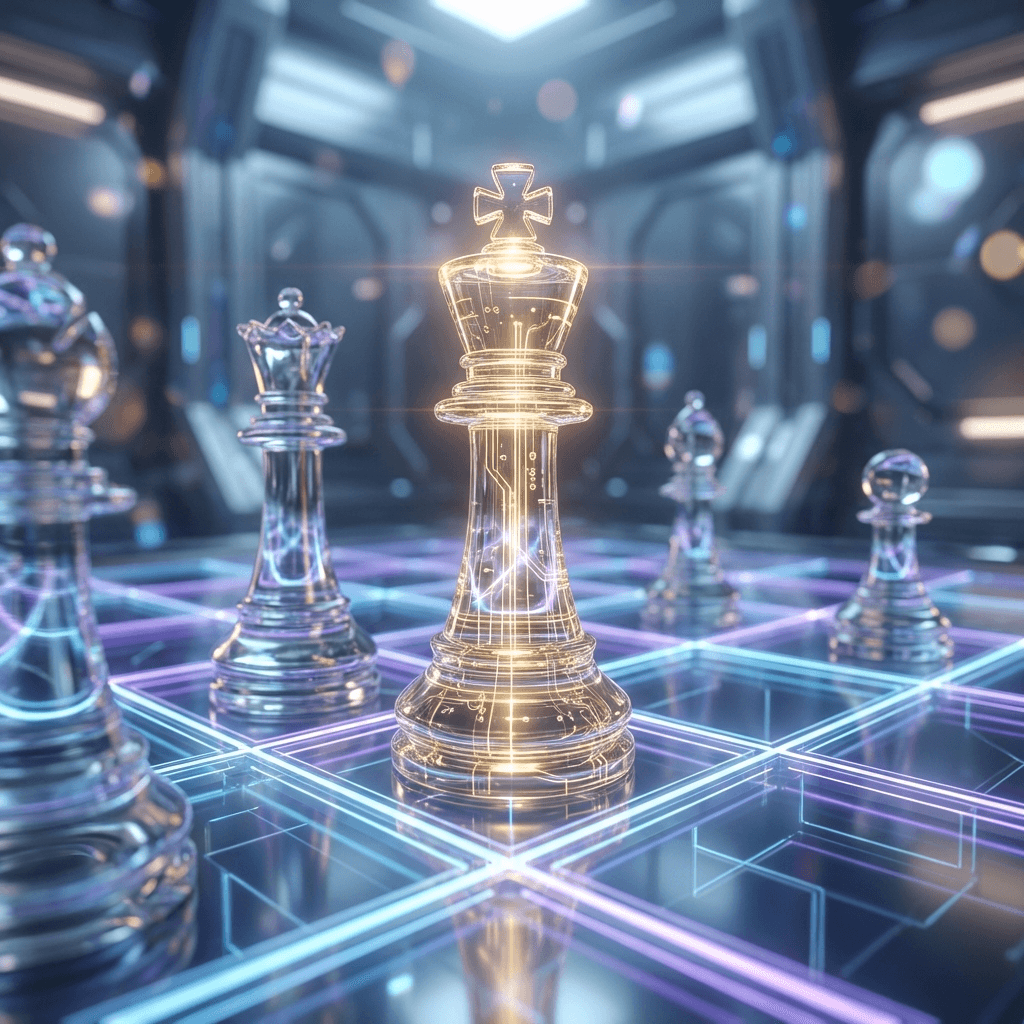
Chess is one of those games that can look Complicated when you first see a crowded board, but the basics are surprisingly easy to pick up.The interesting part is what happens after you learn those basics.
A simple pawn move can change the position of the entire board. A piece that looks safe can suddenly become trapped. A quiet move can set up a threat several turns later.That's what makes chess so enjoyable. Every game gives you a different puzzle to solve.
Whether you're completely new to chess, getting back into the game, or trying to improve your strategy, understanding the rules, pieces, openings, tactics, and common mistakes can make your games much more enjoyable.
This Chess Games Guide covers the essentials, from how the pieces move to practical strategies you can use during your next game.
What Is Chess?
Chess is a two-player strategy game played on a square board containing 64 alternating light and dark squares.
Each player starts with 16 pieces:
1 king
1 queen
2 rooks
2 bishops
2 knights
8 pawns
The main objective is to place your opponent's king in checkmate. Checkmate means the king is under attack and there is no legal move that can remove the threat.
Chess isn't simply about capturing as many pieces as possible. A player can have more material and still lose if their king is trapped.
That balance between material, position, timing, and king safety is what gives chess its depth.
Chess at a Glance
Chess Element | Basic Information |
|---|---|
Players | 2 |
Board | 64 squares |
Pieces per player | 16 |
Main objective | Checkmate the opponent's king |
Main pieces | King, queen, rook, bishop, knight and pawn |
Game format | Turn-based |
Important skills | Strategy, tactics, calculation and planning |
Common opening principle | Develop pieces and control the centre |
Key defensive idea | Protect your king and respond to threats |
Possible result | Win, loss or draw |
Understanding the Chess Pieces
Before thinking about complicated strategies, learn exactly how each piece moves.
King
The king can move one square in any direction.
Although it is the most important piece because checkmate ends the game, the king is not usually the most powerful attacking piece.
Keeping your king safe is one of the first things you should think about during a game.
Queen
The queen is the most powerful piece in terms of movement.
It can move any number of squares horizontally, vertically, or diagonally, as long as another piece doesn't block its path.
Because the queen is valuable, bringing it out too early can sometimes expose it to attacks from less valuable pieces.
Rook
A rook can move any number of squares horizontally or vertically.
Rooks become especially useful when files are open and can be powerful during the middle and end stages of a game.
Bishop
A bishop moves diagonally and stays on the same colour of square throughout the game.
Two bishops can work well together because one operates on light squares and the other on dark squares.
Knight
Knights move in an L-shaped pattern: two squares in one direction and one square to the side.
They're the only pieces that can jump over other pieces.
Knights can be particularly useful in crowded positions because their movement isn't blocked in the same way as sliding pieces.
Pawn
Pawns move forward but capture diagonally.
Their movement is more limited than that of other pieces, but pawns are extremely important because they control squares, support pieces, create space, and can eventually promote.
When a pawn reaches the opposite end of the board, it can usually be promoted to a queen, rook, bishop, or knight.
How a Chess Game Begins
The first part of a chess game is called the opening.
You don't have to memorise dozens of opening lines to play well.
For beginners, a few basic ideas are more useful:
Develop your knights and bishops
Fight for control of the centre
Avoid moving the same piece repeatedly without a reason
Avoid bringing the queen out too early
Castle when appropriate
Try to connect your rooks
The opening should help you reach a position where your pieces are active and your king is reasonably safe.
What Is a Chess Opening?
A chess opening is a sequence of moves used at the beginning of a game.
Some openings have been studied for hundreds of years, while modern players continue to develop new ideas and variations.
Popular opening families include:
Opening | General Character |
|---|---|
Italian Game | Open positions and active piece development |
Ruy Lopez | Classical opening with strategic depth |
Sicilian Defence | Dynamic response to 1.e4 |
French Defence | Solid structure with counterplay |
Caro-Kann Defence | Solid defence with flexible plans |
Queen's Gambit | Strong central ideas and strategic play |
King's Indian Defence | Dynamic positions and attacking chances |
You don't have to play every opening.
Choose a small number of openings that you understand and gradually learn the ideas behind them.
Control the Centre
The centre of the board is extremely important in chess.
Central squares give your pieces more room to move and can make it easier to launch attacks or respond to threats.
Early in the game, players often fight for influence over the central squares.
That doesn't mean you have to occupy the centre with pawns every time. You can also control central squares with pieces.
A useful question during the opening is:
"Who has better control of the centre, and why?"
Develop Your Pieces
Development simply means bringing your pieces from their starting positions to useful squares.
Instead of moving pawns repeatedly while your pieces remain at home, try to give your knights, bishops, rooks, and queen useful roles.
Good development usually gives you:
More active pieces
Better control of important squares
Easier access to attacking positions
Better options when responding to your opponent
The key is not to develop pieces just for the sake of moving them. Think about where they will be most useful.
Keep Your King Safe
King safety is one of the most important ideas in chess.
A common way to protect the king during the opening is castling.
Castling is a special move involving the king and one rook. Under the rules, it is only legal when certain conditions are met, including that the king and participating rook have not previously moved and that the king is not currently in check or moving through an attacked square.
Castling can help move your king away from the centre while bringing a rook into a more active position.
However, don't castle automatically without considering the position. The right choice depends on what is happening on the board.
Learn Basic Chess Tactics
Strategy is about longer-term plans.
Tactics are usually more immediate.
A tactical opportunity may allow you to win material, deliver checkmate, or create another concrete advantage.
Some important chess tactics include:
Fork
A fork happens when one piece attacks two or more enemy pieces at the same time.
Knights are especially well known for creating forks.
Pin
A pin occurs when a piece cannot move without exposing a more valuable piece behind it, often the king.
Skewer
A skewer is similar to a pin, but the more valuable piece is attacked first and must move, exposing a less valuable piece behind it.
Discovered Attack
A discovered attack happens when one piece moves away and reveals an attack from another piece behind it.
Double Check
Double check occurs when two pieces simultaneously give check to the king.
Because the king must respond to both attacks, double checks can create powerful tactical situations.
Checkmate Threats
Not every strong move wins material.
Sometimes the strongest move creates a threat that your opponent must answer immediately.
Learning to spot these tactical patterns can dramatically improve your chess.
Think Before You Move
One of the easiest ways to improve is to slow down before making a move.
You don't need to spend several minutes on every position.
Instead, develop a simple habit:
Look → Think → Check → Move
Before moving, ask:
What did my opponent's last move change?
Is my king safe?
Is any of my pieces under attack?
Do I have a check?
Can I capture something useful?
Does my move leave another piece undefended?
What is my opponent likely to do next?
This short checklist can prevent many unnecessary blunders.
Understand Piece Value
Piece values are not absolute, but traditional approximate values can help beginners understand exchanges.
Piece | Approximate Value |
|---|---|
Pawn | 1 |
Knight | 3 |
Bishop | 3 |
Rook | 5 |
Queen | 9 |
King | Not assigned a normal material value |
These numbers are useful as a general guide, not as a strict rule.
A bishop may be worth more than a knight in one position and less useful in another. A rook sacrifice might look expensive but create a winning attack.
Position matters.
Don't Chase Every Capture
A common beginner habit is capturing a piece simply because it's available.
Before taking something, stop for a moment.
Ask yourself:
"What happens after I capture it?"
Your opponent may have a recapture, a tactical trick, or a stronger attack.
Sometimes leaving an enemy piece alone is better than winning a pawn and damaging your position.
Learn From Your Mistakes
Losing a chess game can be frustrating, but your losses can also show you exactly what needs work.
After a game, look for moments where:
You lost material
Your king became exposed
You missed a tactical opportunity
You moved a piece without a clear purpose
You overlooked your opponent's threat
You entered an endgame you didn't understand
You don't have to analyse every move.
Find one or two important turning points and ask what you could have done differently.
That alone can make future games easier.
The Importance of the Endgame
Chess doesn't end when most of the pieces are gone.
The endgame has its own ideas and techniques.
Important endgame topics include:
King activity
Pawn promotion
Opposition
Passed pawns
Rook endgames
Basic checkmates
Converting a material advantage
One of the biggest differences between the opening and endgame is the role of the king.
In many endgames, the king becomes an active fighting piece rather than something that simply needs to stay protected.
Chess Strategy vs Chess Tactics
It's useful to understand the difference between strategy and tactics.
Strategy | Tactics |
|---|---|
Long-term planning | Short-term calculation |
Improving piece positions | Winning material or creating immediate threats |
Pawn structure | Forks and pins |
King safety | Checks and captures |
Space and control | Tactical combinations |
Long-term advantages | Immediate opportunities |
Strong chess usually requires both.
A good strategic position can create tactical opportunities, while a tactical sequence can completely change the strategic direction of a game.
Common Chess Mistakes Beginners Make
Common Mistake | Better Approach |
|---|---|
Bringing the queen out too early | Develop pieces first when possible |
Moving the same piece repeatedly | Develop efficiently |
Ignoring the opponent's threats | Check what changed after every move |
Forgetting king safety | Consider castling and king position |
Taking every available piece | Calculate the consequences |
Playing too quickly | Pause and check the position |
Memorising openings without understanding them | Learn the ideas behind the moves |
Ignoring the endgame | Practise basic endgame positions |
Giving up after losing material | Look for practical counterplay |
How to Improve Your Chess Game
You don't need to study chess for hours every day.
Consistency is often more useful than occasional marathon sessions.
A simple practice routine could include:
Play:
Play regular games so you become comfortable making decisions.
Review:
Look back at your games and identify major mistakes.
Practise tactics:
Solve a few tactical positions and learn to recognise common patterns.
Study openings:
Learn the basic ideas behind a small number of openings.
Work on endgames:
Practise fundamental positions such as king-and-pawn endings and basic checkmates.
Play slower games:
Longer time controls give you more opportunity to think through positions.
Chess Tips for Beginners
If you're still learning the game, keep these ideas in mind:
Develop your pieces early
Fight for control of the centre
Keep your king safe
Look for checks, captures, and threats
Don't move automatically
Think about your opponent's plans
Avoid unnecessary piece moves
Learn basic tactical patterns
Review your games
Practise regularly
Don't worry about losing while learning
You don't have to understand everything at once.
Chess has an enormous amount to learn, and that's part of what makes it such a rewarding game.
How to Enjoy Chess More
Improvement is great, but chess doesn't always have to be about ratings or winning.
Play different kinds of games.
You might enjoy:
Casual games with friends
Online chess
Puzzle challenges
Blitz games
Rapid games
Longer classical-style games
Chess tournaments
Solving historical positions
Studying famous games
Trying different formats can keep the game fresh and help you discover which parts of chess you enjoy most.
The main goal is to checkmate your opponent's king by placing it under attack with no legal way to escape.
Each player starts with 16 pieces: one king, one queen, two rooks, two bishops, two knights, and eight pawns.
The queen is generally considered the most powerful piece because it can move horizontally, vertically, and diagonally.
An opening is the early stage of a chess game, when players develop their pieces and compete for control of important squares.
Common tactics include forks, pins, skewers, discovered attacks, double checks, and checkmate threats.
Who should use Games
The Best Chess Games Guide: Strategies, Rules, Tips & More is built for players who want a quick browser game with clear rules and short practice loops. The main goal is focus, timing, decision-making, and repeatable play sessions, so the guide focuses on practical choices instead of broad theory.
Use it when you need one of these outcomes:
- short focus breaks between work sessions
- logic or reflex practice without installing an app
- quick challenges that are easy to restart and improve
How to get a better result
- Read the basic objective before starting your first run.
- Play one short round to understand movement, timing, and scoring.
- Replay with one improvement target, such as fewer mistakes or a higher score.
- Use related game guides when you want a different pace or challenge style.
Start small, check the first output, and only then repeat the workflow with the full file, text, media, or game session. That gives you a quick quality check before you spend more time.
Quality checks before you trust the output
- controls feel responsive on desktop and mobile
- difficulty increases in a way that still feels fair
- the goal is clear before the first round starts
Do not judge the game from a single failed round. Fast games reward rhythm, while puzzle games reward slower scanning and planning.
Continue your workflow
If you want to try the workflow now, open the related AltFTool tool area. For more reading, continue through the Games archive or the AltFTool game and puzzle topic cluster.
This creates a cleaner path from explanation to action: read the guide, test the tool, compare the output, and move into the next related AltFTool resource only when it helps the task.
Sources and review notes
References used to check facts, freshness, and reader-safe recommendations in this guide.
General chess guidance covering rules, strategies, tactics, openings, endgames, and tips for beginners.
- 1AltFTool https://www.altftool.com/
altftool.com

Discussion
0 comments
No comments yet
Discussion will appear here once it loads.