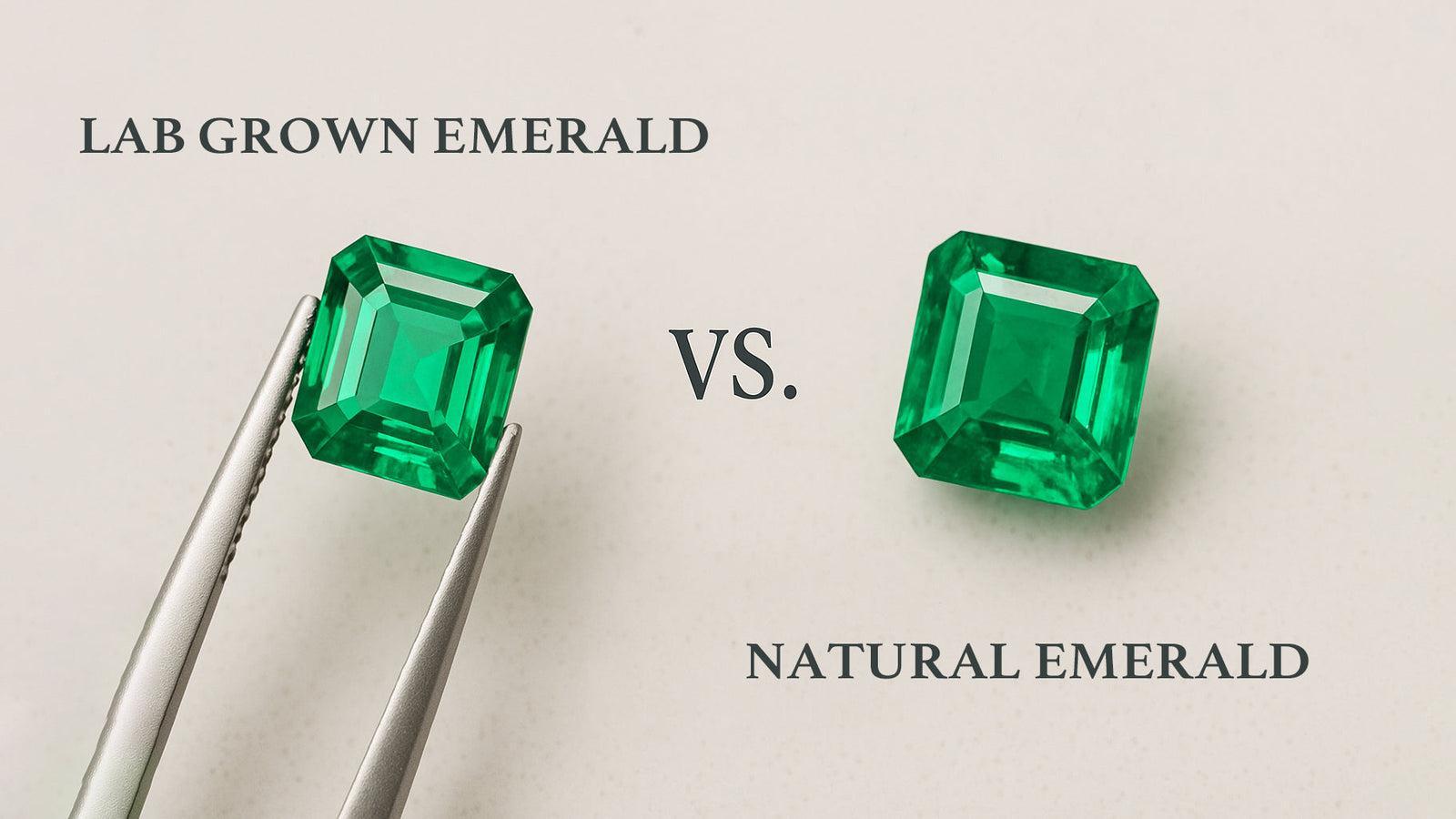
Emeralds are among the most admired gemstones in the jewellery industry, known for their rich green colour, elegant appearance, and timeless appeal. From luxury engagement rings to statement necklaces and everyday accessories, emeralds continue to attract jewellery lovers around the world.
However, buyers today have two main options: natural emeralds and lab-grown emeralds. Although both can offer beautiful green colours and similar physical properties, they differ in their origin, rarity, pricing, and market value.
Natural emeralds develop deep inside the Earth through geological processes over long periods, while lab-grown emeralds are produced in controlled laboratory environments using specialised growth techniques.
So, which option offers better quality? Are lab-created emeralds real gemstones? And why do natural emeralds generally cost more?
In this guide, we compare natural vs lab-grown emeralds based on price, quality, appearance, durability, rarity, and value to help you make an informed buying decision.
What Are Natural Emeralds?
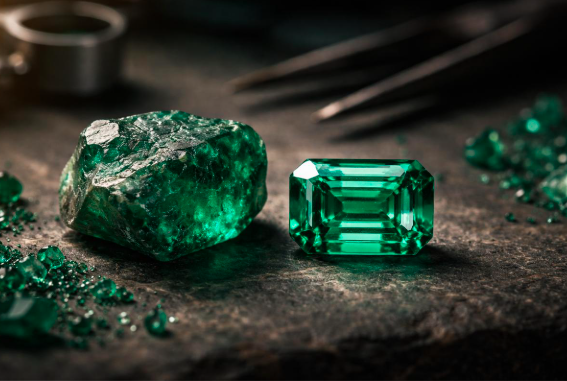
Natural emeralds are precious green gemstones that form naturally within the Earth's crust over millions of years. They belong to the beryl mineral family and get their characteristic green colour mainly from trace amounts of chromium and sometimes vanadium.
These gemstones are mined in different parts of the world, including Colombia, Zambia, Brazil, and other emerald-producing regions.
Natural emeralds are especially valued for their colour, geological origin, rarity, and individual characteristics. Many contain internal inclusions, fractures, and tiny mineral features that create patterns commonly known as jardin, the French word for garden.
These natural features give every emerald a distinctive appearance.
Key Features of Natural Emeralds:
Form naturally through geological processes.
Belong to the beryl mineral family.
Usually contain visible internal inclusions.
Available in different shades of green.
Often undergo clarity-enhancement treatments.
High-quality stones can command premium prices.
Natural emeralds are a popular choice for collectors and buyers who appreciate naturally formed gemstones and their geological history.
What Are Lab-Grown Emeralds?
Lab-grown emeralds, also called laboratory-created emeralds, are gemstones manufactured in controlled laboratory environments. They are produced using specialised techniques that recreate some of the conditions involved in natural emerald formation.
Unlike imitation gemstones, lab-grown emeralds have essentially the same chemical composition, crystal structure, and physical and optical properties as natural emeralds.
Two common production methods are hydrothermal growth and flux growth. Both methods allow manufacturers to produce emerald crystals with controlled growth conditions.
Lab-grown emeralds are often available at more accessible prices than comparable natural stones. Their colour and clarity can also be more consistent, although quality varies between individual stones.
Key Features of Lab-Grown Emeralds:
Created in controlled laboratory environments.
Have essentially the same chemical composition as natural emeralds.
Can display attractive green colours.
Often have fewer visible inclusions.
Generally cost less than comparable natural stones.
Available in different shapes, sizes, and jewellery designs.
Lab-grown emeralds are suitable for buyers who want the appearance and gemstone properties of emerald without paying the premium associated with natural rarity.
Natural vs Lab-Grown Emeralds: Key Differences
Although natural and lab-grown emeralds can look very similar, several important differences affect their buying value.
Comparison Factor | Natural Emeralds | Lab-Grown Emeralds |
|---|---|---|
Origin | Formed naturally underground | Created in laboratories |
Composition | Beryl | Beryl |
Colour | Naturally occurring green variations | Controlled green colour variations |
Clarity | Often contains natural inclusions | Often fewer visible inclusions |
Appearance | Unique natural characteristics | Can appear cleaner and more uniform |
Rarity | Naturally limited | Can be produced repeatedly |
Price | Generally more expensive | Generally more affordable |
Treatments | Often clarity-enhanced | Depends on production and finishing |
Durability | Mohs hardness 7.5–8 | Mohs hardness 7.5–8 |
Resale market | Depends on quality and provenance | Generally more limited |
The main difference is their origin rather than their basic gemstone composition. Both can be genuine emeralds, but only natural emeralds are mined from the Earth.
Natural vs Lab-Grown Emeralds: Price Comparison
Price is one of the biggest factors buyers consider when choosing between natural and lab-grown emeralds.
Natural emeralds generally cost more because their supply is limited by mining, and exceptional-quality stones are relatively rare. Their value depends on several factors, including colour, clarity, carat weight, origin, cut, and treatment history.
Lab-grown emeralds are usually more affordable because they can be produced under controlled conditions without relying on natural mining supplies.
What Determines Emerald Prices?
Explore the important factors that influence the market value of natural and lab-grown emeralds.
Natural Emerald Prices
Rarity, origin and gemstone characteristics influence value.
Colour
Rich, vivid green and bluish-green shades are highly desirable and can attract premium prices.
Clarity
Better transparency and fewer visible inclusions can increase an emerald's appeal and value.
Carat Weight
Larger emeralds with comparable quality can become significantly more expensive.
Origin
Provenance from recognised emerald-producing regions can influence market value.
Treatment
Untreated or minimally treated emeralds can command higher prices than comparable heavily treated stones.
Lab-Grown Emerald Prices
Production quality and visual characteristics shape pricing.
Production Method
Hydrothermal and flux growth methods, along with manufacturing quality, can affect cost.
Colour Consistency
Colour saturation and consistency contribute to the visual appeal of the finished gemstone.
Clarity
Visible inclusions and overall transparency can influence the stone's quality and price.
Carat Weight & Cut
Gemstone size, proportions and cutting precision affect the finished product.
Jewellery Design
Metal settings, craftsmanship and additional decorative elements influence the final jewellery price.
Why Do Their Prices Differ?
Natural emerald pricing is strongly influenced by rarity, geological origin and treatment history. Lab-grown emerald pricing depends more on production, gemstone quality and jewellery craftsmanship. Comparing stones with similar characteristics gives buyers a more meaningful understanding of their value.
Which Is More Affordable?
Lab-grown emeralds are generally the more budget-friendly option. Natural emeralds are often more expensive because buyers are also paying for geological rarity, natural origin, and provenance.
There is no universal price difference or fixed price per carat. Buyers should compare stones with similar colour, size, clarity, and cut rather than relying on a simple natural-versus-lab price estimate.
Natural vs Lab-Grown Emeralds: Quality and Appearance
Quality and appearance are important when selecting an emerald for jewellery. Both natural and lab-grown stones can have attractive green colours, impressive transparency, and brilliant finishes.
However, their internal characteristics and visual patterns may differ.
1. Colour and Transparency
Natural emeralds are available in a range of green shades, from slightly bluish green to pure green. Their colour depends on the mineral composition and geological conditions during formation.
Lab-grown emeralds can also display vivid green colours. Controlled production conditions allow manufacturers to create stones with relatively consistent colour characteristics.
2. Clarity and Inclusions
Natural emeralds commonly contain internal inclusions, fractures, and mineral traces. These features are often called jardin and are considered part of the gemstone's natural character.
Lab-grown emeralds may have fewer visible inclusions, although they can contain growth-related characteristics that develop during laboratory production.
3. Overall Appearance
To an untrained observer, a high-quality natural emerald and a lab-grown emerald can look almost identical. Both can be cut into popular shapes, including emerald, oval, pear, and cushion cuts.
The difference in origin generally cannot be confirmed through appearance alone.
According to the Gemological Institute of America (GIA) , professional gemological examination can identify whether an emerald is natural or laboratory-grown.
Are Natural and Lab-Grown Emeralds Equally Durable?
Durability is another important consideration when purchasing emerald jewellery.
Both natural and lab-grown emeralds have essentially the same hardness because they share the same mineral composition. Emeralds generally measure 7.5–8 on the Mohs hardness scale.
This means both types can withstand normal jewellery use when handled carefully.
However, emeralds can contain internal fractures and inclusions that make them more vulnerable to damage from hard impacts.
Durability Factors to Consider:
Avoid dropping emerald jewellery on hard surfaces.
Remove emerald rings before heavy physical activities.
Store emerald jewellery separately to prevent scratches.
Avoid sudden temperature changes.
Use gentle cleaning methods instead of harsh chemicals.
Natural and lab-grown emeralds both require careful handling, especially when used in frequently worn rings and bracelets.
Emerald Treatments: Natural vs Lab-Grown
Gemstone treatments can influence an emerald's appearance, clarity, and market value.
Understanding Emerald Treatments
Natural and lab-grown emeralds may undergo different treatments to improve their appearance. Understanding these processes helps you make a confident buying decision.
Natural Emerald Treatments
Natural emeralds often contain internal fractures. Clarity enhancement helps reduce the visibility of surface-reaching fractures and improves their overall appearance.
The level of enhancement can influence the gemstone's value, care requirements, and overall quality assessment.
Lab-Grown Emerald Treatments
Lab-grown emeralds are created in controlled environments and may have fewer visible inclusions. However, their finishing and treatment practices can vary by manufacturer.
Ask the seller whether the gemstone has undergone any additional treatment after laboratory growth.
Why Does Treatment Disclosure Matter?
Treatment information helps buyers understand what they are purchasing. It can influence gemstone pricing, maintenance needs, and resale considerations.
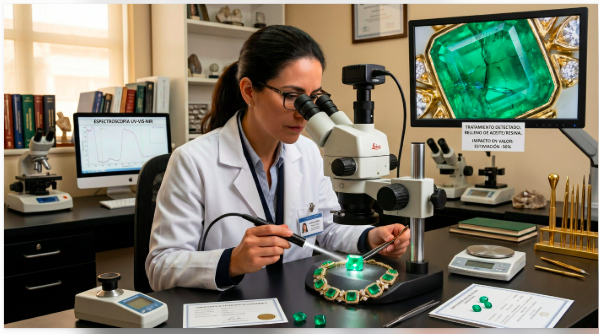
A reliable gemological report can help establish gemstone identity and disclose detectable treatments.
How to Identify Natural vs Lab-Grown Emeralds?
Identifying natural and laboratory-grown emeralds can be difficult without professional equipment. Both types may have similar colours, transparency, and physical properties.
However, trained gemologists can examine certain characteristics to determine their origin.
Here are some common identification methods:
1. Examine Internal Inclusions
Natural emeralds often contain mineral crystals, fluid inclusions, and irregular internal features. Lab-grown emeralds may display growth-related patterns or inclusions associated with their manufacturing process.
2. Check Growth Patterns
Natural and laboratory-grown emeralds can develop different internal growth structures. Gemologists examine these patterns under specialised microscopes.
3. Analyse Chemical Characteristics
Advanced gemological instruments can examine trace elements and other chemical properties to help distinguish natural stones from laboratory-grown materials.
4. Request a Gemological Report
An independent laboratory report is one of the most reliable ways to establish whether an emerald is natural or laboratory-grown.
Do not depend only on colour, clarity, or a simple home test to identify an emerald's origin.
Which Emerald Has Better Resale Value?
Resale value is an important consideration for buyers who view gemstones as long-term purchases.
Natural emeralds generally have a stronger established resale market, particularly when they have exceptional colour, desirable clarity, documented provenance, and favourable treatment reports.
Lab-grown emeralds are generally purchased for their appearance and affordability rather than rarity. Their resale market is usually more limited because similar stones can be manufactured repeatedly.
However, buying a natural emerald does not guarantee appreciation or a profit.
Factors affecting resale value include:
Original purchase price.
Gemstone quality and carat weight.
Natural or laboratory-grown origin.
Treatment history.
Independent certification.
Brand, jewellery design, and market demand.
For buyers interested in rarity and potential long-term collectability, exceptional natural emeralds may be more suitable. Those prioritising appearance and affordability may prefer lab-grown options.
Natural vs Lab-Grown Emeralds: Which One Should You Buy?
The right choice depends on your budget, personal preferences, and reasons for purchasing emerald jewellery.
Choose Natural Emeralds If:
You appreciate naturally formed gemstones.
You prefer unique internal inclusions and natural characteristics.
You value rarity and geological origin.
You are interested in collecting fine gemstones.
You want a gemstone with an established natural-stone resale market.
Choose Lab-Grown Emeralds If:
You want an attractive emerald at a lower price.
You prefer stones with fewer visible inclusions.
You want more flexibility in jewellery design and size.
You prioritise appearance over natural rarity.
You want a gemstone with essentially the same basic mineral properties.
Neither option is automatically better. A well-cut, attractive lab-grown emerald can be a better purchase than a poorly selected natural emerald, depending on the buyer's priorities.
Tips for Buying Emerald Jewellery
Before purchasing emerald jewellery, consider these practical tips:
Check the Origin: Confirm whether the gemstone is natural or laboratory-grown.
Compare Colour: Look for attractive green colour and balanced saturation.
Inspect Clarity: Examine visible inclusions and fractures.
Ask About Treatments: Find out whether the stone has undergone oiling, resin filling, or other enhancement.
Check Certification: Request an independent gemological identification report for valuable purchases.
Compare Prices: Evaluate similar stones rather than comparing unrelated grades.
Buy From a Trusted Seller: Choose a jeweller who clearly discloses gemstone origin and treatments.
A transparent buying process helps reduce the risk of purchasing a gemstone that does not match its advertised description.
How to Care for Natural and Lab-Grown Emeralds?
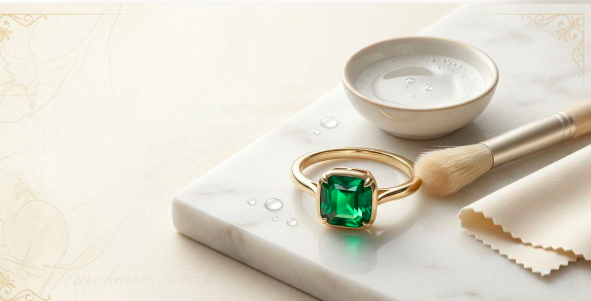
Proper care helps preserve the appearance of emerald jewellery over time. Although natural and lab-grown emeralds share similar physical properties, their care requirements can depend on the presence of fractures and treatments.
Follow these basic maintenance tips:
Clean emerald jewellery using lukewarm water, mild soap, and a soft cloth.
Avoid ultrasonic and steam cleaners, particularly for clarity-enhanced emeralds.
Keep emeralds away from harsh cleaning chemicals.
Remove jewellery before swimming, exercising, or doing household work.
Store individual pieces in soft-lined jewellery boxes.
Ask a professional jeweller to inspect settings and gemstone condition.
Extra care is particularly important for emeralds that have undergone oil or resin treatments, as certain cleaning products and repair procedures can affect the filling materials.
Conclusion
Natural and lab-grown emeralds both offer beautiful green colours, attractive jewellery designs, and similar fundamental gemstone properties. However, their origins, pricing, rarity, and resale markets make them different purchasing options.
Natural emeralds are ideal for buyers who appreciate geological rarity, natural inclusions, and gemstone provenance. Lab-grown emeralds are a practical alternative for those who want the beauty and properties of emeralds at a more accessible price.
Before making a purchase, compare colour, clarity, cut, carat weight, treatments, and certification. Understanding these differences will help you choose an emerald that matches your budget, style, and expectations.
FAQ'S
Yes. Lab-grown emeralds are genuine emeralds created in laboratories. They have essentially the same chemical composition, crystal structure, and physical properties as natural emeralds.
Generally, yes. Natural emeralds often cost more because of their geological rarity, limited supply, and natural origin.
Not always. Both can look very similar. Professional gemological testing is recommended to determine their origin accurately.
Yes. Both generally have a Mohs hardness of 7.5–8 and require similar care and handling.
Both can work well for engagement rings. Natural emeralds appeal to buyers who value rarity, while lab-grown emeralds offer an attractive and more affordable alternative.
Sources and notes
Links the author listed for this post.
Content references gemological research and gemstone identification guidance from GIA and the International Gem Society.


Discussion
0 comments