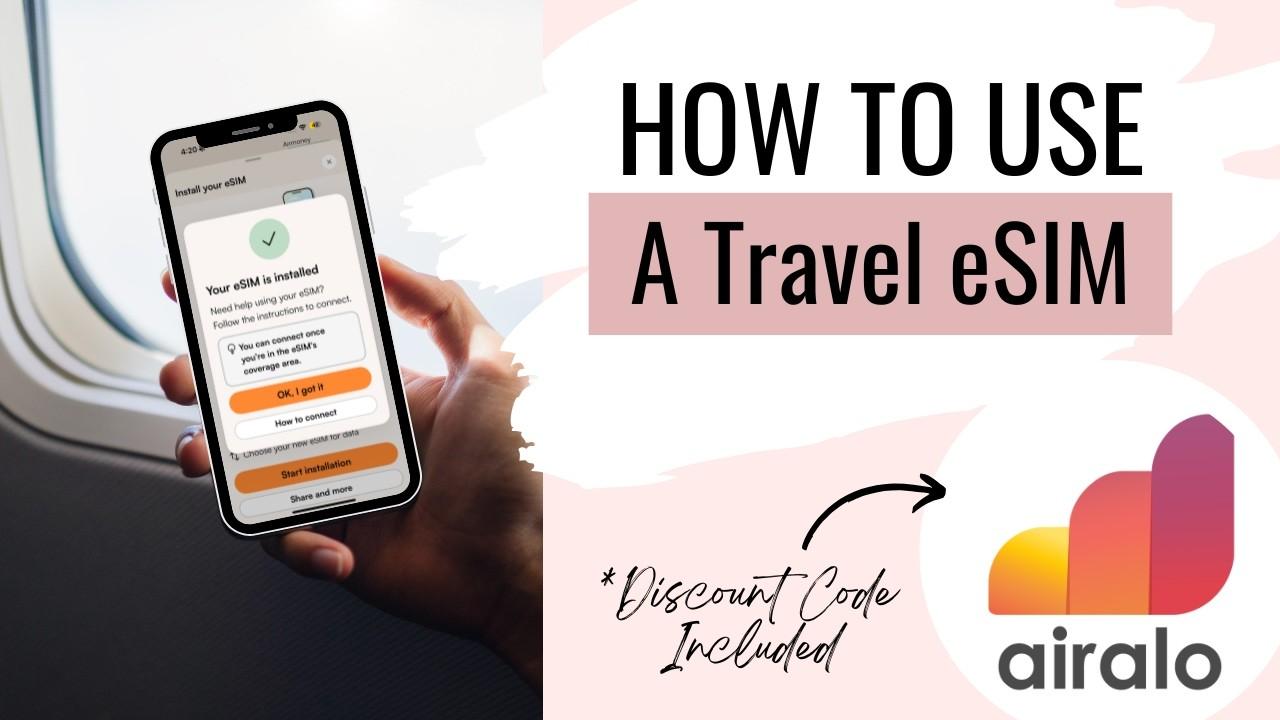
Imagine landing in another country and immediately using your phone to access maps, book a taxi, contact your hotel and share travel photographs without searching for a local SIM card.
For many international travellers, staying connected has traditionally involved purchasing a new SIM card, finding a mobile network provider or activating an expensive international roaming package. Sometimes, travellers even need to wait at airport counters before they can access mobile internet.
However, mobile connectivity is changing with the introduction of eSIM technology.
An eSIM, or embedded SIM, allows compatible smartphones to connect to mobile networks without inserting a traditional physical SIM card. Travellers can purchase a digital mobile data plan, install it on their devices and activate connectivity when they reach their destination.
Companies such as Airalo are making this technology more accessible by offering digital connectivity packages for international destinations.
In 2026, as international travel becomes increasingly dependent on digital services, eSIM technology is changing how people prepare for journeys, communicate abroad and manage mobile connectivity.
Travellers can explore Airalo's international eSIM plans to check available destinations and connectivity options before their next journey.
1. What Is an eSIM and How Does It Work?
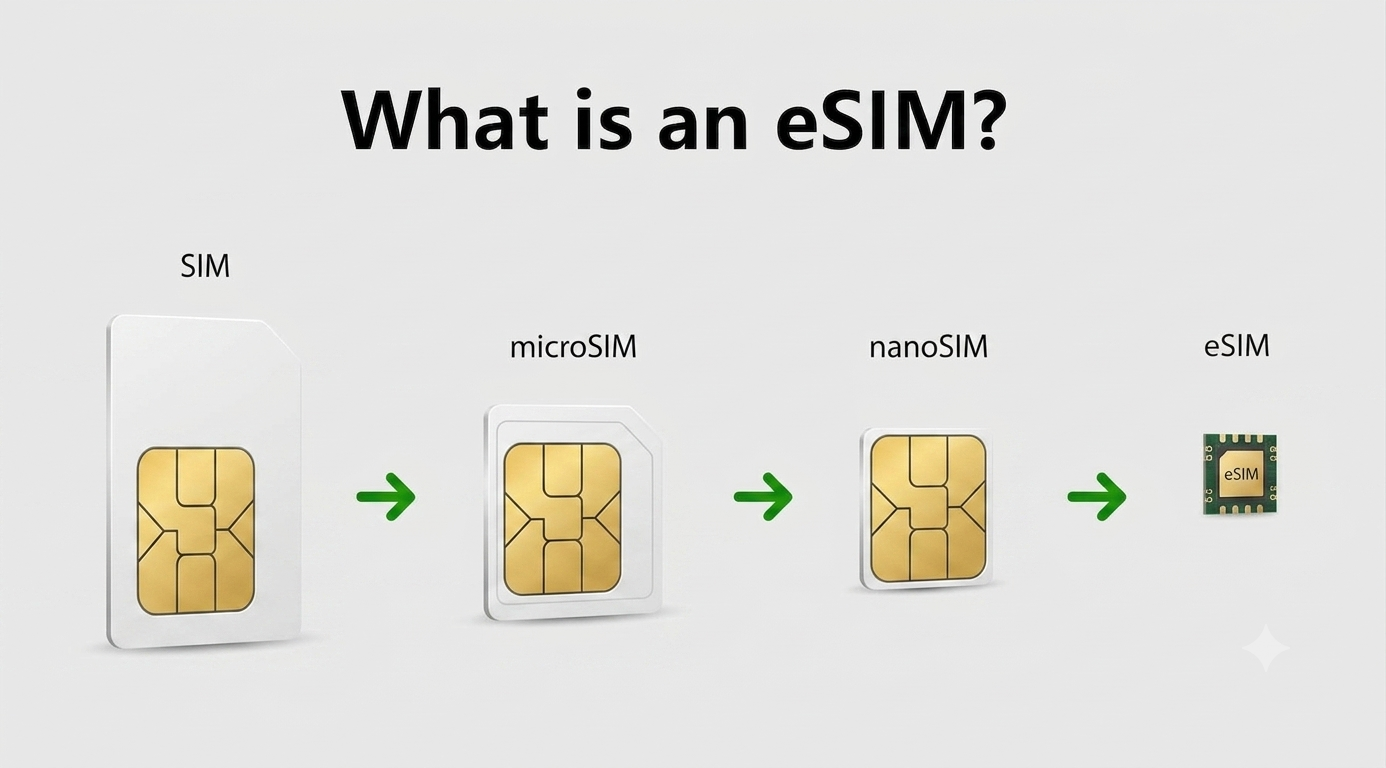
An eSIM is a digital version of a traditional SIM card. Instead of inserting a removable plastic card into a smartphone, the device uses an embedded SIM component to download and store mobile network profiles.
This allows users to activate supported mobile plans digitally without physically changing SIM cards.
For international travellers, the process is relatively simple:
Check whether the smartphone supports eSIM technology.
Choose an eSIM plan for the destination.
Purchase and install the plan using the provider's instructions.
Activate the eSIM according to its validity policy.
Connect to a supported mobile network after arriving.
For example, someone travelling from India to France can purchase a suitable France eSIM before departure. After reaching France, the traveller can select the travel eSIM for mobile data and connect to a supported network.
Airalo provides country-specific, regional and global connectivity packages through its website and mobile application.
How Airalo works+1
2. No More Searching for Physical SIM Cards at Airports
One of the biggest advantages of eSIM technology is that travellers do not necessarily need to purchase a physical SIM card after landing.
Traditional SIM cards can involve several steps, including finding a mobile operator, comparing packages, completing registration and inserting the new card into a phone.
This can be inconvenient, particularly after a long international flight.
With an eSIM, travellers can arrange their connectivity before leaving home. Once they arrive and connect to a supported network, their travel data plan can become active according to the provider's activation rules.
This means travellers can spend less time dealing with connectivity arrangements and more time enjoying their destinations.
3. International Roaming Could Become Less Expensive
International roaming has traditionally been a concern for travellers because mobile data, calls and messages can become expensive when using certain home-network plans abroad.
An eSIM provides another option by allowing users to purchase a separate travel connectivity package.
Instead of relying entirely on their home operator's roaming service, travellers can select a destination-specific data package based on their requirements.
For example, someone visiting Japan for seven days may choose a short-term data package instead of paying for an international roaming option that does not match their usage needs.
However, prices and savings depend on the destination, provider, package size and home-network roaming charges. Travellers should compare available options before purchasing.
Traditional SIM vs eSIM vs International Roaming
Feature | Physical SIM | Travel eSIM | International Roaming |
|---|---|---|---|
Installation | Physical card required | Digital installation | Existing SIM or eSIM |
Purchase | Store or online | Online or app | Home operator |
Connectivity setup | Manual SIM replacement | Digital activation | Roaming activation |
Pricing | Depends on local plan | Depends on travel package | Depends on roaming tariff |
4. Stay Connected Across Multiple Countries
Travellers visiting multiple countries often face another challenge: maintaining mobile connectivity while crossing borders.
A traditional local SIM card purchased in one country may not provide affordable coverage in another. Travellers may need to purchase additional SIM cards or activate international roaming.
Regional and global eSIM packages offer an alternative.
For example, someone travelling through France, Germany, Italy and Spain may find a regional Europe eSIM package more convenient than purchasing separate country-specific connections.
Airalo offers different coverage options, including:
Local eSIMs: Designed for individual countries.
Regional eSIMs: Cover multiple countries within a particular region.
Global eSIMs: Provide connectivity across selected international destinations.
The exact countries, supported networks, data allowances and validity periods depend on the selected package.
This flexibility can make international travel planning easier, particularly for people taking multi-country holidays or business trips.
5. Your Original Phone Number Can Remain Available
One common concern among international travellers is losing access to their primary phone number when switching SIM cards.
With compatible dual-SIM devices, travellers can often keep their original SIM or eSIM active while using another eSIM for mobile data.
For example, an Indian traveller visiting Singapore may continue using their Indian number for important calls or messages while selecting a travel eSIM for internet connectivity.
This can be useful for receiving important communications, accessing accounts and staying in touch with family.
However, keeping the home line active may still result in roaming charges depending on the operator and selected settings.
Apple explains that supported iPhones can use a travel eSIM alongside a primary line, although available functionality depends on device and carrier support.
6. Travel Becomes Easier With Digital Navigation and Booking
Modern international travel depends heavily on mobile internet. Travellers use smartphones for almost everything, from finding restaurants to checking flight updates and booking accommodation.
Without reliable connectivity, even simple travel activities can become difficult.
An eSIM can help travellers access essential digital services, including:
Google Maps and other navigation applications.
Online hotel and flight bookings.
Ride-hailing and transportation applications.
Digital boarding passes and travel documents.
Translation and currency conversion applications.
Messaging and video-calling services.
For example, a traveller arriving in London can use mobile internet to check public transport routes, find nearby restaurants and book a taxi without depending entirely on airport Wi-Fi.
Reliable connectivity also helps travellers respond to unexpected changes, such as cancelled flights, hotel booking updates or transportation delays.
7. eSIM Technology Is Changing Business Travel
International business travel requires dependable communication. Professionals travelling between countries need access to emails, video meetings, business applications and online documents.
Traditional roaming arrangements can make connectivity management complicated, particularly for employees who frequently travel between different destinations.
eSIM technology offers a more flexible approach.
Businesses can explore digital connectivity packages for employees, allowing them to arrange mobile data before travelling.
Some important advantages include:
Better communication: Employees can stay connected with colleagues and clients while abroad.
Convenient travel preparation: Digital plans can be purchased and installed before departure.
Flexible connectivity: Travellers can select local, regional or global packages depending on their itinerary.
Simplified travel management: Digital connectivity reduces the need to purchase and manage physical SIM cards in every destination.
For frequent international travellers, these advantages can make mobile connectivity easier to organise.
8. What Role Does Airalo Play in the Future of Travel?
Airalo is an international eSIM marketplace that helps travellers access mobile connectivity without purchasing traditional physical SIM cards.
Through its application and website, users can browse available plans, select their destinations and purchase digital connectivity packages.
Its services are designed for different travel requirements, whether someone is taking a short holiday, travelling for business or visiting multiple countries.
Important Airalo Features
Feature | How It Works | Traveller Benefit | Best Use |
|---|---|---|---|
Local eSIM | Country-specific connectivity | Internet access at a destination | Single-country trips |
Regional eSIM | Coverage across selected countries | Fewer connectivity changes | Multi-country travel |
Global eSIM | Coverage across supported worldwide locations | International flexibility | Frequent travellers |
Data packages | Selected data allowances and validity | Flexible usage planning | Short or long trips |
Top-ups | Add data to eligible eSIMs | Continued connectivity | Extended travel |
Airalo also provides instructions for purchasing, installing and managing eSIM packages. Some packages include calls and texts, while others provide data-only connectivity.
Travellers can explore Airalo's international eSIM plans to check available destinations and connectivity options before their next journey.
9. Are There Any Limitations to eSIM Technology?
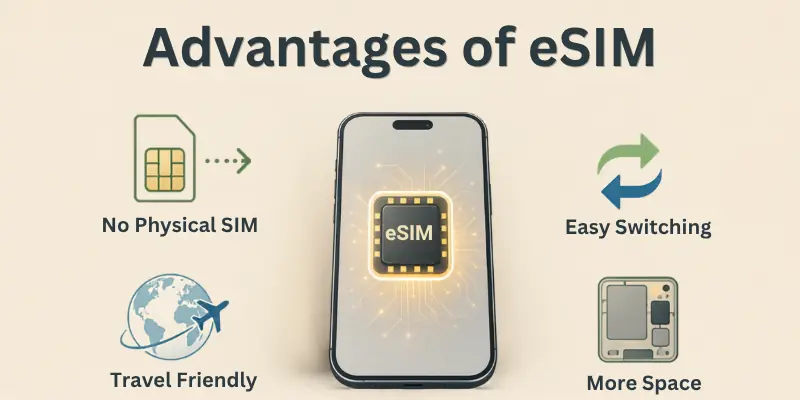
Although eSIMs offer several advantages, they are not suitable for every smartphone or travel situation.
Before purchasing an eSIM, travellers should understand a few important limitations.
Device Compatibility
Not every smartphone supports eSIM technology. Some devices support it only in specific regional versions.
Travellers should check their manufacturer's compatibility information before purchasing a plan.
Carrier Restrictions
A smartphone may support eSIM technology but still be locked to a particular mobile operator.
An unlocked device is generally required to use an eSIM from another provider.
Internet Connection for Installation
An internet connection is normally required to download and install an eSIM. Installing it before departure using a reliable Wi-Fi connection can help avoid difficulties.
Coverage Differences
An eSIM does not automatically work everywhere. Connectivity depends on the package's coverage area and supported local networks.
Data-Only Packages
Some travel eSIMs provide internet access without a traditional phone number. Travellers may need messaging applications or internet-based calling services for communication.
Important Things to Check Before Buying an eSIM
Requirement | What to Check | Why It Matters | Recommended Action |
|---|---|---|---|
Device support | eSIM compatibility | Avoid installation problems | Check device specifications |
Network status | Carrier unlocked | Allows another provider's connection | Confirm with operator |
Data allowance | GB or unlimited options | Matches internet usage | Estimate daily requirements |
Validity | Number of active days | Prevents unexpected expiry | Match it with travel dates |
Coverage | Supported countries and networks | Ensures destination connectivity | Read package details |
Activation | Installation and validity rules | Avoids early activation | Follow provider instructions |
Apple and Airalo both recommend checking device compatibility and network restrictions before purchasing or installing a travel eSIM.
10. What Would International Travel Look Like Without Physical SIM Cards?
Imagine a future in which travellers no longer need to visit mobile network stores after landing in another country.
Before departure, they could arrange their connectivity digitally, select a suitable destination package and prepare their devices.
After arriving, their smartphones could connect to supported networks according to their selected plans.
This could change several aspects of international travel:
More convenient arrivals: Travellers could avoid searching for SIM card counters after landing.
Simpler multi-country journeys: Regional connectivity packages could reduce the need to purchase separate local SIM cards.
Better travel planning: Connectivity could become another digital item travellers arrange alongside flights and hotels.
Flexible mobile services: Users could manage multiple supported mobile plans directly through their smartphones.
Reduced dependence on physical cards: Travellers would have fewer small accessories to carry, replace or worry about losing.
However, physical SIM cards will not disappear immediately. Some devices, networks and markets still rely on traditional SIM technology. eSIM adoption will depend on device availability, network support and local regulations.
The Future of International Travel Connectivity

The future of travel is becoming increasingly digital. From online boarding passes and contactless payments to mobile navigation and digital accommodation bookings, smartphones are now essential travel companions.
eSIM technology is another step towards making international journeys more convenient.
As more smartphones support embedded SIM technology and connectivity providers expand their international coverage, travellers may find it easier to arrange mobile data before leaving home.
For occasional holidaymakers, eSIMs can simplify the process of staying connected abroad. For frequent travellers and business professionals, they can offer a flexible alternative to managing multiple physical SIM cards.
Services such as Airalo demonstrate how international mobile connectivity can move towards a more digital and accessible experience.
The biggest change is not simply removing a plastic SIM card. It is making global communication easier to arrange, manage and use wherever a journey takes you.
Frequently Asked Questions (FAQs)
An eSIM is a digital SIM that allows compatible smartphones to connect to mobile networks without inserting a physical SIM card. Travellers can purchase and install international data packages digitally.
Airalo allows users to purchase eSIM packages for individual countries, regions or global destinations. Users install the eSIM on a compatible device and connect to a supported network when they arrive.
Yes, many compatible smartphones support dual-SIM functionality. Travellers can keep their primary SIM active while using a travel eSIM for mobile data, depending on device and network support.
An eSIM can be a convenient and potentially more affordable alternative to international roaming. However, the best option depends on the destination, data requirements and available pricing.
Sources and notes
Links the author listed for this post.
This article is based on information from Airalo, Apple Support, the GSMA and international mobile connectivity resources.
More on AltFTool
- AltFTool (opens in a new tab)
altftool.com

Discussion
0 comments