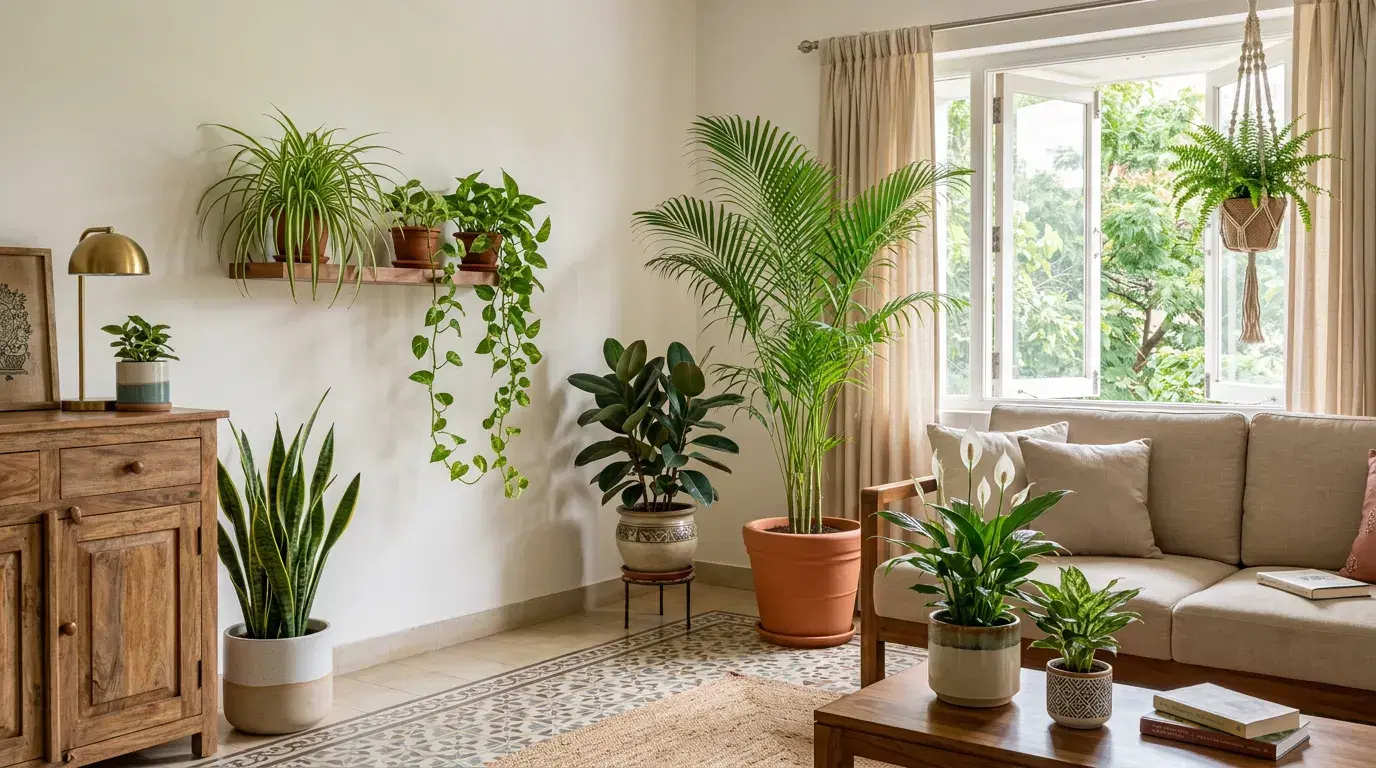
Every November, the same thing happens. The sky turns hazy, throats feel scratchy, and “AQI” becomes the most-checked number on your phone, right next to the weather. Searches for air purifiers and indoor plants spike across North India and beyond.
But most people check the AQI without knowing what the number means, and buy a purifier without knowing what to look for. This guide fixes both. You will learn how to read AQI, choose a purifier that suits your room, and use plants realistically, without hype or panic.
Part 1: How to Read AQI (Without Getting Confused)
AQI stands for Air Quality Index. It converts complex pollution data into a single number from 0 to 500. In India, the official scale is used by the Central Pollution Control Board (CPCB), and the number is driven by the most dominant pollutant at that moment, often PM2.5 or PM10 in winter.
The Indian AQI Scale
AQI Range | Category | What It Means for You |
|---|---|---|
0-50 | Good | Minimal impact. Enjoy the outdoors |
51-100 | Satisfactory | Minor discomfort for very sensitive people |
101-200 | Moderate | Breathing discomfort for people with asthma, heart or lung conditions, children and the elderly |
201-300 | Poor | Discomfort on prolonged exposure for most people |
301-400 | Very Poor | Respiratory illness likely on prolonged exposure |
401-500 | Severe | Affects healthy people and seriously affects those with existing illness |
What Is PM2.5 and Why Does It Matter?
PM2.5 refers to particles smaller than 2.5 micrometres, far thinner than a strand of hair. They are small enough to travel deep into your lungs and even enter the bloodstream. In winter, they come from vehicle exhaust, construction dust, biomass and waste burning, industrial emissions, crop-residue burning in some regions, and cold, still air that traps everything close to the ground.
Quick tip: If your app shows PM2.5 separately, check it. It is often a better guide to indoor risk than the headline AQI alone.
Where to Check AQI
CPCB’s national AQI dashboard (official government data)
SAFAR (for select cities)
Reputed weather and air-quality apps that use monitoring-station data
Remember that readings can differ between apps and between stations, because they use different monitors and averaging periods. Look at the trend and the nearest station rather than a single number.
Part 2: What to Do at Each AQI Level
AQI Category | Smart Actions at Home |
|---|---|
Good to Satisfactory | Open windows for ventilation, ideally in the afternoon |
Moderate | Keep windows closed during peak traffic hours; run a purifier if anyone has asthma or allergies |
Poor | Run a purifier in the bedroom and main living area; avoid outdoor exercise |
Very Poor | Keep windows and doors sealed; wear a well-fitted N95 or FFP2 mask outdoors |
Severe | Stay indoors as much as possible; run purifiers continuously; consult a doctor if symptoms appear |
Best time to air out your home: Early morning and late evening are often the worst in winter because of low temperatures and traffic. Midday, when the air mixes better, is usually the least bad window. Check live AQI before opening up.
Part 3: Choosing the Best Air Purifier for Your Home
An air purifier is the most effective home tool against fine particles, but only if you pick the right one and use it correctly.
The 5 Specifications That Actually Matter
Feature | What to Look For | Why It Matters |
|---|---|---|
True HEPA filter (H13 or higher) | Captures 99.97% of particles at 0.3 microns (for H13) | The core of PM2.5 removal |
CADR (Clean Air Delivery Rate) | Matched to your room size | Shows how fast it cleans air |
Pre-filter | Washable mesh pre-filter | Traps large dust and extends filter life |
Activated carbon layer | Thick, not a thin sheet | Helps with odours and some gases |
Noise level | Under 35-40 dB on low or sleep mode | Matters for bedrooms |
Be careful with: Ozone-emitting or “ionizer” devices. Ozone is a lung irritant, so avoid purifiers that produce it.
How to Match a Purifier to Your Room
A simple rule of thumb: aim for the purifier to clean the room’s air about 4-5 times per hour.
Quick math: Room area (sq m) x ceiling height (m) x 5 = approximate CADR needed (m3/h).
Example: a 15 sq m bedroom with a 2.7 m ceiling needs about 200 m3/h.
Room Size | Approximate CADR Needed |
|---|---|
Small bedroom (up to 120 sq ft) | 150-200 m3/h |
Medium room (120-250 sq ft) | 250-400 m3/h |
Large living room (250-450 sq ft) | 400-600 m3/h |
If the stated coverage area is for a very long run time or a low setting, treat it as optimistic. Buy a little above your need.
Purifier Types at a Glance
Type | Best For | Things to Note |
|---|---|---|
Compact / bedroom units | Single rooms, budget buyers | Check CADR, since some are underpowered |
Mid-range HEPA purifiers | Living rooms and larger bedrooms | Best balance of performance and cost |
Premium multi-stage units | Families with allergy or asthma concerns | Higher upfront and filter costs |
DIY box-fan purifier | Emergency or tight budgets | Fan plus HEPA filter; effective but less polished |
Hidden Costs to Check Before Buying
Filter replacement cost and how often it is needed (often 6-12 months, shorter in heavy pollution)
Electricity use, since the purifier may run 8-24 hours a day
Availability of filters in your city
Warranty and service support near you
Part 4: Do Indoor Plants Really Clean the Air?
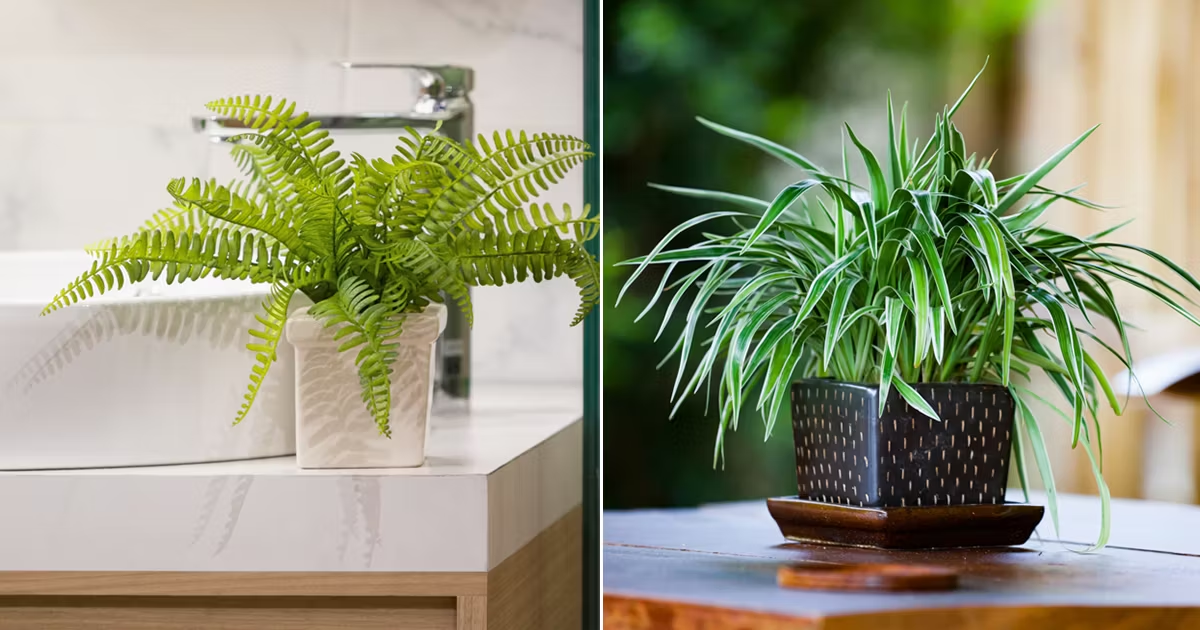
Here is the honest answer: plants are lovely, but they are not a substitute for a purifier.
The popular claim comes from a 1989 NASA experiment done in small, sealed chambers. Later research suggests that in a normal, ventilated home, you would need an impractical number of plants to noticeably change air quality. They do not reliably remove PM2.5 from your living room.
So why keep them? Because plants improve mood, humidity and the look of a room, and some help trap a little surface dust on their leaves.
Best Beginner-Friendly Indoor Plants for Indian Homes
Plant | Light Needed | Care Level | Good to Know |
|---|---|---|---|
Snake Plant (Sansevieria) | Low to bright | Very easy | Survives neglect; good for bedrooms |
Money Plant (Pothos) | Low to medium | Very easy | Grows in water or soil |
Areca Palm | Bright, indirect | Moderate | Adds a lush look; needs space |
Peace Lily | Low to medium | Easy | Flowers indoors; toxic to pets |
Spider Plant | Medium | Easy | Pet-safe and fast growing |
Aloe Vera | Bright | Easy | Needs little water |
Tulsi (Holy Basil) | Direct sun | Moderate | Culturally loved; best on a sunny balcony |
Plant care tips for winter:
Water less. Cold weather slows growth.
Wipe leaves with a damp cloth so dust does not block light.
Keep plants away from heaters and cold draughts.
Check toxicity if you have pets or toddlers.
Part 5: A Complete Winter Air Quality Plan for Your Home
You do not need to spend a lot. Combine small habits with one good device.
Low-Cost Habits That Help
Wet-mop and damp-dust instead of dry sweeping, which pushes dust back into the air
Avoid burning incense, mosquito coils, wood or garbage indoors and nearby
Use the exhaust fan or chimney while cooking
Keep doors and windows sealed on high-pollution days; seal gaps with weather strips
Change or wash bedsheets and curtains regularly
Take off outdoor shoes at the entrance
Wear an N95 or FFP2 mask outdoors on poor-AQI days; cloth masks offer little protection from PM2.5
Priority Plan by Budget
Budget Level | What to Do |
|---|---|
Minimal | Seal gaps, damp-clean daily, wear N95 outdoors, add a few easy plants |
Moderate | One quality HEPA purifier for the bedroom |
Higher | Purifiers for the bedroom and living room, plus an indoor air-quality monitor |
Start with the bedroom. You spend 7-8 hours there, so cleaner air at night gives the biggest benefit.
Common Mistakes to Avoid
Buying a purifier that is too small for the room
Leaving windows open while the purifier runs
Never changing filters, which turns the device into a dust box
Placing it in a corner behind furniture, which blocks airflow
Trusting “air-purifying plant” claims as a full solution
Ignoring symptoms such as persistent cough, wheezing or breathlessness
FAQs
On the Indian scale, anything above 200 (Poor and worse) is considered harmful with prolonged exposure. People with asthma, heart disease, children and the elderly may feel effects even in the Moderate range.
Not always, but it can help if someone at home has allergies, asthma or heart or lung issues.
Closed on poor-AQI days. Ventilate briefly when outdoor readings are better.
No. Plants are a nice addition, but a HEPA purifier is far more effective against fine particles.
Follow the manufacturer’s guidance, usually every 6-12 months, and sooner in heavily polluted areas.
Sources and notes
Links the author listed for this post.
This article is a general, editorial guide and not medical advice. The AQI categories follow the scale published by the Central Pollution Control Board (CPCB). CADR rules of thumb, plant suggestions and purifier specifications are indicative and may vary by product. For current readings, use the CPCB AQI dashboard or SAFAR. For health guidance, refer to WHO air quality guidelines and consult a doctor if you have respiratory or heart conditions. Check product specifications and independent test data before buying.
Discussion
0 comments
No comments yet
Discussion will appear here once it loads.