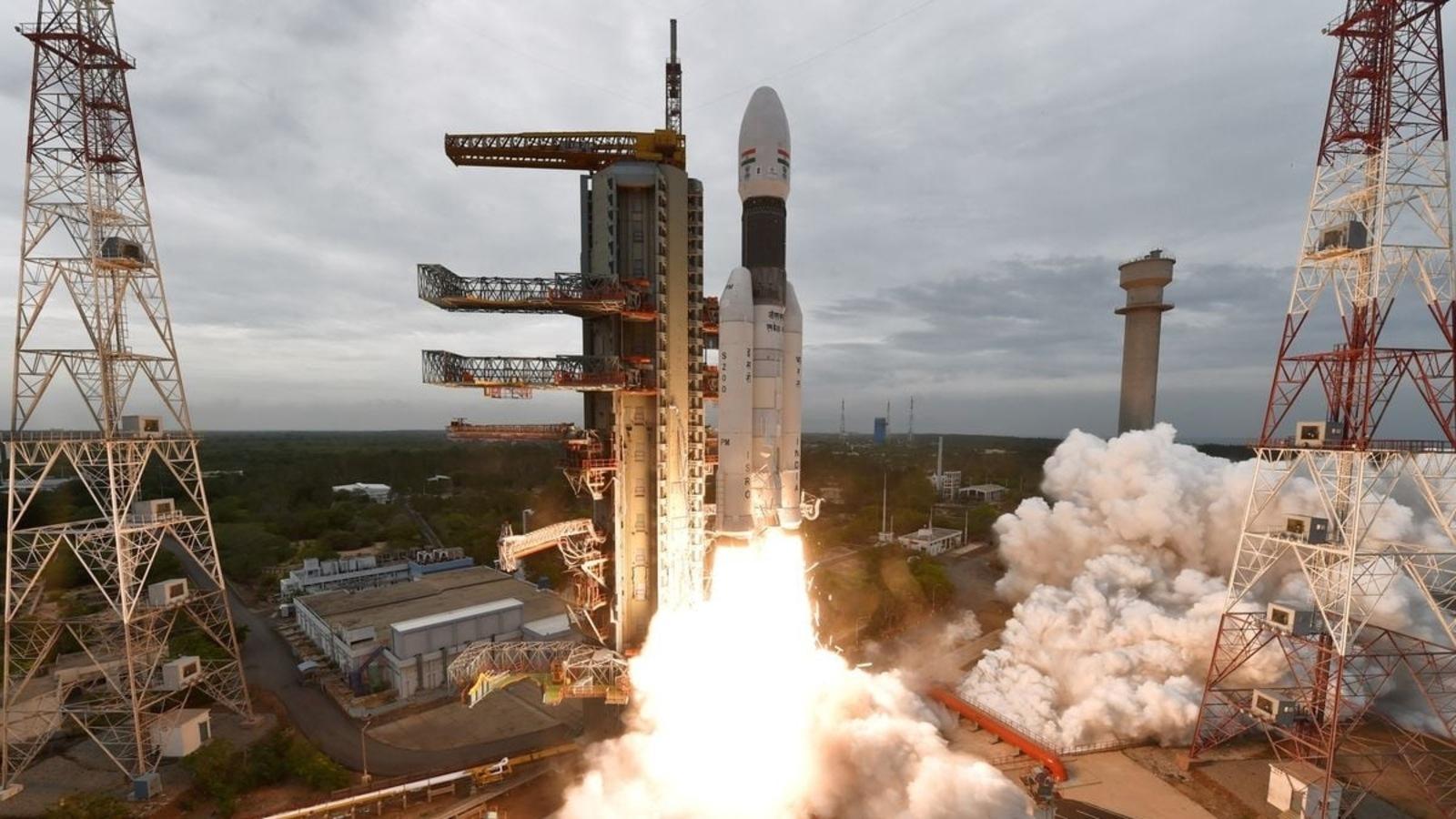
Space exploration is entering an exciting phase, with major missions targeting the Moon, Mars, Mercury, asteroids, and distant planets. Space agencies around the world are preparing new spacecraft, testing advanced technologies, and planning missions that could answer some of the biggest questions about our universe.
As 2027 approaches, several important space exploration milestones are worth following. NASA, ISRO, ESA, JAXA, and China's space programme are working on projects that could change how humans explore space, study other planets, and search for signs of life beyond Earth.
From NASA's Artemis programme to India's Gaganyaan mission, these developments also highlight the growing role of international cooperation and commercial space technology.
Here are 10 important space missions and milestones to watch as 2027 approaches.
Note: Space mission schedules can change because of technical, operational, and funding challenges. The dates below are planned targets, not guaranteed launch dates.
1. NASA's Artemis III Mission
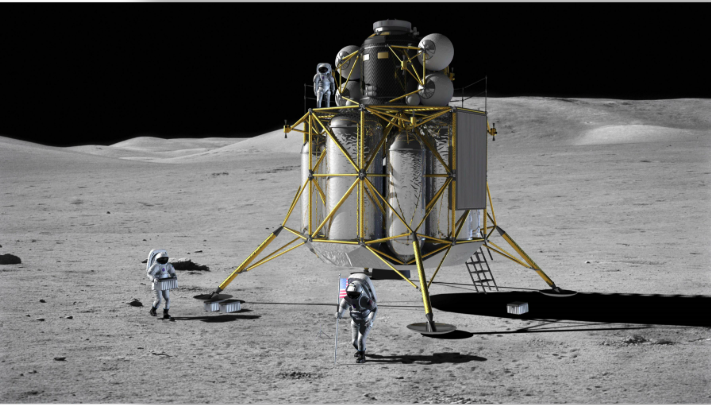
NASA's Artemis programme is one of the most important human space exploration initiatives. It aims to establish a long-term human presence on and around the Moon and prepare for future crewed missions to Mars.
Artemis III is currently planned for 2027. Under NASA's revised mission plan, it is expected to focus on testing rendezvous and docking operations between the Orion spacecraft and commercial lunar landers in Earth orbit rather than conducting a lunar landing.
This mission will help NASA test important systems needed for future lunar exploration.
Why This Mission Matters:
Tests spacecraft docking and rendezvous technology.
Supports future astronaut missions to the lunar surface.
Advances commercial lunar lander development.
Helps prepare for longer human space exploration missions.
NASA's first crewed lunar landing under the revised programme is planned for a later Artemis mission.
NASA's Artemis Program - NASA+1
2. ISRO's Gaganyaan Human Spaceflight Programme
India's Gaganyaan programme is one of the country's biggest space ambitions. Developed by the Indian Space Research Organisation (ISRO), the programme aims to demonstrate India's ability to send astronauts into low Earth orbit and bring them safely back to Earth.
Before a crewed mission, ISRO needs to complete important tests involving the launch vehicle, crew module, life-support systems, and astronaut safety.
The programme is targeting its first crewed mission in 2027, subject to successful testing and readiness.
Why This Mission Matters:
Could make India one of the countries capable of independent human spaceflight.
Develops advanced astronaut safety systems.
Strengthens India's space technology capabilities.
Creates opportunities for future human space exploration.
Gaganyaan is particularly important because it represents a major step forward for India's independent human spaceflight ambitions.
3. ESA and JAXA's BepiColombo Mercury Mission
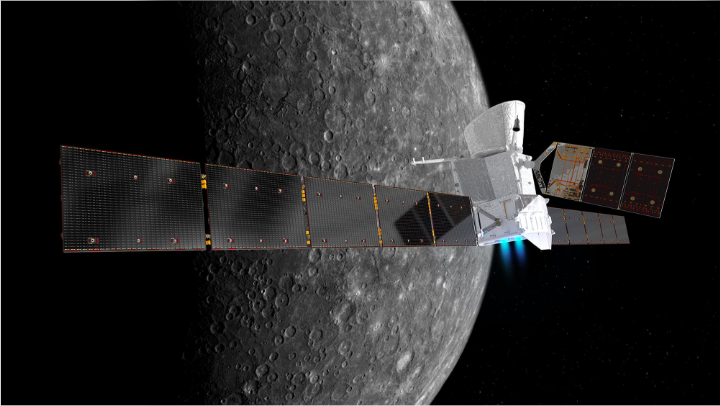
BepiColombo is a joint mission developed by the European Space Agency (ESA) and the Japan Aerospace Exploration Agency (JAXA) to study Mercury, the closest planet to the Sun.
After years of travelling through the inner Solar System, the spacecraft reached its planned Mercury orbit insertion milestone on November 21, 2026. Its two science orbiters are expected to separate on December 9–10, 2026, before beginning their individual scientific operations.
The mission will investigate Mercury's surface, magnetic field, internal structure, and interaction with the solar wind.
Why This Mission Matters:
Provides detailed information about Mercury.
Studies the planet's unusual magnetic field.
Helps scientists understand how rocky planets formed.
Offers new information about the evolution of the Solar System.
The mission's science phase is expected to begin in April 2027.
4. China's Chang'e 7 Lunar South Pole Mission
China's Chang'e 7 mission is designed to explore the Moon's south polar region, an area that has attracted significant scientific interest because permanently shadowed craters may contain water ice.
The mission is planned to use multiple exploration systems, including an orbiter, lander, rover, and a small hopping probe.
Scientists hope these instruments will help examine the lunar surface, investigate potential water resources, and understand the region's environmental conditions.
Why This Mission Matters:
Investigates possible water ice deposits.
Studies the Moon's south polar environment.
Tests advanced robotic exploration technologies.
Supports future plans for long-term lunar exploration.
The mission has been associated with a 2026–2027 launch window, so its latest official schedule is worth following.
5. NASA's Europa Clipper Mission
NASA's Europa Clipper mission is designed to investigate Europa, one of Jupiter's most fascinating moons. Scientists believe Europa has a large ocean beneath its thick icy surface, making it an important target in the search for environments that could potentially support life.
The spacecraft launched in October 2024 and is travelling towards Jupiter. It is scheduled to perform an Earth gravity-assist flyby on December 1, 2026, before continuing its journey.
After reaching Jupiter in 2030, Europa Clipper will conduct repeated close flybys of Europa to study its ice shell, surface composition, and possible subsurface ocean.
Why This Mission Matters:
Investigates the possibility of habitable environments beyond Earth.
Studies Europa's underground ocean.
Examines the moon's icy surface and geological activity.
Provides important information for future astrobiology research.
Europa Clipper could help scientists understand whether the conditions needed for life exist elsewhere in our Solar System.
6. ESA's Hera Asteroid Defence Mission
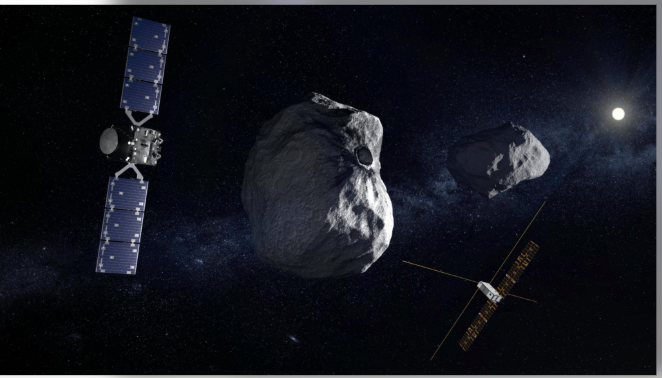
The European Space Agency's Hera mission is an important project in planetary defence. Its main objective is to study the Didymos asteroid system and examine the impact left by NASA's DART spacecraft.
NASA's DART mission deliberately crashed into Dimorphos, a small asteroid moonlet, in 2022 to test whether a spacecraft could change an asteroid's movement.
Hera reached the Didymos system in November 2026 and has begun its early characterisation phase. It is collecting detailed information about the asteroids and the effects of the DART collision.
Why This Mission Matters:
Studies the results of the first full-scale asteroid deflection test.
Measures the physical properties of Dimorphos.
Improves scientific understanding of asteroid impacts.
Helps develop technologies for future planetary defence missions.
Hera is particularly important because studying asteroid deflection could help scientists prepare for potential asteroid threats in the future.
7. NASA's Nancy Grace Roman Space Telescope
The Nancy Grace Roman Space Telescope is an upcoming NASA observatory designed to investigate some of the biggest mysteries in astronomy.
Named after NASA's first chief astronomer, Nancy Grace Roman, the telescope will observe large sections of the universe using advanced infrared technology.
Its wide field of view will allow scientists to survey distant galaxies, study dark energy, investigate dark matter, and discover planets outside our Solar System.
The mission is targeted for launch by May 2027, with the possibility of being ready earlier.
Why This Mission Matters:
Helps scientists investigate dark energy.
Studies the distribution of dark matter.
Searches for exoplanets beyond our Solar System.
Creates large-scale maps of the universe.
Improves our understanding of galaxy formation.
Its ability to observe enormous areas of space could help astronomers discover objects and cosmic patterns that are difficult to study with traditional telescopes.
8. NASA's Lucy Asteroid Exploration Mission
NASA's Lucy mission is designed to explore Jupiter's Trojan asteroids. These objects share Jupiter's orbit around the Sun and are believed to preserve important clues about the early history of our Solar System.
Lucy launched in October 2021 and is travelling towards these distant asteroids.
One of its major upcoming milestones is a planned flyby of the Trojan asteroid Eurybates in August 2027. The spacecraft will also visit other Trojan asteroids during its extended mission.
Why This Mission Matters:
Explores ancient objects left over from Solar System formation.
Studies the composition and structure of Trojan asteroids.
Helps scientists understand planetary evolution.
Provides information about the early history of Jupiter and other planets.
Lucy could reveal important details about how the Solar System developed billions of years ago.
9. NASA's ESCAPADE Mars Exploration Mission
NASA's ESCAPADE mission, which stands for Escape and Plasma Acceleration and Dynamics Explorers, is designed to investigate how Mars interacts with the solar wind.
The mission uses two small spacecraft that will study the planet's magnetic environment and the processes responsible for atmospheric loss.
Mars once had a much thicker atmosphere and conditions that may have supported liquid water on its surface. Scientists want to understand how the planet gradually lost much of its atmosphere.
ESCAPADE's spacecraft are expected to reach Mars orbit in 2027.
Why This Mission Matters:
Studies how Mars loses atmospheric particles.
Investigates the planet's magnetic environment.
Helps explain changes in the Martian atmosphere.
Provides useful information for future Mars exploration.
Understanding atmospheric loss could help scientists reconstruct the history of Mars and evaluate the planet's past habitability.
10. China's Tianwen-2 Asteroid Sample Return Mission
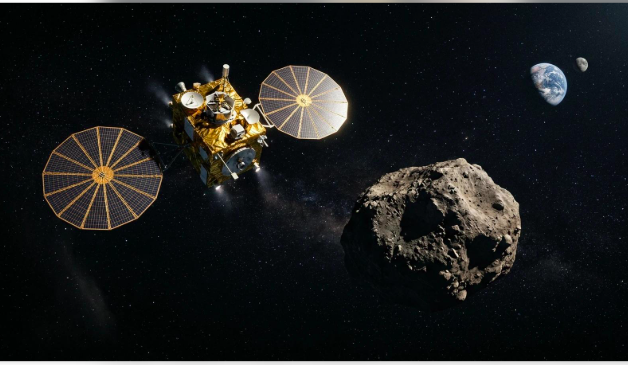
China's Tianwen-2 mission is designed to study the near-Earth asteroid Kamoʻoalewa and collect samples for scientific analysis on Earth.
The spacecraft launched in 2025 and is expected to study the asteroid before attempting to collect material from its surface. Its sample-return capsule is targeted to return to Earth in 2027.
Scientists are particularly interested in Kamoʻoalewa because its origin and relationship with the Moon remain subjects of investigation.
Why This Mission Matters:
Collects material from a near-Earth asteroid.
Helps scientists investigate the origins of small Solar System bodies.
Provides samples for detailed laboratory analysis.
Improves knowledge of asteroid composition and evolution.
If successful, Tianwen-2 will provide scientists with valuable material that can be studied using advanced laboratories on Earth.
Upcoming Space Missions: Quick Comparison
Mission | Space Agency | Main Focus | Expected Milestone |
|---|---|---|---|
Artemis III | NASA | Human spaceflight | 2027 |
Gaganyaan | ISRO | Crewed spaceflight | 2027 target |
BepiColombo | ESA/JAXA | Mercury exploration | December 2026 separation |
Chang'e 7 | CNSA | Lunar south pole | 2026–27 target |
Europa Clipper | NASA | Europa exploration | December 2026 Earth flyby |
Hera | ESA | Asteroid defence | 2026–27 observations |
Roman Telescope | NASA | Deep-space astronomy | By May 2027 |
Lucy | NASA | Trojan asteroids | August 2027 |
ESCAPADE | NASA | Mars atmosphere | 2027 |
Tianwen-2 | CNSA | Asteroid samples | 2027 return target |
Why Are These Space Missions Important for the Future?
Space missions are not only about sending spacecraft beyond Earth. They help scientists develop technologies, understand planetary systems, and investigate questions that cannot be answered through observations from Earth alone.
Some of the biggest benefits include:
Why Are These Space Missions Important for the Future?
Space exploration is helping scientists understand the universe, protect our planet and develop technologies for future generations.
Better Understanding of the Universe
Space telescopes and planetary missions help scientists study galaxies, stars, planets and other celestial objects. These discoveries reveal more about how the universe works.
COSMIC DISCOVERIESSearch for Life Beyond Earth
Missions investigating Europa and other potentially habitable environments may help scientists understand whether conditions for life exist beyond Earth.
SEARCH FOR LIFEPlanetary Defence
Asteroid missions such as Hera help scientists study asteroid deflection and develop strategies to protect Earth from potentially dangerous space objects.
EARTH PROTECTIONHuman Space Exploration
Artemis and Gaganyaan are advancing the technologies needed to send astronauts into space, explore the Moon and support future human exploration.
HUMAN EXPLORATIONScientific and Technological Development
Space programmes encourage innovation in robotics, communication, navigation, advanced materials and spacecraft engineering. These developments can also support applications and technologies used on Earth.
INNOVATION & TECHNOLOGYWhat Should Space Enthusiasts Watch as 2027 Approaches?
Several important milestones deserve attention during the final weeks of 2026 and throughout 2027.
November–December 2026: Follow BepiColombo's Mercury arrival operations and spacecraft separation.
December 2026: Watch Europa Clipper's planned Earth gravity-assist flyby.
2027: Follow the planned progress of Artemis III and Gaganyaan.
2027: Watch for the Roman Space Telescope launch.
August 2027: Follow NASA Lucy's first planned Trojan asteroid flyby.
2027: Look out for Tianwen-2's planned asteroid sample return.
These events could make the coming year an important period for space science and exploration.
Conclusion
The next phase of space exploration could bring major discoveries about our Solar System, distant planets, and the possibility of life beyond Earth.
From NASA's Artemis programme and ISRO's Gaganyaan mission to Europa Clipper and China's Tianwen-2, these projects represent important steps in scientific research and technological development.
As 2027 approaches, space enthusiasts should keep an eye on these missions because even a single successful launch, landing, or scientific discovery could change what we know about space.
The most exciting part is that these missions are not just exploring new destinations. They are helping scientists understand Earth's place in the universe and preparing humanity for future exploration.
FAQ'S
Major missions and milestones include Artemis III, Gaganyaan, the Roman Space Telescope, Lucy's asteroid flyby, and ESCAPADE's arrival at Mars.
Gaganyaan is India's human spaceflight programme, designed to send Indian astronauts into low Earth orbit and safely return them to Earth.
NASA's Europa Clipper mission will investigate Jupiter's moon Europa and study its icy surface and possible underground ocean.
Artemis III is planned to test important spacecraft docking and lunar lander technologies in Earth orbit as part of NASA's Moon exploration programme.
Asteroid missions help scientists understand the formation of the Solar System, study planetary materials, and improve Earth's planetary defence capabilities.
Sources and notes
Links the author listed for this post.
Information is based on published mission updates and space agency announcements from NASA, ISRO, ESA, JAXA, and other space research organizations.


Discussion
0 comments