
Booking a flight is usually the first real step in turning a travel idea into an actual plan. Whether you are putting together a family holiday, flying out for a client meeting, or sneaking away for a long weekend, the flight you pick sets the tone for the entire trip.
Most of us start the exact same way: we open a search tab, type in our destination, and sort the results from lowest price to highest. Saving money feels like a win. Who wouldn't want an extra hundred dollars to spend on good food or a nicer hotel?
The catch is that the lowest number on a search results screen rarely tells the whole story. A fare that looks like a steal at first glance can quickly snowball into an expensive, exhausting headache once you factor in baggage fees, brutal layovers, awkward arrival hours, and rigid cancellation rules. Meanwhile, spending just a little more upfront often buys you better timings, fewer stops, smoother connections, and peace of mind if your plans shift.
Comparing flights isn't just about hunting for the lowest sticker price—it's about evaluating the entire door-to-door journey.
Why the Lowest Fare Can End Up Costing You More

Airline pricing today is heavily unbundled. Decades ago, a plane ticket included your seat, a checked bag, a meal, and the ability to change your flight without losing your shirt. Now, basic economy fares strip away almost everything except the right to sit in a standard seat and bring a small personal item.
Picture this common scenario: you are comparing two flights for a four-day trip. Flight A is $180, and Flight B is $230. Naturally, your eyes lock onto Flight A.
Before you click "buy," look closer at what happens next. Flight A only allows a backpack that fits under the seat in front of you. Bringing a standard carry-on or checking a suitcase adds $45 each way—suddenly, that $180 ticket is $270. On top of that, Flight A lands at 1:30 AM, long after trains and airport shuttles have stopped running, forcing you to pay $60 for a late-night cab. Flight B, priced at $230, includes a checked bag and lands at 4:00 PM, right when public transit is running and your hotel room is ready for check-in.
That "cheap" flight just cost you $100 more and robbed you of a good night's sleep. A smart booking decision always weighs the total out-of-pocket cost and your personal energy, not just the headline fare.
7 Crucial Factors to Compare Before You Book
To figure out which flight actually gives you the best value, look beyond the initial search grid and check these seven details before pulling out your credit card.
1. The True All-In Price (Not the Teaser Fare)

Never judge a flight until you reach the final checkout page—the screen right before you enter your payment details. Many airlines and third-party booking sites lure you in with base fares that exclude mandatory carrier-imposed surcharges, payment processing fees, or basic amenities.
As you click through the booking flow, tally up what you will genuinely need:
Checked luggage or overhead bin access
Seat selection (especially important if you are travelling with kids or have a medical reason to sit near the aisle)
In-flight food and water on budget long-haul carriers
Once you see the final checkout total for each option, compare those numbers side by side. You will often find that a mid-tier "Main Cabin" or "Standard" ticket on a full-service airline costs almost the exact same as a stripped-down budget ticket with add-ons—while giving you far better service.
2. Total Travel Time and Layover Quality
A direct flight is almost always the easiest way to travel, though it usually comes at a premium. If you are travelling for a three-day work conference or a short weekend break, paying extra to fly nonstop is usually worth every penny because you aren't burning half your trip sitting in an airport terminal.
On longer international routes, connecting flights can save you substantial money and sometimes open up better arrival times. However, not all layovers are created equal:
Too short (under 60–90 minutes): A minor 20-minute departure delay on your first leg can cause you to miss your connection entirely, leaving you stranded at an airport desk trying to get rebooked. For international connections where you have to clear customs or switch terminals, aim for at least two to three hours.
Too long (6+ hours or overnight): A 10-hour layover might shave $80 off your ticket, but you will easily spend half of that on overpriced airport meals, coffee, or a lounge pass—not to mention the exhaustion of trying to sleep on metal terminal chairs.
Also, watch out for "self-transfer" tickets sold by third-party sites. These stitch together two separate airlines that don't have a partnership. If your first flight is delayed and you miss the second one, the second airline has no obligation to put you on another plane for free, and you will likely have to collect your bags, exit security, and check in all over again.
3. Baggage Rules and Weight Limits

Baggage policies are the single biggest trap in modern air travel. Two airlines might both say "1 carry-on included," yet one allows a sturdy 10 kg (22 lb) rolling suitcase while the other strictly limits you to a tiny 7 kg (15 lb) bag and weighs it at the boarding gate.
Before you book, check three specific rules:
Dimensions and weight: Budget airlines in Europe and Asia are notorious for enforcing strict size frames and scales at the gate, charging hefty penalty fees if your bag is even slightly oversized.
Checked bag allowance: Are you travelling for a week-long winter vacation where bulky coats take up space, or planning to bring souvenirs home? Paying for a bag online during booking is almost always 40% to 50% cheaper than paying at the airport check-in counter.
Multi-airline rules: If your trip involves two different airlines on one ticket, verify whose baggage rules apply so you don't get surprised on the return leg.
4. Departure and Arrival Times in the Real World
A 6:00 AM flight looks great on paper because you get a full day at your destination. In reality, a 6:00 AM international flight means arriving at the airport by 3:30 AM, which means waking up at 2:30 AM. You spend your entire first day of vacation walking around like a zombie.
On the flip side, landing at midnight means navigating an unfamiliar city in the dark, paying peak surge pricing for rideshares, and potentially paying for an extra night at your hotel just so you have somewhere to sleep at 2:00 AM.
Look for flights that align with normal human waking hours and local transit schedules. Arriving between mid-morning and early evening usually lets you take affordable trains or buses into the city, drop your bags at your hotel, grab a proper meal, and start enjoying your trip without burnout.
5. Aircraft Type, Comfort, and Airline Reliability

Not every airline—or even every plane within the same airline—offers the same experience. On a 90-minute hop, seat pitch and entertainment screens barely matter. On an eight-hour overnight flight, cramped legroom and a seat that barely reclines can ruin your back for days.
When comparing similar prices, check:
On-time performance: Some airlines chronically run late on certain evening routes because delays stack up throughout the day. Morning flights generally have the best on-time record.
Customer support: When weather strikes or a plane has a mechanical issue, major legacy carriers usually have multiple daily flights and partner airlines they can move you onto. Low-cost airlines might only fly a route twice a week, meaning a cancellation could leave you stuck for three days.
6. Cancellation, Refund, and Change Policies
Life happens. Kids get sick, meetings move, and passports get delayed. Basic economy tickets are almost always strictly non-refundable and non-changeable—if you can't fly, you lose 100% of your money.
Standard economy tickets often let you change your flight dates with zero change fees (you just pay the difference in ticket price if the new flight is more expensive), or cancel for a future travel credit. If your dates aren't 100% locked in stone, paying $30 to $50 more for a flexible fare acts as cheap insurance.
7. Direct Booking vs. Online Travel Agencies (OTAs)

When you search on a comparison site, you will often see tiny third-party booking agencies offering the exact same flight for $15 less than the airline's own website.
While big, reputable agencies are fine for straightforward trips, booking directly with the airline gives you massive advantages if anything goes wrong. When you book through a third party, the airline's customer service desk often cannot touch your reservation—they will tell you to call the agency you bought it from. Trying to reach a third-party call center while standing in a crowded airport during a storm is a nightmare nobody wants. Whenever the price is close, book directly on the airline's official site.
Direct vs. Connecting Flights: Which One Makes Sense?
There is no universal rule here—the right choice comes down to the length of your trip, your budget, and who you are travelling with.
Factor | Choose a Direct Flight When... | Choose a Connecting Flight When... |
Trip Length | You are travelling for 2 to 5 days and every hour counts. | You are taking a long international trip (10+ days) where losing a few hours matters less. |
Budget | The price difference is modest (e.g., under $75–$100 per person). | The connection saves you hundreds of dollars, especially when buying multiple family tickets. |
Travel Companions | You are flying with toddlers, elderly parents, or lots of luggage. | You are travelling solo or with light carry-on luggage and don't mind stretching your legs. |
Risk Tolerance | You have a strict deadline, like a wedding, cruise departure, or business pitch. | You have a flexible arrival schedule and buffer time built into your itinerary. |
How to Use Flight Comparison Tools Effectively
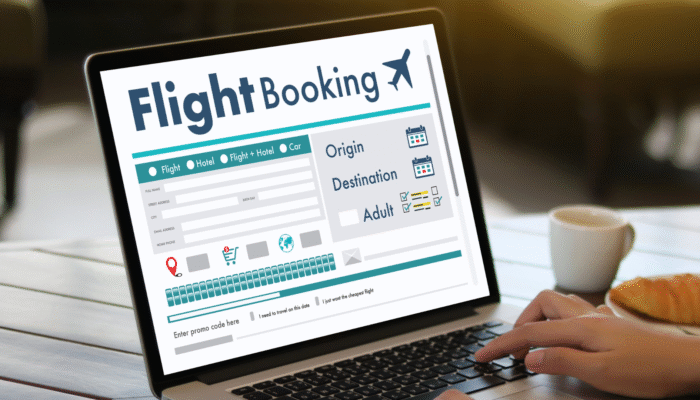
Flight search engines have made shopping for tickets vastly easier, as long as you know how to use their strengths without falling for fake urgency.
Google Flights: Arguably the best starting point for research. Its calendar grid and price graph show you immediately how shifting your trip by one or two days can drop the fare. It also links you directly to the airline to complete the purchase.
Skyscanner: Fantastic for discovering budget airlines and exploring "Everywhere" searches if you know your dates and budget, but haven't picked a destination yet.
Kayak and Momondo: Great for comparing complex multi-city routes and checking whether mixing and matching two different one-way airlines beats a traditional round-trip ticket.
Use these platforms to map out your options and track price trends, then click through to the airline's official website to double-check the baggage rules and lock in your seat.
Common Flight Booking Mistakes to Avoid
Even seasoned travellers occasionally slip up when rushing to grab a fare. Keep an eye out for these frequent missteps:
Booking separate one-way tickets without checking connection risks: Buying two separate tickets to save money means zero protection if the first flight runs late.
Ignoring alternative airports: Flying into a secondary airport 45 miles outside the city might save $40 on airfare, only to cost you $70 and two hours on a regional bus. Always factor in ground transport.
Trusting fake countdown timers: Some booking websites flash red banners claiming "Only 1 seat left at this price!" or "Offer expires in 9 minutes!" to panic you into skipping the fine print. Take your time and read the fare conditions.
Forgetting passport validity rules on layovers: Some countries require your passport to be valid for at least six months beyond your travel dates, and certain transit hubs require transit visas depending on your nationality—even if you never leave the airport.
Practical Tips for Landing a Better Deal

You don't need secret hacker tricks or incognito browser myths to get good prices. A few steady habits work reliably well:
Book in the sweet spot: For domestic flights, aiming for 1 to 3 months in advance usually hits the best balance of price and seat availability. For international trips, start watching prices 3 to 6 months out (and even earlier for peak summer or December holidays).
Be flexible with mid-week days: Flying on a Tuesday, Wednesday, or Saturday is often noticeably cheaper than flying on Friday evenings or Sunday afternoons, when business travellers and weekenders pack the planes.
Set price alerts early: Turn on email notifications on Google Flights or Skyscanner a few months before your trip. Watching prices rise and fall for a couple of weeks teaches you what a genuinely good fare looks like for your specific route.
Check your credit card perks: Before paying for baggage or seat selection, check if your travel credit card already covers a free first checked bag, airport lounge access during long layovers, or trip delay insurance.
Putting the Whole Journey First
A great flight deal isn't defined by the smallest number on your bank statement—it's defined by how smoothly you get from your front door to your destination without unnecessary stress or hidden charges.
When you compare the complete picture—final checkout price, realistic layover times, baggage allowances, sensible arrival hours, and fair cancellation rules—you end up making smarter choices every single time. Spending an extra ten minutes comparing those details before you book can save you hundreds of dollars and ensure your trip starts the way it should: relaxed, organized, and ready to enjoy.
Budget fares often exclude checked bags, seat selection, and flexible changes, which can push the final checkout price higher than a standard ticket.
Aim for at least 90 minutes on domestic routes and two to three hours on international trips to cover potential delays and terminal transfers.
Booking directly with the airline makes it much easier to handle cancellations, rebookings, or flight delays without dealing with middleman customer support.
Booking one to three months ahead for domestic trips and three to six months ahead for international travel usually gives you the best balance of price and availability.
Pick a direct flight for short trips where saving time matters most, and consider connecting flights on long international journeys to save money.
Sources and notes
Links the author listed for this post.
Information is based on airline booking guidelines, airline websites, and travel industry resources. The article highlights important factors to consider when comparing flight prices and planning a comfortable journey.
More on AltFTool
- AltFTool (opens in a new tab)
altftool.com


Discussion
0 comments