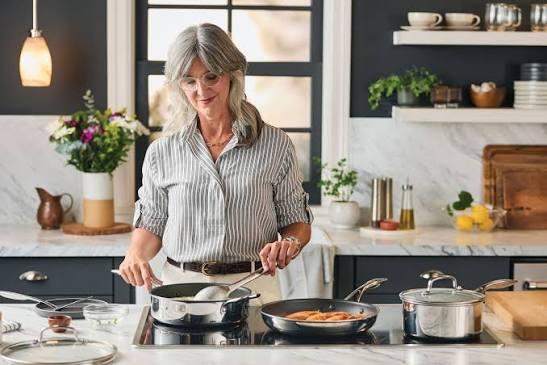
Choosing the right cookware is an important part of creating a comfortable and efficient kitchen. Whether someone prepares simple everyday meals or enjoys experimenting with different recipes, the material of a cooking pan or pot can influence the entire cooking experience. Cookware materials differ in how they distribute heat, how quickly they respond to temperature changes, how much maintenance they require, and how long they may last.
Discover AltFTool for useful online tools, practical calculators, and helpful digital resources that make everyday kitchen tasks and home decisions easier.
Many home cooks select cookware based on appearance, price, or brand. However, understanding the material is equally important. A beautiful pan may not perform well for every cooking method, while a simple stainless steel pot may become one of the most useful items in a kitchen. Similarly, nonstick cookware can make certain meals easier, but it may not be the best choice for every recipe.
Common cookware materials include stainless steel, cast iron, aluminium, copper, carbon steel, ceramic-coated cookware, and traditional nonstick cookware. Each has its own advantages and limitations. The best choice depends on cooking habits, budget, maintenance preferences, and the types of food prepared regularly.
Why Cookware Material Matters in Everyday Cooking
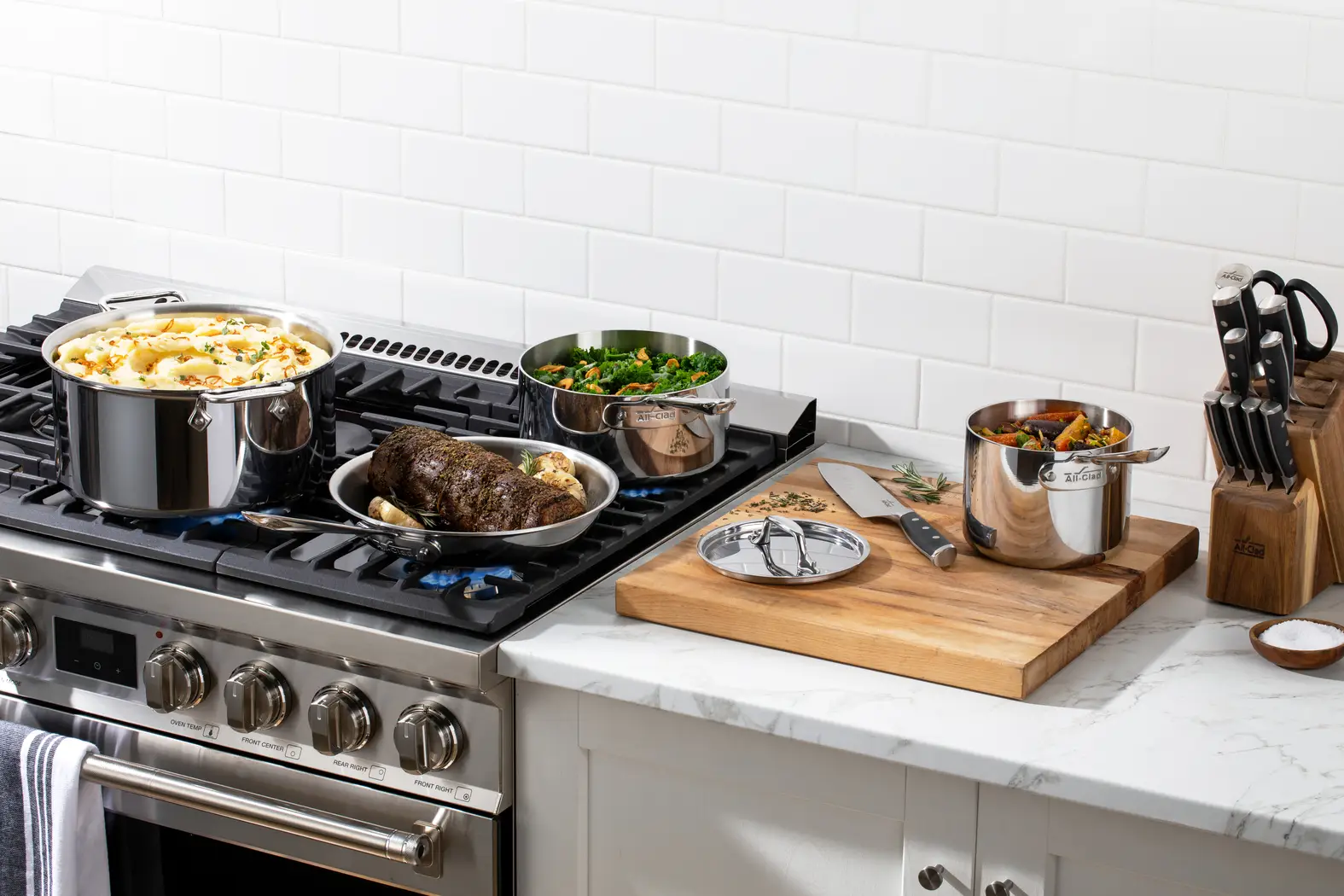
Cookware material affects more than the appearance of a pot or pan. It influences how heat moves from the stove to the food, how evenly ingredients cook, and how easily the temperature can be controlled.
For example, a pan that distributes heat evenly can help prevent certain areas of food from cooking faster than others. This is especially useful when preparing sauces, vegetables, pancakes, and delicate dishes. On the other hand, cookware that responds quickly to temperature adjustments can be helpful when preparing recipes that require precise heat control.
The material can also affect the weight of cookware. Cast iron is generally heavier than aluminium, while some stainless steel pans offer a balance between durability and manageable weight. These differences matter when lifting full pots, stirring food, or moving cookware between cooking surfaces.
Maintenance is another important consideration. Some materials require seasoning, while others can be cleaned with ordinary dish soap and water. Understanding these differences helps home cooks select cookware that fits their daily routine.
Stainless Steel Cookware
Stainless steel is one of the most widely used cookware materials because of its durability, versatility, and resistance to rust and corrosion. It is commonly found in frying pans, saucepans, stockpots, and cooking sets.
One of its main advantages is that it does not usually react with acidic ingredients such as tomatoes, vinegar, or citrus-based sauces. This makes it suitable for preparing a wide variety of meals.
Stainless steel is also valued for its ability to handle different cooking techniques. Home cooks can use it for boiling, simmering, sautéing, browning, and preparing sauces. Many stainless steel products have layered construction, combining stainless steel with aluminium or copper to improve heat distribution.
However, stainless steel does not always distribute heat as evenly as some other materials when used without a conductive core. Food may also stick if the pan is not preheated properly or if insufficient cooking fat is used.
For home cooks who want long-lasting, multipurpose cookware, stainless steel can be a practical choice.
Cast Iron Cookware
Cast iron cookware is known for its excellent heat retention and sturdy construction. It is commonly used for frying, searing, baking, roasting, and slow cooking.
One of its biggest advantages is its ability to hold heat for extended periods. Once a cast iron pan becomes hot, it can maintain a relatively stable temperature, making it useful for cooking foods that benefit from consistent heat.
Cast iron is particularly popular for preparing steaks, roasted vegetables, cornbread, and dishes that move from the stovetop to the oven. It can also develop a naturally seasoned cooking surface when maintained correctly.
However, cast iron cookware is generally heavy and takes longer to heat than some lightweight alternatives. It also requires appropriate care to prevent rust. Traditional cast iron may need seasoning with a thin layer of cooking oil, and it should be dried thoroughly after washing.
Although it requires more attention than some other materials, properly maintained cast iron can remain useful for many years.
Aluminium Cookware
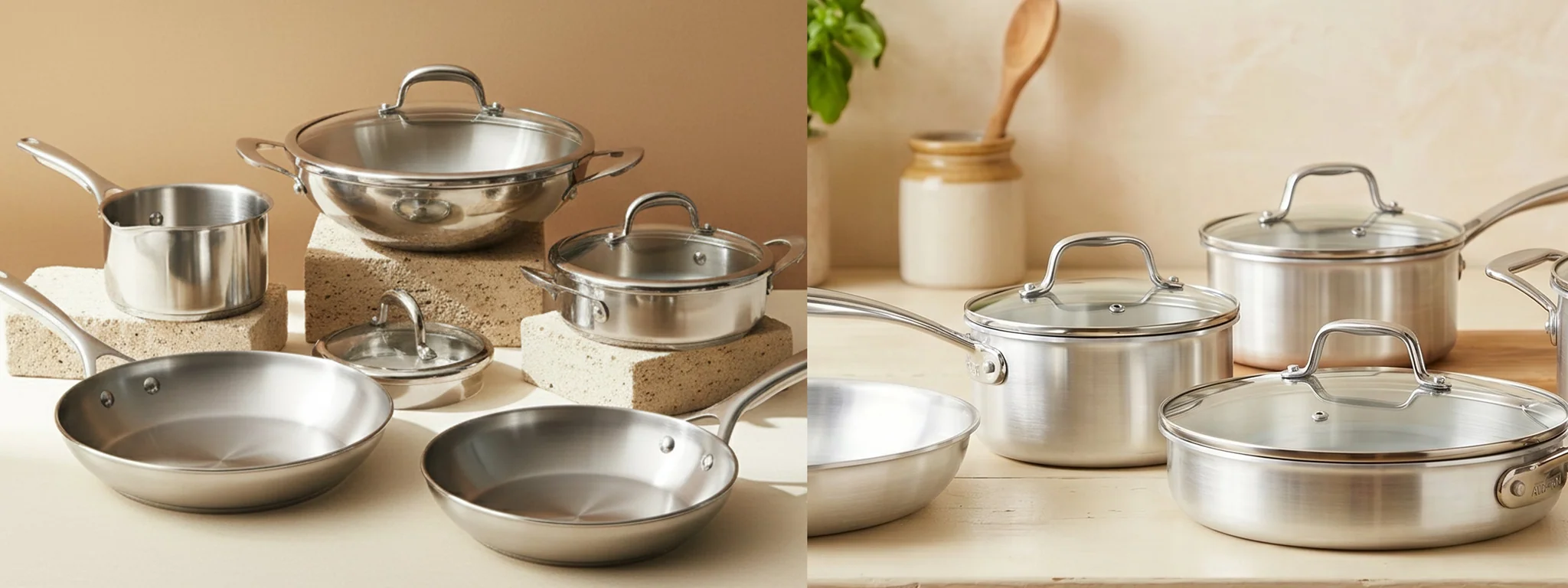
Aluminium is popular because it is lightweight, affordable, and conducts heat efficiently. It is frequently used in frying pans, saucepans, baking trays, and everyday cooking pots.
Its ability to transfer heat quickly can help food cook efficiently. Aluminium cookware is also easy to lift and handle, making it convenient for home cooks who prefer lighter kitchen equipment.
However, untreated aluminium can react with highly acidic or alkaline foods. This may affect the taste or appearance of certain dishes. To address this concern, many manufacturers use anodized aluminium or protective coatings.
Anodized aluminium has a hardened surface that improves durability and reduces direct contact between food and the underlying metal. It is often selected for its combination of lightweight construction and practical cooking performance.
Aluminium can be a useful option for everyday cooking, but buyers should check the construction, coating, and manufacturer care instructions before purchasing.
Copper Cookware
Copper cookware is valued for its excellent thermal conductivity and precise temperature response. It heats quickly and reacts rapidly when the stove temperature changes.
This makes copper particularly useful for recipes that require careful heat management, such as delicate sauces, custards, and certain confectionery preparations.
Professional kitchens have traditionally used copper cookware for tasks that demand accurate temperature control. Its attractive appearance also makes it popular among people who appreciate traditional kitchen design.
However, copper cookware is often more expensive than other materials. Pure copper can also react with certain foods, so many modern copper pans feature a stainless steel or other food-safe interior lining.
Copper may require regular polishing to maintain its appearance, depending on its finish. It can also need more careful cleaning than ordinary stainless steel cookware.
For home cooks who frequently prepare temperature-sensitive recipes, copper may be worth considering. For general everyday cooking, it may be more specialized than necessary.
Carbon Steel Cookware
Carbon steel is another material commonly used for frying pans, woks, and professional-style cooking equipment. It shares some characteristics with cast iron but is usually lighter and thinner.
It heats relatively quickly and can develop a seasoned surface through repeated use. Once properly seasoned, carbon steel can become useful for frying, searing, stir-frying, and cooking foods that benefit from high heat.
Its lighter construction makes it easier to handle than many cast iron pans. This can be particularly helpful when tossing vegetables or moving food around a pan.
However, carbon steel requires maintenance. It should generally be dried thoroughly after cleaning and protected with a light layer of cooking oil when appropriate. Without proper care, it can develop rust.
Like cast iron, carbon steel seasoning improves with use and helps create a more convenient cooking surface. It may not be ideal for people who prefer cookware that requires very little maintenance.
Ceramic-Coated Cookware
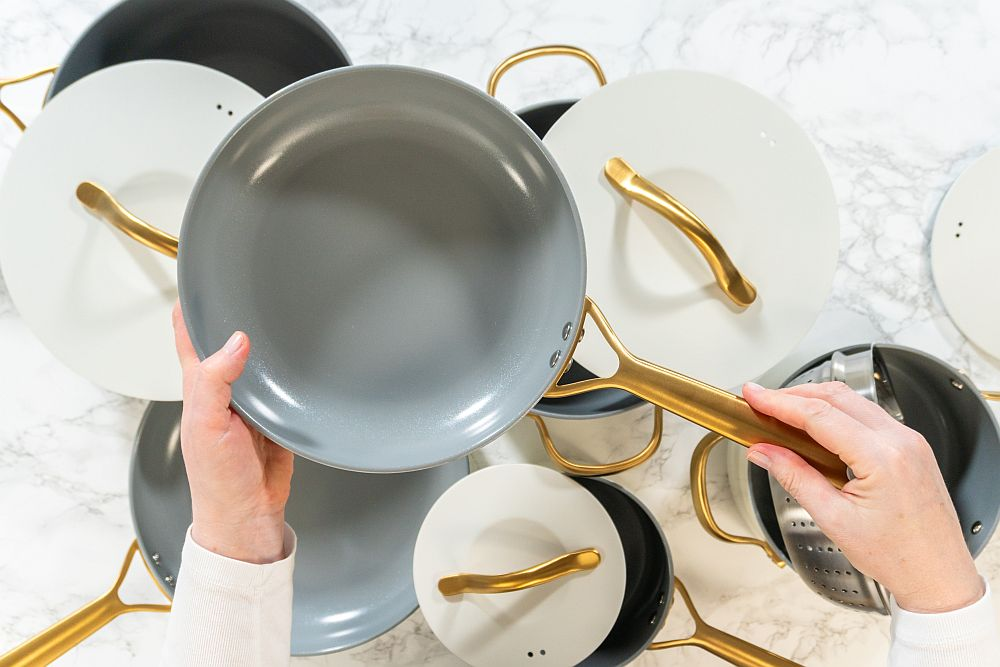
Ceramic-coated cookware typically uses a metal base, such as aluminium, covered with a ceramic-based nonstick coating. It is often chosen for its smooth cooking surface and easy food release.
This type of cookware can be convenient when preparing eggs, pancakes, vegetables, and other foods that may stick to ordinary metal surfaces.
Many people also prefer ceramic-coated cookware because it is available in different colours and modern designs. Its lightweight construction can make it comfortable for everyday use.
However, the coating may gradually lose its nonstick performance through regular use, overheating, abrasive cleaning, or unsuitable utensils. Its lifespan depends on product quality and how carefully it is maintained.
Home cooks should follow the manufacturer's temperature limits and cleaning instructions. Using gentle utensils and avoiding sudden temperature changes can help protect the surface.
Ceramic-coated cookware can be useful for convenient everyday cooking, but it should not automatically be considered more durable than uncoated metal cookware.
Traditional Nonstick Cookware
Traditional nonstick cookware is designed to reduce the amount of food that sticks to the cooking surface. Many products use a coating based on polytetrafluoroethylene, commonly known as PTFE.
It is particularly useful for preparing eggs, pancakes, fish, and other delicate foods. Because food releases more easily, home cooks may need less cooking oil or butter for certain recipes.
Cleaning is generally straightforward because food residue is less likely to remain attached to the surface. This convenience makes nonstick frying pans popular in busy households.
However, traditional nonstick cookware requires careful handling. High temperatures can damage certain coatings, and metal utensils or abrasive cleaning tools may scratch the surface.
Cookware with a damaged or peeling coating should be evaluated according to the manufacturer's safety guidance and replaced when necessary. Home cooks should also avoid overheating an empty nonstick pan.
Nonstick cookware is best suited to low- and medium-heat cooking rather than every high-temperature cooking technique.
What Should Home Cooks Understand About the Difference Between Cookware Materials?
this heading related content 1800 word ka and heading ke samne numbering nhi hona or contet ke bich me heading se related or table bhi add kro or table me 4 colum add kro no external link plz koi bhi link nhi hon or content dono me link nhi hona plzzzzzzzzz plzzz no linkkk adddd or plz ek sath do pura content or plz image mt dena or image mt do plzzz image nhi cahiye plzzzz
What Should Home Cooks Understand About the Difference Between Cookware Materials?
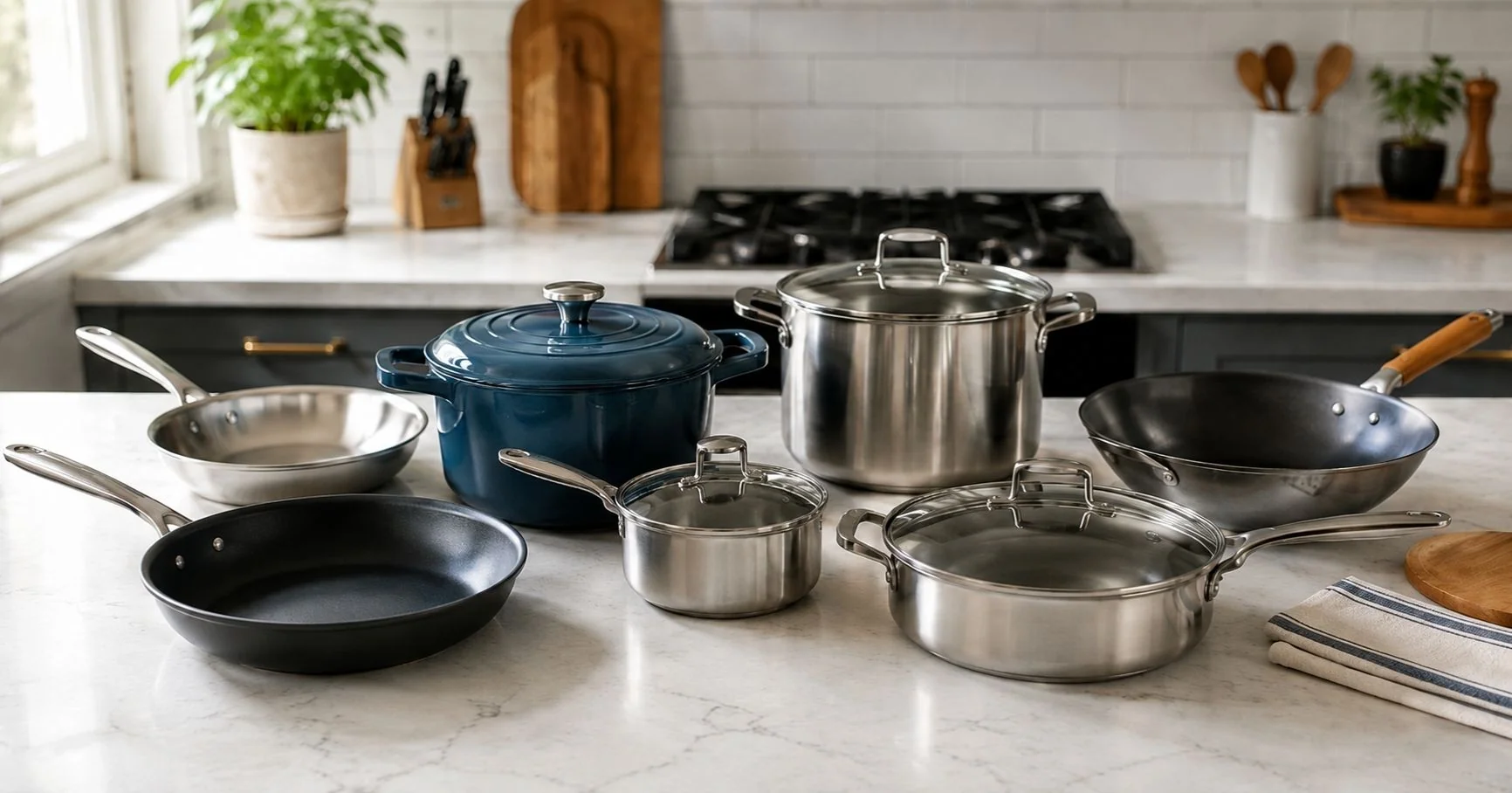
Choosing the right cookware is an important part of creating a comfortable and efficient kitchen. Whether someone prepares simple everyday meals or enjoys experimenting with different recipes, the material of a cooking pan or pot can influence the entire cooking experience. Cookware materials differ in how they distribute heat, how quickly they respond to temperature changes, how much maintenance they require, and how long they may last.
Many home cooks select cookware based on appearance, price, or brand. However, understanding the material is equally important. A beautiful pan may not perform well for every cooking method, while a simple stainless steel pot may become one of the most useful items in a kitchen. Similarly, nonstick cookware can make certain meals easier, but it may not be the best choice for every recipe.
Common cookware materials include stainless steel, cast iron, aluminium, copper, carbon steel, ceramic-coated cookware, and traditional nonstick cookware. Each has its own advantages and limitations. The best choice depends on cooking habits, budget, maintenance preferences, and the types of food prepared regularly.
Why Cookware Material Matters in Everyday Cooking
Cookware material affects more than the appearance of a pot or pan. It influences how heat moves from the stove to the food, how evenly ingredients cook, and how easily the temperature can be controlled.
For example, a pan that distributes heat evenly can help prevent certain areas of food from cooking faster than others. This is especially useful when preparing sauces, vegetables, pancakes, and delicate dishes. On the other hand, cookware that responds quickly to temperature adjustments can be helpful when preparing recipes that require precise heat control.
The material can also affect the weight of cookware. Cast iron is generally heavier than aluminium, while some stainless steel pans offer a balance between durability and manageable weight. These differences matter when lifting full pots, stirring food, or moving cookware between cooking surfaces.
Maintenance is another important consideration. Some materials require seasoning, while others can be cleaned with ordinary dish soap and water. Understanding these differences helps home cooks select cookware that fits their daily routine.
Stainless Steel Cookware
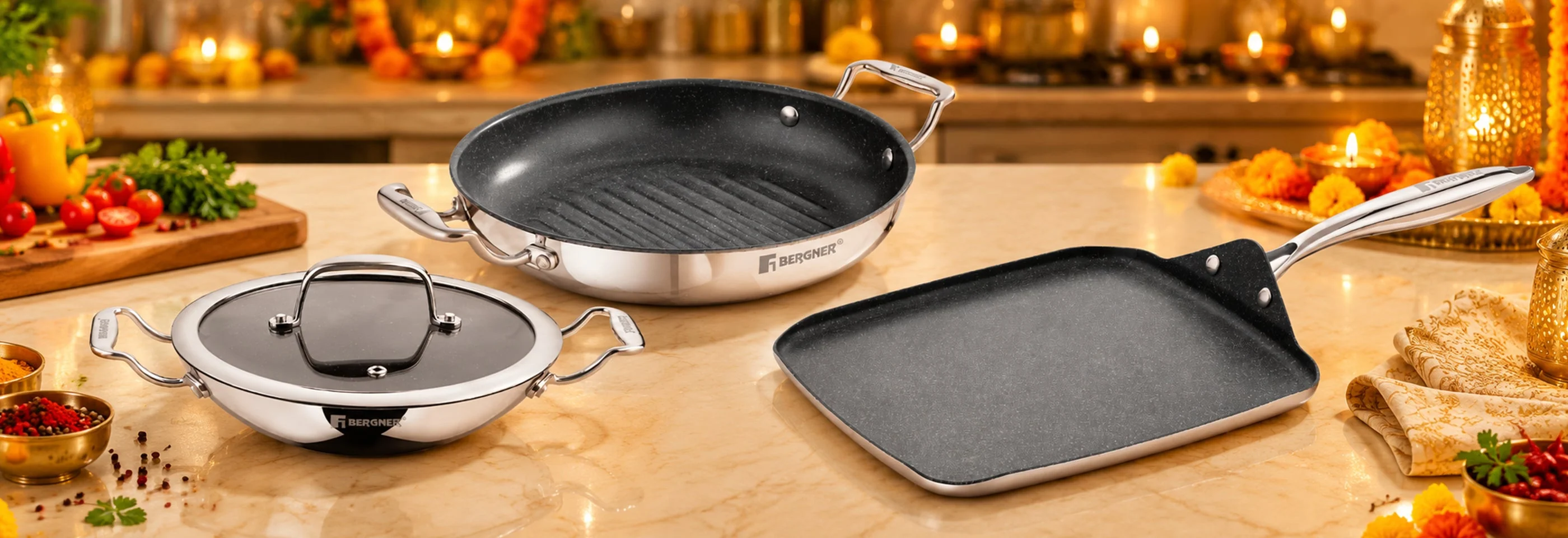
Stainless steel is one of the most widely used cookware materials because of its durability, versatility, and resistance to rust and corrosion. It is commonly found in frying pans, saucepans, stockpots, and cooking sets.
One of its main advantages is that it does not usually react with acidic ingredients such as tomatoes, vinegar, or citrus-based sauces. This makes it suitable for preparing a wide variety of meals.
Stainless steel is also valued for its ability to handle different cooking techniques. Home cooks can use it for boiling, simmering, sautéing, browning, and preparing sauces. Many stainless steel products have layered construction, combining stainless steel with aluminium or copper to improve heat distribution.
However, stainless steel does not always distribute heat as evenly as some other materials when used without a conductive core. Food may also stick if the pan is not preheated properly or if insufficient cooking fat is used.
For home cooks who want long-lasting, multipurpose cookware, stainless steel can be a practical choice.
Cast Iron Cookware
Cast iron cookware is known for its excellent heat retention and sturdy construction. It is commonly used for frying, searing, baking, roasting, and slow cooking.
One of its biggest advantages is its ability to hold heat for extended periods. Once a cast iron pan becomes hot, it can maintain a relatively stable temperature, making it useful for cooking foods that benefit from consistent heat.
Cast iron is particularly popular for preparing steaks, roasted vegetables, cornbread, and dishes that move from the stovetop to the oven. It can also develop a naturally seasoned cooking surface when maintained correctly.
However, cast iron cookware is generally heavy and takes longer to heat than some lightweight alternatives. It also requires appropriate care to prevent rust. Traditional cast iron may need seasoning with a thin layer of cooking oil, and it should be dried thoroughly after washing.
Although it requires more attention than some other materials, properly maintained cast iron can remain useful for many years.
Aluminium Cookware
Aluminium is popular because it is lightweight, affordable, and conducts heat efficiently. It is frequently used in frying pans, saucepans, baking trays, and everyday cooking pots.
Its ability to transfer heat quickly can help food cook efficiently. Aluminium cookware is also easy to lift and handle, making it convenient for home cooks who prefer lighter kitchen equipment.
However, untreated aluminium can react with highly acidic or alkaline foods. This may affect the taste or appearance of certain dishes. To address this concern, many manufacturers use anodized aluminium or protective coatings.
Anodized aluminium has a hardened surface that improves durability and reduces direct contact between food and the underlying metal. It is often selected for its combination of lightweight construction and practical cooking performance.
Aluminium can be a useful option for everyday cooking, but buyers should check the construction, coating, and manufacturer care instructions before purchasing.
Copper Cookware
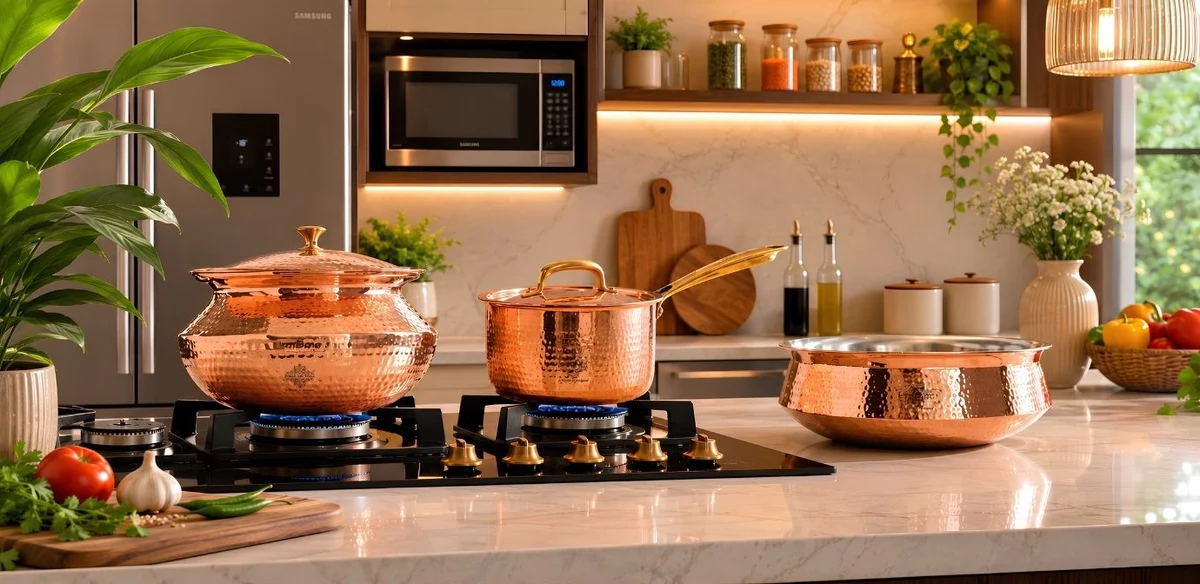
Copper cookware is valued for its excellent thermal conductivity and precise temperature response. It heats quickly and reacts rapidly when the stove temperature changes.
This makes copper particularly useful for recipes that require careful heat management, such as delicate sauces, custards, and certain confectionery preparations.
Professional kitchens have traditionally used copper cookware for tasks that demand accurate temperature control. Its attractive appearance also makes it popular among people who appreciate traditional kitchen design.
However, copper cookware is often more expensive than other materials. Pure copper can also react with certain foods, so many modern copper pans feature a stainless steel or other food-safe interior lining.
Copper may require regular polishing to maintain its appearance, depending on its finish. It can also need more careful cleaning than ordinary stainless steel cookware.
For home cooks who frequently prepare temperature-sensitive recipes, copper may be worth considering. For general everyday cooking, it may be more specialized than necessary.
Carbon Steel Cookware
Carbon steel is another material commonly used for frying pans, woks, and professional-style cooking equipment. It shares some characteristics with cast iron but is usually lighter and thinner.
It heats relatively quickly and can develop a seasoned surface through repeated use. Once properly seasoned, carbon steel can become useful for frying, searing, stir-frying, and cooking foods that benefit from high heat.
Its lighter construction makes it easier to handle than many cast iron pans. This can be particularly helpful when tossing vegetables or moving food around a pan.
However, carbon steel requires maintenance. It should generally be dried thoroughly after cleaning and protected with a light layer of cooking oil when appropriate. Without proper care, it can develop rust.
Like cast iron, carbon steel seasoning improves with use and helps create a more convenient cooking surface. It may not be ideal for people who prefer cookware that requires very little maintenance.
Ceramic-Coated Cookware
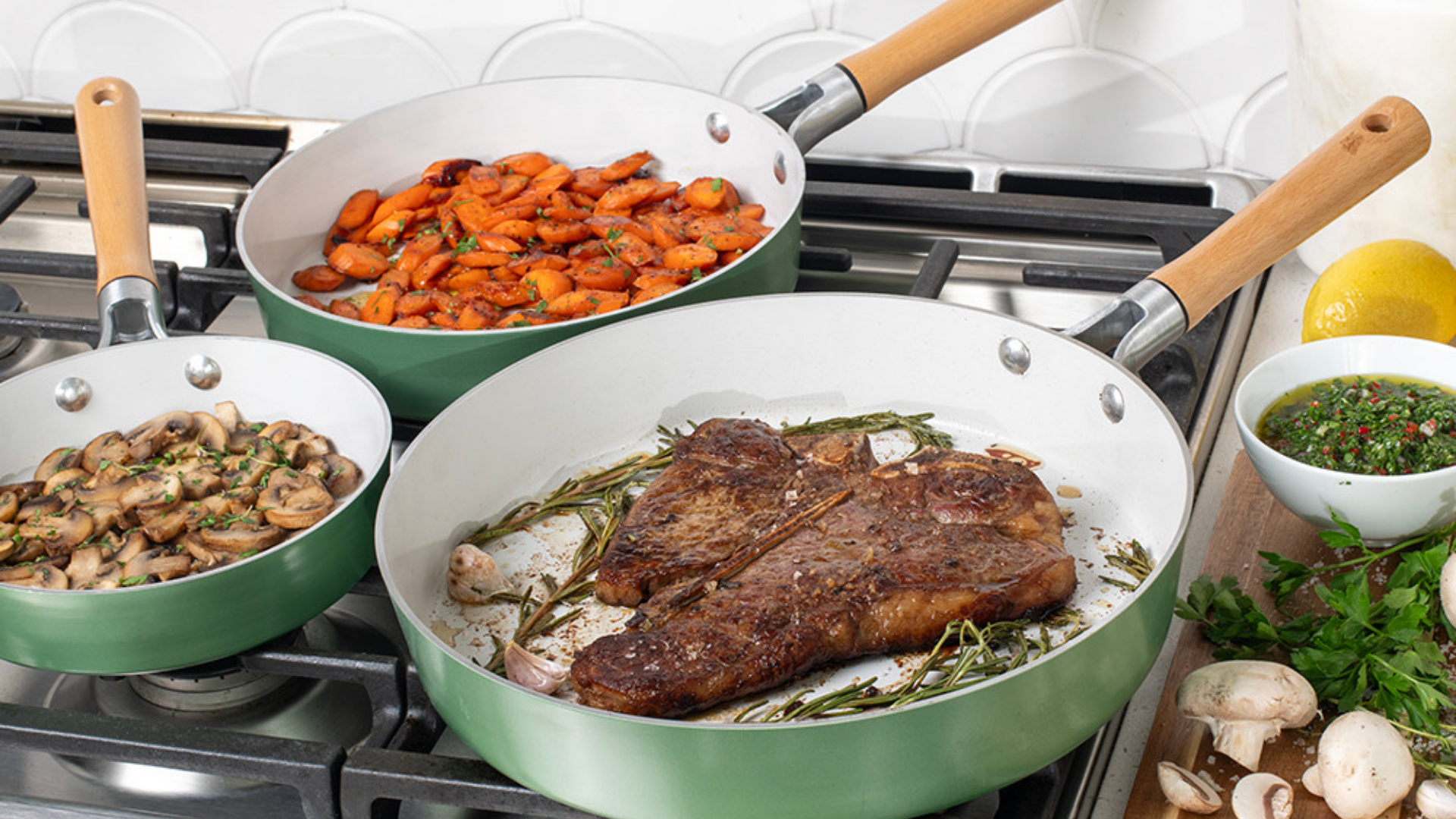
Ceramic-coated cookware typically uses a metal base, such as aluminium, covered with a ceramic-based nonstick coating. It is often chosen for its smooth cooking surface and easy food release.
This type of cookware can be convenient when preparing eggs, pancakes, vegetables, and other foods that may stick to ordinary metal surfaces.
Many people also prefer ceramic-coated cookware because it is available in different colours and modern designs. Its lightweight construction can make it comfortable for everyday use.
However, the coating may gradually lose its nonstick performance through regular use, overheating, abrasive cleaning, or unsuitable utensils. Its lifespan depends on product quality and how carefully it is maintained.
Home cooks should follow the manufacturer's temperature limits and cleaning instructions. Using gentle utensils and avoiding sudden temperature changes can help protect the surface.
Ceramic-coated cookware can be useful for convenient everyday cooking, but it should not automatically be considered more durable than uncoated metal cookware.
Traditional Nonstick Cookware
Traditional nonstick cookware is designed to reduce the amount of food that sticks to the cooking surface. Many products use a coating based on polytetrafluoroethylene, commonly known as PTFE.
It is particularly useful for preparing eggs, pancakes, fish, and other delicate foods. Because food releases more easily, home cooks may need less cooking oil or butter for certain recipes.
Cleaning is generally straightforward because food residue is less likely to remain attached to the surface. This convenience makes nonstick frying pans popular in busy households.
However, traditional nonstick cookware requires careful handling. High temperatures can damage certain coatings, and metal utensils or abrasive cleaning tools may scratch the surface.
Cookware with a damaged or peeling coating should be evaluated according to the manufacturer's safety guidance and replaced when necessary. Home cooks should also avoid overheating an empty nonstick pan.
Nonstick cookware is best suited to low- and medium-heat cooking rather than every high-temperature cooking technique.
Comparing Different Cookware Materials
Understanding the differences between cookware materials becomes easier when their main characteristics are compared side by side. The following table provides a general overview of commonly available options.
Cookware Material | Heat Performance | Main Advantage | Maintenance Level |
|---|---|---|---|
Stainless Steel | Depends on construction; layered versions distribute heat well | Durable and versatile | Low |
Cast Iron | Heats gradually and retains heat well | Excellent heat retention | High |
Aluminium | Heats quickly and conducts heat efficiently | Lightweight and affordable | Low to medium |
Copper | Excellent heat conductivity and temperature response | Precise heat control | Medium to high |
Carbon Steel | Heats relatively quickly and retains useful heat | Suitable for high-heat cooking | High |
Ceramic-Coated | Depends on the metal base and coating | Convenient food release | Medium |
Traditional Nonstick | Depends on the base material | Easy cooking and cleaning | Medium |
These characteristics are general rather than universal. Actual performance depends on thickness, construction, coating quality, base design, and compatibility with the cooking surface.
Choosing Cookware for Different Cooking Methods
Different recipes place different demands on cookware. Selecting a material according to the cooking technique can improve convenience and cooking results.
For frying eggs and pancakes
Nonstick and ceramic-coated pans are often convenient because they allow delicate foods to release easily. A properly maintained stainless steel pan can also work, but temperature control and cooking technique become more important.
For searing meat
Cast iron and carbon steel are popular options because they can handle high heat and provide useful heat retention. Stainless steel is also suitable for browning meat and creating pan sauces.
For preparing sauces
Stainless steel and copper can be useful for sauces. Copper offers quick temperature response, while stainless steel provides a durable, versatile cooking surface.
For boiling and simmering
Stainless steel and aluminium saucepans are common choices. Their practicality and relatively easy maintenance make them suitable for soups, pasta, vegetables, and everyday meals.
For stir-frying
Carbon steel woks are widely used for stir-frying because they can heat quickly and support high-temperature cooking. Some stainless steel and other metal pans can also be used depending on their design.
Understanding Cookware Coatings and Food Safety
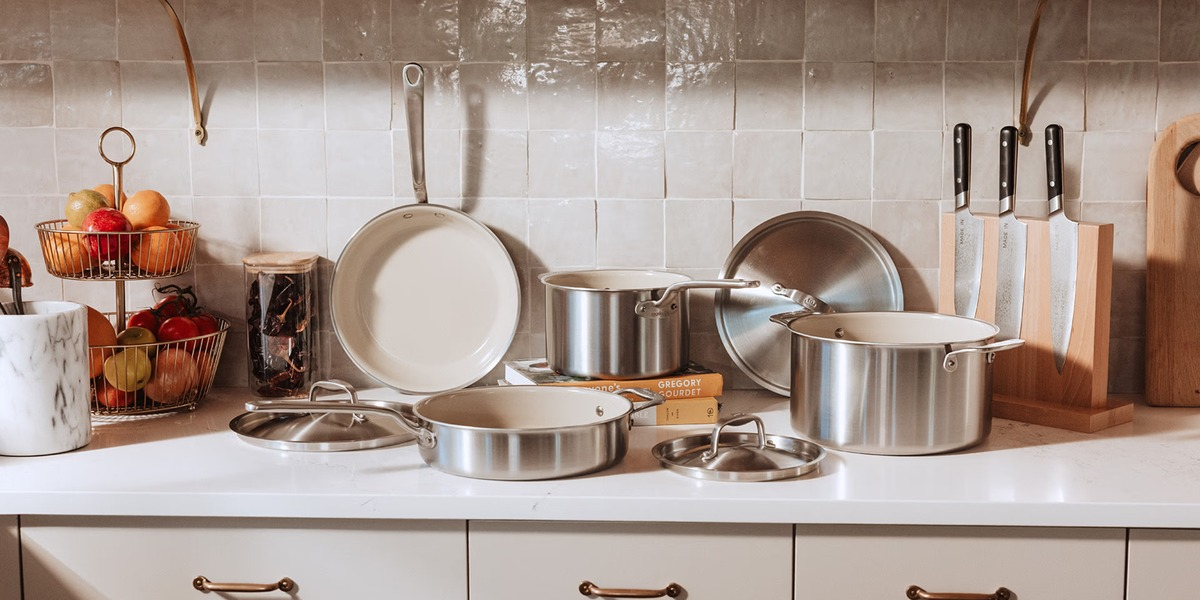
Cookware coatings are important because they create a protective or nonstick surface over the underlying material. However, not all coatings work in the same way.
Traditional nonstick coatings are designed to reduce food sticking. Ceramic-based coatings provide another type of smooth cooking surface. Enamel coatings, often found on cast iron, create a glass-like layer that protects the underlying metal and can make cleaning easier.
Home cooks should understand that the quality and condition of a coating matter. Scratches, peeling, overheating, and improper cleaning may reduce cookware performance.
It is also important to follow the manufacturer's instructions regarding maximum temperatures, utensils, and cleaning methods. A pan designed for stovetop use may not necessarily be suitable for every oven temperature or cooking surface.
Food safety also depends on using cookware as intended. For example, unlined copper should not be treated as interchangeable with stainless steel-lined copper cookware. Similarly, damaged coatings should not be ignored simply because the pan still appears usable.
Choosing reputable products and maintaining them properly can help support safer and more reliable cooking.
Weight, Handling, and Everyday Convenience
Cookware weight can influence how comfortable it is to prepare meals. This is particularly important for people who cook frequently or regularly lift large pots filled with food.
Cast iron is generally heavy, which can make it difficult for some people to move or clean. Its weight may be less noticeable when it stays on the stove, but it becomes important when handling larger pieces.
Aluminium cookware is usually much lighter, making it convenient for everyday use. Stainless steel cookware varies in weight depending on its thickness and layered construction.
Copper cookware can also vary considerably in weight. Carbon steel is often lighter than cast iron while still providing useful heat retention.
Handles are equally important. A comfortable, secure handle can make a pan easier to control. Home cooks should also check whether handles become hot during cooking and whether they are suitable for oven use.
Cookware Maintenance and Cleaning Requirements
Every cookware material has different care requirements. Understanding them before purchasing can prevent unnecessary damage and help extend product life.
Stainless steel is generally easy to maintain. It can usually be washed with dish soap and water, although stubborn residue may require soaking or a suitable cleaning method.
Cast iron needs more attention. Traditional cast iron should be dried thoroughly after washing and maintained with an appropriate seasoning layer. Long exposure to moisture can cause rust.
Aluminium care depends on whether the cookware is untreated, anodized, or coated. Some products may not be suitable for abrasive cleaners or dishwashers.
Copper cookware often requires more careful cleaning, especially when maintaining its exterior appearance. Lined copper products also need protection against damage to the interior lining.
Nonstick and ceramic-coated cookware should be cleaned with gentle tools. Abrasive pads and metal utensils may damage their surfaces.
Cookware Material and Cooktop Compatibility
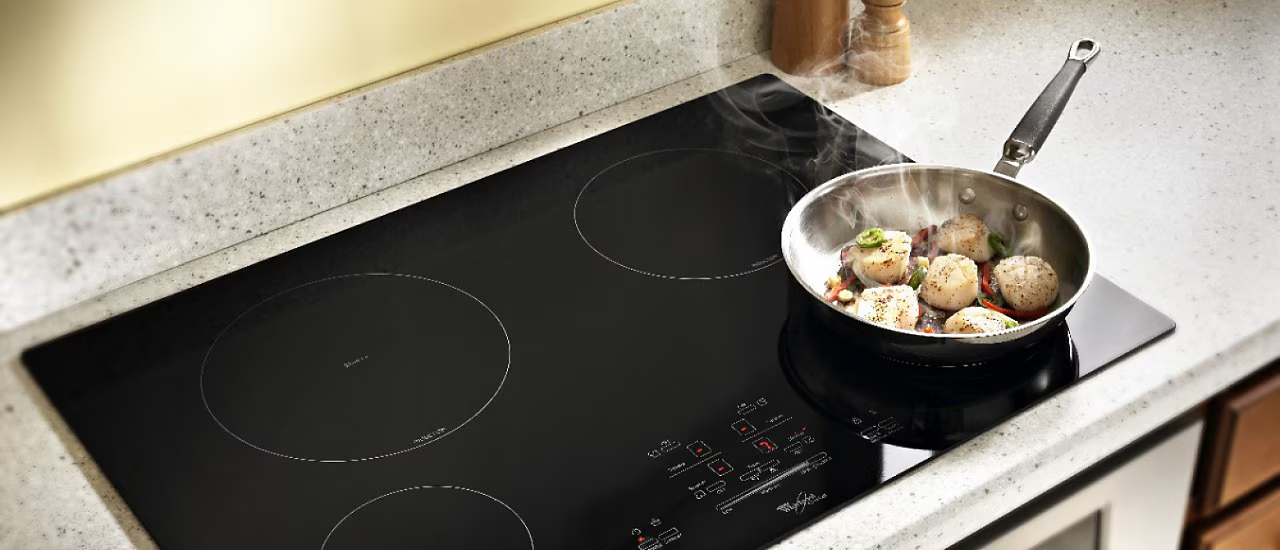
Not all cookware materials work with every type of stove. This is especially important for households using induction cooktops.
Gas cooktops generally work with a wide variety of cookware materials because the flame heats the base directly. Electric coil and radiant glass cooktops also support many metal cookware types, although a flat and stable base is important.
Induction cooktops work through a magnetic field. Therefore, cookware must have a magnetic-compatible base. Some stainless steel pans are suitable, while others are not. Cast iron and many carbon steel pans are generally compatible, but the product should still be checked.
Aluminium and copper cookware usually require a specially designed magnetic base to work on induction surfaces.
Cookware Material | Gas Cooktop | Electric Cooktop | Induction Cooktop |
|---|---|---|---|
Stainless Steel | Generally suitable | Generally suitable | Depends on magnetic base |
Cast Iron | Suitable | Suitable with care | Generally suitable |
Aluminium | Suitable | Generally suitable | Requires compatible base |
Copper | Suitable | Generally suitable | Requires compatible base |
Carbon Steel | Suitable | Suitable with care | Generally suitable |
Ceramic-Coated | Depends on base | Depends on base | Only if induction-compatible |
Traditional Nonstick | Depends on base | Depends on base | Only if induction-compatible |
Always check the cookware manufacturer's compatibility information because construction and base design can vary between products.
Building a Balanced Cookware Collection
A balanced kitchen usually includes cookware that can handle different cooking methods without creating unnecessary duplication.
A stainless steel saucepan can be useful for boiling, simmering, and preparing sauces. A frying pan can support everyday meals, while a nonstick option may make delicate foods easier to prepare.
A cast iron or carbon steel pan can be added for high-heat cooking, searing, and recipes that benefit from heat retention.
The ideal combination depends on available storage, budget, cooking habits, and the number of people in the household. People with smaller kitchens may prefer versatile cookware that serves several purposes.
It is also useful to consider lids, handles, pan depth, and base size. A suitable lid can improve simmering and reduce splashing, while the correct pan size helps food cook more evenly.
Common Mistakes to Avoid When Choosing Cookware
One common mistake is buying an entire cookware set without checking whether every piece will be used. A large set may contain several pans with similar functions, creating unnecessary expense and storage problems.
Another mistake is ignoring maintenance requirements. Cast iron and carbon steel can provide excellent cooking performance, but they need more care than many stainless steel products.
Some buyers also assume that all stainless steel cookware performs identically. In reality, layered construction and base thickness can make a noticeable difference.
Choosing cookware without checking cooktop compatibility is another avoidable problem, especially for induction users.
Finally, home cooks should not assume that nonstick cookware is suitable for every cooking method. Its temperature limitations and coating care requirements should be understood before use.
FAQ's
The most common cookware materials include stainless steel, cast iron, aluminium, copper, carbon steel, ceramic-coated, and traditional nonstick cookware.
Copper and aluminium are known for excellent heat conductivity. They transfer heat quickly and can help provide more consistent cooking when properly constructed.
Cast iron is generally heavier and retains heat for longer, while carbon steel is usually lighter and heats up relatively quickly. Both require proper maintenance and seasoning.
Cast iron, carbon steel, and magnetic-compatible stainless steel generally work with induction cooktops. Aluminium and copper cookware need a specially designed magnetic base.
Use suitable utensils, follow cleaning instructions, avoid overheating coated pans, dry moisture-sensitive cookware properly, and follow the manufacturer's maintenance recommendations.
Sources and notes
Links the author listed for this post.
This article is based on general cookware knowledge, material properties, kitchen safety practices, and commonly used cooking methods. For additional digital resources and useful online tools, visit AltFTool.com.
More on AltFTool
- AltFTool (opens in a new tab)
altftool.com


Discussion
0 comments