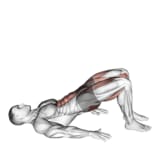
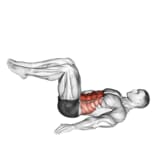
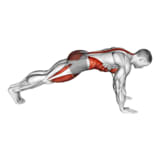
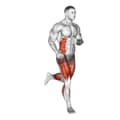
Beginners and returners who want to train at home without buying anything. You need a little floor space, a sturdy chair or step, and a door frame or post to hold for rows.
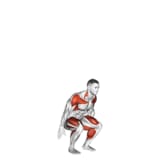
When every set reaches the top of the rep range, make the move harder instead of adding weight: lower the incline on push-ups, pause for two seconds at the bottom of squats and lunges, or slow the lowering to three seconds.
Safety and technique tips
Clear the space and check that any chair or step you use is stable and won't slide.
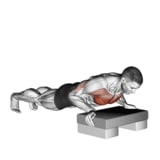
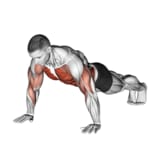
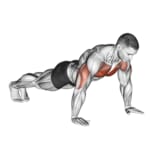
Keep a straight line from head to heels on push-ups and planks; drop to the incline or kneeling version if your hips sag.
Breathe out on the effort and never hold your breath for a whole set.
Wear supportive shoes or train barefoot on a non-slip surface.
Make it yours
Customise it in the workout generator
Change the days, the session length, your equipment or your goal, and get a week built for you, with any exercise swappable.
Yes, especially as a beginner. Body-weight moves can be made harder with slower reps, pauses, single-leg versions and lower inclines, which keeps your muscles challenged as you get stronger.
Is 30 minutes three times a week enough?
It covers the WHO advice of muscle-strengthening activity on at least two days a week. Add walking or other moderate activity on most days to reach 150 minutes a week.
What if I can't do a push-up yet?
Start with your hands on a wall or a table. As you get stronger, use a lower surface, then your knees on the floor, then a full push-up.
Should I do this every day?
No. Rest a day between sessions so your muscles can recover. Easy walking on rest days is fine and helps.