traditional
306
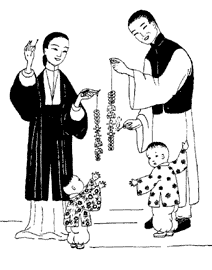
A day to honour ancestors by tending and cleaning family graves.
Festival Overview
A day to honour ancestors by tending and cleaning family graves.
History, Origin & Significance
The Qingming Festival or Ching Ming Festival, also known as Tomb-Sweeping Day in English, is a traditional Chinese festival observed by ethnic Chinese in mainland China, Hong Kong, Macau, Taiwan, Malaysia, Singapore, Cambodia, Indonesia, Philippines, Myanmar, Thailand, and Vietnam. A celebration of spring, it falls on the first day of the fifth solar term, also called Qingming, of the traditional Chinese lunisolar calendar. This makes it the 15th day after the Spring Equinox, either 4, 5 or 6 April in a given year. During Qingming, Chinese families visit the tombs of their ancestors to clean the gravesites and make ritual offerings to their ancestors. Offerings typically include traditional food dishes and the burning of joss sticks and joss paper. The holiday recognizes the traditional reverence of one's ancestors in Chinese culture.
Source: Wikipedia — Qingming Festival
At a Glance
A single, focused day of observance and celebration.
The most recognisable custom of Qingming Festival.
Communities across 2 countries take part.
A signature dish closely associated with the celebration.
Flavours of the Celebration
No Qingming Festival celebration is complete without its signature dishes, shared with family and community throughout the festivities.
Customs & Practices
The customs practised during Qingming Festival vary by region, but these are the most widely recognised.
Duration
Tomb sweeping & offerings
Where It's Celebrated
Primarily celebrated in China & Taiwan. Detailed country facts (capital, currency, languages) need a REST Countries API key configured — see .env.example.
Open in Google MapsPlan Your Visit
Typically celebrated in April.
China, Taiwan
Good to Know
Qingming Festival falls on Apr 5, 2027 (estimated date — exact timing can vary by region or calendar reckoning).
Keep Exploring