Loading page
✦ SkillForge Trade Schools
Learn a trade with a torch in your hand — not a lecture hall seat.
Compare skilled-trade programs based on real shop hours, tool-list transparency, evening cohorts, hands-on training, and apprenticeship connections.
✓ Real hands-on shop hours✓ Transparent tool lists✓ Evening and weekend training options✓ Apprenticeship connection guidance
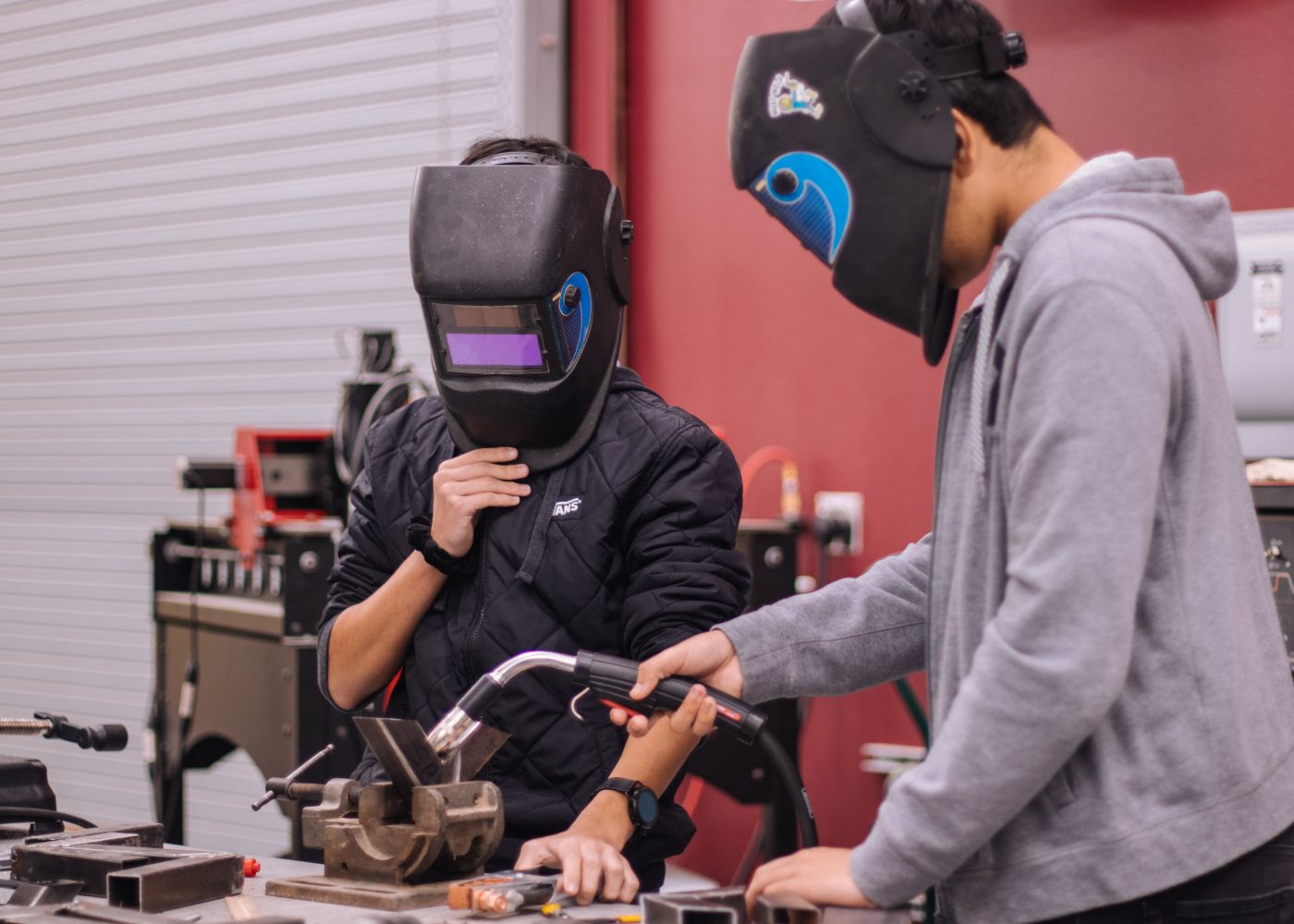
Hands-on training lab ●
learn by doing
shop hours → real skills
ask better questions ✦
WeldingHVAC/RElectricalAutomotiveThe practical way to compare your next step.
✦ Start with a clearer plan
Free Trade
Career Guide
Get a practical guide to choosing a skilled trade, comparing hands-on programs, and understanding apprenticeship and licensing requirements.
01
Know the Work
Understand what the work is really like — including heat, heights, physical demands, tools, and job-site conditions.
02
Understand State Rules
Learn how apprenticeship and licensing requirements can vary from state to state.
03
Ask Better Questions
Get a list of hard questions to ask admissions representatives before committing to a program.
FREE RESOURCEChoose your next
Choose your next
move with confidence.
SKILLFORGE
FIELD NOTES
FIELD NOTES
6Trades Covered01
50States Mapped for Licensing02
< 1 yrTypical Program Length03
$0Cost for the Guide04
✦ Trade tracks
Explore Six
Skilled Trade Paths
Compare what students actually learn, how long programs typically take, and what hands-on training can look like.
 017–10 months
Welding
Build hands-on skills through Stick, MIG, TIG, plate, and pipe practice in individual welding booths.
KEY FOCUS+ Stick welding+ MIG+ TIG+ Plate+ Pipe practice
 026–9 months
HVAC/R
Learn residential and commercial heating and cooling fundamentals through hands-on system work and troubleshooting.
KEY FOCUS+ Split systems+ Heat pumps+ Refrigerant handling+ Electrical troubleshooting
 039–14 months
Electrical
Practice real electrical skills using mock-up walls, conduit bending, wiring exercises, and code-book navigation.
KEY FOCUS+ Mock-up walls+ Conduit bending+ Wiring+ Code-book navigation
 048–12 months
Plumbing
Develop practical plumbing skills through soldering, drain/waste/vent layouts, and fixture rough-in labs.
KEY FOCUS+ Soldering+ DWV layout+ Fixture rough-ins+ Plumbing labs
 056–11 months
CNC Machining
Build machining fundamentals through manual lathe work, G-code, setup sheets, and CAM basics.
KEY FOCUS+ Manual lathe+ G-code+ Setup sheets+ CAM basics
 069–15 months
Automotive Tech
Get hands-on experience with lift bays, scan-tool diagnostics, vehicle systems, and EV/hybrid safety.
KEY FOCUS+ Lift bay time+ Scan-tool diagnostics+ Vehicle systems+ EV/hybrid safety
✦ Your next step
How SkillForge
Works
A simple four-step process for comparing trades and training programs.
⌂
01
Grab the Free Guide
Start with the free Trade Career Guide and licensing roadmap.
02
Narrow It Down
Compare two or three trades based on honest questions such as indoor vs. outdoor work, physical demands, heights, tools, and work environment.
03
Compare the Shops
Use the tool-list worksheet and shop-hour questions to compare real training programs beyond their marketing brochures.
04
Line Up the Requirements
Understand training hours, apprenticeship requirements, and state-specific licensing checkpoints.
✦ Apprenticeship + licensing
School Hours Aren't
the Same as License Hours
One of the most important things to understand before choosing a trade program is the difference between school training and the hours that may count toward an apprenticeship or license.
TRAINING HOURS?
CHECKPOINTSLearn the
difference.school time ≠ always license time
difference.school time ≠ always license time
01
State Registration
Apprenticeship and licensing requirements can vary significantly by state. Understand where registration is required and who manages the process.
02
Document Your Hours
Hours may need to be properly documented and verified to count toward applicable requirements.
03
Classroom Credit
Classroom training may count differently from hands-on work, and some programs or states may cap how much classroom credit applies.
04
Pay Progression
Apprentice compensation can increase as experience and documented hours accumulate, depending on the trade and program.
✦ School screening
Look Beyond the
Marketing Brochure
Use four practical signals to evaluate a real trade school before committing your time or money.
01
Counted Hands-On Shop Hours
Ask exactly how many hours students spend working with equipment and practicing trade-specific skills.
02
Tool-List Transparency
Find out which tools students must purchase and which tools, equipment, and materials the school provides.
03
Evening & Weekend Cohorts
If you work while training, ask whether evening or weekend cohorts are available and how often they run.
04
Real Apprenticeship Connections
Ask whether the school actually makes introductions to apprenticeship opportunities or simply provides a link to a job board.
Readers who
asked better questions.
“The guide helped me understand Ohio's apprentice rules before I started comparing schools. I knew exactly what questions I needed to ask.”
R
Ray D.Ohio · fictional demonstration testimonial
“I was about to buy a completely different set of tools. The checklist helped me understand what the school actually provided before I spent the money.”
K
Krystal M.Texas · fictional demonstration testimonial
“The evening-cohort questions made a huge difference for me. I could compare programs without assuming I had to quit my job to train.”
T
Tomás A.North Carolina · fictional demonstration testimonial
Fictional demonstration testimonials for SkillForge Trade Schools.
✦ Questions, answered
Before you choose
a training path.
No. SkillForge is an independent information and matching service. It does not guarantee employment, job placement, wages, or career outcomes.
Program length varies by trade, school, training schedule, state, and program structure. The guide provides typical ranges for the trades covered.
Costs vary by school, trade, location, equipment, program length, and other factors. Always verify current pricing directly with the training provider.
They may count differently depending on the trade, state, apprenticeship program, and applicable requirements. Do not assume classroom hours are equivalent to hands-on or documented apprenticeship hours.
Some programs offer evening or weekend schedules, but availability varies. Ask each school about its current schedule before enrolling.
Your email is used to provide the requested guide and may also be used to send related educational information, subject to the page's consent and privacy terms.
✦SKILL
FORGE
FORGE
✦ Your next move
Ready to
Find Your Trade?
Get the Free Trade Career Guide and licensing roadmap to compare programs, shop hours, tools, apprenticeships, and state-specific requirements.
✦
✦